Executive Overview
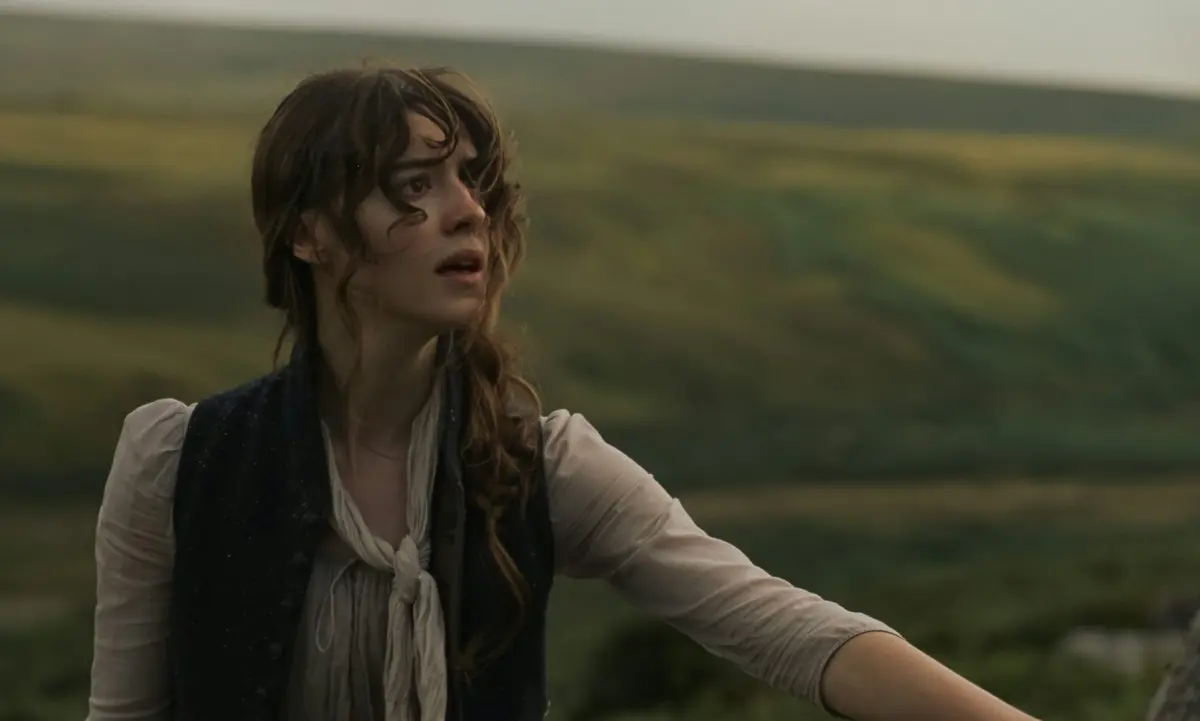
Georgia Oakley’s fresh cinematic adaptation of Jane Austen’s beloved 1811 novel, Sense and Sensibility, arrives as a visual triumph that immediately captivates its audience. Boasting sweeping pastoral landscapes, meticulously captured rocky seascapes, and atmospheric settings—such as the wild, purple-blossomed pond at Norland House Park—the film constructs an intoxicating window into the Georgian era.
However, behind the rich textures of silk gowns, embroidered waistcoats, and masterfully lit candlelit interiors lies a tension between artistic license and historical reality. While the film excels at utilizing cinematography, sound design, and set decoration to evoke the sensory world of Austen, its treatment of period-specific social codes—particularly concerning hair grooming and dance choreography—ultimately undermines its historical integrity.
By prioritizing modern emotional expression over the rigid behavioral codes of the 1790s, Oakley’s adaptation risks pulling viewers out of its carefully curated universe. In the Georgian and Regency periods, movement, posture, and physical presentation were not merely aesthetic choices; they were vital currencies in the high-stakes marriage market and the strict hierarchies of social mobility. When characters engage in unpinned hair styling and avant-garde, musical-theatre-style choreography, the film sacrifices the profound social import that movement once held, trading cultural authenticity for contemporary spectacle.
Detailed Chronology & Production Context
To understand the friction between Oakley’s artistic vision and historical expectations, one must examine how the narrative unfolds and where visual departures from the period take place.
Act I: The Establishment of the Pastoral World
From the opening frames, the production establishes a lush, tactile environment for sisters Elinor Dashwood (played by Daisy Edgar-Jones) and Marianne Dashwood (played by Esmé Creed-Miles) as they navigate grief, displacement, and nascent romance following the death of Mr. Dashwood. The film introduces Norland House and its surrounding grounds through lingering shots of natural beauty.
Yet, even in these establishing sequences, subtle character-driven styling choices begin to diverge from historical norms. Hair styling in the late 18th century was a physical manifestation of social standing, requiring daily pinning, pomades, and structural discipline to denote civility. In contrast, the film uses hair as an immediate psychological shorthand: Elinor sports soft, controlled waves, while Marianne’s locks are left unkempt, stringy, and wild. While effective in delineating their contrasting personalities—sensible versus romantic—this unbridled look defies the strict grooming standards demanded of young women of the gentry.
Act II: The Introduction of Social Gatherings and the "Hop"
The narrative tension escalates when the Dashwood family is exposed to local society through their well-meaning, boisterous distant relative, Sir John Middleton (Turlough Convery). It is through Sir John that the film introduces its first major dance sequence: an informal gathering known as a "hop."
In the original novel, Austen references a "little hop in the park" attended by the dashing and passionate Mr. Willoughby (Frank Dillane), who allegedly danced from eight o’clock until four in the morning without sitting down. Historically, however, a "hop" was regarded by the upper echelons of Georgian society as a lower-class, informal affair associated with the "meaner sorts." Refined gentry and nobility engaged in structured country dances and formal balls, where bodily comportment signaled breeding, self-control, and moral rectitude.
In the film, the cinematic hop blends traditional country dance steps with modern, expressive choreography. While it captures an undeniable sense of youthful jubilation, the jagged, energetic movements begin to erode the atmospheric illusion of the 1790s.
Act III: The London Ballroom and the Climax of Movement
The cultural dissonance reaches its peak during the second major dance sequence, set in a formal London ballroom. Here, Elinor finds herself dancing with Edward Ferrars (George MacKay), the man she loves but cannot marry due to socioeconomic constraints.
In both Georgian society and Austen’s literary universe, the formal ball was the absolute epitome of embodied politeness. Serpentine lines, precise footwork, measured spacing, and confident eye contact were essential metrics for assessing a prospective partner’s grace, temperament, and social viability.
Instead of historical country dance formations, however, the film’s choreography—overseen by movement director Holly Blakey—introduces sweeping arms, dramatic lifts, and over-arched backbends. Rather than reflecting the regulated constraints of an 18th-century ballroom, the sequence evokes the emotional liberties of 21st-century contemporary musical theatre.
Supporting Context & Metrics: The Sociological Weight of Georgian Dance
To fully appreciate the critique of the film’s choreography, one must understand the sociological framework governing the Georgian and Regency marriage markets. Dance was not merely a recreational pastime; it was an institutionalized arena for courtship, social assessment, and hierarchy reinforcement.
The Education of Comportment
- Early Training: Boys and girls from gentry and noble families began taking dance and posture lessons from an early age.
- Metrics of Evaluation: Observers and potential suitors assessed posture, footwork, spatial awareness, and eye contact to determine a participant’s grace, discipline, and emotional stability.
- Social Penalties: A lack of bodily control or awkward comportment signaled ineptitude, meekness, and social inferiority, potentially ruining a young woman’s prospects on the marriage market.
Hierarchy of Dance Spaces
| Dance Formality | Social Ranking | Historical Perception |
|---|---|---|
| The Formal Ball | Upper Gentry & Aristocracy | Considered the pinnacle of civility; strict adherence to codified steps, lines, and social hierarchy. |
| The Country Dance | Middling to Upper Ranks | Socially acceptable, structured, and community-oriented while maintaining polite boundaries. |
| The Informal "Hop" | Working / Lower Classes ("Meaner Sorts") | Associated with unrefined energy, lack of decorum, and unmonitored physical exertion. |
As historical dance and literature scholars note, Austen’s characters operated within a universe where every physical gesture was freighted with meaning. When characters like Marianne or Willoughby abandon restraint for unbridled physical expression, they cross a sociological line that contemporaries would have viewed with deep suspicion.
Official Statements & Creative Rationales
The divergence between historical accuracy and cinematic expression was a deliberate choice by the production team. Confronted with the challenge of making 18th-century material resonate with modern audiences, choreographer Holly Blakey defended her avant-garde approach to the film’s movement sequences.
"It was vital that whatever we were doing inside the choreography… did feel like an expression of how the girls were feeling," explained Blakey in interviews discussing her vision for the adaptation.
This philosophy prioritizes internal emotional truth over external societal constraints. In the mind of the creative team, contemporary audiences require a kinetic release—physical movements that mirror the internal turmoil, heartbreak, and passion of characters like Marianne Dashwood.
However, cultural historians and Austen scholars argue that this approach fundamentally misunderstands the nature of Georgian repression. The brilliance of Austen’s heroines lies precisely in their ability to convey monumental emotional depths within the rigid, suffocating confines of societal rules. When physical choreography breaks free of those constraints to mirror internal feelings directly, the dramatic tension born from repression is lost. The dance floor ceases to be a pressure cooker of hidden glances and coded messages, devolving instead into an overt display of modern emotional liberation.
Future Outlook: The Evolution of Austen Adaptations
Georgia Oakley’s Sense and Sensibility joins a long, storied lineage of Jane Austen cinematic and television reinterpretations, each attempting to balance period authenticity with contemporary relevance.
A Comparative Look at Period Choreography
- Emma (2020): Utilized intimate, tension-filled choreography where characters like Emma Woodhouse and Mr. Knightley locked eyes and fingers, using the strict proximity of the dance to amplify suppressed romantic tension.
- The Other Bennet Sister (TV Continuation): Highlighted the anxiety of compliance, showing characters like Mary Bennet literally counting their steps to avoid social failure.
- Bridgerton (Recent Seasons): Embraced anachronistic pop-music covers and stylized balls, though maintaining the narrative conceit that the ballroom remains the ultimate theater of social warfare (e.g., characters enduring stepped-on toes and whispered scandals).
What Lies Ahead for Period Cinema?
As filmmakers continue to adapt 18th- and 19th-century literature for 21st-century viewers, the debate between historical fidelity and creative innovation will only intensify. Oakley’s film proves that stunning visual aesthetics, breathtaking natural landscapes, and strong lead performances can create a deeply immersive cinematic experience.
Yet, the critique surrounding its choreography and styling serves as a cautionary tale for future period productions. When modern movement vocabularies "burst through the ambience," they risk shattering the delicate historical illusion that filmmakers work so tirelessly to build. Future adaptations must decide whether they wish to transport audiences entirely into the restrained, candlelit reality of the past, or settle for a hybrid theatrical spectacle where modern hearts beat beneath Regency-era silk. For purists and historians alike, the ideal adaptation remains one where the constraints of the era are not obstacles to be discarded, but rather the very tools used to forge unforgettable drama.