Executive Overview
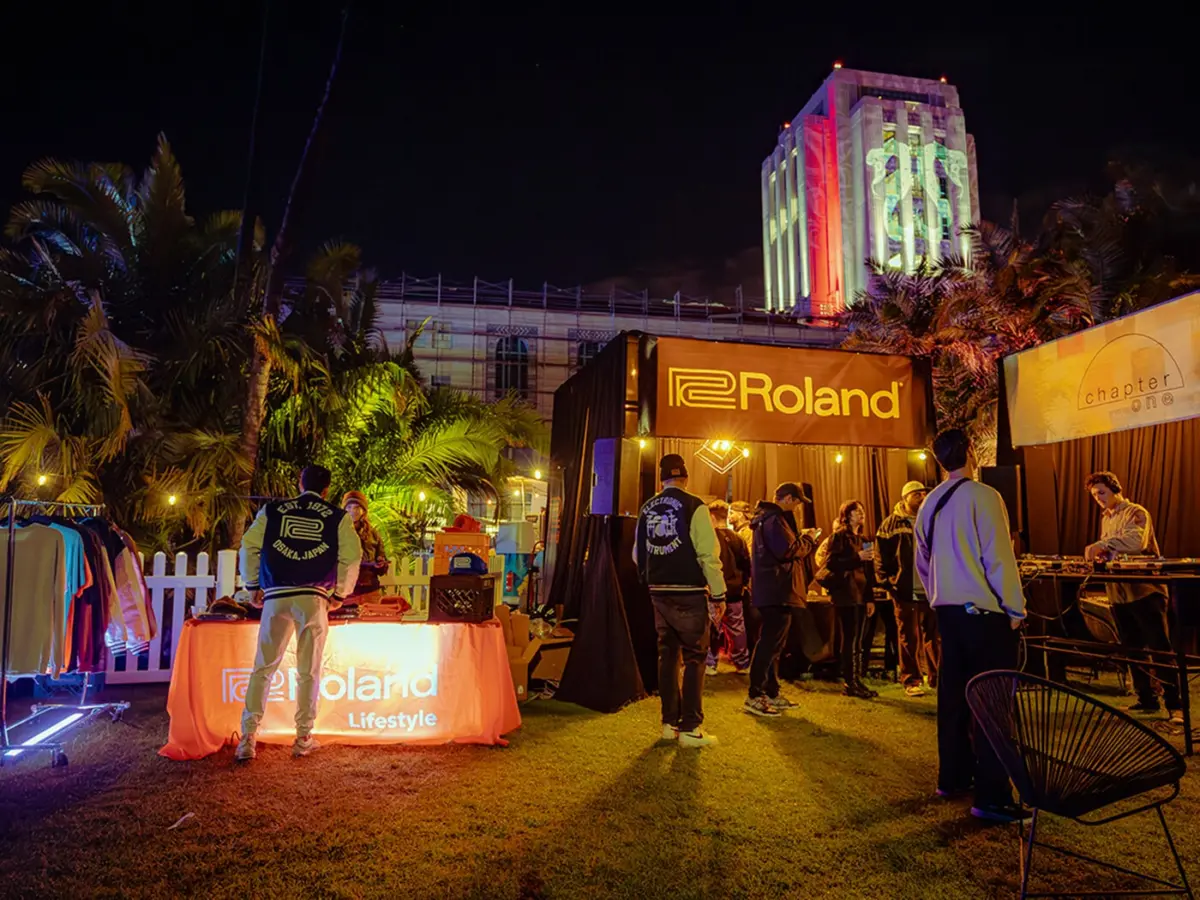
Amidst the sun-drenched concrete and palm trees of San Diego’s Waterfront Park, the bi-annual CRSSD Festival serves up a sensory overload of deep house, techno, and live electronic acts. Temperatures routinely hover around a balmy 32°C (90°F), driving thousands of festival-goers toward ice-cold beers, shady spots, and the ocean breeze. Yet, tucked away in the center of the festival grounds sits a shaded black tent that defies the traditional party atmosphere.
This is the CRSSD Lab—a dedicated interactive sanctuary that has quietly anchored the festival experience for over eight years.
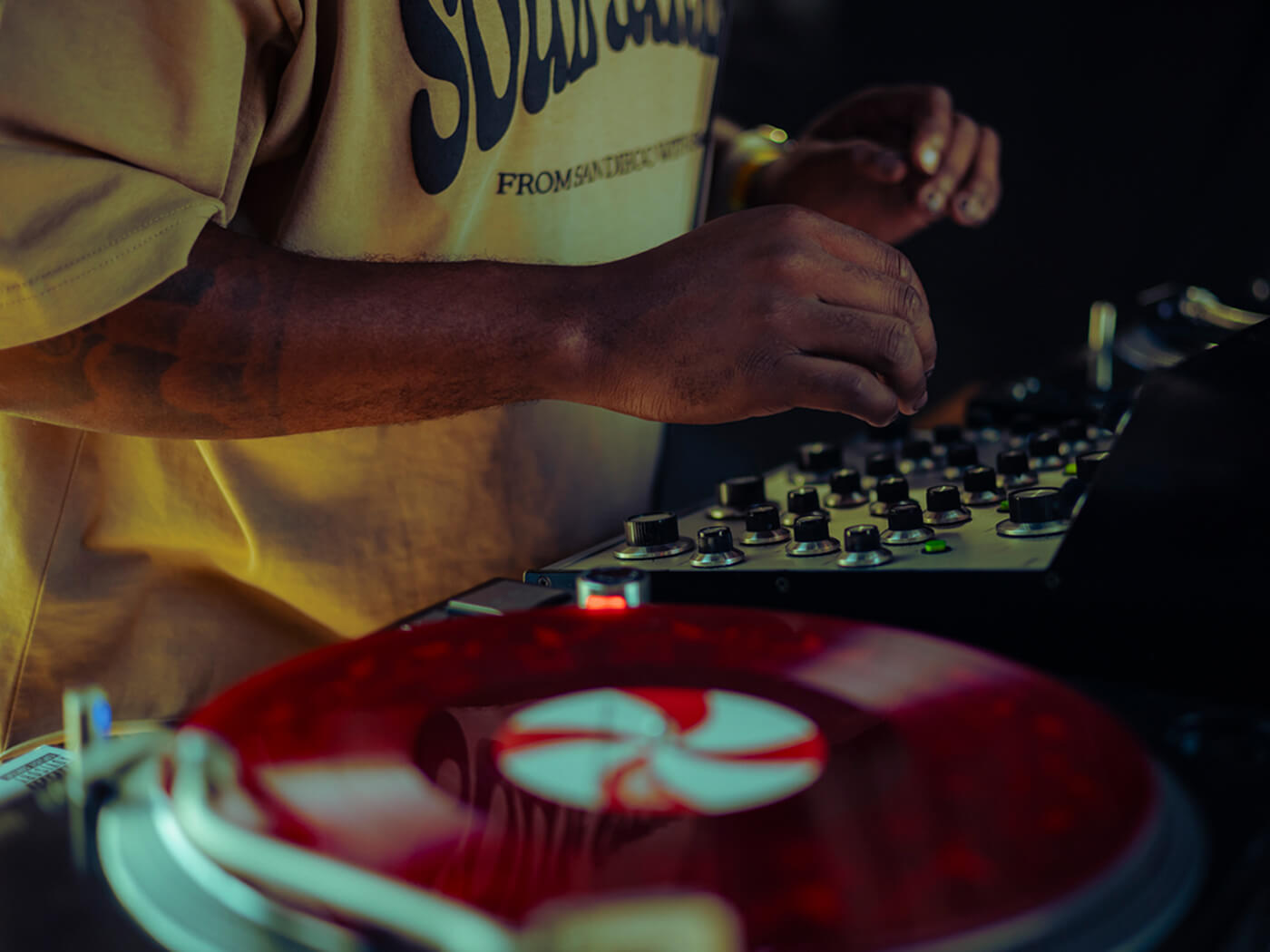
Far removed from the booming main stages, the Lab plays host to two electronic music mainstays: Roland, the legendary electronic instrument manufacturer, and Chapter One, a boutique independent record store and label out of Los Angeles. Inside the tent, the air hums not just with ambient festival bleed, but with the raw, unmistakable frequencies of hardware synthesizers, the warm crackle of vinyl spinning on Technics SL-1200 turntables, and the animated conversations of curious music lovers.
For over eight years, this pop-up experiment has blurred the lines between consumer and creator. It raises a compelling question in modern music culture: Can a festival activation genuinely convert passive dance music consumers into active, gear-purchasing music producers?
By bringing high-end hardware into the beating heart of a weekend-long dance party, Roland and Chapter One are proving that hands-on engagement is more powerful than digital marketing—demystifying the production process and fostering a thriving, hyper-engaged subculture in the process.
Detailed Chronology: A Day Inside the Lab
To understand the magnetic pull of the CRSSD Lab, one has to step inside as the afternoon sun reaches its peak.

2:00 PM – The Morning Aftermath Transitions into Afternoon Curiosity
By early afternoon, the festival gates have been open for a couple of hours. While the majority of attendees are staking out their spots near the live stages or cooling off by the bar, a steady stream of festival-goers wanders in and out of the black tent.
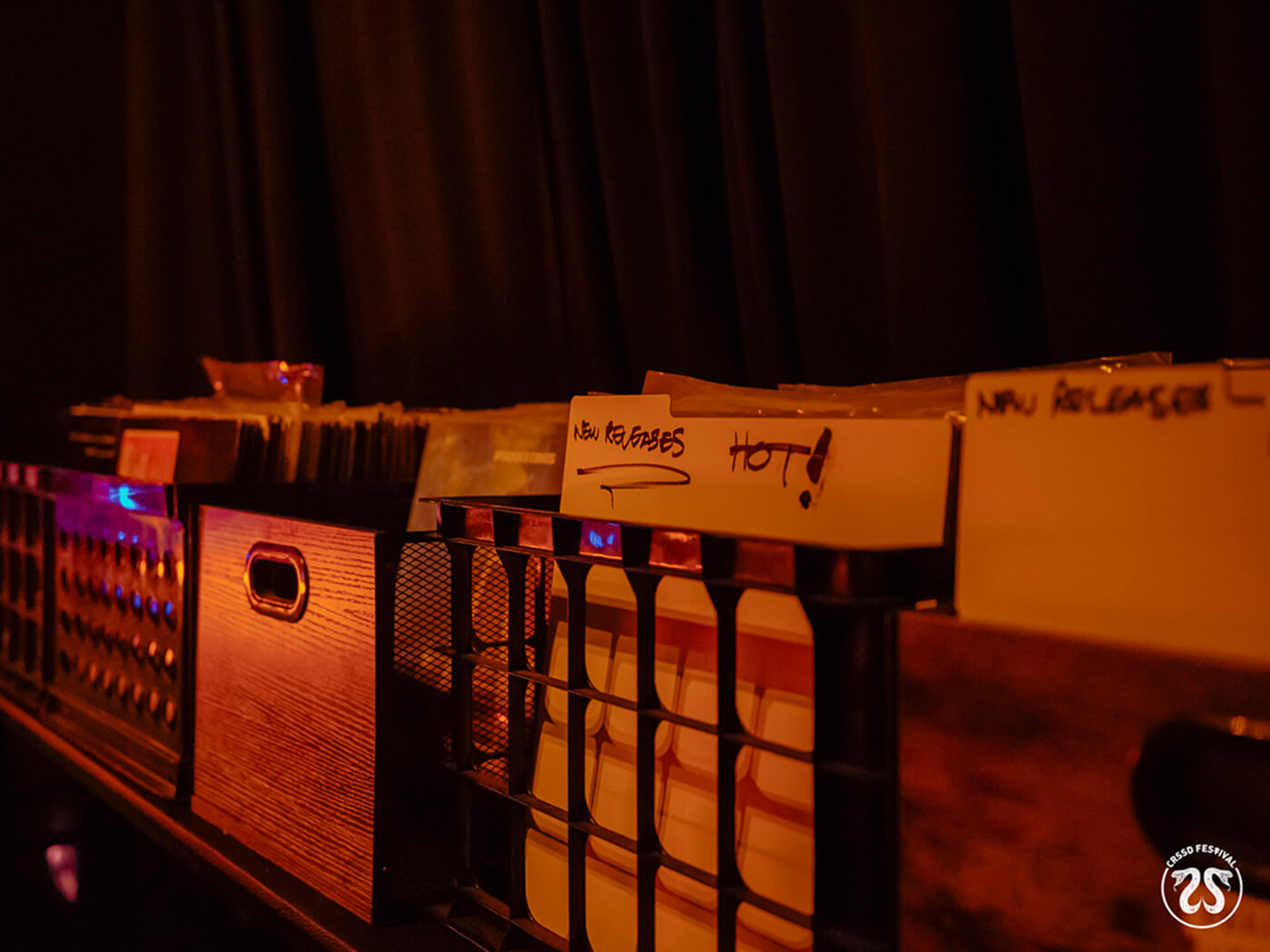
The initial atmosphere is relaxed. On the central table sit powerhouse instruments: the Roland Juno-X synthesizer and a TR-1000 drum machine, wired directly into a live Ableton Live rig. Nearby, crates of vinyl curated by Chapter One invite attendees to flip through records. A Technics SL-1200 turntable sits ready with a pair of headphones, allowing listeners to audition cuts ranging from underground dance singles to classic electronic albums like Daft Punk’s Random Access Memories.
3:00 PM – The Retail-Meets-Community Workflow
By mid-afternoon, the tent’s utility becomes apparent. A growing stack of vinyl, carefully wrapped in brown paper bags, waits behind the Chapter One counter for attendees to retrieve at the end of the night. This frictionless retail model allows festival-goers to browse freely without having to lug heavy wax around in the desert heat for the rest of the day.
At the Roland station, the workflow is entirely collaborative. Synthesizers, guitars, and hardware effects are chained into a central digital audio workstation (DAW). An attendee steps up, noodles out a synth line, and records a clip into Ableton. Once they step aside, the next curious fan jumps in to lay down a complementary drum beat or bassline. A Roland DJ-202 controller sits nearby, welcoming novices to try their hand at beatmatching pre-selected tracks.
Though rarely overcrowded to the point of suffocation, the booth maintains a steady, vital energy—a rotating cast of friends tinkering with gear, asking questions, and geeking out with brand representatives who treat every visitor like a peer rather than a target demographic.
Supporting Context & Metrics: The Business of Engagement
While the optics of a synth petting zoo at a dance festival look great on Instagram, the longevity of the CRSSD Lab points to measurable business and cultural impacts for both participating brands.
Roland’s Direct-to-Consumer Strategy
In an era dominated by targeted social media ads and algorithmic video content, physical presence remains an unmatched differentiator for hardware brands.
- The Face-to-Face Advantage: Mar Keith Anthony, Roland’s Global Brand Relations Manager, emphasizes the rarity of what they are doing. Roland remains the singular music technology brand embedded on-site at CRSSD—a positioning they replicate at high-profile events like Movement in Detroit and Stagecoach, the country festival hosted annually on the Coachella grounds.
- Geographic Reach: The Lab acts as an invaluable feeder system for Roland’s broader retail strategy, complementing physical spaces like their newly launched flagship store in New York City. Both the festival pop-ups and the flagship store share a singular philosophical mission: prioritize hands-on experimentation over passive viewing.
- Demographic Feedback Loops: Roland utilizes these activations to capture qualitative data straight from the source. The booth consistently attracts parents inquiring about starter gear for musically inclined children, alongside seasoned bedroom producers seeking advice on specific routing setups or sampling workflows.
Chapter One’s Vinyl Pipeline
For Chapter One, the metrics of success are written both in sales figures and demographic shifts.
- Conversion Rates: Chapter One regularly sells roughly 80 percent of its total physical stock brought to the festival. Items range from accessible $5 dance singles to premium, collector-grade full-lengths.
- Bridging the Generational Gap: According to Chapter One’s Max Coletto, the booth serves as a generational melting pot. The store routinely interacts with young, first-time electronic music converts alongside veterans in their 50s and 60s who have lived through decades of rave culture.
- The Underground Curiosity Boom: Coletto notes a distinct upward trend in underground music literacy among younger crowds. Attendees may not always recognize specific record labels or underground artists right away, but their exposure to live festival culture sparks a deep, genuine curiosity to dig deeper into left-of-centre sounds.
Official Statements: Perspectives from the Frontline
To truly grasp the ethos of the CRSSD Lab, one must look to the individuals who build and maintain it year after year.
Breaking Down Barriers to Entry
Mar Keith Anthony believes that modern music production is plagued by an invisible barrier of intimidation—one that physical activations are uniquely equipped to tear down.
"We’re creating and fostering collaboration, and teaching skills at the same time," Anthony explains. "People don’t know how simple music-making tools are these days. People walk in like, ‘Oh, I don’t make music,’ and I’m like, ‘I can literally show you in five minutes how to do it!’ That’s our goal. We’re just trying to inspire people to pick up instruments and make music."
This human-centric approach is designed to foster long-term brand loyalty by establishing authenticity. By sending direct brand employees rather than third-party promotional staff, Roland ensures that technical questions are met with expert, passionate answers.
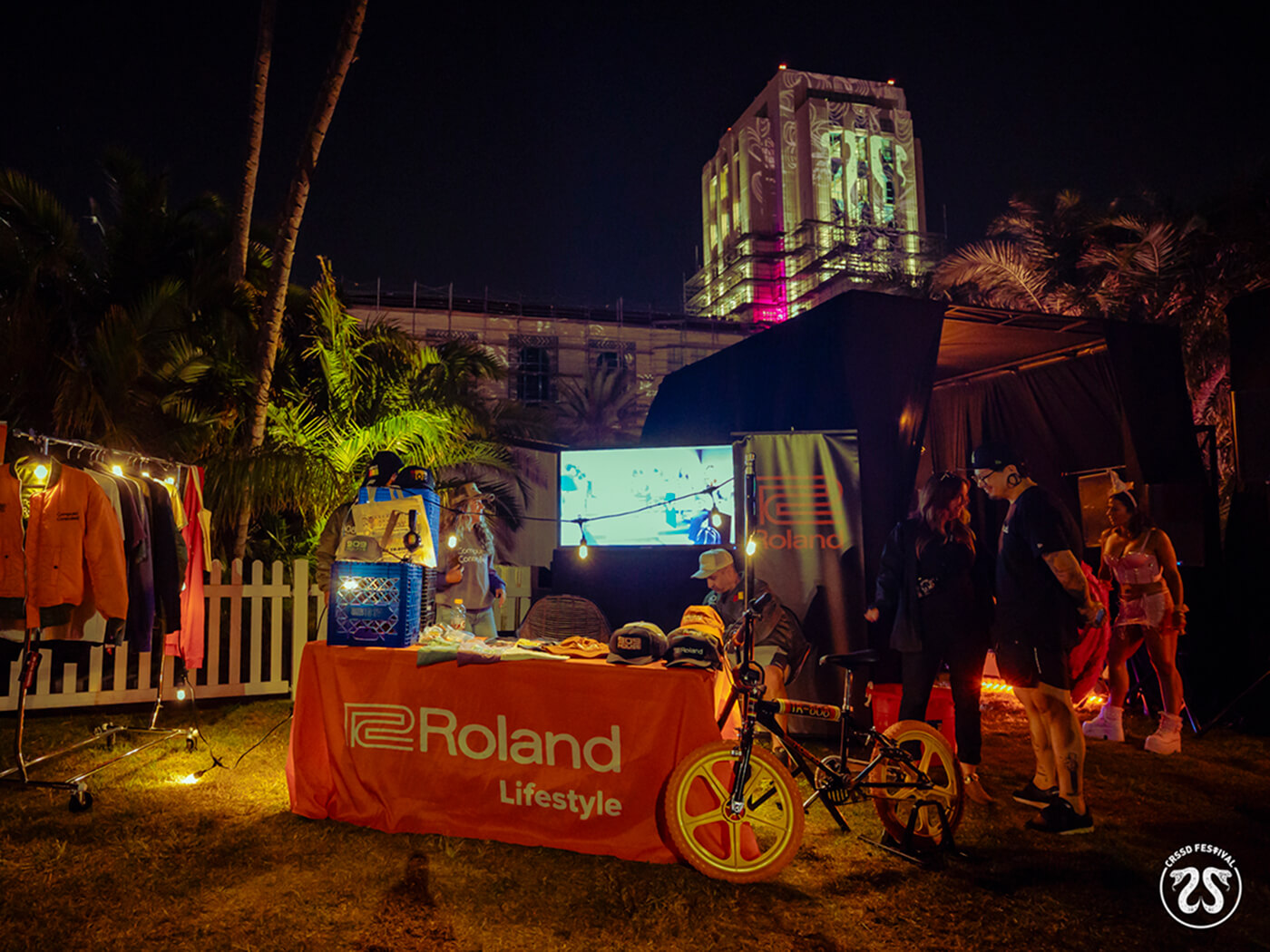
"Coming here for years is really about making sure the fans know that we’re part of the community as well," Anthony adds. "We’re invested in the continued creation of this style of music. It’s important being out in the elements like this. No one can speak to the products better than someone that works directly for the brand."
Creating an Immersive Experience
Max Coletto of Chapter One echoes the sentiment that the value of the pop-up extends far beyond the cash register. For Chapter One, the festival booth acts as a vital bridge connecting online discovery with physical record culture in Southern California.
"It’s definitely a good feeder to our community in L.A.," Coletto says. "We see really young first-timers—people who are getting into electronic music—and we see 50- to 60-year-olds who have been listening to this music their whole lives… It’s always a nice little memory for them. It’s not just about getting the record, it’s about interacting with them. It’s a whole experience."
Future Outlook: The Evolution of Experiential Music Tech
As the electronic music landscape continues to recover, fracture, and expand in the post-pandemic era, experiential marketing is undergoing a renaissance. Festival-goers are increasingly looking for immersive, educational, and community-driven touchpoints rather than corporate sponsorships that feel hollow or purely transactional.
The enduring success of the CRSSD Lab offers a blueprint for how hardware manufacturers and independent record stores can survive—and thrive—by embedding themselves directly into the subcultures they serve. By treating music fans not merely as consumers of finished audio products, but as active participants in the creative cycle, brands like Roland and Chapter One are cultivating an entirely new generation of producers, vinyl collectors, and gear enthusiasts.
As Mar Keith Anthony summarizes it best:
"We’re creatives, and we feel like music is the heartbeat of everything that we do. So therefore, for us, that’s what we’re passionate about: creating more music makers."
With installations like the CRSSD Lab proving that a 32°C festival tent can double as a masterclass in synth programming and crate-digging, the future of electronic music hardware is looking brighter—and a whole lot more hands-on.