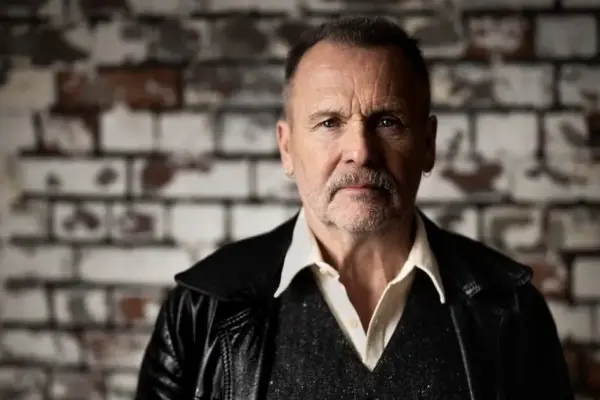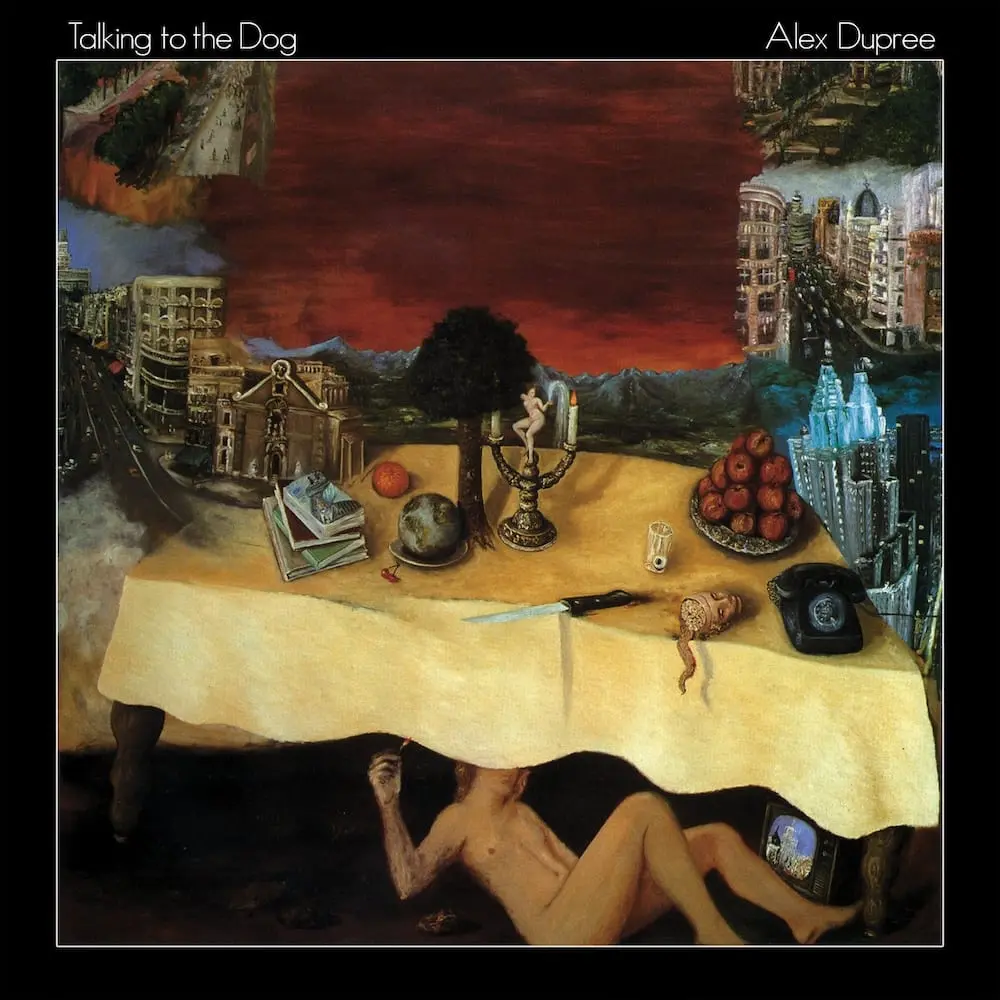
For over two decades, the Texas-born singer-songwriter Alex Dupree has occupied a unique, self-carved niche in the landscape of American independent music. Operating largely on the fringes of the commercial music industry, Dupree has steadily constructed a catalog of witty, warm, and criminally overlooked outsider-folk masterpieces. Whether working under his own name or previously steering The Trapdoor Band, his career has defied easy categorization. He moves fluidly between country twang, softly strummed folk, and soulful confession, united by a singular calling card: an uncommonly sharp eye for lyrical detail.
While critics have frequently invoked touchstones like David Berman, Cass McCombs, Bob Dylan, and Townes Van Zandt when attempting to contextualize his sound, the reality is that Dupree sounds very little like anyone other than himself. He is a modern-day picaresque poet, jester, and troubadour—a lineage that remains vital precisely because artists like Dupree refuse to compromise their vision for mainstream appeal.
With the announcement of his latest full-length album, Talking to the Dog—slated for release on August 14, 2026, via Scissor Tail Records—Dupree prepares to unveil what may be the definitive artistic statement of his career. Far from resting on his laurels, Dupree pushes his idiosyncratic brand of cosmic Americana into fresh territory, balancing deeply personal lyricism with bold arrangements. As the critical community continues to search for authentic voices in a saturated marketplace, Talking to the Dog arrives as a masterclass in independent songcraft, demanding that listeners finally pay attention to an artist who has spent too long operating in the shadows.
Detailed Chronology: Tracing the Arc to Talking to the Dog
To fully appreciate the scope of Talking to the Dog, one must examine the trajectory that led Alex Dupree to this creative zenith. For twenty years, Dupree’s career has been characterized by quiet tenacity. While flashier contemporaries chased transient trends, Dupree refined a craft that values narrative depth, emotional resonance, and sonic texture over algorithmic optimization.
His early work with The Trapdoor Band established his reputation as a formidable writer with a distinctly Texan sensibility—one that incorporated the wide-open spaces of his homeland with the intimate, confessional tone of a late-night barstool philosopher. Over successive solo releases, Dupree expanded his sonic palette, incorporating elements of country-rock, sparse folk, and atmospheric Americana. Yet, despite widespread acclaim from a devoted core of music critics and fellow musicians, mainstream breakout success remained elusive. Rather than dampening his creative output, this outsider status seemed to liberate him, fostering an uncompromising approach to songwriting.
The journey toward Talking to the Dog began in earnest following the passing of legendary folk troubadour Michael Hurley. As a peer-in-spirit to Hurley’s shaggy, unvarnished brand of counter-cultural artistry, Dupree felt the loss keenly. It is fitting, therefore, that this new era in Dupree’s career is punctuated by a poignant tribute to Hurley, alongside a fearless reimagining of Scott Walker’s avant-garde melancholy. These interpretive choices did not happen in a vacuum; they represent the culmination of decades spent studying the masters of the craft, synthesizing disparate influences into a cohesive, highly individual artistic vocabulary.
Supporting Context & Metrics: Inside the Soundscape of Talking to the Dog
Musically and lyrically, Talking to the Dog is a multi-layered achievement that rewards close listening. The album’s production relies on a dynamic interplay between acoustic intimacy and expansive, cinematic arrangements, showcasing an artist at the absolute peak of his powers.
The Art of the Cover: Hurley and Walker
Cover songs on singer-songwriter records can often feel like throwaway gestures or filler, but on Talking to the Dog, they serve as structural anchors. The first is a rendition of Michael Hurley’s You’re a Dog, Don’t Talk To Me. Where Hurley’s original recording leaned into low-fi, counter-cultural whimsy and loose-limbed humor, Dupree approaches the material with a tender, golden-hued melancholy reminiscent of Bill Callahan. The humor remains, but it is reframed through a lens of profound, reflective wonder.
More unexpected is Dupree’s reworking of Scott Walker’s On Your Own Again. Stripped of the lush, swooping orchestral arrangements that defined Walker’s original work, Dupree’s version relies on delicate piano figures and a strategic, haunting use of silence. This minimalist approach highlights Dupree’s underappreciated vocal prowess, culminating in a hushed, wavering final note that hangs in the air long after the music stops.
Original Masterworks and Collaborations
For long-time followers, however, the primary draw remains Dupree’s original writing—and these new tracks rank among his finest achievements.
- "I Can See Her In Your Eyes": Featuring the unmistakable vocals of Jolie Holland (co-founder of The Be Good Tanyas), this track unfolds as a crepuscular country-jazz duet. It plays with the classic tropes of country and western music with genuine affection, gently subverting them without resorting to pastiche.
- "New Meaning": Serving as the album’s opener, this track pairs a muscular electric guitar and forward-driving piano with meditations on vulnerability, personal rebirth, and resilience.
- "I Could’ve Been Anyone": Ushered in by stately, cinematic strings, the song tells a quintessentially American tale of longing, framing a failed relationship as an epic road trip viewed through the rear-view mirror.
The Dive Bar and the Cosmic Frontier
The atmosphere of a dimly lit Texas dive bar is never far away in Dupree’s arrangements.
- "Stevie’s Fever": A jumpy, infectious country-rock number driven by distorted guitar stabs and honky-tonk piano, anchored by lyrics that paint an appealingly world-weary picture.
- "Room For One More": A brisk, shuffling track that seamlessly bridges references to William Blake and communist philosophy. It invites a tantalizing counterfactual historical thought experiment: what if Bob Dylan had collaborated with The Band before recording Highway 61 Revisited rather than after? The sessions might well have sounded precisely like this.
Perhaps the album’s crown jewel is "Zodiac", a masterpiece of lo-fi cosmic country. With one foot planted firmly in the post-Summer of Love comedown and the other stepping into a narcotically altered future, the track bridges the geographical and psychological gap between Dupree’s Texas roots and the artificially colored skies of Los Angeles. It hovers in a beguiling psychic landscape that feels simultaneously earthly and extraterrestrial.
The journey continues outward with "Voyager Blues", which ventures further into the ether through space-age psychedelia, driven by keening strings and a refreshingly minimal, surprisingly funky guitar groove. Finally, the closer, "Marseille", brings the listener gently back down to Earth. Built around an acoustic guitar arrangement of Leonard Cohen-esque simplicity, its lyrics achieve a rare balance, wedding the corporeal details of human existence to profoundly spiritual inquiries.
Official Statements and Industry Perspective
In discussions surrounding the rollout of Talking to the Dog, Scissor Tail Records and associates have emphasized the uncompromising artistic integrity that defines Dupree’s career. While commercial metrics and radio-friendly formats have traditionally dictated the fortunes of modern artists, Dupree has carved out a sustainable, highly respected space within the independent community through sheer excellence of craft.
Cultural critics have frequently noted that couplets pulled at random from Talking to the Dog easily stand shoulder-to-shoulder with the finest lyric writing of the past sixty years. Industry insiders have long recognized Dupree as a "songwriter’s songwriter"—an artist whose records are traded among peers with the same hushed reverence usually reserved for generational talents. Yet, there is a growing consensus that the sheer accessibility and emotional depth of this latest project could—and should—break him out of specialized cult status and into the broader critical mainstream.
Future Outlook: A Legacy Secured
As the August 14, 2026 release date for Talking to the Dog approaches, the independent music community stands at a crossroads regarding how it values enduring, non-commercial artistry. In an era dominated by hyper-compressed singles and disposable streaming content, Alex Dupree offers a counter-narrative: an album designed to be listened to as a complete work of art, rich in narrative texture, literary ambition, and sonic nuance.
Whether Talking to the Dog achieves the widespread commercial breakthrough that eluded his previous efforts remains to be seen. However, for those who value authentic storytelling, peerless musicianship, and the continuation of the great American troubadour tradition, the album is already an undisputed triumph. Alex Dupree has delivered a career-defining work that cements his status as an essential voice in modern folk and Americana. Let us hope that this is the moment the wider world finally catches up.