Executive Overview
In the expansive, often over-commercialized landscape of American roots and folk music, true iconoclasts are rare. Rarer still are artists who manage to maintain an uncompromisingly eccentric, fiercely independent artistic vision across a career spanning six decades without ever courting, or succumbing to, the machinery of mainstream fame.
Michael Hurley, the undisputed godfather of "freak folk," was one such luminary. Following his passing in April of last year at the age of 83, the music world paused to mourn a singular talent—an itinerant mystic, a brilliant cartoonist, and a songwriter who plucked tunes from the ether with the casual grace of a Victorian urchin pilfering apples. Shortly after his death, No Quarter released his final studio album, Broken Homes and Gardens, offering a poignant, vital postscript to a legendary catalog comprising over thirty records.
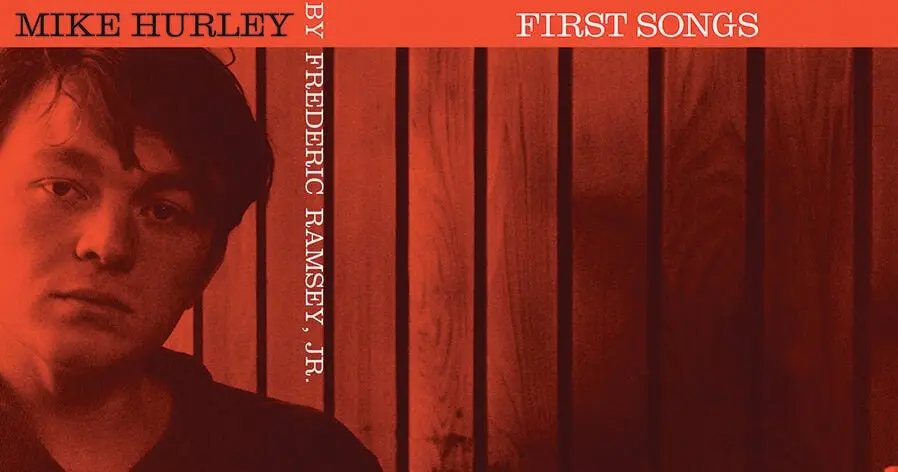
Now, cementing his enduring legacy, Smithsonian Folkways has announced the definitive vinyl reissue of Hurley’s foundational 1964 debut, First Songs. Scheduled for release on November 6, this meticulously remastered edition arrives on Folkways’ iconic original black gatefold LP jacket, complete with the legendary, historic liner notes penned by Frederic Ramsey Jr.
To herald the reissue, Smithsonian Folkways has also unveiled an official, hand-animated music video for Hurley’s classic track “The Werewolf Song,” crafted by Hurley’s close friend and collaborator, animator Drew Christie.
This comprehensive report examines the historical origins of First Songs, the painstaking technical preservation behind the upcoming vinyl release, the intimate story behind Christie’s visual accompaniment, and the lasting cultural footprint of an artist who actively evaded fame to preserve the pure, unadulterated magic of his craft.
Detailed Chronology: From Greenwich Village Bohemians to the Bucks County Stone House
To understand the magnitude of First Songs, one must travel back to the early 1960s, an era when the American folk revival was reaching a fever pitch. Yet, while contemporaries in Greenwich Village were polishing traditional Appalachian ballads or writing sharp-edged protest anthems, a 22-year-old Michael Hurley was operating on an entirely different dimensional frequency.
The Crucible of Greenwich Village and Convalescence
Before the recording of First Songs, Hurley’s life was steeped in the classic bohemian tradition. Living a hard-scrabble, nomadic existence in New York City’s Greenwich Village, the young Hurley pushed his physical limits. The lifestyle took a severe toll: Hurley contracted a debilitating cocktail of hepatitis, infectious mononucleosis, and early-stage tuberculosis.
Hospitalized for six grueling months at Bellevue Hospital in New York City, Hurley faced a stark turning point. Upon his eventual discharge, he retreated to a quieter, more grounded existence, renting a small, rustic stone house situated in rural Bucks County, Pennsylvania. It was within the quiet isolation of this Pennsylvania sanctuary that the raw material for his debut album truly began to coalesce.
The Historic Recording Sessions in New Jersey
Bucks County placed Hurley within geographic proximity of roots music historian, writer, and folklorist Frederic Ramsey Jr. Recognizing Hurley’s singular, untamed talent, Ramsey took the young songwriter under his wing.
In a move that would permanently alter the trajectory of independent acoustic music, Hurley explicitly eschewed the sterile environment of a professional recording studio. Instead, he requested a more intimate, organic setting. Acceding to this wish, Ramsey recorded First Songs entirely within his own home in New Jersey.
The historical weight of these sessions cannot be overstated. Ramsey utilized the exact same reel-to-reel tape machine that he had famously used sixteen years prior, in 1948, to capture the legendary field recordings that became Lead Belly’s Last Sessions (released via Smithsonian Folkways). This acoustic lineage inextricably linked Hurley’s idiosyncratic, modern myth-making with the very bedrock of American blues and folk history.
Crucially, this session laid the groundwork for Hurley’s lifelong obsession with lo-fi, homemade recording techniques—an aesthetic approach he proudly claimed to have invented long before the moniker entered the modern indie-rock lexicon.
Supporting Context & Metrics: The Anatomy of a Masterpiece
When Smithsonian Folkways initially issued First Songs in 1964, it was met with quiet reverence by folklorists and insiders, though it flew largely under the radar of the broader public. Over the ensuing decades, however, its reputation has snowballed into that of a holy grail for collectors of underground folk music.
The Audiometric Restoration: Breathing New Life into Analog Tapes
For the upcoming November 6 reissue, Smithsonian Folkways spared no expense in honoring the sonic integrity of the original analog recordings. The label enlisted GRAMMY-nominated mixing and mastering engineer Mike Monseur—whose impressive credits include acclaimed archival and contemporary work with acts like The Seldom Scene, The War & Treaty, and Wynonna Judd.
Monseur undertook a painstaking restoration process, stripping away decades of tape degradation, hum, and surface noise while strictly preserving the raw, unpolished intimacy that makes First Songs a masterpiece. The resulting master captures the eerie immediacy of Hurley’s youthful guitar playing and vocal delivery, ensuring that modern listeners experience the recording with the same startling clarity that Frederic Ramsey Jr. heard in his New Jersey living room over sixty years ago.
The Critical Consensus: The Outsider’s Outsider
In his definitive review of Hurley’s final studio album, Broken Homes and Gardens, critic Thomas Blake captured the essence of Hurley’s enduring appeal, writing:
“An outsider’s outsider, an essentially itinerant worker whose work was mining the raw product of his unique mind and presenting it as entertainment. And he was good at it. He seemed to pluck songs from the air like a Victorian urchin stealing apples.”
Blake further noted the uncanny consistency of Hurley’s creative fire across his decades-long career:
“If he had plans to slow down or to tie up any creative loose ends, there is no evidence of that in these songs. They show Hurley in his essential form: digressive, surreal, jokey, ultimately moving. A folk prankster with a poet’s soul.”
This description applies doubly to First Songs. Across a sprawling, thirty-odd album legacy that includes milestones like Armchair Boogie (1971) and Have Moicy! (1976), Hurley’s artistic DNA remained stubbornly constant. He was an artist unconcerned with commercial polish, chordal perfection, or industry trends.
Official Statements: Behind the Animation of “The Werewolf Song”
To celebrate the announcement of the First Songs vinyl reissue, Smithsonian Folkways released a mesmerizing, historically resonant official music video for Hurley’s classic track “The Werewolf Song.”
The visual companion was brought to life by filmmaker, animator, and close personal friend of Hurley, Drew Christie. Below is Christie’s intimate, firsthand account of how the video was conceived, crafted, and ultimately approved by the master himself:
"When I first heard ‘The Werewolf Song,’ it inspired so many visual ideas in me. I would just drive in my car listening to it on repeat, letting ideas and images flow to me through the music. At the time I was working mainly in charcoal, and I liked how immediate and raw the material was and how it didn’t allow you to get bogged down in details. Michael’s music is much the same way: very raw and direct and honest and not worried about perfection and precision.
I animated the song quickly, frame by frame, on newsprint on an old door table with glass in the center. A lamp was under the glass part of the door, and I shot the film with the lamp illuminating it from below.
When I finished the animation, I showed it to Michael down in Astoria, and he loved it right away. He said, ‘That’s always how I pictured him moving and stepping! You got it!’ He loved it so much he started showing it to everyone he would meet for a while.
‘First Songs’ is a truly special record and statement of a young artist who was wise beyond his years and had something truly unique to sing. It seems to come from another dimension or realm. Whenever people ask who I think is the most original artist or just a favorite, I always say ‘Michael Hurley.’ And then they always say ‘Who?!’ and that’s part of the reason why Michael is so special. His music is so undeniably amazing, and yet he tried with all his might to avoid fame and all its trappings. And he was successful in that. He was a true mystic and his legend will only grow with time."
Future Outlook: The Growing Mythos of Michael Hurley
As the music industry increasingly looks toward hyper-curated, algorithmic pop and over-produced nostalgia acts, the legacy of Michael Hurley stands as a towering monument to anti-commercial authenticity.
With the reissue of First Songs on November 6, a new generation of vinyl collectors, roots music historians, and indie-folk dreamers will have the opportunity to engage directly with the genesis of a legend. Packaged in Smithsonian Folkways’ iconic original black gatefold LP jacket and housing Frederic Ramsey Jr.’s historical liner notes, this release is far more than a mere commercial product—it is a cultural artifact.
Michael Hurley spent his entire life running away from the suffocating trappings of celebrity, preferring the quiet freedom of the road, the company of stray animals, and the creation of strange, beautiful folk art. Yet, as Drew Christie rightly observed, his determined avoidance of fame has only served to magnify his mythology.
In death, as in life, Michael Hurley remains the ultimate outsider’s outsider—a folk prankster with a poet’s soul, whose songs will continue to echo out of the ether for generations to come.
Ordering Information
Fans and collectors can secure their copies of the deluxe vinyl reissue of Michael Hurley’s First Songs via Smithsonian Folkways or directly through Bandcamp at michaelhurley.bandcamp.com.