Executive Overview
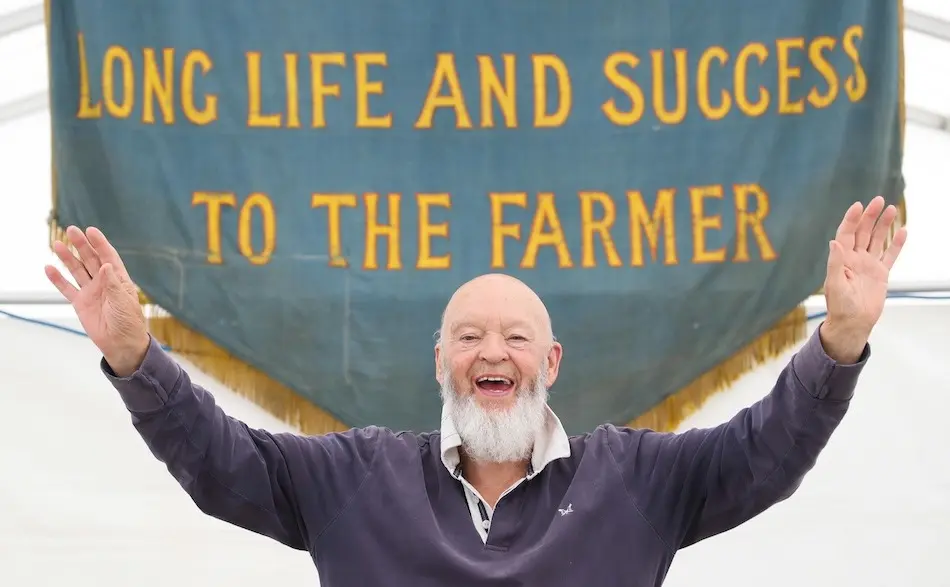
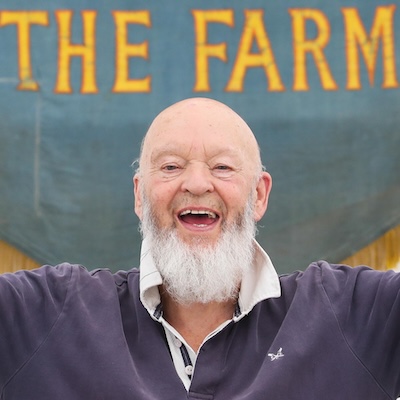
To mark the extraordinary milestone of his 90th birthday, dairy farmer-turned-cultural titan Sir Michael Eavis sat down for an exclusive, reflective interview at his historic home in Pilton, Somerset. Spanning more than five decades of ambition, resilience, and revolutionary cultural impact, Eavis’s journey from a local farmer locked in fierce battles with local magistrates to the mastermind behind the greatest greenfield festival in the world is the stuff of modern British folklore.
As Worthy Farm enters a planned fallow year, this comprehensive feature examines the life and legacy of a man who redefined live music, built a philanthropic empire, championed social housing, and inadvertently created a ubiquitous supermarket cheddar brand. From his early clashes with authority rooted in Methodist conviction to his enduring enthusiasm for avant-garde art installations and rock legends like Neil Young, Eavis remains as vibrant, sharp, and irrepressible as ever.
Detailed Chronology: From Somerset Pastures to Global Stardom
The Genesis: 1970 and the First Pilton Pop, Folk & Blues Festival
The story of the Glastonbury Festival began humbly in September 1970. Inspired by an open-air concert he witnessed at the Bath Festival of Blues and Progressive Music featuring Led Zeppelin, a 35-year-old Michael Eavis took a gamble that would forever alter the landscape of British culture. Charging just £1 per ticket—which included free milk from Worthy Farm—around 1,500 people gathered to watch Marc Bolan and T. Rex.
In those formative years, Eavis was far from a visionary hero in the eyes of his neighbors; he was viewed as a disruptive agitator. The early iterations of the festival faced intense friction with local authorities, police, and magistrates who feared the influx of counter-culture youths. Yet, Eavis maintained that the struggle itself forged the indomitable spirit required for the festival’s survival.
Surviving the Storms: The Threat of Extinction
Throughout the 1970s, 1980s, and 1990s, the festival stood on a knife-edge. Eavis recalls facing existential threats from local officialdom regularly.
"The chairman of the magistrates once said to me, ‘If you do this again, you’ve had it’," Eavis reminisces.
Despite legal threats, financial precarity, and operational hurdles, Eavis pressed on, driven by an unshakeable belief in the communal and political power of the gathering. Each decade brought new challenges—from rising policing costs and security concerns to unauthorized "gate-crashers"—yet every hurdle was cleared through sheer tenacity and negotiation. By the turn of the millennium, Glastonbury had transitioned from a chaotic hippie gathering into a globally revered cultural institution, cemented by massive BBC television coverage and universally coveted ticket sales.
Supporting Context & Metrics: The Empire of Worthy Farm
While the Glastonbury Festival operates for just one weekend every few years (accounting for its scheduled fallow years designed to let the land heal), the ecosystem surrounding Worthy Farm is active 365 days a year.
Agricultural Roots and Commercial Reach
Sir Michael Eavis remains, fundamentally, a Somerset dairy farmer. The farm’s operations are vast and modern, seamlessly integrated with regional partners. The milk produced by the Worthy Farm herd is supplied directly to Wyke Farms, where it is transformed into artisan cheddar.
In a testament to the surreal cultural footprint of the Eavis name, Worthy Farm Cheddar can now be found on supermarket shelves across the United Kingdom—a reality that still brings a sense of wonder to its creator. Eavis fondly recalls stepping off a train in Glasgow, walking into a local Co-op store, and finding his farm’s cheese prominently displayed across the shelves.
Philanthropy and Social Impact
Beyond music and agriculture, the true legacy of Sir Michael Eavis lies in his profound commitment to community welfare. Glastonbury Festival is not merely a commercial enterprise; it is a major philanthropic engine, donating millions of pounds annually to environmental, humanitarian, and social causes such as Greenpeace, Oxfam, and WaterAid.
Locally, Eavis’s impact is etched into the very fabric of Pilton. Recognizing the housing crisis facing rural communities and young families, he spearheaded the development of 52 social houses in the village. Built to high environmental standards and designed to ensure local people could afford to remain in their home village, the project gained national acclaim. Former England footballer and broadcaster Gary Lineker famously visited the development, producing a widely shared feature that highlighted the pioneering social housing scheme.
Reflecting on the estate, Eavis notes:
"I drive that way out of the village, you know, and I see the sun shining out on them and think, ‘How did all this happen?’"
Official Statements & Personal Reflections
At 90 years old, Eavis exhibits a remarkable zest for life, crediting the sheer excitement of his career for keeping him going. During his anniversary conversation, he shared insights into his creative collaborations, spiritual foundation, and personal highlights.
On Creative Collaborations and the 2025 Festival
Even during a fallow year, Eavis’s mind remains locked into the creative pulse of the festival. Within a single week, he met with visionary installations producer Joe Rush and the mechanical arts collective Arcadia, proving that his appetite for boundary-pushing art remains undiminished.
Looking back at the most recent festival, Eavis singled out rock icon Neil Young’s Saturday night performance as his absolute highlight.
"He was so good. He really loves performing here and he played such a great set," Eavis beamed.
When asked about his favorite festival out of the dozens held since 1970, Eavis offers a characteristic philosophy:
"I always think that the most recent one is the best one. I really do."
Faith, Politics, and Purpose
Eavis acknowledges that his lifelong Methodist upbringing has deeply influenced his worldview, anchoring the festival’s enduring political conscience. Glastonbury has always provided a platform for activism, social commentary, and global awareness—elements that Eavis believes are inseparable from the festival’s identity.
"There will always be a political angle there. And I think people expect that," he affirms.
Future Outlook: Celebrating 90 Years "My Way"
As Sir Michael Eavis celebrates his landmark 90th birthday, the festivities remain refreshingly grounded. Rejecting grand global galas, he is hosting a celebratory gathering in Pilton village surrounded by family, lifelong friends, and local residents. True to form, the man who brought the world’s biggest rock stars to a Somerset dairy farm plans to take the stage himself to perform three songs with his band.
When pressed on his setlist—specifically whether Frank Sinatra’s anthemic “My Way” will make an appearance—Eavis plays coy, though he acknowledges with a knowing smile that it is a fair guess.
Looking toward the future, the Glastonbury Festival machine continues to evolve under the stewardship of his family, most notably his daughter Emily Eavis, ensuring that the green fields of Pilton will ring with music, activism, and community spirit for generations to come. Yet, at the heart of it all remains Sir Michael Eavis: a visionary dairy farmer who stared down local magistrates, built a sanctuary of counter-culture, and ultimately achieved greatness entirely on his own terms.