Executive Overview
To modern observers traversing the rolling hills and manicured farmland of the British countryside, the European rabbit (Oryctolagus cuniculus) is an omnipresent fixture—a standard element of the pastoral landscape. Yet, this familiarity belies a complex, turbulent history. Far from being a native species, the rabbit is one of the most ecologically devastating and economically costly invasive species in the modern United Kingdom, with impacts running into billions of pounds annually.
Long before they became agricultural pests, however, rabbits played a profound role in shaping the social, economic, and cultural contours of medieval England. Their early history within the British Isles is not merely a tale of ecological introduction; it is a captivating narrative of social mobility, elite status signaling, and profound demographic upheaval.
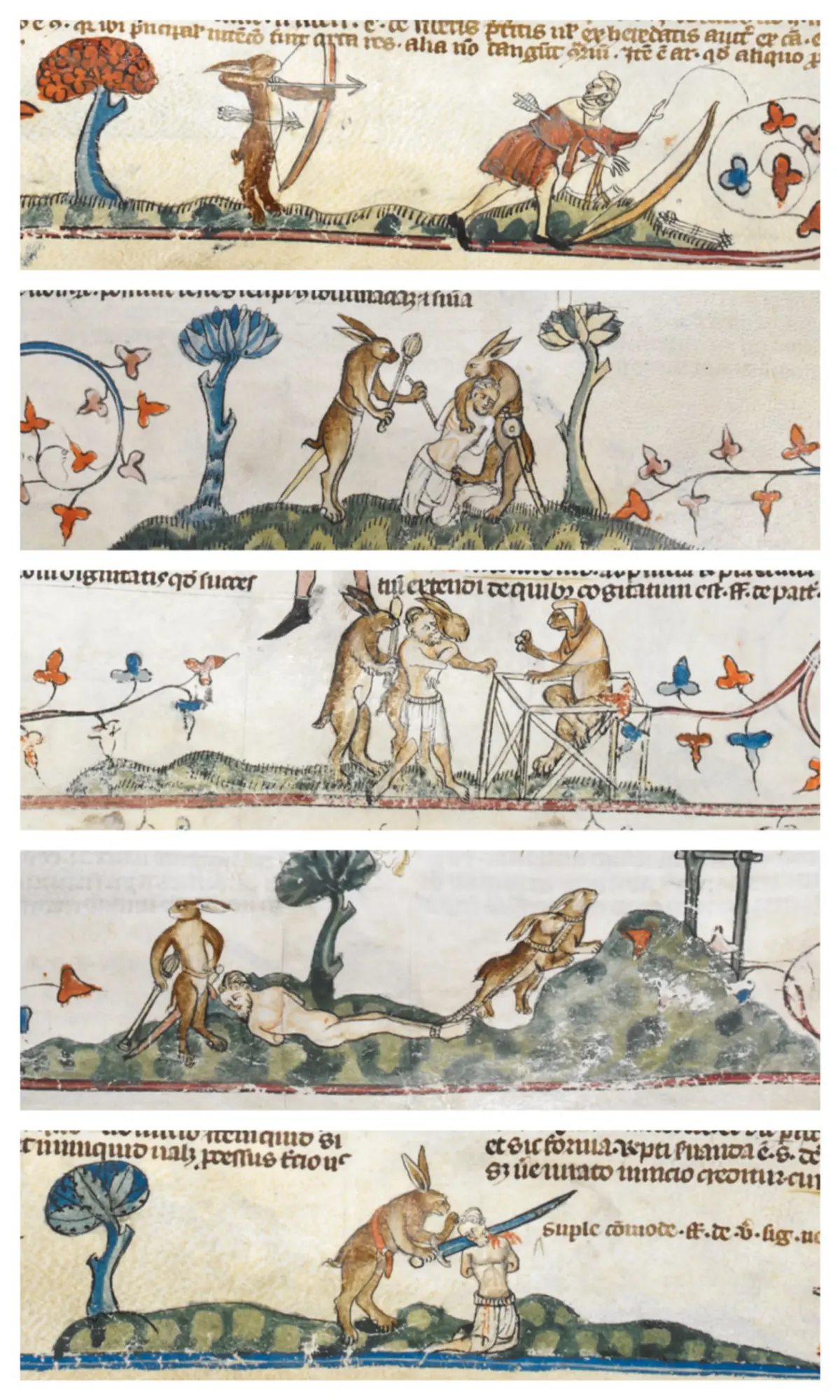
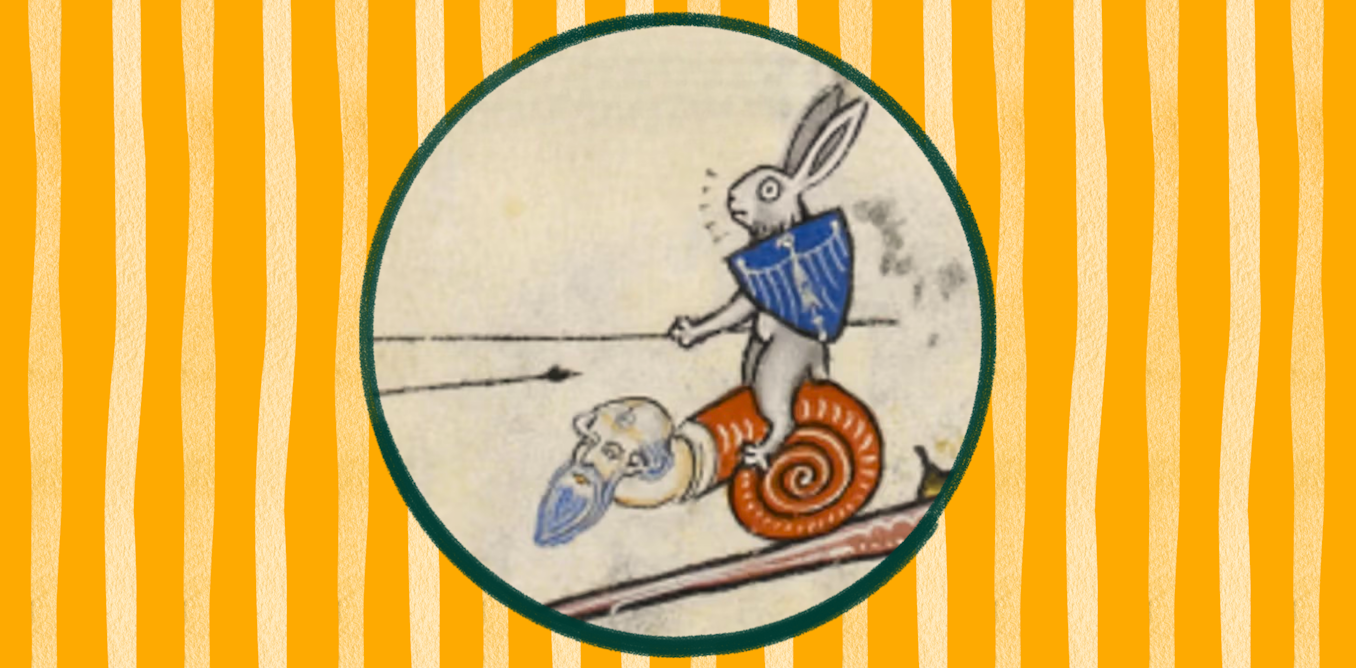
From their humble beginnings as hyper-exclusive luxuries gifted exclusively by reigning monarchs and the Norman aristocracy, rabbits transitioned into commonplace commodities following the devastating socio-economic realignment triggered by the Black Death (1346–1353). As living standards for the lower strata of society rose, so too did their access to the meat and fur of these animals, blurring the lines of sumptuary distinction. This tension between elite control and peasant aspiration manifested not only in strict anti-poaching legislation but also in the rich, satirical subculture of medieval manuscripts. Here, artists and scribes depicted rabbits as ferocious avengers—jousting on snails, putting hounds on trial, and executing their human masters. This biting gallows humor reflected a deep-seated cultural appetite for social inversion, a phenomenon that resonates just as strongly in modern popular culture today.
Detailed Chronology: The Rabbit’s Ascent in Medieval Britain
The trajectory of the rabbit in Britain spans centuries of shifting political dynasties, demographic crises, and legal reforms. Tracing this timeline reveals how an imported luxury transformed into a ubiquitous element of English life.
1. Antiquity to the Norman Conquest: The Invisible Arrival
While conventional historical consensus long attributed the introduction of rabbits to Britain entirely to the Normans following the conquest of 1066, archaeological investigations have complicated this neat narrative. Excavations have occasionally unearthed isolated rabbit bones from Roman Britain—most notably at Fishbourne Roman Palace in West Sussex. However, these finds point to isolated Roman imports rather than established, self-sustaining wild populations.
It was not until the post-Norman period that documentary evidence establishes the true establishment of the species. The earliest concrete references emerge in the late 12th century, signaling a novel economic asset entering the feudal landscape.
2. The Twelfth Century: Novelty and Ecclesiastical Confusion
By the latter half of the 12th century, rabbits—frequently referred to historically as "coneys"—were rare enough to cause administrative confusion. A prominent early reference survives from the Scilly Isles in 1176, detailing a dispute over the payment of tithes (the traditional tenth of produce owed to the church).
The local landowner, Richard de Wyka, openly admitted that he had withheld paying tithes on his rabbit stock because he genuinely believed that "tithes were not payable on things of this kind." De Wyka’s confusion underscores the novelty of the animal; it did not fit neatly into traditional agricultural or pastoral categories, sitting somewhere between wild game and domestic livestock.
3. The Thirteenth Century: Royal Monopoly and Elite Curiosities
During the 1200s, rabbits remained sufficiently scarce and valuable to warrant the direct personal attention of the English crown. They were managed intensively within high-walled or fenced enclosures known as warrens, requiring substantial investment in infrastructure, including watchtowers and stone lodges to deter poachers and predators.
- 1235: King Henry III demonstrated the high status of rabbits by issuing a royal gift of ten live animals drawn from his personal park at Guildford to Geoffrey Despenser, a prominent English landowner and Lord of Martley in Worcestershire.
- The Mid-13th Century: Royal mandates show crown officials carefully monitoring rabbit populations. On several occasions, Henry III instructed gamekeepers to catch 30 or 40 rabbits in the Guildford park only if the warren was deemed sufficiently well-stocked, ensuring the foundational breeding colony was never depleted.
- Christmas 1240: For decades, Henry III’s elite feasts relied on traditional requisitions of venison, wild boar, fish, swans, peacocks, hens, eggs, and hares. It was not until his Christmas feast of 1240 that rabbits were officially added to the royal menu, marking their arrival as an elite table delicacy. At the time, rabbit meat commanded exorbitant prices, costing four to five times as much as common chicken.
4. The Fourteenth Century: Demographic Shock and Social Levelling
The foundational bedrock of medieval feudalism was shattered by the arrival of the Black Death between 1346 and 1353. Sweeping across Europe, the pandemic eradicated between one-third and two-thirds of the population. This catastrophic loss of life triggered unintended socio-economic consequences for the survivors.
With labor suddenly scarce, surviving peasants and agricultural laborers could command significantly higher wages. Simultaneously, vast tracts of agricultural land became freely available. This newfound economic leverage allowed lower-class individuals to improve their living standards and mimic the consumption habits of their social betters.
By the 14th and 15th centuries, rabbit meat was increasingly consumed by prosperous peasants, while the fur—particularly the soft undercoats—was utilized by aspiring craftsmen. Common grey rabbit fur provided essential winter warmth, while specialized warrens cultivated rarer silver-grey and black pelts. The prestige of rabbit fur remained high enough that King Henry VII famously commissioned custom night attire tailored specifically from black rabbit fur.
5. Late Fourteenth Century: Legislative Backlash and Poaching Anxieties
The upward mobility of the peasantry provoked severe anxiety among the ruling elite. In response to "the excess of dress of people beyond their estate," Parliament introduced strict sumptuary legislation in 1363, attempting to legally mandate what individuals could wear based strictly on their birth and social rank.
Simultaneously, the hunting of game became deeply politicized. In the wake of the Peasants’ Revolt of 1381, the English Parliament grew paranoid that lower-class gatherings for hunting and trapping under the guise of leisure were merely fronts for sedition.
In 1390, Parliament enacted sweeping anti-poaching legislation explicitly targeting laborers and artisans. King Henry gave his royal consent to extend bans across the realm, outlawing the use of "hounds and ferrets, hays, nets, hair-pipes, cords and all other devices to take or destroy beasts of the forest, hares or rabbits, or other sport of gentlefolk," ostensibly to forestall the plotting of anti-monarchical rebellions.
6. The Sixteenth Century: Ubiquity and Continental Recognition
By the mid-16th century, the animal’s transition from royal rarity to widespread ecological fixture was complete. Writing in 1555, the renowned Swiss naturalist Conrad Gesner observed that while "there are few countries wherein coneys do not breed, but the most plenty of all is in England." What had started as a fragile, heavily guarded aristocratic import had successfully colonized the British landscape.
Supporting Context & Metrics: Economics, Ecology, and Culture
To fully appreciate the historical trajectory of the rabbit in Britain, one must examine the intersection of economic valuation, ecological impact, and cultural expression.
Economic and Ecological Metrics
- Price Disparity: In the 13th century, a single rabbit cost roughly four to five times the price of a standard domestic chicken, categorizing them strictly alongside luxury provisions like venison and peacocks.
- Demographic Devastation: The Black Death (1346–1353) reduced the European population by an estimated 33% to 66%, inadvertently creating the labor shortage that catalyzed working-class upward mobility.
- Modern Financial Toll: Today, invasive species cost the United Kingdom economy over £5 billion annually, with the European rabbit remaining a leading driver of agricultural crop destruction, soil erosion, and structural damage to infrastructure.
The Subversive Art of Medieval Scribes
While the socio-economic elite attempted to maintain their monopolies through sumptuary laws and harsh anti-poaching penalties, medieval craftsmen and manuscript illuminators fought back with ink and wit. The cultural phenomenon of the "world turned upside down" (mundus inversus) found its ultimate expression in the marginalia of 14th-century texts.
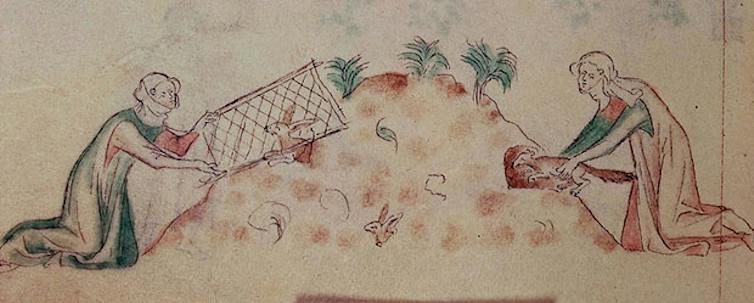
In manuscripts such as the Queen Mary Psalter (1310–1320), women are depicted hunting rabbits with ferrets, acknowledging the animals as active participants in rural life. However, the Smithfield Decretals, illuminated in London during the 1340s, takes this subversion to extraordinary lengths. In its margins, rabbits are illustrated capturing, trying, and ultimately executing their human hunters and hunting hounds.
This sophisticated gallows humor allowed medieval artisans to gently mock the rigid chivalric ideals, judicial systems, and social hierarchies of their feudal lords. It is a direct artistic ancestor to modern pop-culture touchstones, such as the legendary "Killer Rabbit of Caerbannog" featured in Monty Python and the Holy Grail (1975).
Official Statements and Academic Insights
Historians and environmental researchers emphasize that the history of the rabbit offers a unique window into medieval psychology and ecological vulnerability.
Dr. Eleanor Vance, a prominent historian of medieval social structures, notes:
"The rabbit in medieval England was never just a source of protein or warm pelts. It was a potent symbol of status. When kings gifted live rabbits from royal warrens, they were distributing political favor packaged in fur. The desperate attempts by Parliament to ban laborers from owning ferrets or hunting nets in the late 14th century show a ruling class terrified that the material leveling of society would inevitably lead to its political destabilization."
Environmental scientists studying invasive species stress the long-term irony of the animal’s introduction. Professor Marcus Thorne of the Centre for Invasive Species Research states:
"What the Norman aristocracy and medieval landowners cultivated as a high-value, enclosed luxury has evolved over centuries into one of our most severe ecological headaches. The medieval warren infrastructure ultimately failed to contain a species whose biological fecundity was poorly understood at the time. Today, we manage the descendants of those royal gifts as a multi-billion-pound threat to British agriculture and biodiversity."
Future Outlook: Managing a Legacy of Invasion
As the United Kingdom looks toward contemporary ecological management, the legacy of the medieval rabbit looms large. Modern conservationists, agricultural bodies, and government agencies grapple continuously with the descendants of those early Norman imports.
Efforts to control rabbit populations today involve sophisticated biological monitoring, habitat management, and coordinated pest control strategies designed to mitigate the multi-billion-pound annual drain on the UK economy. Climate change and shifting agricultural practices continue to influence rabbit population dynamics, ensuring that the species remains a subject of intense scientific scrutiny.
Ultimately, the journey of the European rabbit—from an exclusive royal gift behind stout stone walls to a ubiquitous countryside resident and satirical icon—serves as a timeless reminder of the unintended consequences of human intervention in the natural world. The medieval monks, kings, and scribes who recorded the rabbit’s early days could scarcely have imagined that their prized table delicacy would transform into an enduring ecological titan of the British Isles.