Executive Overview
High in Canada’s Yukon Territory, ringed by ancient mountains and shaped by the unforgiving extremes of the midnight sun and months of polar darkness, sits Kluane Lake. It is here, on the ancestral, unceded lands of the Kluane First Nation—a community numbering barely ninety people whose families have tended these shores for more than ten thousand years—that Diyet van Lieshout was born in a tent. Today, as the creative force behind Diyet & The Love Soldiers, she carries the linguistic, cultural, and emotional topography of this glacial wilderness across international stages.
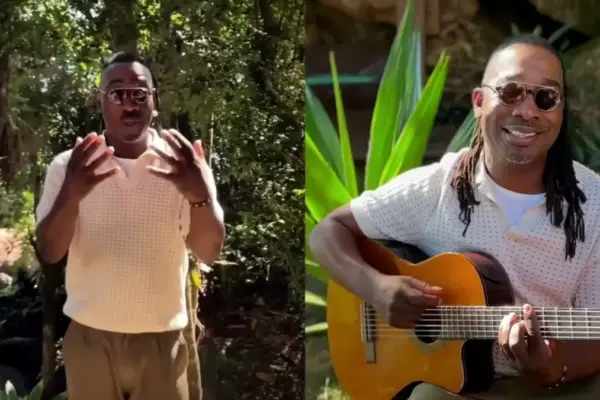
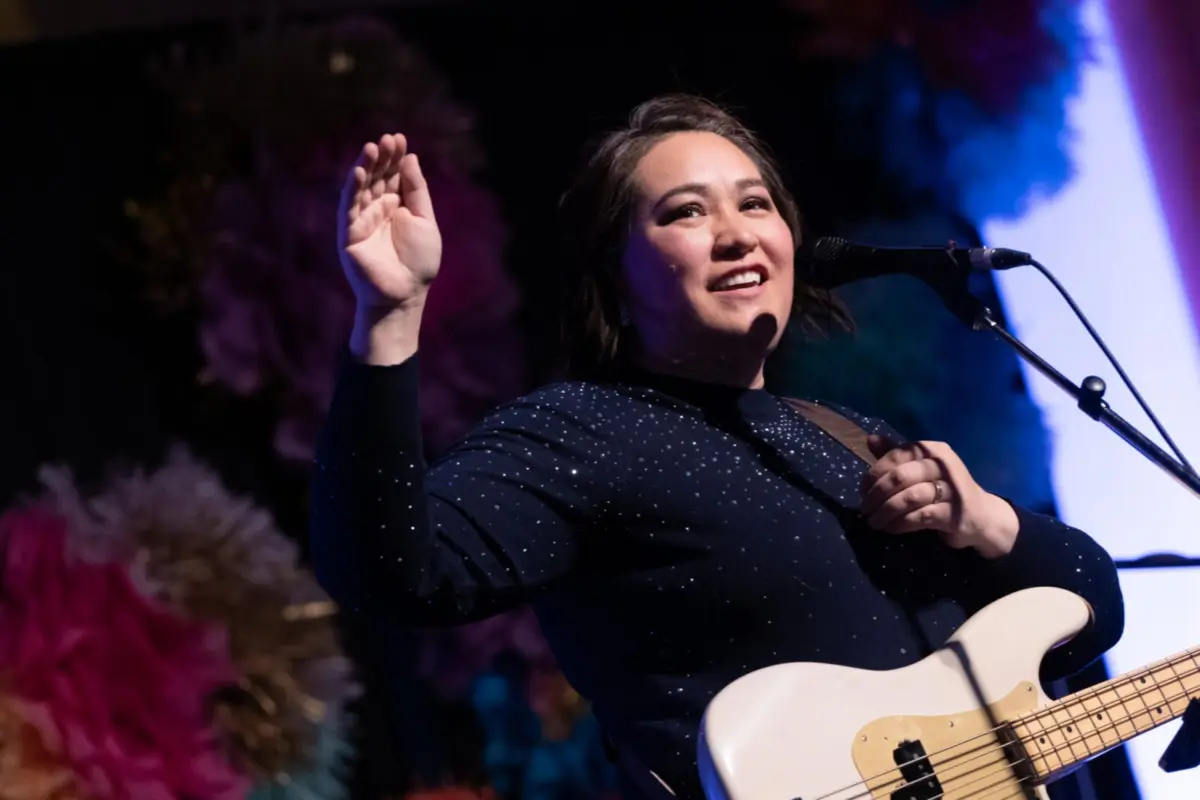
As the global music community converges on Las Palmas de Gran Canaria for WOMEX (World Music Expo), Diyet is preparing to transform a 45-minute showcase room into a portal to the Yukon. Performing on the Borondón Stage at Sala San Borondón, the trio—comprising Diyet on lead vocals and bass, her Dutch husband Robert van Lieshout on acoustic guitar, drums, and percussion, and Juno-winning producer Bob Hamilton on electric guitar, pedal steel, and mandolin—represents a masterclass in modern roots music.
This feature article examines Diyet’s extraordinary journey from a shy child discovering her voice to a globally touring artist bridging Indigenous heritage with contemporary alt-country, folk, and roots. Through an exclusive Q&A conducted as part of the Musical Road to WOMEX series, we explore how her latest album, Seeds of Dreaming, maps a multi-generational legacy of survival, resilience, and belonging. Furthermore, we investigate the profound parallels between the endangered Southern Tutchone language and the lost Guanche heritage of Gran Canaria, charting the future of an artist looking toward symphonic scales while keeping her roots deeply anchored in the North.
Detailed Chronology: From the Shores of Kluane to Global Stages
The trajectory of Diyet’s life is a story of geographical and artistic migration, where a winding path through international cultural capitals ultimately served to pull her back to her northern roots.
The Early Years and Musical Awakening
Born into a rich, multi-ethnic lineage of Southern Tutchone, Tlingit, Japanese, and Scottish ancestry, Diyet’s early worldview was framed by subsistence living and oral tradition. Raised on the shores of Kluane Lake, music was never a commodity performed on a distant platform; it was an integral thread of daily survival, storytelling, and community gathering.
Though naturally shy, Diyet accidentally discovered the power of her voice at the age of ten. This accidental revelation set off a formal academic and professional pursuit of music:
- Academic Foundation: She earned a degree in voice performance, mastering the technical mechanics of Western classical singing.
- Commercial and Educational Interludes: Her career took her to Vancouver, where she composed songs for a publishing house, and later to the Netherlands, where she taught voice and immersed herself in European musical culture.
The Return Home and the Birth of The Love Soldiers
Despite international opportunities, the magnetic pull of the North proved irresistible. Diyet returned home to Kluane alongside her Dutch husband, Robert van Lieshout. Finding themselves in a tiny village devoid of performance venues, Diyet experienced a profound creative shift. Stripped of external commercial pressures, she began writing music entirely for herself, drawing directly from the emotional weight of her surroundings.
Shortly thereafter, Diyet & The Love Soldiers crystallized. Featuring Robert van Lieshout and acclaimed producer Bob Hamilton, the trio forged a signature sound described as alt-country, folk, and roots, threaded organically through the Southern Tutchone language. It is a sonic ecosystem that lives in two distinct worlds: checking ice-fishing nets for dinner one afternoon, and commanding an international festival stage the next.
Seeds of Dreaming and International Touring
Over a grueling five-year period of touring from the frosty expanses of Alaska to cultural hubs across Europe, Diyet gathered the raw material for her landmark album, Seeds of Dreaming. Released to critical acclaim, the record serves as an auditory atlas of her ancestral landscape:
- "8th Wonder": A deeply personal tribute dedicated to her mother, a survivor of Canada’s harrowing residential school system.
- "Grandfather’s Country": Built around the traditional Southern Tutchone phrase Ásí Keyi, honoring the land of her grandfathers and the foundational memories of her youth.
Supporting Context & Metrics: Cultural Preservation and Linguistic Survival
To understand the weight of Diyet’s performance at WOMEX, one must contextualize the precarity of Indigenous languages in the modern era. Language is not merely a mechanism for transactional communication; it is a complex archive of ecological knowledge, social philosophy, and emotional nuance.
The Anatomy of Southern Tutchone
Southern Tutchone is an Athabaskan language spoken by First Nations people in the southwest Yukon. Like many Indigenous tongues across the globe, decades of systemic colonial policies, residential school assimilation programs, and forced displacement have severely disrupted the intergenerational transmission of the language.
When Diyet sings in Southern Tutchone on international stages, she is participating in an act of active linguistic reclamation. Every note delivered in her native tongue helps push the language out of historical archives and back into living, breathing contemporary culture.
The Guanche Parallel in Gran Canaria
Coinciding with her arrival in Las Palmas de Gran Canaria, Diyet was introduced to the history of the Guanches—the original Indigenous inhabitants of the Canary Islands whose culture and language were largely suppressed or eradicated following the Spanish conquest in the 15th century.
This historical overlap creates a poignant thematic bridge for the WOMEX showcase. As Diyet notes, bringing a threatened language from the Yukon to an island with its own complex narrative of cultural erasure highlights a shared global human experience of resilience, memory, and reclamation.
Official Statements & Q&A: In Conversation with Diyet
Ahead of her showcase performance at the Sala San Borondón, Diyet sat down for an extensive Q&A exploring her artistry, her North-centric songwriting philosophy, and her expectations for WOMEX.
On the World Her Music Lives In
"My music lives in the North. It comes from the mountains, the water, the long winters, the midnight sun, and from growing up in a place where the land is always present in your life… I think of the music as a meeting place between worlds, Southern Tutchone and English, traditional and contemporary, Indigenous and non-Indigenous."
Refusing to be shoehorned into a single commercial genre, Diyet blends the rugged storytelling of country and folk with the harmonic sensibilities of her classical training and the unyielding realities of northern survival. Her goal is simple yet profound: to make listeners feel as though they have been invited into her home.
On Growing Up in Kluane
"When you grow up in a place like that, the land isn’t scenery, it’s part of who you are. You learn to pay attention to weather, water, animals, seasons and the people around you… Even after travelling around the world, Kluane is still the place I write from. It is my centre."
This deep spatial awareness informs every lyric she pens. The vastness of the landscape translates directly into the dynamic range of her compositions—quiet, reflective fingerpicking giving way to soaring, anthemic choruses that evoke sweeping mountain ranges and endless horizons.
On Discovering Guanche History in Las Palmas
"Coming from a small Indigenous Nation and being involved in the work of keeping Southern Tutchone alive, I understand how fragile language can become when it stops being passed naturally from one generation to another… So I’m curious about the people of Gran Canaria today and how they understand that history. What remains? What has been remembered? What has been reclaimed?"
On Storytelling and Dispelling Stereotypes
"At WOMEX, I want people to meet us as we actually are, not as some idea of what Indigenous music is supposed to sound like. If people leave our showcase feeling like they have travelled north for 45 minutes, met some people they didn’t know before and maybe understand our part of the world a little differently, then I think we’ve done our job."
Rather than leaning into archaic, romanticized tropes of Indigenous performance, Diyet presents a modern reality: an artist who navigates digital recording studios, global tour routes, and ancestral fishing grounds with equal fluency.
Future Outlook: Symphonic Horizons and Beyond
As Seeds of Dreaming completes its first full year of global rotation, Diyet & The Love Soldiers are standing at a major artistic crossroads. While the intimate chemistry of the core trio—Diyet, Robert van Lieshout, and Bob Hamilton—remains the beating heart of their live performances, the future points toward broader horizons.
Exploring Orchestral Landscapes
During our discussion, Diyet revealed an exciting new creative direction: orchestral collaborations.
- Expanding the Scale: The trio has begun exploring how their intimately crafted northern roots songs translate when arranged for a full orchestra.
- New Sonic Textures: By merging the organic minimalism of alt-country with the sweeping cinematic scope of symphonic arrangements, Diyet aims to project the grandeur of the Yukon glacial lakes onto an entirely new canvas.
- Language in Modern Spaces: This symphonic exploration is also designed to test how Southern Tutchone can live inside grand, contemporary musical structures without losing its ceremonial and cultural integrity.
The Road Ahead
For delegates and music professionals attending WOMEX, the performance on the Borondón Stage is more than a routine showcase; it is an invitation to pause, listen, and cross continents through sound.
As Diyet summarizes in her personal invitation to the people of Las Palmas:
"Come north with us. For 45 minutes, we’ll take you from Las Palmas to Kluane in the Yukon… You don’t need to know anything about the Yukon. You don’t need to understand Southern Tutchone. Just come ready to listen. Hopefully when you leave, true North won’t feel quite so far away."
The journey north begins just after midnight on Friday, October 23, when Diyet & The Love Soldiers take the Borondón Stage at Sala San Borondón from 00:00 to 00:45.