Executive Overview
For generations, the global culinary imagination has been haunted by a singularly unflattering caricature: British food as an austere wasteland of overcooked root vegetables, soggy pastry, and unmentionable horrors like jellied eels. Even national centerpieces like roast beef and heavy puddings have long been dismissed as uninspired, rustic anomalies when stacked against the vibrant complexity of Mediterranean, Asian, or Latin cuisines.
Yet, this pervasive stereotype is both historically inaccurate and relatively modern. According to recent historical research, Britain’s infamous culinary reputation is largely an artifact of the 20th century—born from the protracted scarcity, strict government rationing, and supply chain fractures of the Second World War and the post-war recovery era.
Before mid-century austerity flattened the national palate, British cuisine was remarkably cosmopolitan, dynamic, and experimental. In their illuminating book, The King’s Dinner, digital humanities scholar Adam Crymble and historian Sarah Fox re-examine the gastronomic landscape of the Georgian era—specifically the reign of George III (1760 to 1820). Through meticulous data mining of royal household accounts, trade manifests, and period cookbooks, the researchers uncover a food culture defined by surprising global connections. Far from being isolated meat-and-two-veg traditionalists, Georgian Britons enthusiastically incorporated foreign ingredients, migrant cooking techniques, and exotic umami flavor profiles into an evolving, multicultural national cuisine.
Detailed Chronology: The Evolution of the Georgian Plate
To understand how the British table transformed during the late 18th and early 19th centuries, it is helpful to trace the milestones of trade, migration, and royal dining that shaped the era:
- 1761: Turtle soup begins its unbroken reign at the annual Lord Mayor’s Day banquet in London, a tradition that would continue through 1825, signaling the elite obsession with Caribbean imports as symbols of imperial reach.
- 1773: The Norris Street Café in London pioneers commercial service of Indian-style curries alongside traditional fare, reflecting the burgeoning influence of the East India Company.
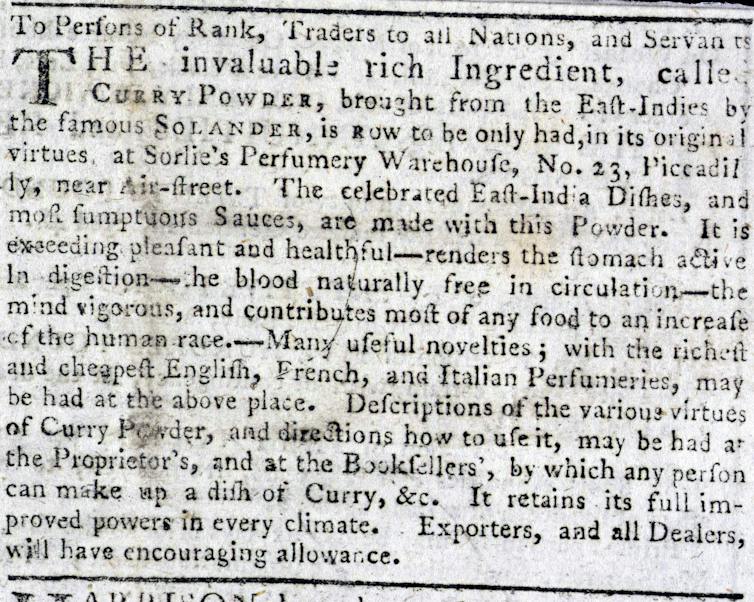
- 1784: The earliest known commercial advertisements for Indian curry powder appear in British newspapers, signaling the transition of curry from an exclusive elite luxury to a marketable pantry staple.
- 1794–1799: Household account books for King George III at Kew Palace record regular purchases of 32 distinct varieties of fruits and vegetables, illustrating an expansive royal appetite for both indigenous crops and recent botanical introductions.
- 1800: Specialist culinary warehouses, such as Skill’s Warehouse and Warehouse No. 42, flourish across London, supplying affluent households and royalty with exotic goods, including East Indian-style piccalilli and imported preserves.
- 1810: Deen Mahomet—an Indian immigrant, author, and pioneer of the "shampooing surgeon" (derived from the Hindi chāmpnā, meaning to knead or massage)—opens the Hindostanee Coffee House in London, offering authentic Indian dishes to the British public.
- 1812: The Hindostanee Coffee House closes its doors, undone by fierce competition from pre-existing local establishments that had successfully adapted Indian spices for the British palate.
- 1815: The Four Nations eating house opens in Soho, London, deliberately catering to the city’s multicultural appetite by serving a menu comprising German, Italian, French, and English dishes side by side.
Supporting Context & Metrics: Inside the Royal Larder and Beyond
The misconception that British historical diets were monotonous stems from a profound amnesia regarding the reach of the Georgian economy. Far from eating a static loop of beef and bread, Britons across the social spectrum—and particularly within the royal households—had access to a startling array of global provisions.
1. A Cornucopia of Produce
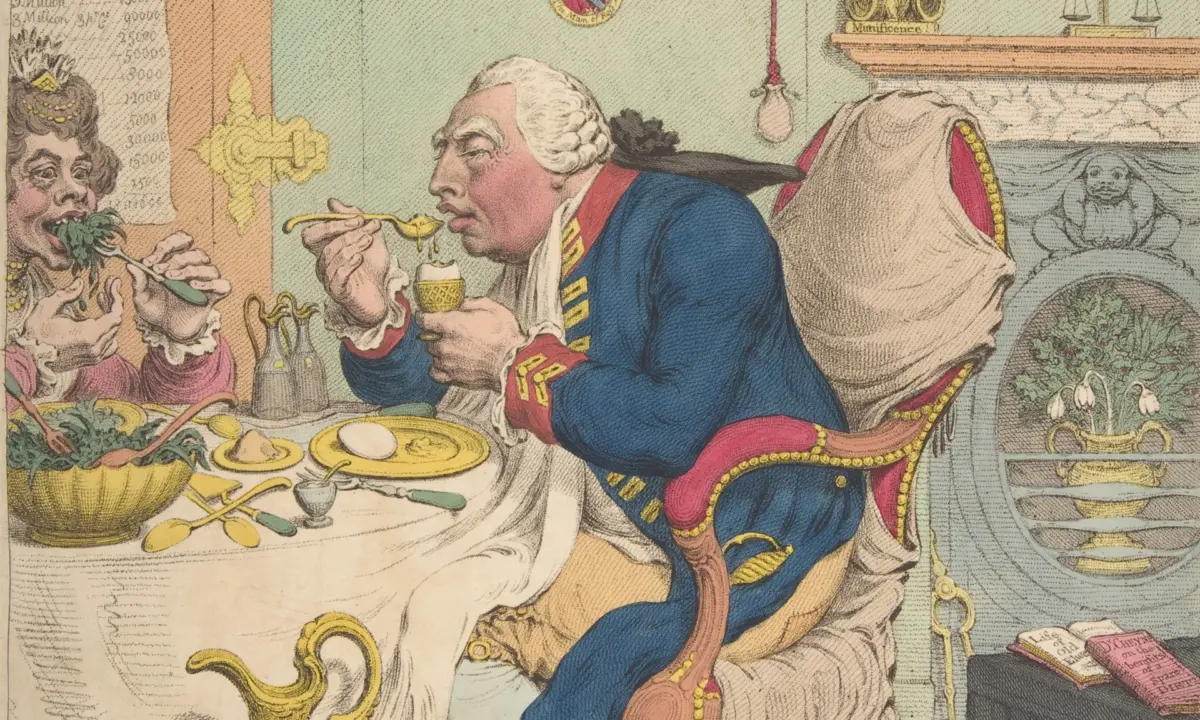
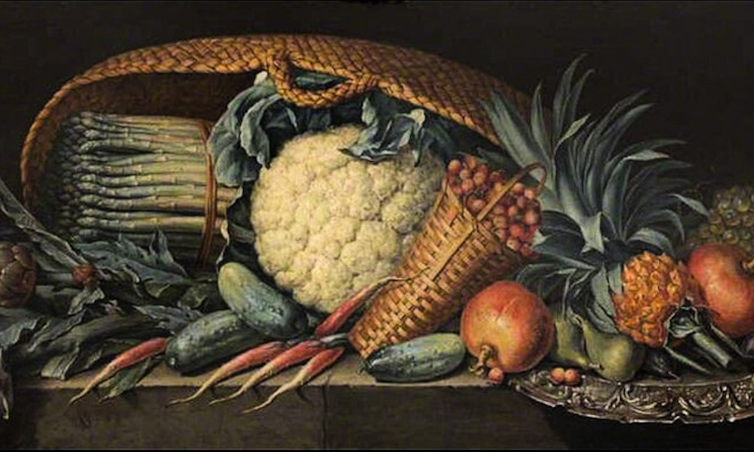
While the cultural myth of British dining reduces meals to a slab of roast beef, archival records tell a different story. Monthly provisioning books from King George III’s household at Kew (covering 1794 to 1799) document regular purchases of 32 separate types of fruits and vegetables.
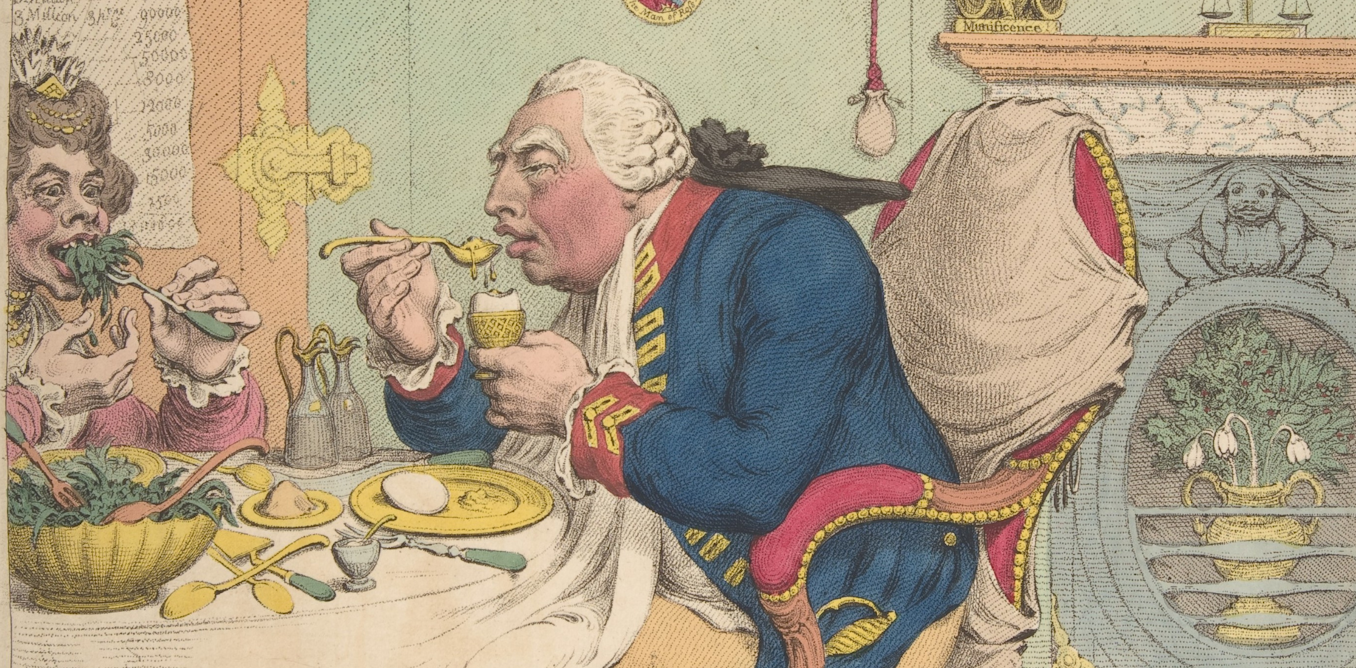
This inventory represented a fascinating botanical timeline of global trade. Alongside long-established native crops like cabbage, artichokes, and coastal samphire, the royal table routinely featured relative newcomers: broccoli imported from Italian agricultural traditions, potatoes transplanted from the Americas, and cucumbers originating in Asia. The King and Queen Charlotte, whose native Mecklenburg-Strelitz upbringing favored fish and vegetable-heavy dishes, maintained a diet that was both health-conscious by the standards of the day and internationally diverse.
2. The European Nexus and the French Paradox
Eighteenth-century Britain was a refuge for continental migrants fleeing religious persecution and, later, the political convulsions of the French Revolution. This steady influx of refugees enriched London’s culinary geography.
During the Napoleonic Wars (1803–1815), populist rhetoric sometimes framed French cuisine as unpatriotic or effeminate. Yet, high society remained infatuated with French culinary arts. London shopfronts brimmed with imported continental luxuries, ranging from smoked sausages and reindeer meat to Parmesan cheese and Spanish olives. This tension culminated in establishments like Soho’s Four Nations eating house, which openly celebrated a pan-European culinary synthesis.
3. The Early Rise of Curry and Indian Condiments
Perhaps the most surprising revelation of Georgian food history is how early—and how deeply—Indian flavors permeated British cooking. The establishment of the East India Company brought hundreds of returning employees back to British shores, bringing with them a taste for the subcontinent’s spices.
Commercial curry powder was being advertised in the public prints as early as 1784. Cookbooks from the period, such as those by writer Eliza Smith, featured intricate instructions for "mangoing" cucumbers—a preservation technique where local cucumbers or gourds were hollowed out and stuffed with turmeric, ginger, cloves, mace, and mustard seed before being pickled in vinegar. The Prince Regent himself was documented eating pullet (young chicken) paired with Indian pickle.
Specialist warehouses capitalized on this craze. Establishments like Skill’s Warehouse catered directly to royal patrons by supplying exotic goods, while public dining venues integrated South Asian spices into the daily urban diet.
4. Roast Beef vs. Imperial Turtle
The status of roast beef as the quintessential British meal was forged in the crucible of 18th-century geopolitical rivalry with France. Iconic caricatures, such as James Gillray’s 1792 print French Liberty, English Slavery, weaponized food to make political points. Gillray portrayed a rotund, cheerful Englishman named John Bull devouring a massive platter of steaming beef, contrasted against a starved French counterpart subsisting on snails and raw onions. Beef was mobilized as a visual shorthand for national prosperity, physical vigor, and constitutional liberty.
Yet, even as roast beef held symbolic court—served daily to both royalty and their domestic servants—it faced a formidable rival that symbolized Britain’s rising oceanic empire: sea turtle. Imported live from the Caribbean on grueling maritime voyages to ensure freshness, giant turtles were astronomically expensive status symbols.
Turtle soup became an elite obsession. It was the second most frequently served soup at the Prince Regent’s London residence, Carlton House, during the summer months. It anchored the menu at the annual Lord Mayor’s banquet for over six decades and dominated elite dining clubs. For those priced out of genuine turtle, "mock turtle soup"—ingeniously concocted from a calf’s head and rich stock—became a wildly popular working- and middle-class substitute.
5. The Mastery of Umami
While French culinary technique relied heavily on unctuous, emulsion-based cream sauces, the traditional British palate favored sharp, pungent, and savory contrasts. Roast beef was already naturally rich in umami, but Georgian cooks amplified these deep, savory notes using anchovy and wine reductions, heavily spiced pickles, Asian-inspired fish and soy sauces, and meat-intensive gravies.
Data from royal household accounts at Kew and Carlton House reveal a distinct preference: gravies were served over 1,000 times during the studied periods, dwarfing the frequency of delicate French sauces. Paired with commercial "store sauces," catsups, and pickles that flooded the market by 1760, the British kitchen was an early adopter of flavor-enhancing chemistry.
Official Statements & Academic Insights
Historians and cultural analysts pointing toward The King’s Dinner argue that rewriting the narrative of British food is essential to understanding the broader history of globalization.
"The stereotype of British food as perpetually bland, gray, and unimaginative is a historical fallacy," notes Dr. Adam Crymble, co-author of the study. "When we look inside the kitchens of George III, we do not find an insular island rejecting foreign influence. Instead, we uncover an empire actively metabolizing the world—absorbing ingredients, cooking methods, and spices from every corner of the globe and weaving them into the fabric of national identity long before the modern era of multiculturalism."
Co-author Dr. Sarah Fox emphasizes the socio-economic dimension of these historical findings: "Food history is people’s history. The Georgian diet shows us that ordinary people, as well as monarchs, were constantly negotiating global trade networks. From imported Parmesan and East Indian pickles to Caribbean turtle and Italian broccoli, the British plate has always been a meeting place of cultures."
Future Outlook: Reclaiming Britain’s Culinary Heritage
As contemporary food historians, chefs, and researchers continue to unearth archival data from the 18th and 19th centuries, the cultural conversation surrounding British cuisine is undergoing a quiet revolution.
Moving forward, culinary historians predict a broader public reassessment of historical recipes. Far from being a modern invention driven solely by late-20th-century immigration, Britain’s love affair with spice, fusion cooking, and cross-cultural experimentation is now recognized as a centuries-old tradition. By looking back to the tables of Kew Palace and the bustling commercial warehouses of Georgian London, modern chefs and food writers have a rich, complex historical foundation upon which to build the future of British gastronomy—one that proudly reclaims its multicultural, flavorful roots and permanently retires the myth of wartime austerity as the defining chapter of the national menu.