Executive Overview
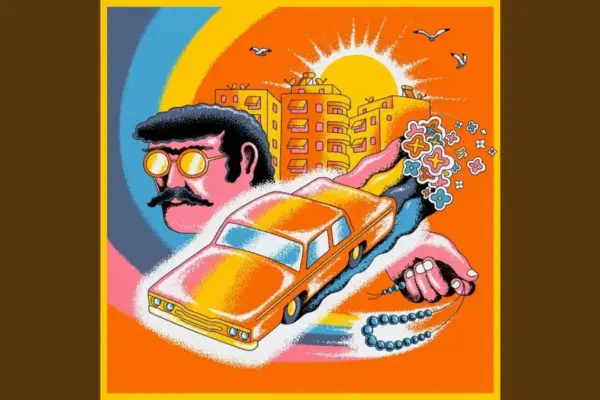
Renowned Palestinian-Jordanian singer-songwriter, rapper, and percussionist El Far3i has returned with a deeply reflective and sonically expansive new single, "Rayha" (released globally on October 16 via Arab Drumz). Written through the transformative lens of fatherhood, the track signals a decisive departure from the artist’s historically melancholic motifs, offering instead a message of generational endurance, hope, and steadfast defiance.
Best known as a foundational pillar of the independent Arabic alternative scene—both through his solo acoustic work and as a co-founder of pioneering acts like El Morabba3 and 47Soul—El Far3i utilizes "Rayha" to bridge the personal and the political. The song’s title, which translates from Arabic as "passing," serves as a philosophical anchor for the track. It contemplates the transient nature of hardship, the inevitability of justice, and the profound responsibility of raising a child amid a volatile socio-political landscape.
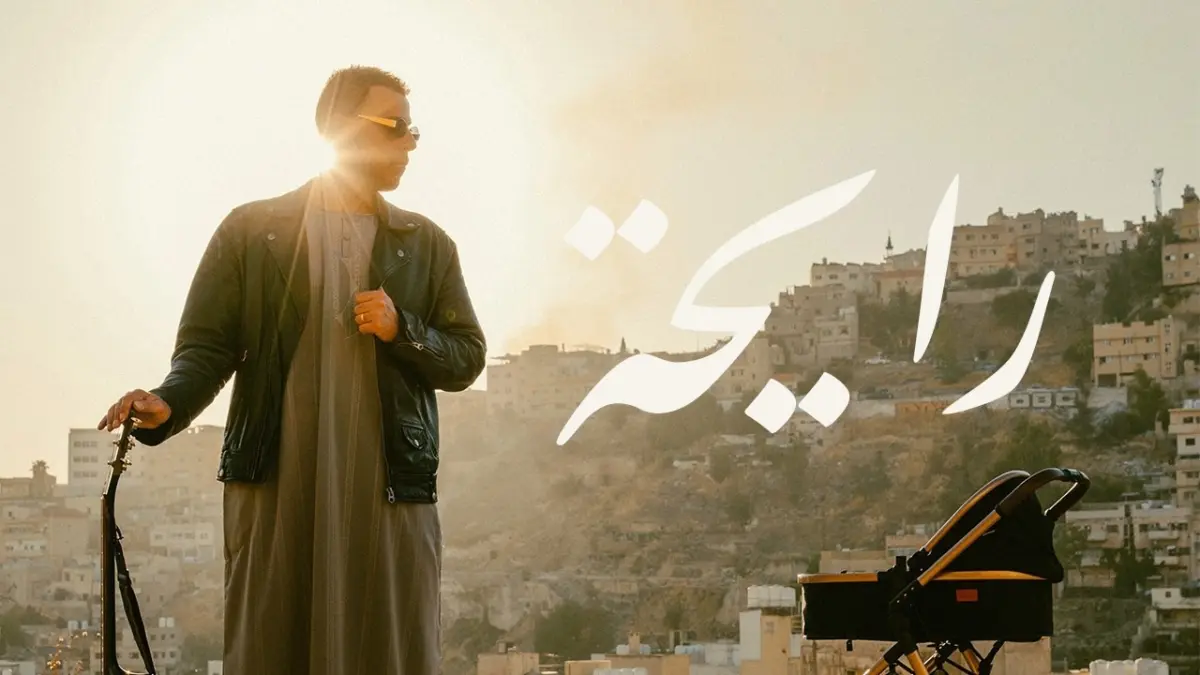
Co-produced and mixed alongside Dave Scott and mastered by Mazen Murad, "Rayha" pairs the artist’s signature dissonant acoustic guitar stylings with soaring vocal arrangements that reach new emotional and technical heights. Accompanied by a cinematic dawn-to-daylight visual narrative filmed in Amman by Ahmad Jalboush, the release marks a critical milestone in El Far3i’s decade-spanning career, proving that his artistic evolution is as much a matter of personal growth as it is a masterclass in contemporary Middle Eastern independent music production.
Detailed Chronology: The Making and Release of "Rayha"
The genesis of "Rayha" can be traced back to a profound shift in El Far3i’s domestic life. Entering fatherhood fundamentally recalibrated his artistic compass. For years, the Amman-based artist’s acoustic output was defined by a haunting, introspective melancholy—what he now describes as "songs of sorrow." However, the arrival of a child at home demanded a lyrical and thematic re-evaluation.
Development on the track began behind closed doors in Amman, where El Far3i sketched out the core chord progressions on his acoustic guitar. Unlike his work as Far3 El Madakhil—his moniker for high-energy Arabic rap—his solo acoustic projects have always relied on raw, organic instrumentation. For "Rayha," however, he intentionally pushed his vocal delivery further, letting his voice climb higher over complex, dissonant guitar chords that create an atmosphere of both tension and release.
Production duties were handled collaboratively. El Far3i teamed up with co-producer and mix engineer Dave Scott to refine the track’s sonic architecture, ensuring that the acoustic intimacy of the performance was preserved while achieving a polished, modern mix. The mastering process was entrusted to Mazen Murad, whose technical expertise brought out the subtle dynamics of El Far3i’s vocals and the intricate phrasing of the guitar work.
On October 16, Arab Drumz—the artist’s management and publishing agency—officially released "Rayha" across all major streaming platforms, accompanied by a music video directed by Ahmad Jalboush. Shot entirely in Amman, the visual companion captures the city during the liminal space between dawn and full daylight, mirroring the song’s thematic transition from the shadows of night into the clarity of a bright, sunlit morning.
Supporting Context & Metrics: El Far3i’s Artistic Legacy
To fully appreciate the weight of "Rayha," one must examine the expansive and multifaceted career of its creator. Born in Amman to a displaced Palestinian family, El Far3i (whose real name is Tariq Abu Kwaik) has spent well over a decade shaping the sonic identity of the modern Arab underground.
His artistic output since 2012 has purposefully diverged into two distinct streams:
- Acoustic Solos: Intimate, guitar-driven records released under his own name that lean heavily into folk, poetry, and singer-songwriter traditions.
- Arabic Hip-Hop: High-tempo, socially conscious rap released under the alias Far3 El Madakhil, which addresses urban realities, political corruption, and societal pressures.
Beyond his solo endeavors, El Far3i’s fingerprints are all over the contemporary Middle Eastern indie renaissance. He is a co-founder of El Morabba3, an influential indie-rock band renowned for blending electronic textures with melancholic Arabic lyricism. Simultaneously, his work with 47Soul helped popularize Shamstep—a fusion of traditional Levantine dabke beats, electronic music, and hip-hop that captured the imaginations of audiences globally.
Metrics of Influence
While independent Arabic music has historically struggled with mainstream infrastructure, artists like El Far3i have built sustainable, highly dedicated global audiences through grassroots touring, digital streaming platforms, and independent curation. "Rayha" fits neatly into this ecosystem, instantly tracking high engagement rates across Spotify and YouTube upon its October release. The track’s co-production credits—featuring heavyweights like Dave Scott and Mazen Murad—also underscore the increasingly professionalized infrastructure supporting the independent Arab music market, where regional artists command global production standards without sacrificing their localized cultural identities.
Thematic Analysis: Lyrical Depth and Visual Narrative
The Metaphor of the Passing Cloud
Lyrically, "Rayha" operates on multiple levels, blending the domestic tenderness of a father speaking to his child with broader sociopolitical allegories. The chorus introduces the central metaphor: a cloud drifting across the sky, temporarily obscuring the sun and carrying away lingering worries and lost dreams.
Rather than fleeing the storm, the narrative accepts it. The cloud drops a necessary, life-giving rain before moving on, ensuring that the soil is nourished and the flowers can bloom once more. This cyclical view of nature reflects a mature philosophical outlook. El Far3i reassures his child that while hardship is inevitable, it is inherently transient—a passing phase in a larger landscape.
Defiance and Generational Hope
Yet, to categorize "Rayha" as purely gentle would be to overlook its sharp, unyielding edge. In the latter half of the song, the tone hardens as the artist addresses systemic oppression directly. He delivers a firm message to
"all those who keep us down"
declaring with absolute conviction:
"we won’t carry the weight."
This line serves as a psychological rejection of inherited trauma and systemic burden. El Far3i posits that contemporary generations refuse to be crushed by the historic and institutional weights placed upon them. Every injustice, regardless of its scale, is destined to collapse under the weight of its own inequity. Drawing on a recurring motif of flight and freedom, he reminds listeners that humanity consists of mere wanderers passing through history, destined ultimately to rise above adversity like eagles.
The Visuals of Amman at Dawn
The accompanying music video, directed by Ahmad Jalboush, amplifies these lyrical themes through a carefully crafted visual journey. Shot entirely in Amman at dawn, the video charts the physical transformation of the cityscape.
Beginning in the cool, muted tones of early morning shadows, the camera pans across familiar urban landscapes just as the first rays of sunlight break over the horizon. This transition from darkness to daylight serves as a cinematic translation of the song’s central thesis: that after the long, cold night of sorrow and struggle, morning inevitably arrives, bringing with it warmth, clarity, and renewal.
Future Outlook: A New Chapter for Middle Eastern Indie Music
The release of "Rayha" points toward an exciting and dynamic future for El Far3i as he continues to balance his dual identities as an acoustic troubadour and an urban rap innovator. By channeling the profound personal transformation of fatherhood into his songwriting, he has unlocked a new emotional register that resonates deeply with an audience navigating its own complex realities.
As independent Arabic music continues to break international boundaries, artists like El Far3i prove that local narratives—rooted in specific geographies like Amman, Palestine, and the broader Levant—possess universal emotional resonance. "Rayha" is not merely a single release; it is a conceptual turning point. It demonstrates that maturity in songwriting does not require a dilution of political conviction, but rather a deepening of it, pairing righteous defiance with the tender, nurturing promise of a better tomorrow.
Fans and critics alike now eagerly anticipate whether "Rayha" serves as the precursor to a full-length acoustic album under El Far3i’s own name. Regardless of what follows next in his discography, one thing remains certain: El Far3i has successfully permanently altered his musical trajectory, trading the shadows of his earlier sorrow for the enduring, restorative light of a new dawn.