Executive Overview
Music often acts as a compass, pointing toward the cultural coordinates, histories, and geographies that shaped its creators. For Diyet van Lieshout—the foundational creative force behind the acclaimed alt-country, folk, and roots outfit Diyet & The Love Soldiers—that compass unfailingly points back to the shores of Kluane Lake. Nestled just two hours from the Alaska border in the Yukon territory, Kluane is a landscape defined by towering mountain rings, the unyielding glare of the midnight sun in summer, and months of profound, star-studded winter darkness. It is the ancestral homelands of the Kluane First Nation, where Diyet’s family has maintained an unbroken connection for over ten thousand years.
As the band prepares for a high-profile international showcase at WOMEX 2025 in Las Palmas de Gran Canaria, their trajectory offers a profound study in cultural preservation, contemporary songwriting, and the intersections of Indigenous and non-Indigenous worlds. Their music—a seamless hybrid of English lyrics and the endangered Southern Tutchone language—operates as a bridge across vast physical and conceptual distances.
Ahead of their performance on the Borondón Stage at Sala San Borondón, Diyet sat down for an exclusive interview as part of the Musical Road to WOMEX series. The conversation traversed the deep-rooted origins of her creative voice, the realities of walking in two distinct worlds, the unexpected historical parallels discovered between her Yukon community and the indigenous Guanches of the Canary Islands, and an ambitious future outlook that includes plans for orchestral arrangements. This feature-length article explores the geography, heritage, and artistic philosophy driving one of Canada’s most distinctive musical voices.
Detailed Chronology: From a Yukon Tent to the Global Stage
The story of Diyet van Lieshout begins not in a professional recording studio or a conservatory, but quite literally inside a tent on the rugged, unforgiving ancestral lands of the Kluane First Nation. Born into a micro-community of approximately ninety people, Diyet’s early life was deeply embedded in a subsistence lifestyle governed by the land, the ice, and the seasonal migrations of wildlife.
Despite growing up in an environment where music was a communal, everyday act rather than a staged spectacle, Diyet was a self-described shy child. Her discovery of her own vocal talent occurred entirely by accident at the age of ten. This accidental discovery set off a remarkable educational and professional odyssey that took her far from the familiar glacial waters of the Yukon.
The Circuitous Path Home
- Academic and Professional Foundations: Diyet pursued formal training, earning a degree in voice performance. This academic grounding opened doors to commercial songwriting for a publishing house in Vancouver, followed by a stint teaching voice in the Netherlands.
- The Pull of the North: Despite the professional opportunities available in urban centers and abroad, the cultural and geographical pull of the Yukon proved insurmountable. Diyet returned home alongside her Dutch husband, Robert van Lieshout.
- Roots in the Village: Returning to a remote village devoid of traditional performance venues, Diyet faced an artistic blank slate. It was in this isolated setting that she finally began writing music genuinely for herself, drawing directly from the emotional and physical landscape of her youth.
Formation of The Love Soldiers
The transition from solo reflection to a collaborative ensemble materialized shortly after her return to the North. Diyet & The Love Soldiers coalesced around a core trio combining diverse musical backgrounds and exceptional technical prowess:
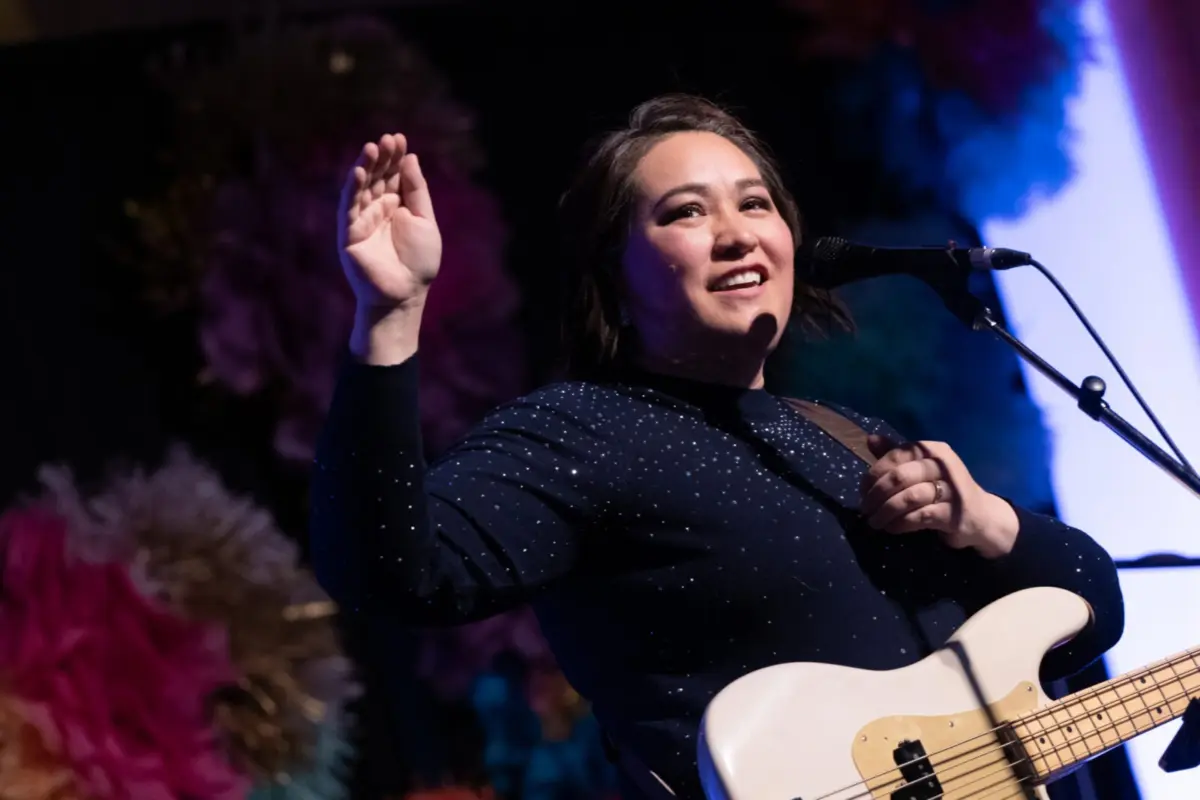
- Diyet van Lieshout: Lead vocals, bass, and primary songwriting, grounding the project in Southern Tutchone storytelling.
- Robert van Lieshout: Acoustic guitar, drums, and percussion, bringing rhythmic foundation and European roots sensibilities.
- Bob Hamilton: Juno-winning producer and multi-instrumentalist handling electric guitar, pedal steel, and mandolin, injecting atmospheric depth and alt-country sheen.
Together, the trio forged a signature sound that defies neat categorization, effortlessly threading traditional Indigenous vocal styling through contemporary alt-country, folk, and roots arrangements.
Supporting Context & Metrics: Heritage, Language, and Seeds of Dreaming
To fully appreciate the music of Diyet & The Love Soldiers, one must examine the complex tapestry of Diyet’s multicultural heritage and the political-cultural landscape of Indigenous language preservation in Canada.
A Tapestry of Identities
Diyet’s lineage is a living testament to cross-cultural histories, running through Southern Tutchone, Tlingit, Japanese, and Scottish roots. This diverse heritage informs her perspective of "living in two worlds at once." As she frequently notes, her daily reality can shift dramatically from ice-fishing for winter sustenance one day to standing under the stage lights of an international music festival the next.
The Anatomy of Seeds of Dreaming
Released following a grueling five-year touring cycle spanning from Alaska to the cultural centers of Europe, the band’s critically lauded album Seeds of Dreaming serves as an aural cartography of home. Every track on the record functions as a directional marker pointing back to Kluane Lake:
- "8th Wonder": Written as a poignant tribute to her mother, a survivor of Canada’s deeply traumatic residential school system. The song addresses historical trauma not with despair, but through the lens of survival, generational resilience, and healing.
- "Grandfather’s Country": Built explicitly around the Southern Tutchone phrase Äsì Keyi (meaning "my grandfather’s country"), the track honors the specific geography and ancestral stewardship of the land where Diyet spent her formative years.
| Album Metric / Detail | Description |
|---|---|
| Release Window | Spanning compositions developed across 5 years of international touring |
| Primary Themes | Family identity, historical trauma, residential school survival, generational healing, and territorial belonging |
| Linguistic Integration | Seamless weaving of English narrative structures with endangered Southern Tutchone vocabulary |
| Sonic Palette | Alt-country, acoustic folk, traditional Indigenous vocal chants, and atmospheric roots instrumentation |
Official Statements & Insights: Q&A with Diyet
In the lead-up to their showcase at WOMEX Las Palmas, Diyet offered profound insights into her creative process, the fragility of endangered languages, and the philosophy of bringing a piece of the Yukon to the Atlantic.
On the World Her Music Inhabits
When asked how she describes her musical home to a first-time listener, Diyet emphasizes that genre boundaries are secondary to geographic and emotional truth:
"My music lives in the North. It comes from the mountains, the water, the long winters, the midnight sun, and from growing up in a place where the land is always present in your life… I think of the music as a meeting place between worlds—Southern Tutchone and English, traditional and contemporary, Indigenous and non-Indigenous. There’s a lot of the North in it, but you don’t have to be from the North to understand the stories."
On Language Preservation and the Guanche Connection
During her pre-festival interview, Diyet was introduced to the history of the Guanches—the Indigenous inhabitants of the Canary Islands whose culture and language were largely suppressed following the Spanish conquest. As an artist actively working to keep Southern Tutchone alive, the parallel struck a resonant chord:
"Coming from a small Indigenous Nation and being involved in the work of keeping Southern Tutchone alive, I understand how fragile language can become when it stops being passed naturally from one generation to another. Language carries so much more than words. It carries humour, worldview, relationships to land and ways of understanding who you are… There’s something meaningful about bringing Southern Tutchone songs from my home in the Yukon all the way to an island on the other side of the world that has its own complicated history of language and culture."
On Performing for Industry Delegates at WOMEX
Performing before a room full of music industry professionals, delegates, and international festival bookers requires a distinct approach. Diyet views the 45-minute showcase window not as a standard industry pitch, but as an exercise in immersive storytelling:
"For our 45 minutes, I want that room in Las Palmas to feel a little bit like my home in Kluane… I approach it the same way we approach any performance: bring people into the story, give them some context about where we come from, and then let the music take the listener where they want to go. You don’t need to know anything about the Yukon. You don’t need to understand Southern Tutchone. Just come ready to listen."
Future Outlook: Orchestral Horizons and Beyond
As Seeds of Dreaming passes its one-year milestone and the band establishes a firm foothold across international markets, Diyet & The Love Soldiers are standing at the threshold of a significant artistic evolution.
Beyond the Trio: Expanding the Sonic Canvas
While the tight-knit intimacy shared by Diyet, Robert van Lieshout, and Bob Hamilton has defined the band’s signature sound for years, Diyet is actively conceptualizing the next iteration of her creative output. This includes finding innovative ways to place the Southern Tutchone language front and center within larger, more complex musical arrangements.
Exploring Orchestral Collaborations
Chief among these future-facing ambitions is the exploration of orchestral music. Diyet and her collaborators have begun preliminary work investigating how compositions born from the solitary stillness of Kluane Lake translate when scaled up for symphonic performance.
- A New World of Sound: Integrating traditional Indigenous storytelling and endangered language elements with the dynamic power of an orchestra represents a groundbreaking direction for the trio.
- Preserving Intimacy at Scale: The core challenge—and triumph—of this upcoming chapter lies in maintaining the raw, confessional intimacy of a northern campfire song even as it resonates through a concert hall backed by string and brass sections.
The Message to the World
Ultimately, Diyet’s artistic mission remains anchored in visibility, resilience, and uncompromised cultural expression. As she prepares to take the Borondón Stage at Sala San Borondón, her message to the global community is clear and unwavering:
"The important message is that Indigenous people are still here, our cultures are alive, and we are creating new things. Healing isn’t about pretending difficult things didn’t happen. It’s about carrying that history while still moving forward. When I sing in Southern Tutchone on an international stage, that in itself means something to me. The language is being heard. It is travelling. It is being used to create something new."
Performance Details:
Catch Diyet & The Love Soldiers live on the Borondón Stage at Sala San Borondón during WOMEX 2025. The journey north begins in the waning hours of Friday, October 23, from 00:00 to 00:45.