Executive Overview
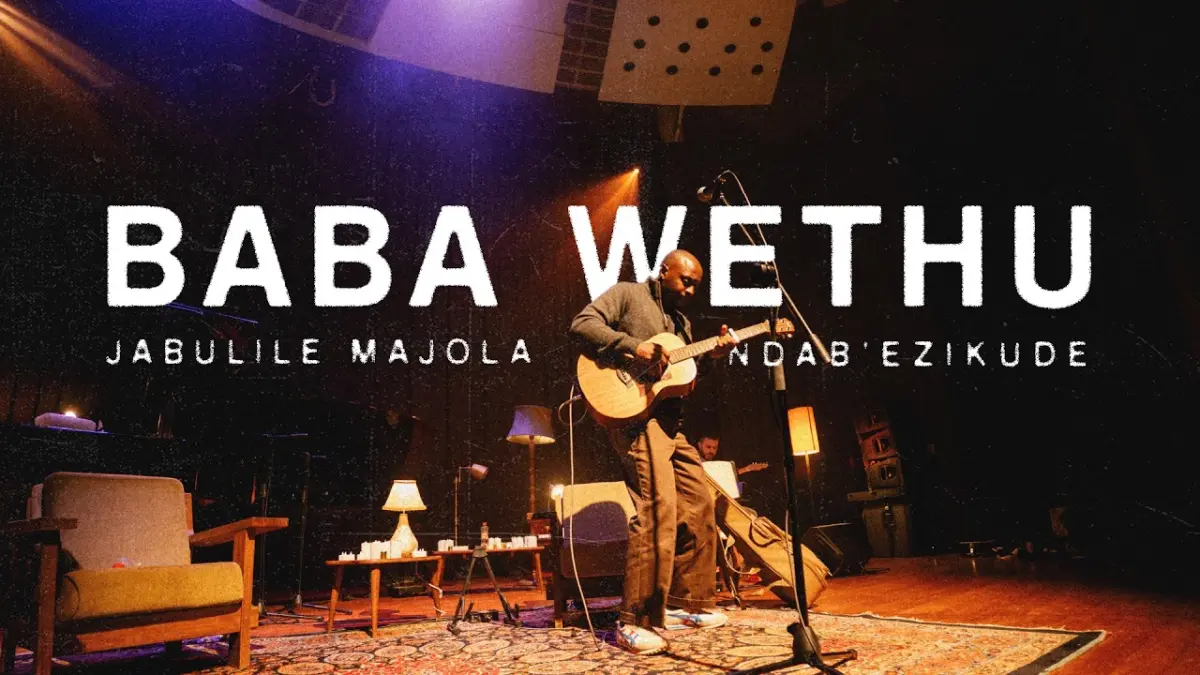
In the contemporary landscape of South African music, few artists possess the raw, unfiltered emotional gravity of Jabulile Majola. With the release of his live performance video for “Baba Wethu” recorded at Cape Town’s prestigious Baxter Theatre, Majola has once again proven himself to be a master chronicler of generational trauma, spiritual longing, and profound resilience. Serving as the lead single and gateway track to his highly anticipated upcoming debut studio album, IPASI, “Baba Wethu” is more than a composition; it is an act of sonic resurrection.
The track, co-written with his oldest brother Levit Phungula, builds upon the foundational success of Majola’s 2025 breakthrough EP, Isitifiketi. In this latest offering, Majola transforms profound personal abandonment into universal art. Using the poignant metaphor of a weary, rain-drenched dove navigating treacherous terrain, the artist explores the deep chasms left by familial absence. Yet, the song ultimately evolves from a cry of despair into a transformative prayer for deliverance, anchored by a haunting marching chant and elevated by a sparse, evocative arrangement featuring Ross Dorkin of the acclaimed Afropop trio Beatenberg on bass.
This piece delves deep into the anatomy of “Baba Wethu,” exploring the biographical roots of its creation, the intricate cultural and linguistic nuances of its isiZulu lyricism, the collaborative chemistry of its live realization at the Baxter Theatre, and what this monumental release signifies for the future trajectory of Majola’s burgeoning career.
Detailed Chronology: From the Hills of KwaZulu-Natal to the Stage of the Baxter Theatre
To truly understand the weight of “Baba Wethu,” one must retrace the harrowing yet triumphant journey of Jabulile Majola’s life—a chronology defined by loss, communal salvation, and artistic awakening.
Early Beginnings and the Rural Roots of Greytown
The genesis of Majola’s artistic voice lies in the quiet, demanding landscapes of Greytown, KwaZulu-Natal. Born into circumstances marked by sudden and devastating disruption, Majola experienced the fracturing of family before he could even comprehend the concept. His mother vanished from his life when he was merely days old. By the tender age of two, when most children are shielded by the immediate warmth of nuclear family life, Majola’s world was upended entirely.
He was taken in by a pastor’s family, finding himself thrust into a sprawling domestic ecosystem of 26 children. In this rural sanctuary, survival depended on shared resources, collective discipline, and an enduring spiritual framework. The only tangible anchor he retained from his biological mother was the name she bestowed upon him before disappearing—a surname and identity that would become his shield and his signature.
This early exposure to institutional benevolence intertwined with pastoral devotion left an indelible mark on his psyche. The hymns sung in rural churches, the rhythmic cadence of communal prayer, and the melancholic beauty of traditional isiZulu storytelling became the vernacular of his survival.
The Artistic Awakening and the Isitifiketi EP (2025)
For years, Majola’s musical expressions remained internal, a private dialogue with a distant past. However, the urge to externalize these experiences grew too powerful to suppress. The pivotal turning point arrived with the rollout of his 2025 EP, Isitifiketi.
Isitifiketi served as a critical crucible for Majola. It introduced audiences to a vocal stylist capable of bending notes with the emotional precision of traditional maskandi guitarists while maintaining the sophisticated phrasing of contemporary soul. The EP earned critical acclaim for its unflinching honesty, laying bare the bureaucratic and emotional certificates of birth, abandonment, and belonging that dictate South African lives. It proved that Majola was not merely a balladeer, but an archivist of the human condition.
The Collaboration with Levit Phungula
As Majola prepared to step into the larger arena of a full-length debut album, IPASI, he sought to anchor the project in the very roots of his familial bloodline. He partnered with his oldest brother, Levit Phungula, to co-write what would become the album’s opening manifesto: “Baba Wethu.”
The creative sessions between the brothers were less about commercial songwriting and more about excavating shared history. Phungula provided a stabilizing older brotherly presence, helping Majola channel decades of unresolved grief into structured, melodic poetry. Together, they forged a lyrical framework that honors the pain of the past while offering a pathway toward spiritual reconciliation.
The Baxter Theatre Live Session
The culmination of this artistic journey found its physical manifestation on the stage of the Baxter Theatre in Rondebosch, Cape Town. Known for hosting some of South Africa’s most culturally significant theatrical and musical productions, the Baxter provided an acoustically intimate and emotionally resonant backdrop for Majola’s vision.
Stripped of studio artifice, the live performance captured the raw synergy between Majola’s voice and the masterful instrumentation of Ross Dorkin. Dorkin, renowned for his work with Beatenberg—a band celebrated for blending intricate African guitar idioms with sophisticated pop sensibilities—brought a grounded, pulsing harmonic foundation to the double-bass. The resulting live take is a masterclass in tension and release, preserved on film to showcase Majola’s formidable stage presence and vocal prowess.
Supporting Context & Metrics: The Metaphorical and Musical Architecture of “Baba Wethu”
To fully appreciate the cultural resonance of “Baba Wethu,” one must analyze the linguistic genius of its lyrics and the structural composition of the track.
The Metaphor of the Worn Dove (Ngijuba elifuna indawo yokuphumula)
Majola introduces the song not through human trauma, but through avian vulnerability:
“Ngijuba elifuna indawo yokuphumula” (I am a dove looking for a place to rest)
In global mythology and Abrahamic and indigenous traditions alike, the dove represents peace, the Holy Spirit, and a seeker searching for dry land after a catastrophic deluge. But Majola’s dove is not a triumphant symbol of divine favor; it is a battered creature worn down by an endless journey. It crosses hills and gullies through steady, unyielding rain, its wings heavy with moisture and exhaustion.
When the bird’s physical strength finally collapses under the weight of its migration, it does not fall silently. It lifts its voice to the heavens. This imagery mirrors Majola’s own life: a young boy navigating the psychological topography of abandonment, braving emotional storms without a map, and ultimately crying out for a higher source of shelter.
The Chanted Interrogation: “Ulaphi sekonakala”
As the song progresses, Majola introduces a relentless marching chant:
“Ulaphi sekonakala” (Where are you when things fall apart?)
This refrain acts as the rhythmic and emotional core of “Baba Wethu.” The isiZulu title itself invokes the Father (Baba Wethu), creating a direct parallel to the Christian Lord’s Prayer, yet subverting it into an interrogation of divine and paternal absence. The child abandoned by his mother, raised among dozens of foster siblings by a pastor, demands answers from the ultimate patriarch. Why do families fracture? Where is the protective hand when the foundation crumbles?
The marching cadence of the chant gives the song a militaristic yet mournful momentum. It feels like an army of the broken marching through the rain, demanding accountability from the universe.
The Biographical Threshold: “Uthando lwangishiya ngisase mncane”
The emotional climax of the song’s narrative arrives when Majola strips away the avian metaphor entirely and speaks his truth with devastating directness:
“Uthando lwangishiya ngisase mncane” (Love left me while I was still a child)
This line functions as an open wound in the composition. Coming to terms with the fact that maternal love was withdrawn before one even possessed the cognitive capacity to understand rejection is a profound psychological burden. By singing these words in his soaring, emotive tenor, Majola personalizes a grief shared by millions of children growing up in households shaped by migrant labor, social dislocation, and systemic instability in South Africa.
The Redemptive Turn: “Esangithunga ndawonye”
Crucially, “Baba Wethu” does not end in despair. In the final movements of the song, the narrative undergoes a profound spiritual and emotional transformation. Majola reaches outward, invoking:
“Esangithunga ndawonye” (The hand that stitched me together)
Here, the imagery shifts from fragmentation to mending. The divine or paternal figure is no longer just an absent authority to be interrogated, but a master tailor capable of reassembling a shattered soul. Majola transitions into a plea for safe passage:
“Ithemba eliyongiwelisa ngaphesheya” (The hope that will carry me over)
He who opened the song too exhausted to take another step now asks to be carried the rest of the way across the mist-shrouded valley. It is an act of total surrender—an acknowledgment that while human beings can break us, healing requires an act of grace beyond our own mortal capacities.
Official Statements and Artistic Perspectives
In recent interviews surrounding the rollout of IPASI and the release of the "Baba Wethu" live video, Jabulile Majola and his collaborators have shed light on the philosophy guiding their work.
Speaking on the emotional weight of bringing his childhood history into public spaces, Majola emphasized that storytelling is a form of communal healing rather than private therapy.
"When you sing about things that happened when you were days old, or when you were two years old, people think those wounds heal just because time passes," Majola explains. "They don’t. They grow with you. They change shape. Writing ‘Baba Wethu’ with my brother Levit was about giving those invisible wounds a shape, a sound, and a voice. If a dove can cross a mountain in the rain, maybe a boy from Greytown can find his way across the mist."
Reflecting on the stripped-back, live arrangement of the track at the Baxter Theatre, bassist Ross Dorkin noted the unique challenge and privilege of supporting Majola’s vocal delivery:
"Jabulile’s voice has a magnetic pull that demands absolute honesty from the instrumentation," Dorkin stated. "In Beatenberg, we are used to intricate pop arrangements, but working with Majola requires stripping everything back to its essential emotional resonance. On ‘Baba Wethu,’ my bass wasn’t there to show off technical skill; it was there to act as the heartbeat beneath his prayers. Standing on that stage at the Baxter, you could feel the entire room holding its breath."
Levit Phungula, co-writer and older brother, highlighted the ancestral and familial duty inherent in the project:
"We carry our history in our bones. Writing this song together was our way of honoring not just our struggles, but the immense grace of the family that took us in, and the resilience that kept us standing when everything felt lost."
Future Outlook: The Anticipation of IPASI
The release of the live video for “Baba Wethu” at the Baxter Theatre marks a critical turning point in Jabulile Majola’s artistic trajectory. As the opening portal to his upcoming debut album, IPASI, the track establishes an exceptionally high artistic benchmark.
Music industry analysts and cultural critics are already positioning IPASI as one of the most anticipated South African releases of the year. In an era dominated by hyper-commercialized amapiano and algorithmic pop production, Majola represents a vital counter-current—an artist reviving the tradition of deeply personal, socially conscious, and vocally transcendent African storytelling.
The forthcoming album promises to expand upon the sonic templates laid down in Isitifiketi and “Baba Wethu,” blending traditional isiZulu folk idioms with modern acoustic arrangements and spiritual jazz undertones. Furthermore, the live performance at the Baxter Theatre signals Majola’s readiness to command major theatrical and concert stages, positioning him not merely as a recording artist, but as a formidable live performer capable of holding audiences spellbound in silent, reverent awe.
As the rain-drenched dove of his lyrics finally finds its sanctuary across the mist, Jabulile Majola is poised to take flight on a much larger national and international stage. “Baba Wethu” is not just the beginning of an album; it is the definitive arrival of a major voice in contemporary African music—one that proves out of the deepest abandonment, the most breathtaking beauty can be stitched together.