Executive Overview
For nearly three decades, Istanbul’s legendary underground sonic architects, BaBa Zula, have operated as cultural cartographers, mapping the subterranean fault lines where traditional Anatolian folk music violently and beautifully collides with contemporary dub, electronica, and avant-garde psychedelia. Formed in 1996, the collective has continually challenged conventional notions of heritage and modernity, positioning sound not merely as entertainment, but as an active vehicle for socio-political commentary and historical preservation.
Now, the band returns with "Kutsal Zeytin Halayı" (Holy Olive Halay Dance), the arresting lead single and sonic mission statement from their upcoming full-length album, XXX. Set for release on September 25 via the adventurous independent label Glitterbeat, XXX promises to be a leaner, sharper beast than much of the band’s sprawling discography. Clocking in at a brisk, uncompromising thirty minutes and thirty seconds, the album represents the shortest and most compositionally focused record the band has ever engineered.
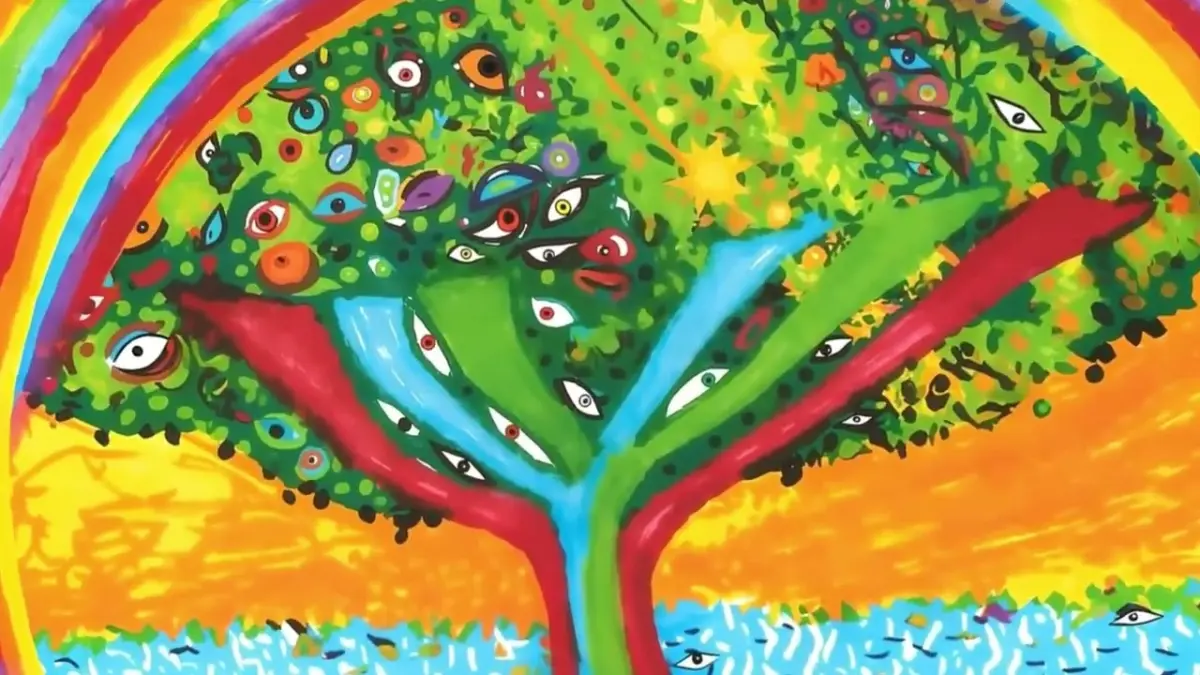
Yet, despite its tight runtime, "Kutsal Zeytin Halayı" carries the emotional and historical weight of epochs. Co-vocalists Murat Ertel and Esma Ertel weave their voices together across a hypnotic, engine-like motorik beat, tracing the cultural, spiritual, and ecological biography of a single botanical symbol through four millennia of human history. From the olive branch clutched in the beak of Noah’s dove to the sacred oils burning in the sepulchers of the Pharaohs, and from its hallowed footing on the Mount of Olives to its divine oath in the Quran’s Surah At-Tin (The Fig), the track spans ancient epochs.
However, BaBa Zula is fundamentally incapable of looking backward without locking eyes on the present. Beneath its rich mythological veneer, "Kutsal Zeytin Halayı" is a fiercely contemporary protest song. The band weaponizes the enduring, deeply rooted resilience of the olive tree against what they describe as "corporate techno-fascism"—a sweeping indictment of modern developmental aggression, ecological destruction, and unchecked industrial exploitation.
As core members Murat Ertel, Esma Ertel, Levent Akman, and Ümit Adakale reunite alongside a slate of exceptional guest contributors—including İklim Tamkan on synthesizer and organ, and Eylül Güntekin on double bass—BaBa Zula proves that after thirty years on the vanguard of Turkey’s psychedelic revival, their pulse remains as urgent, political, and electrifying as ever.
Detailed Chronology: The Evolution of BaBa Zula and the Genesis of XXX
To understand the weight and resonance of "Kutsal Zeytin Halayı," one must trace the winding historical trajectory of BaBa Zula itself, a journey that mirrors the evolution of modern Turkish independent music.
1996–2000s: The Birth of Istanbul’s Psych-Revivalists
Emerging from the vibrant, historically rich, and politically charged cultural underbelly of Istanbul in 1996, BaBa Zula—initially founded by Levent Akman, Murat Ertel, and original members—quickly established themselves as pioneers of a new musical dialect. While contemporaries looked strictly to Western indie rock or clung rigidly to traditional folk preservation, BaBa Zula recognized that the true spirit of Anatolian rock (Anadolu Rock) pioneered in the 1960s and 70s by icons like Barış Manço, Erkin Koray, and Cem Karaca was inherently revolutionary, syncretic, and boundary-pushing.
The band integrated traditional instruments such as the saz (long-necked lute) and various percussion setups with the heavy, cavernous echoes of Jamaican dub, analog synthesizers, and performance art. Their early work, including landmark scores like their contribution to Derviş Zaim’s acclaimed 1996 film Tabutta Puntat (Tabula Rasa), cemented their reputation as sonic chameleons who could seamlessly move between cinematic soundscapes and sweat-drenched, hypnotic live club performances.
2010s–Present: Expanding the Transnational Grid
Over the ensuing decades, BaBa Zula expanded their global footprint, touring extensively across Europe, the Americas, and Asia. They collaborated with a diverse array of international artists—ranging from dub legend Mad Professor to various European psych-rock collectives—all while weathering the shifting political and cultural landscapes of their home country.
Throughout their journey, the core rhythm section of Levent Akman, Ümit Adakale, and Esma Ertel has remained a bedrock of stability and explosive rhythmic invention. This tight-knit core has served as the anchor for Turkey’s wider psychedelic revival, mentoring younger generations of musicians and proving that traditional Anatolian modes could converse fluidly with global electronic and ambient idioms.
The Making of XXX
As the band approached the creation of their latest studio album, XXX, they made a deliberate choice to strip away any extraneous compositional fat. Eschewing the sprawling, multi-movement jams that occasionally defined their past releases, BaBa Zula focused on concision and immediate impact.
Due for release via Glitterbeat on September 25, XXX arrives at a razor-sharp thirty minutes and thirty seconds. This economy of form does not dilute the band’s message; rather, it concentrates it, turning every track into a high-pressure kinetic engine. "Kutsal Zeytin Halayı" was chosen as the lead single precisely because it encapsulates this dual mandate: brevity of form paired with an expansive, millennia-spanning ideological breadth.
Supporting Context & Metrics: The Symbolism and Politics of the Olive Tree
The Four-Thousand-Year Cultural Biography of the Olive
To fully grasp the narrative arc of "Kutsal Zeytin Halayı," one must examine the profound cultural and religious weight carried by the olive tree across the Mediterranean and Middle Eastern basins. In the lyrics and visualizer crafted by BaBa Zula, the olive tree functions as a silent witness to the rise and fall of human civilization.
- The Abrahamic and Deluge Traditions: In the Judeo-Christian and Islamic traditions, the olive branch carried back to Noah’s ark by a dove stands as the ultimate symbol of peace, reconciliation, and the renewal of life after the cataclysmic cleansing of the earth.
- Ancient Egypt and the Pharaonic Era: Archaeological records confirm that olive oil was integral to the spiritual and daily life of ancient Egypt, used not only for illumination in sacred lamps built for the Pharaohs but also in mummification processes, cosmetic preparations, and royal ceremonies.
- The Mount of Olives and Sacred Geography: Standing on the Mount of Olives in Jerusalem, the ancient groves have borne witness to centuries of theological devotion, geopolitical conflict, and spiritual contemplation, anchoring the landscape in a deep, unchanging temporal rhythm.
- The Quranic Injunction: In Surah At-Tin (The Fig), the Quran explicitly swears by the fig and the olive ("By the fig and the olive, and [by] Mount Sinai, and [by] this secure city…"), elevating the tree to a status of divine significance and moral instruction.
Murat and Esma Ertel: Vocal Interplay as Historical Dialogue
Within the song, the vocal delivery is split dynamically between Murat Ertel and Esma Ertel. Rather than singing in unison, they trade lines like historical interlocutors passing down a sacred oral history. This call-and-response structure mimics the traditional halay—a form of regional circle dance characterized by locked arms and synchronized footwork, symbolizing community unity and collective endurance.
As the verses unfold, building tension against a relentless, mechanical motorik beat (a rhythmic innovation born in 1970s German Krautrock, pioneered by bands like Neu!), the vocal exchange culminates in a unified, unyielding vow:
“I swear by that olive.”
The Geopolitical Critique: Countering "Corporate Techno-fascism"
While the historical references in "Kutsal Zeytin Halayı" look backward into the annals of mythology, its political core looks squarely at the existential crises of the 21st century. BaBa Zula has never shied away from socio-political commentary, and in this single, they explicitly frame the olive tree as a casualty—and a combatant—against modern ecological devastation.
The band characterizes the primary antagonist of our era as "corporate techno-fascism." This term encapsulates the relentless encroachment of multinational conglomerates, unchecked real estate development, strip-mining, and industrial energy projects that routinely bulldoze ancient olive groves, displace rural agrarian communities, and prioritize short-term corporate capital over planetary survival. By dedicating every verse of the song to standing on nature’s side, BaBa Zula transforms a traditional folk dance into an act of radical ecological resistance.
Official Statements & Production Credits
The realization of XXX and its lead single required a synthesis of veteran visionaries and fresh instrumental perspectives. The production reflects a careful balance between the band’s established Anatolian-dub roots and a forward-looking contemporary sheen.
The Lineup
- Murat Ertel: Co-founder, vocals, electric saz, and mastermind of the band’s psychedelic ethos.
- Esma Ertel: Co-vocalist and percussionist, anchoring the ritualistic energy of the group’s performances.
- Levent Akman: Percussionist, founder, and rhythmic architect who has helped drive Turkey’s psych revival for three decades.
- Ümit Adakale: Percussionist, providing the intricate, driving heartbeat that underpins the band’s dense rhythmic texture.
- İklim Tamkan: Guest musician contributing atmospheric synthesizers and church-like organ textures, bridging organic tradition with electronic abstraction.
- Eylül Güntekin: Guest musician on double bass, providing a heavy, woody low-end that grounds the track’s hypnotic motorik drive.
Release Details
- Lead Single: "Kutsal Zeytin Halayı" (Holy Olive Halay Dance) — Released with an official visualizer on YouTube.
- Parent Album: XXX
- Label: Glitterbeat Records
- Release Date: September 25
- Album Length: 30 minutes, 30 seconds (The shortest and most focused record in BaBa Zula’s discography)
Future Outlook: The Legacy of BaBa Zula in an Era of Ecological and Cultural Upheaval
As the music industry increasingly prioritizes algorithmic optimization, endless streaming bloat, and transient micro-trends, BaBa Zula’s decision to release a hyper-focused, thirty-minute record centered entirely around the political and spiritual ecology of the olive tree is a radical artistic statement.
XXX and its lead single, "Kutsal Zeytin Halayı," suggest that the band’s upcoming era will be defined by maximum impact and uncompromising ideological clarity. By connecting the ancient past of the Mediterranean basin directly to the boardrooms of modern corporate technocrats, BaBa Zula demonstrates that psych-rock—at its best—is not an escapist exercise in nostalgia, but an active, living oracle capable of diagnosing the illnesses of the present.
As audiences prepare for the full release of XXX on September 25 via Glitterbeat, "Kutsal Zeytin Halayı" serves as both a warning siren and an invitation. It invites listeners to lock arms in the metaphorical circle of the halay, to listen to the deep, silent wisdom of four-thousand-year-old roots, and to repeat the unbreakable vow alongside Murat and Esma Ertel:
“I swear by that olive.”
Quick Links & Resources
- Watch the Official Visualizer: Stream "Kutsal Zeytin Halayı" on YouTube
- Pre-Order XXX: Available now via BaBa Zula’s Bandcamp
- Digital Streaming & Platforms: Pre-save and stream via IDOL-IO
- Label Information: Explore releases via Glitterbeat Records
- Official Band Hub: BaBa Zula Official Website