Executive Overview
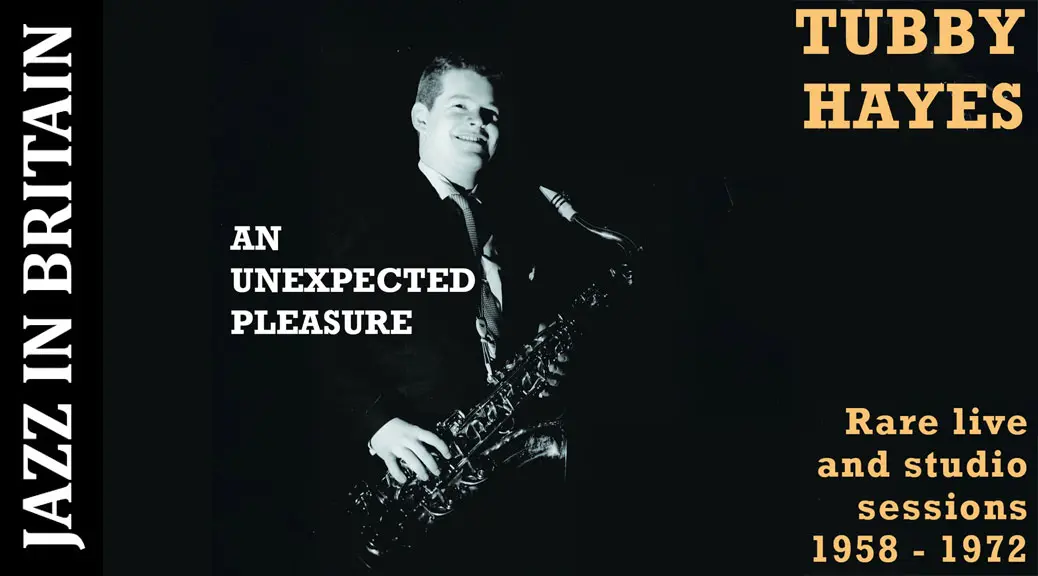
To understand the volatile brilliance of British jazz legend Edward "Tubby" Hayes, one must first look at the paper trail—or rather, the lack thereof. In a new three-disc retrospective box set titled An Unexpected Pleasure, compilers John Thurlow and Simon Spillett—backed by the tireless archival label Jazz In Britain—have assembled thirty-six previously unissued performances spanning a critical fourteen-year period in Hayes’ career (1958–1972).
Yet, the true narrative of this release is not merely musical; it is an investigative chronicle of institutional neglect and grassroots preservation. Of the ten historic venues cataloged across these recordings—ranging from the iconic Aeolian and Paris Studios to international hubs in Duisburg, Cologne, and Oslo—nine trace back to public broadcasting entities. The tenth is a singular, fiercely independent 1958 Jazz Couriers date.
Most strikingly, not a single one of these recordings was sourced from the official vaults of the institutions that originally commissioned and paid for them. While the BBC recorded Hayes for the better part of two decades, the Corporation largely wiped its master tapes. This box set exists exclusively because musicians—such as the late bassist Ron Mathewson—retained their own off-air recordings, and because a dedicated Holmfirth-based charity has spent years chasing the ghosts of mid-century radio.
An Unexpected Pleasure is a masterclass in archaeological jazz restoration. It stands as a vital testament to a genius whom the commercial recording industry abandoned long before his premature death in 1973, saved only by the foresight of individuals who smuggled history out of the broadcast studios in shopping bags and private collections.
Detailed Chronology: A Trajectory Across Decades
The chronology of An Unexpected Pleasure operates with a quiet, devastating architecture, charting Hayes’ evolution from the white-hot vanguard of modern European jazz to his poignant, terminal twilight.
1958–1963: The Couriers and the Continental Exchange
Disc one opens with Ronnie Scott in the two-tenor front line of the legendary Jazz Couriers, anchoring an era when British modernists were finally beginning to converse with their American contemporaries on equal terms. The rhythmic pulse of the era is anchored by drummers like Bill Eyden and, later, Allan Ganley, whose tenure defined the poll-winning quintet years.
International borders were crossed not through corporate booking agencies, but via cultural trade agreements between broadcasters. A June 1959 appearance in Duisburg places Hayes in front of Kurt Edelhagen’s trailblazing multinational orchestra for WDR in Cologne. This ensemble—featuring Derek Humble, Dusko Goykovich, Jean-Louis Chautemps, Karl Drewo, and Belgian pianist Francis Coppieters—had scandalized conservative unions upon its formation, yet it represented the cutting edge of European big band music. A March 1964 Cologne trio session draws from the same artistic well, featuring Edelhagen’s house pianist Bora Rokovic and drummer Stuff Combe.
1964–1966: The Ghost Year and the Oslo Summit
Disc two spans 1964 to 1966, though it contains a telling vacuum: the entirety of 1965. During this year, Hayes had no stable working group, released zero commercial records, and was critically written off by contemporary press. Yet, paradoxically, he continued to broadcast almost weekly—a testament to the disconnect between the commercial music industry and public service radio.
The crown jewel of this era is a January 1966 session in Oslo. Performing alongside the Norwegian Broadcasting Corporation’s (NRK) official studio orchestra—led by Thorleif Østereng and boasting Blue Note artist Donald Byrd as its house arranger through 1965–1966—Hayes delivered staggering renditions of "100% Proof" and "Alone Together." While no paperwork confirms whether Byrd penned the charts Hayes soloed over, the institutional weight of the collaboration reframes the session entirely: an elite American composer-arranger writing for a state-backed Scandinavian radio orchestra, with an Englishman flown in to tear across the changes.
1967–1972: The Commercial Exit and Final Statements
Disc three chronicles the final, heartbreaking chapter of Hayes’ life. By June 1969, Fontana Records had recorded Hayes’ quartet playing "Grits, Beans And Greens" and declined to release it. The commercial record industry had definitively finished with him.
Yet, three months later, the BBC stepped into the breach, marching the exact same band into Aeolian Studios to capture "Grits, Beans And Greens," "Mainly For The Don," and "A Uttoxeter Idyll." From 1970 until his passing in June 1973, not a single note of new music appeared under his name commercially. We can only hear him across those final years because a public broadcaster kept booking him, and someone in the control room kept the tape running.

The collection culminates on September 11, 1972, at the Golders Green Hippodrome for a live Jazz Club broadcast. Hayes arrived with Mike Pyne on electric piano, Daryl Runswick on bass, and Tony Levin on drums. He was contending with a replaced heart valve, a body failing him since 1965, and a prognosis of just nine months to live. Despite being commercially persona non grata, the BBC drafted a standard contract, paid his fee, and even granted Levin an extra twenty pounds for travel. Hayes played four tunes—including the presciently titled "An Unexpected Pleasure"—leaving behind an immortal document of courage and craft.
Supporting Context & Metrics: The Archival Infrastructure
To fully appreciate the magnitude of this release, one must examine the logistical hurdles overcome by compilers John Thurlow and Simon Spillett, alongside design architect Pete Woodman.
- The Missing Paper Trail: Because the original broadcast reels arrived at Jazz In Britain largely unlabelled and stripped of metadata, the team had to enlist Louis Barfe—one of Britain’s foremost broadcasting historians—to forensic-date and locate the recordings.
- Editorial Honesty: The accompanying booklet embraces its evidentiary gaps rather than fabricating certainty. Sessions are marked with scholarly caveats: "possibly Kensington House," undated January 1966 logs, and big band rosters at Maida Vale (July 1969) listing dual bassists and drummers without attribution for the surviving take.
- The Jazz Club Pipeline: The majority of the British recordings trace their lineage to the BBC Light Programme’s flagship jazz showcase, Jazz Club. This institution migrated between legendary London facilities: the Paris Studios beneath Lower Regent Street, the Playhouse, Golders Green Hippodrome, Aeolian Hall in New Bond Street (a wartime variety house), and Kensington House in Shepherd’s Bush (home of the Transcription Service).
| Archival Metric / Data Point | Detail / Context |
|---|---|
| Total Unissued Tracks | 36 performances spanning 14 years |
| Broadcaster Origin | 9 out of 10 settings sourced from public radio archives (BBC, WDR, NRK) |
| Commercial Releases (1970–1973) | 0 albums issued under Hayes’ name during his final years |
| Final Recorded Session | Golders Green Hippodrome, September 11, 1972 |
| Key Archival Contributors | Spike Wells, Bruce Cale, Allan Ganley, Tony Levin, Ron Mathewson, Jeff Clyne, Louis Barfe |
Official Statements & Scholarly Perspectives
The release of An Unexpected Pleasure has sent ripples through the European jazz community, sparking necessary conversations about cultural preservation and institutional amnesia.
In the box set’s extensive liner notes, Simon Spillett reflects on the systemic forces that sidelined Hayes during his final decade:
"The record industry had finished with him. The broadcaster had not. […] The reason we can hear him across those years comes down to somebody at a public institution continuing to book him and somebody in the room keeping the tape."
Reflecting on the ragged documentation and the detective work required to assemble the release, an institutional spokesperson for Jazz In Britain noted:
"None of this survives by accident. Somebody threaded a reel, somebody carried it home, somebody kept it through six decades of house moves and clear-outs, and somebody else went looking. We should applaud every one of them, because without that chain of small, unglamorous decisions these thirty-six performances would be gone—and instead we get to stand in the room."
Music historians have universally praised the release for correcting the historical record, proving that Hayes’ artistic decline was a myth manufactured by corporate bean-counters rather than a reflection of his musical capabilities, which remained searingly inventive until his final breath.
Future Outlook: The Fight to Preserve the British Jazz Canon
An Unexpected Pleasure marks a watershed moment for Jazz In Britain as their first venture into a deluxe clamshell box set format. Its critical and commercial success signals a broader paradigm shift: the burden of cultural preservation is shifting definitively away from monolithic state institutions and toward independent archivists, dedicated musicians’ estates, and crowd-funded non-profits.
As the BBC and other European broadcasters continue to digitize, monetize, or occasionally purge legacy tapes under the pressures of modern media management, the model pioneered by Thurlow, Spillett, and Barfe offers a blueprint for cultural reclamation. Future projects will likely lean heavier on private off-air cassette and reel-to-reel caches to bypass the bureaucratic apathy of corporate archives.
Ultimately, An Unexpected Pleasure is far more than a niche archival product for die-hard Tubby Hayes completists. It is an act of historical justice. It ensures that the explosive, uncompromising sound of Britain’s greatest tenor saxophonist is not lost to the corporate trash heap, reminding us that true art survives not because institutions protect it, but because individuals refuse to let it die.