Executive Overview
For five transformative days—spanning August 27 to August 31—the world-renowned City of Birmingham Symphony Orchestra (CBSO) steps out from the hallowed, acoustically engineered confines of Symphony Hall to reclaim the urban landscape. Under the banner of CBSO in the City 2025, the orchestra is delivering 20 entirely free public performances across Birmingham and the wider West Midlands.
This ambitious initiative is far more than a localized pop-up concert series; it is a profound exercise in cultural democracy. By embedding classical music, contemporary opera, and genre-bending ensemble arrangements into everyday public spaces—ranging from bustling railway concourses and public libraries to children’s hospitals, tram networks, and contemporary art galleries—the CBSO is systematically dismantling the architectural and psychological barriers that have historically kept orchestral music siloed within traditional concert halls.
At a time when the arts sector faces compounding economic pressures, shifting audience demographics, and the lingering socioeconomic ripples of a nationwide cost-of-living crisis, CBSO in the City offers a blueprint for modern cultural stewardship. Through strategic partnerships, participatory mass-music events, and an innovative "Golden Ticket" initiative, the orchestra is not merely performing for the public; it is inviting the community to fundamentally rewrite its relationship with live orchestral music.
Detailed Chronology and Performance Landscape
The five-day festival is a logistical marvel, featuring an eclectic schedule of performances that turn the civic geography of the West Midlands into a living, breathing stage. The programming bridges centuries of classical tradition with contemporary narrative art, ensuring that every corner of the community finds a point of connection.
Day One to Day Five: Transforming Civic Spaces
The initiative touches nearly every major cultural and transit hub in the region. Among the early highlights is a family-friendly adaptation of Kenneth Grahame’s classic The Wind in the Willows hosted at the Library of Birmingham, introducing young audiences to narrative-driven orchestral motifs. In a striking juxtaposition of classical precision and clinical care, solo harp performances resonate through the corridors of the Birmingham Children’s Hospital, offering a moment of tranquility and healing for young patients, their families, and dedicated healthcare staff.
The Library of Birmingham also serves as the backdrop for a delicate harp and flute duo, showcasing the intricate interplay of chamber music in an open, sunlit architectural marvel. Meanwhile, at The Exchange’s Banking Hall café, a CBSO string quartet performs alongside Helios, a breathtaking, large-scale luminous installation by acclaimed British artist Luke Jerram, presented by the University of Birmingham. This interdisciplinary pairing of sound and visual art creates an immersive sensory experience for morning commuters and casual visitors alike.
Art, Tramways, and Suburban Beats
The fusion of visual art and live performance continues at the Birmingham Museum & Art Gallery. Here, string trios and quartets perform in direct dialogue with comedian and artist Joe Lycett’s provocative exhibition, Everything Must Go, proving that classical ensembles can converse fluidly with contemporary pop culture and satire.
In perhaps the most literal interpretation of taking music "on the road," CBSO Music Director Kazuki Yamada steps away from the podium to play the piano aboard a specially branded CBSO tram, surprising daily commuters with spontaneous bursts of artistry as they transit across the city.
Venturing beyond the city center, the CBSO Brass ensemble takes over Solihull’s Touchwood shopping center for the Summer Sessions at the Beach in Theatre Square. Trading formal tailcoats for an energetic summer vibe, the brass players deliver crowd-pleasing arrangements of popular anthems, including disco classics like Disco Inferno, Southern rock staples like Sweet Home Alabama, and power ballads such as Total Eclipse of the Heart. Simultaneously, the CBSO Woodwind Ensemble establishes a residency at the Birmingham Botanical Gardens, marrying pastoral acoustics with rich, organic melodies.

Saxophones in the City and Open for Business
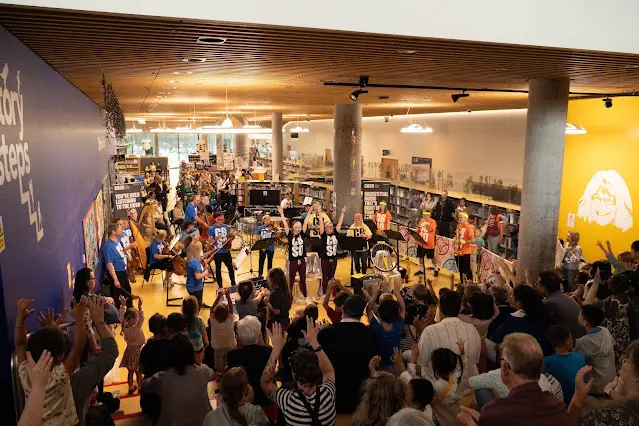
Mass participation anchors the middle of the festival week. Collaborative Artist and saxophone virtuoso Jess Gillam spearheads Saxophones in the City, a monumental "come and play" clarinet and saxophone event at Brindleyplace. Bringing together over 60 participants ranging dramatically in age from 12 to 89, the event underscores the orchestra’s commitment to grassroots music-making and lifelong learning.
Perhaps the most structurally ambitious offering of the week is Open for Business, an innovative walking opera presented jointly by Infinite Opera, Grand Union, and the CBSO. Unfolding across nine distinct venues in the historic industrial quarter of Digbeth, the community-driven production is built entirely from real-life conversations, interviews, and oral histories gathered from local workers and residents. Following four fictionalized characters through snapshots of a single year, the opera maps the rapidly shifting socioeconomic identity of Digbeth, simulating past, present, and future iterations of the neighborhood through sound and narrative.
The Grand Finale: Station Concourse to Bullring
The festival reaches its thundering crescendo over the weekend at Birmingham New Street Station. Under the baton of conductor Jack Lovell-Huckle, the full force of the CBSO and the CBSO Chorus takes over the bustling commuter concourse. The repertoire defies traditional expectations, seamlessly bridging the gap between high art and pop culture by moving from the timeless symphonic works of George Gershwin, Aaron Copland, Gioachino Rossini, and Ludwig van Beethoven straight to iconic cinematic scores from The Phantom Menace and Pirates of the Caribbean. The weekend culminates with encore presentations of this high-octane program in the heart of the Bullring, ensuring that thousands of shoppers and weekend visitors are swept up in the orchestral wave.
Supporting Context, Metrics, and Strategic Vision
To understand the weight of CBSO in the City 2025, one must examine the operational and socio-economic framework that supports it. Orchestras globally are grappling with post-pandemic attendance shifts, reduced municipal funding, and the challenge of proving their relevance to younger, more diverse demographics.
Breaking Down the Cost Barrier
The economic climate in the United Kingdom over recent years has placed immense strain on household budgets. Leisure spending—traditionally viewed as discretionary—is often the first casualty when inflation rises and the cost of living spikes. Recognizing this, the CBSO has engineered CBSO in the City as an entirely free access point.
However, the leadership team understood that temporary exposure, while powerful, must be translated into long-term behavioral change. Enter the "Golden Ticket" initiative. Distributed spontaneously by orchestral members and staff during the public performances, these golden tickets entitle recipients to book a ticket for any concert of their choice during the CBSO’s upcoming 2026–27 Season at Symphony Hall for the token price of just £1.
This mechanism bridges the gap between casual street-level curiosity and formal subscription culture. It removes the financial intimidation factor of booking a seat at a major concert hall, effectively serving as an onboarding ramp for thousands of first-time concertgoers who might otherwise never cross the threshold of Symphony Hall.
Cultural Equity and Urban Placemaking
Urban sociologists and cultural strategists have long advocated for "placemaking"—the intentional shaping of public areas to maximize shared value. By placing world-class musicians in hospital wards, tram cars, museums, and railway stations, the CBSO is actively redefining the civic identity of Birmingham.
The orchestra is not an isolated elite institution living in a glass box; it is woven into the very fabric of the city’s daily life. This decentralization of culture validates the lived experiences of everyday citizens, signaling that high art belongs to everyone, regardless of postcode, income, or prior musical education.

Official Statements and Leadership Perspectives
The philosophical core of the festival is eloquently captured by Emma Stenning, Chief Executive of the CBSO, whose vision for the organization centers on radical inclusivity and community ownership.
"CBSO in the City is about us doing something special to celebrate our home city and sharing the gift of free music to people of all ages and from all walks of life," Stenning stated. "Thousands of people will experience live orchestral music for the first time, and the range of music programming and exciting locations will both play a part in making the performances exciting, fun, and accessible."
Addressing the economic realities facing the region’s population, Stenning emphasized the therapeutic and morale-boosting power of the arts:
"We also appreciate that the cost-of-living crisis has been a worry for so many people, and our £1 golden tickets will give many people that see us this coming weekend the bonus of a great night out to look forward to in the autumn. Music is for everyone and there should never be barriers to this. CBSO in the City fully opens up the world of orchestral music—removing all barriers, bringing people together, and reminding us that music should ultimately be about having fun."
Her sentiments echo through the artistic choices made by Music Director Kazuki Yamada, collaborative artists like Jess Gillam, and community partners across the West Midlands. The messaging is unified: the symphony orchestra is a public trust, designed to reflect, uplift, and engage the entirety of its community.
Future Outlook: The Post-Festival Horizon
As the final notes fade from the glass at New Street Station and the pop-up stages in the Bullring are dismantled, the true test of CBSO in the City 2025 will begin.
The short-term metrics of footfall, social media engagement, and immediate audience reactions will undoubtedly confirm the festival’s popularity. However, the true legacy of this five-day takeover will be measured in the months that follow. When the 2026–27 season opens at Symphony Hall in September, the orchestral world will be watching to see how many of those £1 Golden Tickets are redeemed.
If successful, this initiative could fundamentally alter how regional orchestras across the United Kingdom—and internationally—approach community outreach. Rather than waiting for audiences to navigate the labyrinth of traditional ticket sales and formal concert etiquette, orchestras are learning that the path to sustainability lies in stepping out of the concert hall and meeting audiences where they live, work, and commute.
CBSO in the City demonstrates that classical music does not need to dilute its artistic excellence to be accessible; it simply needs to be brave enough to leave its doors wide open. For full details, schedules, and ticket redemptions, visitors are encouraged to explore the official CBSO website.