Executive Overview
The landscape of modern music production is defined by a relentless convergence of traditional instrumentation and forward-thinking electronic workflows. Bridging the gap between the tactile environment of a pedalboard and the boundless creativity of a software digital audio workstation (DAW), Polish electronic music gear innovator Polyend has officially pulled back the curtain on its latest flagship release: Loop.
Known globally for pushing the envelope with boundary-pushing grooveboxes, sequencers, and quirky MIDI controllers—such as their QWERTY-inspired keyboard iterations—Polyend is charting new territory. With Loop, the company is explicitly setting its sights on guitarists, multi-instrumentalists, and electronic music producers alike.
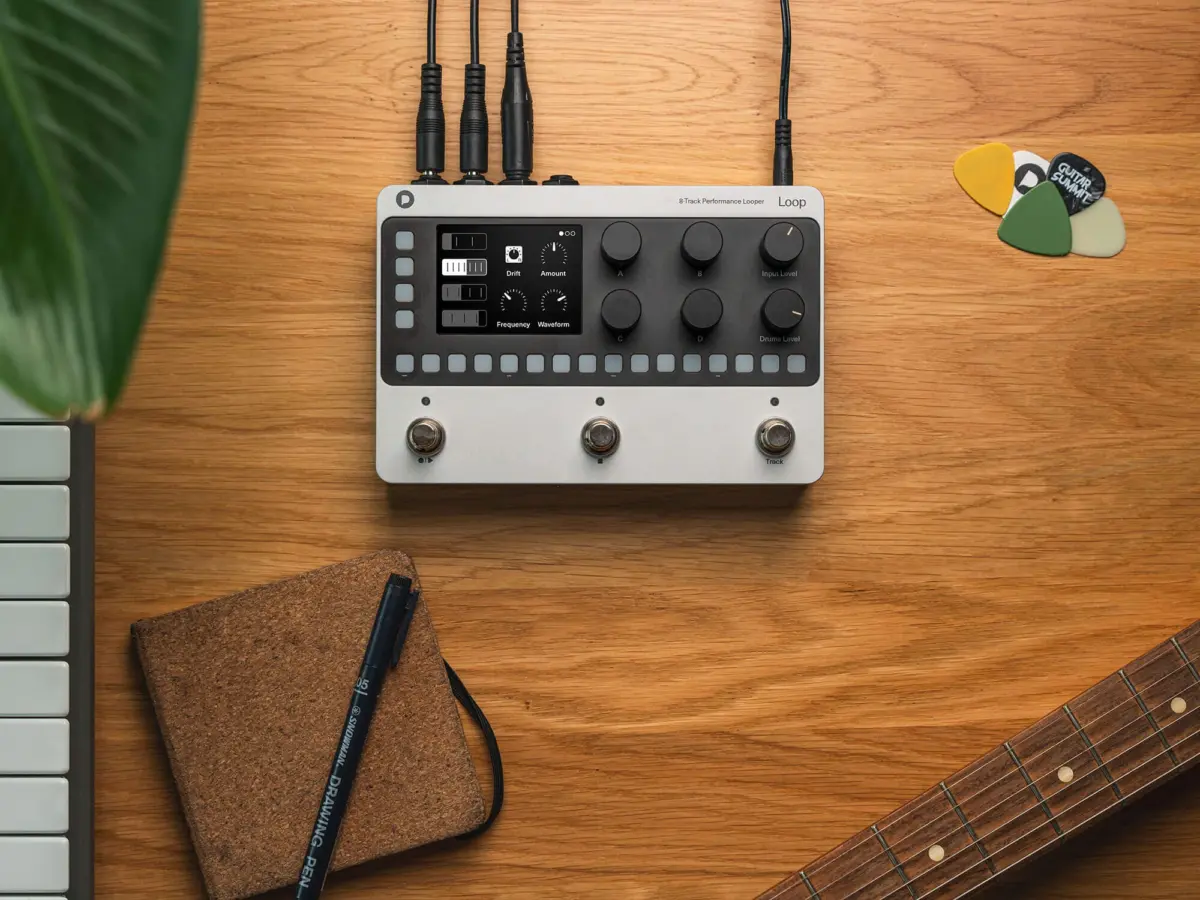
Marketed as an ultimate “idea machine,” Loop is much more than a standard looping pedal. It is a sophisticated hybrid device combining a four-track mono/stereo loop station, a sample-based four-track drum machine, over 100 onboard studio-grade effects, and a comprehensive scene-management architecture. Designed to liberate artists from laptop screens and complicated menu diving, Loop invites musicians to capture spontaneous inspiration, structure entire songs, and perform live with unprecedented fluidity.
Priced at $599 / €599 and slated for release in October 2026, Loop represents a major strategic diversification for Polyend. This in-depth feature explores the inner workings of the device, its feature set, its place in the modern gear market, and what this release signals for the future of hardware-based songwriting.
Detailed Chronology of a Paradigm Shift
To understand the significance of Loop, one must look at Polyend’s trajectory over the past decade. Founded on a philosophy of minimalist design, tactile performance, and non-linear sequencing, the Polish manufacturer carved out a dedicated niche with iconic instruments like the Polyend Tracker, Play, and the recent sequence of innovative controllers.

While these devices won critical acclaim among electronic musicians, beatmakers, and ambient soundscapers, they historically leaned toward sample manipulation and grid-based sequencing. Guitarists, orchestral players, and acoustic singer-songwriters often found themselves admiring Polyend’s slick industrial aesthetic from afar, as the company’s ecosystem did not always naturally integrate with traditional live-instrument performance inputs like high-impedance guitar signals or dynamic microphones.
The conceptualization of Loop began as an answer to a persistent question within the Polyend design team: How can we bring our fluid, non-linear composition philosophy to instrumentalists without sacrificing the raw, immediate nature of foot-controlled hardware?
Over a multi-year development cycle, Polyend’s engineers worked to merge the robust reliability of floor-based loop pedals with the deep structural capabilities of standalone grooveboxes. The result is a device that bridges two historically separate worlds: the pedalboard of the gigging guitar player and the master clock of the electronic producer.
Announced to the public in September 2026, Loop immediately captured the attention of trade publications and gear enthusiasts alike. Pre-orders opened concurrently with the announcement, positioning the hardware for a global shipping window in October 2026. The swift transition from announcement to commercial availability underscores Polyend’s manufacturing confidence and acute awareness of market demand for standalone, DAWless creative tools.
Architecture and Deep Dive: Unpacking the Hardware
At first glance, Loop strikes an imposing yet elegant posture on the floor or desktop. Its physical layout is engineered for immediate, hands-on control, minimizing cognitive load during the heat of a performance or a late-night writing session. Under the hood lies an exceptionally powerful ecosystem of audio manipulation tools.

1. The Four-Track Looper Engine
At the heart of Loop are four independent mono/stereo loop tracks. Unlike traditional loopers that stack everything down to a single stereo bus or force rigid sequential recording, Loop treats each track as a modular entity.
- Independent Processing: Each of the four tracks can run its own independent effect simultaneously. This means a guitarist could have a lush stereo reverb on Track 1, a gritty tape saturation on Track 2, a sweeping modulation effect on Track 3, and a clean dry signal on Track 4.
- Creative Playback Modes: Beyond standard overdubbing and playback, Loop integrates Forward, Reverse, and Ping-Pong playback functions. These modes unlock vast ambient soundscape potential and unexpected rhythmic mutations on the fly.
- Varispeed Technology: One of Loop’s standout audio engineering features is Varispeed. When tempo changes are introduced, Varispeed intelligently links loop speed and pitch changes to match the master tempo organically—while simultaneously keeping the pitch of internal drum samples cleanly locked, avoiding the dreaded “chipmunk effect” on rhythmic elements.
2. The Built-In Drum Machine and Sample Library
Polyend recognized that a looper is only as inspiring as the rhythm underlying it. Rather than relying on simple, rigid click tracks or basic metronomes, Loop integrates a fully featured, four-track sample-based drum machine.
- Rhythmic Variety: The unit ships with over 350 pre-programmed rhythm patterns and more than 500 curated drum kits spanning diverse genres—from crisp, acoustic organic kits to punchy, saturated electronic drum machine emulations.
- User Sampling: Producers are not locked into factory sounds. Users can record their own custom drum samples directly into the unit or import external audio files via storage media.
- Inspiration Library: To ensure writers never face the dreaded blank page syndrome, Loop also includes a factory library of over 180 pre-baked audio loops ready to be chopped, layered, and manipulated instantly.
3. Scene Management and Song Structuring
Many loopers excel at capturing a single 4-bar progression but fall short when it comes to arranging a complete track with verses, choruses, bridges, and breakdowns. Polyend solves this limitation through its Scenes architecture.
- Structural Blueprinting: A Scene in Loop acts as a complete snapshot of a song section. It stores the active loops, drum patterns, tempo information, and assigned effects parameters.
- Capacity: Users can save up to 1,000 individual scenes per project. This enables performers to seamlessly transition from a quiet, ambient verse scene straight into a high-energy, distorted chorus scene with zero audio dropouts or clumsy menu shuffling.
4. Connectivity and Integration
A modern piece of gear must live harmoniously within a wider studio or live rig. Polyend outfitted Loop with an impressive array of I/O options:
- Versatile Inputs: The unit is natively compatible with instrument-level signals (electric guitars, basses), line-level sources (synthesizers, keyboards), and dynamic microphones. It can process up to two mono sources simultaneously.
- Data Management: A microSD card slot allows for seamless import and export of loop data, samples, and project files.
- Hardware Synchronization: For electronic producers and hybrid setups, Loop features TRS MIDI and USB MIDI connectivity, ensuring it can act as either the master clock or a slave device in complex DAW or hardware chains.
Supporting Context & Market Metrics
The launch of Polyend Loop arrives at a fascinating inflection point in the music products industry. Over the past five years, the market has witnessed a significant cultural shift away from screen-based, mouse-and-keyboard production and toward DAWless setups. Musicians are increasingly seeking tactile, dedicated hardware that encourages immediate play and reduces digital fatigue.

At the same time, the boundaries between genres have largely dissolved. Modern guitarists are just as likely to incorporate granular synthesis, sidechain compression, and 808 sub-basses into their pedalboards as they are to use traditional overdrive pedals. Conversely, electronic music producers frequently employ live electric guitars, vocal loops, and acoustic textures to humanize their sequenced tracks.
| Feature Category | Polyend Loop Specification | Industry Context / Significance |
|---|---|---|
| Price Point | $599 / €599 | Competes directly with premium mid-to-high-tier multi-effects and loop stations (e.g., Boss RC series, Line 6 Helix derivatives, and high-end grooveboxes). |
| Track Count | 4 Independent Mono/Stereo Loops + 4 Drum Tracks | Offers significantly more parallel tracking capabilities than standard single- or dual-switch floor loopers. |
| Effects Library | 100+ Onboard Studio-Grade Effects | Eliminates the need for external pedals by packing reverbs, delays, modulation, and distortion directly into the architecture. |
| Storage Capacity | Up to 1,000 Scenes via microSD | Bridges the gap between live looping performance and complete, structured song arrangement. |
| Target Audience | Guitarists, Songwriters, Electronic Producers | Represents a deliberate expansion beyond Polyend’s traditional electronic-only demographic. |
At $599 / €599, Polyend has priced Loop aggressively. While more expensive than a basic practice looper, it undercuts many flagship multi-effects floorboards while offering vastly superior native sampling, song-arranging, and groovebox workflows. For singer-songwriters and live looping artists who previously had to juggle a complex web of separate loopers, drum machines, and individual effect pedals, Loop offers a compelling all-in-one consolidation strategy.
Official Insights and Design Philosophy
While Polyend has historically communicated its product launches through minimalist, highly visual teaser campaigns and demonstration videos, the underlying philosophy of the company remains remarkably artist-centric.
In their official introductory materials, Polyend describes Loop explicitly as an “idea machine for musicians.” This phrasing is deliberate. Rather than positioning the device as a sterile recording utility or a forensic mixing tool, the company emphasizes the psychological aspect of the creative process.
Modern music production is frequently paralyzed by infinite choices. When a producer opens a DAW, they are faced with thousands of plugins, endless tracks, and infinite editing possibilities, which often leads to analysis paralysis rather than creative flow. By boxing the artist into a structured yet deeply flexible four-track loop and drum machine environment, Polyend removes the friction of setup.

Furthermore, by designing the unit with a rugged physical form factor that can sit comfortably on a pedalboard or a studio desktop, Polyend acknowledges that inspiration often strikes away from the studio desk. Whether practicing in a bedroom, writing on a tour bus, or performing on a dimly lit club stage, the Loop is engineered to be an extension of the artist’s hands and feet.
Future Outlook: What Loop Means for Polyend and the Industry
The release of the Loop pedal begs the question: Where does Polyend go from here?
By successfully branching out from pure electronic grooveboxes into the domain of instrumentalists and live performers, Polyend has proven that its design philosophy is scalable across different musical disciplines. The company’s signature focus on clean ergonomics, striking typography, intuitive sequencing logic, and robust build quality translates exceptionally well to the floor-pedal format.
Industry Implications
- The Rise of Hybrid Gear: Expect other traditional pedal manufacturers to take notice. The clean division between "guitar pedals" and "electronic music gear" is dissolving rapidly. Companies that fail to offer integrated sampling, scene management, and modern synchronization options may find their products looking dated to a younger generation of genre-fluid musicians.
- DAWless Live Performance: As live venues increasingly demand streamlined setups that can travel easily without massive touring rigs, all-in-one workstations like Loop provide a viable path for solo artists and bands to sound massive without hauling laptop computers on stage.
- Firmware Ecosystems: In the modern music tech landscape, hardware is only as good as its support. If Polyend follows its established track record with products like the Tracker and Play, users can anticipate ongoing firmware updates, community-driven feature requests, and expanded sample libraries that will continue to evolve the capabilities of Loop long after its initial October 2026 shipping date.
Conclusion
Polyend’s Loop is much more than just another looper. It is a bold, highly focused synthesis of rhythmic generation, loop arrangement, and studio-quality effects processing packaged into a single, cohesive instrument. By lowering the barrier between spontaneous performance and structured composition, Polyend has built a compelling sanctuary for musical ideas.
As pre-orders roll in and the October 2026 shipping window approaches, Loop is poised to become a staple on pedalboards and studio desks worldwide—redefining how modern musicians capture, build, and perform their art.