Executive Overview
In the modern landscape of digital and analog music production, creators are confronted with an unprecedented cornucopia of options. From infinitely expanding plugin bundles and virtual studio technologies (VSTs) to endless variations of hardware synthesizers, MIDI controllers, studio microphones, and audio interfaces, the contemporary studio is rarely short on gear. For many modern musicians, the pursuit of the next piece of kit is practically a second profession—a quest fueled by the perpetual hope that a new hardware purchase or software suite might finally unlock uncharted sonic territory, fix a creative block, or deliver a signature sound.
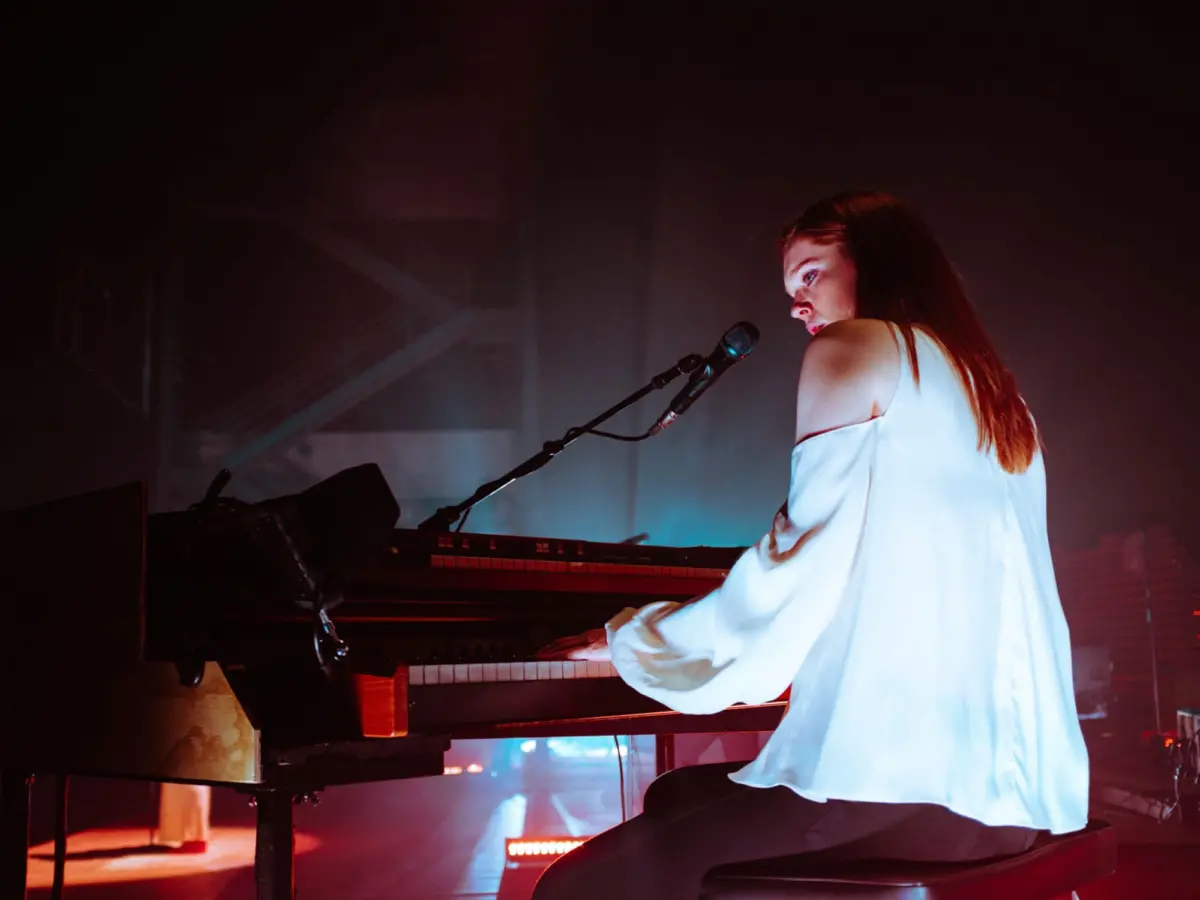
However, according to singer, songwriter, session musician, and high-profile industry collaborator Hazel Mills—whose impressive performance and writing credits include heavyweights like Kylie Minogue and Florence and the Machine—this culture of endless acquisition has a devastating dark side.
Appearing as a guest on a recent episode of MusicTech’s acclaimed My Forever Studio podcast, produced in partnership with Audient, Mills tackled a psychological barrier facing producers at every level of the industry: option paralysis.
Rather than advocating for a studio crammed with the latest technological innovations, Mills champions the deliberate and calculated deployment of constraints. In her view, true creative freedom is not born from having every conceivable tool at your fingertips; rather, it is forged in the discipline of limitation. By committing to a single piece of gear for an extended period—such as an entire year—producers can move past the superficial learning curve, forge a deeper relationship with their instruments, and discover a truer, more authentic artistic voice.
This comprehensive feature explores the psychology of studio minimalism, the trap of option paralysis in modern production workflows, and the profound wisdom behind Hazel Mills’ creative philosophy.
Detailed Chronology: The Evolution of Studio Choice and the Rise of Minimalism
To fully understand Hazel Mills’ perspective on the tyranny of choice, it is helpful to examine how the modern recording studio has evolved over the past several decades, shifting from physical scarcity to digital abundance.
The Era of Physical Scarcity (Pre-1990s)
For the first century of recorded music, studios were defined by physical limitations. Whether working on a four-track cassette recorder in a bedroom or a multi-million-dollar Neve console at Abbey Road, engineers and artists had to make decisive choices early in the tracking process. Gear was expensive, heavy, and finite. If an artist wanted a specific reverb sound, they couldn’t scroll through a list of 40 different impulse responses; they had to rely on the physical room, a single plate reverb, or a physical spring unit.
This scarcity forced a high degree of commitment. Musicians learned their tools inside and out simply out of necessity. The limitations of the hardware shaped the aesthetic of entire genres, creating distinct sonic signatures born entirely of technical constraints.
The Digital Revolution and the Infinite Workspace (2000s–Present)
The advent of digital audio workstations (DAWs) like Pro Tools, Ableton Live, and Logic Pro, coupled with the exponential growth of processing power, completely upended the economics and psychology of music creation. Suddenly, infinite tracks, non-destructive editing, and thousands of plugins became the baseline standard.
While this democratization of audio production allowed bedroom producers to rival multimillion-dollar studios in terms of sonic fidelity, it also introduced a psychological trap. Producers could now leave creative decisions—such as synth patches, EQ curves, and vocal effects—indefinitely unresolved. The mindset shifted from "How do I make this work with what I have?" to "Maybe there is a better plugin for this exact moment."
Hazel Mills’ Entry and the Pivot Toward Intentional Workflows
Against this backdrop of digital saturation, artists like Hazel Mills forged successful careers navigating both high-pressure major label environments (such as touring and recording with Florence and the Machine and Kylie Minogue) and intimate, introspective solo projects.
Observing how both novice bedroom creators and seasoned professionals bog themselves down in gear acquisition, Mills began actively curating her own workspace. Recognizing that fatigue and distraction often stem from having too many choices, she adopted a strict philosophy of modular minimalism. In her interview on My Forever Studio, Mills revealed that she deliberately avoids setting up all her gear simultaneously, preferring instead to curate specific, reliable combinations that are ready to go when inspiration strikes.
Supporting Context & Metrics: The Psychology of Option Paradox
Hazel Mills’ anecdotal warnings about option paralysis are firmly backed by decades of psychological and consumer research. Understanding the cognitive toll of endless choice helps explain why so many modern producers feel creatively exhausted despite having access to world-class tools.
The "Paradox of Choice" in Creative Industries
In his seminal book The Paradox of Choice: Why More Is Less, psychologist Barry Schwartz argued that while autonomy and freedom are critical to human well-being, obtaining too many choices produces psychological distress, decision fatigue, and paralysis. When applied to music production, Schwartz’s theories manifest in several distinct ways:
- Decision Fatigue: Every minute a producer spends browsing through thousands of synth presets, comparing compressor plugins, or researching the latest hardware release is a minute stolen from actual music-making. The brain’s cognitive energy is depleted on administrative and logistical decisions rather than artistic execution.
- Escalating Expectations: When a creator has access to infinite options, the bar for what is "good enough" rises unrealistically. If a sound doesn’t immediately blow them away, they assume the tool is flawed rather than recognizing that creative friction is a normal part of the writing process.
- The "Grass is Greener" Syndrome: Producers frequently fall into the trap of believing that a new piece of hardware or a newly released VST will solve an arrangement or mixing problem, distracting them from the fundamental work of composition and performance.
Quantitative Realities of Modern Gear Culture
While the global music production software and hardware market continues to expand—projected to reach multi-billion dollar valuations annually—surveys within producer communities consistently highlight a counter-trend: gear fatigue.

- The Plugin Graveyard: Industry estimates suggest that the average DAW user actively utilizes fewer than 15% of the plugins installed on their system. The remaining 85% represent sunk financial costs and cognitive clutter.
- The Hardware Turnaround Time: A significant percentage of secondary-market gear sales occur within six months of purchase, as buyers realize that the new piece of equipment did not automatically transform their workflow or output quality.
By advocating for a one-year residency with a single piece of gear, Mills offers a direct antidote to this cycle of consumption and disposal.
Official Statements and Insights: Inside My Forever Studio
The discussion surrounding studio minimalism took center stage during Hazel Mills’ appearance on Season 8 of MusicTech’s My Forever Studio podcast. Created in partnership with audio engineering pioneer Audient, the podcast challenges top-tier songwriters, producers, and session musicians to design their ultimate, idealized studio environment—with a major catch.
The Rules of the Forever Studio
While guests are given the imaginative freedom to select any gear in history to build their dream creative space, the format enforces strict limitations:
- The Cap: Guests are permitted only a strictly limited number of items in their virtual or conceptual space. Every addition requires a deliberate, thoughtful trade-off.
- No Bundles: The loophole-free environment bans catch-all software bundles, forcing artists to justify every single tool they bring into the fold.
- Nostalgia and Anecdotes: The constraints are designed to unearth personal histories, nostalgic memories of formative pieces of gear, and practical insights into how professional artists actually write and record.
In Her Own Words: Hazel Mills on Limitations and Identity
Elaborating on her creative philosophy during the podcast, Mills offered profound insight into how deep familiarity with a tool shapes an artist’s signature voice:
"Option paralysis is very real. I don’t often have all of the gear that I have access to set up and ready to go at once. And I could do that if I wanted to, but I almost don’t want to. I’d rather just have combinations good to go."
Mills expanded on the concept of forced scarcity, explaining that true mastery and originality emerge only when an artist stops looking for external solutions and digs deep into what is immediately available:
"I’m a real advocate of limitations, meaning that you can actually be more creative rather than having all these different pieces of gear [that you] only ever really learn on the surface. Whereas if you’ve got one piece of gear that you use for a year, you really get to know it.
You don’t just get to know how to use it, you also get to know what your relationship is with it, and what your voice is when you’re using it."
This perspective reframes gear not as a magic wand that grants talent, but as a long-term partner. Much like learning a foreign language or mastering an acoustic instrument, understanding the idiosyncrasies, limitations, and sweet spots of a single electronic instrument or software environment takes sustained, undivided attention.
Future Outlook: Reclaiming Creativity in an Age of Abundance
As the music technology industry races toward increasingly sophisticated innovations—including artificial intelligence-assisted generation, cloud-based collaboration ecosystems, and hyper-realistic plugin emulations—the lessons articulated by Hazel Mills are more vital than ever.
The Counter-Movement: Intentional Minimalism
We are beginning to see a pronounced cultural counter-movement among independent artists and major-label producers alike. Many creators are deliberately stripping down their rigs. Hardware "dawless" jams, portable pocket operators, single-synth composition challenges, and analog tape recording revivals point to a collective yearning for tactile engagement and reduced screen time.
Producers are realizing that creative friction is not an obstacle to be engineered away; it is often the very catalyst that forces original problem-solving. When you cannot rely on a thousand different drum samples or infinite preset menus, you are forced to manipulate the sound you have into something unique.
Key Takeaways for Producers at Any Level
For musicians looking to apply Hazel Mills’ philosophy to their own creative spaces, several actionable principles emerge from her My Forever Studio insights:
- Audit Your Workspace: Regularly review your studio setup or plugin folder. Remove items that cause distraction or invoke guilt rather than inspiration. Hide or pack away gear that you haven’t touched in six months.
- Commit to Long-Term Relationships: Pick a primary instrument, synthesizer, or DAW template and commit to using it exclusively for your core writing sessions over a sustained period. Learn its hidden menus, its limitations, and its sonic quirks.
- Embrace Friction: Allow yourself to work within self-imposed boundaries—such as limiting a track to four instruments, restricting yourself to mono recording, or writing an entire song using only stock plugins.
- Focus on Voice Over Gear: Remember that listeners connect with artistic identity, emotion, and performance long before they notice whether a track was mixed with vintage analog gear or stock digital processors.
As Hazel Mills demonstrates, the most powerful instrument in any studio isn’t the most expensive piece of hardware on the rack—it is a focused, unencumbered mind that knows how to make magic out of very little.
For more conversations with top producers and songwriters, be sure to subscribe to My Forever Studio on Apple Podcasts and Spotify, and explore ongoing coverage of music gear, culture, and technology via MusicTech.