Executive Overview
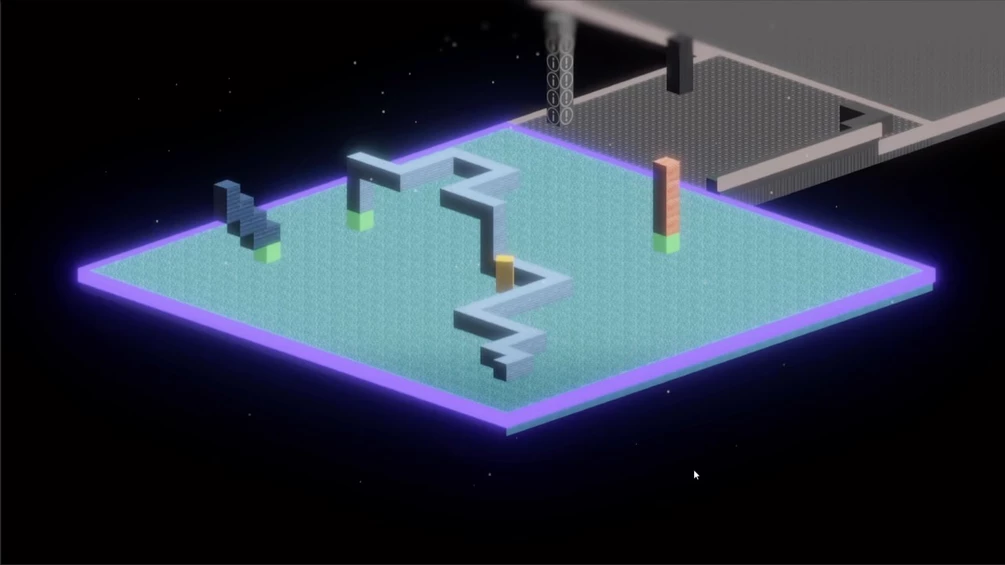
The intersection of interactive entertainment and music production has long been a fertile ground for innovation, yet rarely has a project bridged the gap quite as literally as Chunk DAW. Currently in development and actively accessible via an open beta, this groundbreaking software—styled as a video game—reimagines the traditional digital audio workstation (DAW) through a familiar, tactile, and highly visual lens. Developed by producer, engineer, and graphic designer Sila Mack, Chunk DAW employs a Minecraft-styled modular grid system. In this virtual sandbox, users manipulate sound-carrying blocks, placing them adjacent to one another to load, loop, and sequence complex musical compositions.
As the lines between gaming and creative tooling continue to dissolve, Chunk DAW arrives at a pivotal cultural juncture. Modern digital creators, bedroom producers, and gaming enthusiasts increasingly operate within the same digital ecosystems. By transforming the often-intimidating parameters of high-end audio engineering—such as polyphonic sequencing, tempo manipulation, and mixing consoles—into an accessible, block-based physical puzzle, Mack has created a gateway drug for electronic music production.
Beyond its playful interface, Chunk DAW is a fully functional production environment. It features deep mixing capabilities, precise BPM (beats per minute) adjustments, dynamic volume control, and an expansive library comprising hundreds of distinct material types for the blocks, each altering the sonic character of the loop. Currently being stress-tested through Mack’s dedicated community Discord channel, the project points toward a future where software utility and gamified mechanics merge seamlessly. This development is part of a broader, rapidly accelerating cultural movement that includes high-profile institutional nods to gaming audio—such as Classic FM’s dedicated video game music radio show and the virtual world-building of acts like Gorillaz. This article provides a comprehensive examination of Chunk DAW, exploring its mechanical underpinnings, the professional background of its creator, the current state of its open beta release, and the wider cultural renaissance of music within interactive media.
Detailed Chronology: The Genesis and Evolution of Chunk DAW
To understand the disruptive potential of Chunk DAW, one must trace the trajectory of its development and the multidisciplinary pedigree of its creator, Sila Mack. Operating at the intersection of music production, acoustical engineering, and graphic design, Mack recognized a fundamental friction point in modern audio production: the steep learning curve associated with industry-standard DAWs like Ableton Live, Logic Pro, and Pro Tools.
The Problem of the Blank Canvas
For decades, the traditional DAW has relied on the timeline-and-track paradigm—a layout inherited from multi-track tape machines. While immensely powerful for trained engineers, this interface often induces "producer’s block" for novices and casual creators. The sheer volume of menus, parameter automation curves, and plugin routings can transform the intuitive act of making music into a technical exercise.
Mack’s conceptualization of Chunk DAW began as an antidote to this paralysis. By examining how spatial logic and tactile interaction foster creativity in sandbox video games, Mack theorized that spatial arrangement could replace linear timelines. If a melody could be visualized as a physical object—a "chunk" of audio with inherent sonic properties—and if rhythm could be expressed through physical proximity on a grid, the barrier to entry would evaporate.
Conceptualization and Prototyping
The initial development phase focused heavily on translating audio sequencing into spatial logic. Drawing clear aesthetic and mechanical inspiration from the world-building mechanics of titles like Minecraft, Mack designed a modular grid system. In this environment, sound files, synthesized notes, and drum samples are encapsulated within interactive blocks.
Unlike traditional step sequencers that rely on flat grid matrices, Chunk DAW utilizes blocks that can be stacked, aligned, and looped in relation to one another. The visual design reflects Mack’s background in graphic design: clean, legible, and immediately responsive. Each material assigned to a block—ranging from organic textures to metallic or synthetic finishes—acts as a visual indicator of its sonic texture, creating a synesthetic feedback loop for the user.
Entering the Open Beta Phase
The project reached a critical milestone with the launch of its open beta testing phase. Rather than employing a traditional closed alpha restricted to industry insiders, Mack opted for a community-driven release model centered around a dedicated Discord channel.
This approach serves a dual purpose:
- It provides immediate, real-time stress testing of the software’s audio engine across a diverse array of user hardware.
- It fosters a collaborative creative community where early adopters can share loops, experiment with unconventional mixing techniques, and provide direct feedback on interface responsiveness.
As testers dive into the open beta, Chunk DAW is rapidly evolving from a proof-of-concept prototype into a robust, export-ready platform that allows users to save and export their musical creations outside the game environment.
Supporting Context & Metrics: Mechanics, Interface, and Workflow
To evaluate Chunk DAW strictly as a piece of music technology, one must examine its mechanical feature set. It is not merely a toy or a mini-game embedded within a larger title; it is a dedicated creative ecosystem built on sound engineering principles wrapped in gamified mechanics.
The Modular Grid and Block Mechanics
At the heart of Chunk DAW is the modular grid system. Users interact with a three-dimensional or isometric workspace where they can place, move, and delete sound-carrying blocks.
- Sequencing via Proximity: The fundamental architecture of a sequence relies on spatial arrangement. When blocks are positioned next to each other, internal logic rules trigger them in sequence, establishing loops and polyrhythms.
- Material Diversity: The software features hundreds of different materials for the blocks. In the context of the game’s engine, these materials are not just cosmetic skins; they dictate or influence the timbre, resonance, and processing applied to the underlying audio sample or MIDI data. This introduces an element of tactile sound design reminiscent of modular synthesis patch cables, but visualized through physical textures.
Mixing and Audio Manipulation Suite
Once a sequence is constructed within the sandbox, Chunk DAW transitions from a sequencer into a mixing desk. Users are provided with intuitive tools to refine their compositions:
- Volume and Gain Staging: Individual blocks and aggregate groups can be adjusted for amplitude, ensuring dynamic balance within the mix.
- BPM Control: The global tempo can be manipulated on the fly, allowing producers to test their loops at ambient crawl speeds or high-tempo electronic dance music (EDM) velocities without stuttering or latency artifacts.
- Export Functionality: Crucially, Chunk DAW is designed with utility in mind. Users are not trapped within the game world; the software allows them to save and export their finished tracks, bridging the gap between playful experimentation and professional-grade music production.
Comparative Industry Metrics: The Gamification of Audio
Chunk DAW enters a market that is increasingly receptive to gamified audio tools. Over the past decade, software like Image-Line’s FL Studio has drawn praise for its gamified, pattern-based approach to beat-making. Meanwhile, dedicated music-making video games—from classic titles like MTV Music Generator to modern VR rhythm-and-production suites—have consistently demonstrated that users crave interactive interfaces that strip away the intimidation of traditional workstation software.
| Feature / Metric | Traditional DAW (e.g., Ableton, Logic) | Chunk DAW (Sila Mack) |
|---|---|---|
| Primary Interface | Linear timelines, multi-track mix consoles | Minecraft-styled spatial modular grid |
| Learning Curve | Steep; requires understanding of signal flow and routing | Intuitive; gamified spatial interaction |
| Compositional Logic | MIDI notes on piano rolls, audio waveforms | Sound-carrying blocks and material properties |
| Target Audience | Professional producers, audio engineers | Gamers, hobbyists, bedroom producers, innovators |
| Export Capabilities | Comprehensive multi-stem and master export | Fully integrated save and export systems |
Official Statements and Creator Vision
While formal press releases from major corporate entities often obscure the human element of software development, Chunk DAW is defined by the singular vision of its creator, Sila Mack. Operating as a triple threat—producer, engineer, and graphic designer—Mack’s commentary on the project emphasizes accessibility, joy, and the removal of creative friction.
Bridging Engineering and Play
In discussions surrounding the development of Chunk DAW, Mack has frequently pointed to the artificial barrier that exists between "playing a game" and "working on a project." Traditional music production is often framed as labor, complete with the mental fatigue of managing file directories, plugin licenses, and CPU loads.
By restructuring the DAW experience into a game environment, Mack aims to restore the childlike sense of play that initially draws many people to music. When an aspiring producer can build a beat by stacking blocks rather than drawing automation curves on a digital timeline, the psychological burden of creation lifts. The focus shifts from technical execution to pure sonic exploration.
Community-Centric Development
The decision to utilize an open beta hosted via Discord reflects a modern ethos of software development that values iterative, community-led feedback over closed-door corporate polish. Mack’s active engagement with testers ensures that Chunk DAW grows organically in response to how musicians and gamers actually use the tool. Whether users are constructing complex IDM (Intelligent Dance Music) rhythms or simple four-on-the-floor house loops, the telemetry and qualitative feedback gathered from the Discord channel are shaping the final feature set of the software.
Future Outlook: The Convergence of Gaming, Culture, and Music Production
Chunk DAW does not exist in a vacuum. Its emergence coincides with a profound cultural realignment regarding how video games, virtual spaces, and music intersect in the modern digital economy. As audiences increasingly consume music and gaming through the same digital portals, the boundary lines separating these mediums are vanishing entirely.
The Broader Cultural Landscape
Recent developments across the media landscape underscore this convergence:
- Classic FM’s Next Level: The mainstream institutional embrace of gaming audio was solidified when the UK’s premier classical music station, Classic FM, launched its dedicated video game music radio show, Next Level. Headed by prominent YouTuber Daniel Middleton (aka DanTDM), the broadcast explores the rich, sophisticated orchestrations found in modern gaming masterpieces such as The Legend of Zelda and Minecraft—ironically, the very aesthetic touchstone that inspired Chunk DAW.
- Gorillaz’s Kong Studios Online Revival: Virtual band Gorillaz further blurred the lines between gaming and music promotion with the launch of their Kong Studios online video game. Inviting fans to explore the digital rooms and spaces inhabited by 2D, Murdoc, Noodle, and Russel, the project builds upon an interactive legacy dating back to 1998, proving that fans desire spatial, gamified engagement with their favorite musical artists.
- Historical Integration: The symbiotic relationship between electronic dance music and video games has deep historical roots—ranging from 16-bit chiptune soundtracks that laid the groundwork for modern synthwave to contemporary interactive scores that react dynamically to player inputs. (For a deeper dive into this lineage, industry analysts frequently point to comprehensive historical surveys, such as DJ Mag’s feature on the journey through dance music in video games).
Where Do We Go From Here?
As Chunk DAW moves past its open beta phase toward a full commercial or public release, its implications for the future of music software are profound.
- Educational Applications: Music academies and STEM/STEAM educational programs are actively searching for tools that teach foundational concepts of rhythm, arrangement, and mixing without overwhelming students. A gamified DAW like Chunk DAW could easily find a home in classrooms worldwide.
- The Rise of "Playable" Releases: We may soon see a paradigm shift where electronic music artists release their latest EPs or albums not as traditional streaming files, but as playable sandbox worlds where fans can remix, deconstruct, and interact with the stems inside a Chunk-like environment.
- Redefining the DAW: As processing power increases and user interface design becomes more daring, traditional software developers may be forced to adopt the spatial, modular philosophies pioneered by indie creators like Sila Mack.
Conclusion
Chunk DAW is more than a clever novelty or a niche indie project; it is a conceptual milestone in how we interact with digital audio. By taking the intimidating machinery of the digital audio workstation and filtering it through the accessible, block-based mechanics of sandbox gaming, Sila Mack has democratized music production in a way few traditional software updates ever could.
As the open beta continues to gather momentum within the community Discord channel, and as the broader cultural dialogue around gaming and music reaches new heights of sophistication, Chunk DAW stands ready to inspire a new generation of producers who learned that making music isn’t just about labor—it’s about play.