Executive Overview
To understand the geographical and spiritual topography of indie pop’s 1980s genesis, music historians typically point to a triumvirate of global hubs: Bristol, England; Dunedin, New Zealand; and Olympia, Washington. These cities birthed distinct movements of jangly, unpolished guitar music that prioritized community, self-reliance, and emotional resonance over commercial gloss. In Bristol, the short-lived Sarah Records championed lo-fi heroes like Heavenly and The Field Mice through meticulous 7-inch singles and a staunch fans-first business philosophy. Half a world away, Oceania gained unlikely international attention for its ramshackle, jangle-pop output via the revered New Zealand label Flying Nun, home to bands like The Clean and The Chills. Meanwhile, in the Pacific Northwest, Calvin Johnson forged a gentler, more idiosyncratic approach to American punk. Operating K Records initially out of his kitchen to help friends release cassettes, Johnson laid the groundwork for a counter-cultural ethos that would soon define an entire era.
Today, this rich lineage extends directly to Austin, Texas, where the quartet Touch Girl Apple Blossom has emerged as one of the most promising indie pop revivalist groups of the modern era. Yet calling them a "revivalist" act misses a crucial point: K Records—now operating through the Perennial imprint—is still very much alive and well under the stewardship of Calvin Johnson. (Unlike their British peers at Sarah Records, which famously shuttered by design in 1995 upon reaching its 100th release).
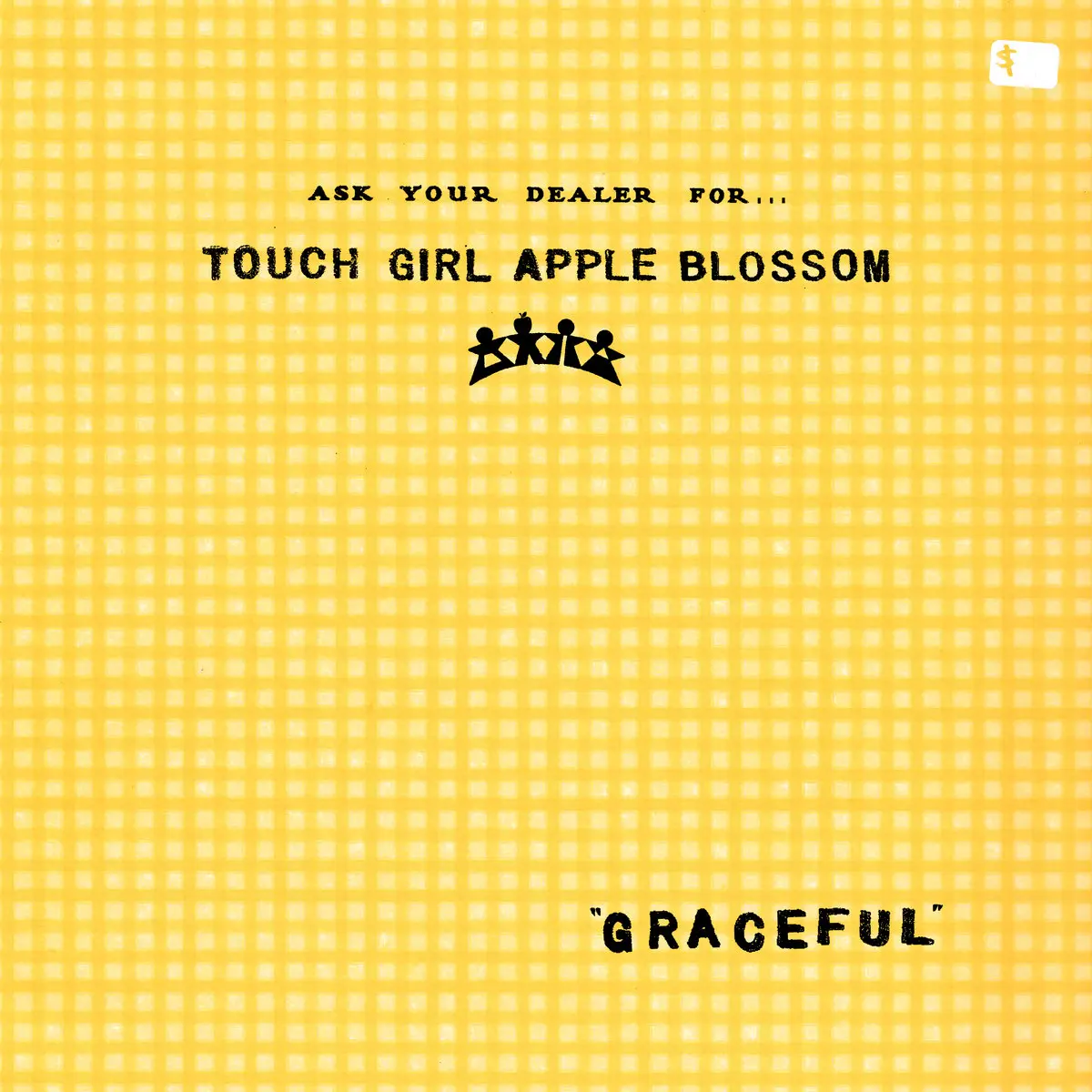
Landing a record deal with the very artist whose lyric inspired your band’s name three and a half decades prior sounds like an almost mythic, too-good-to-be-true narrative. To cynical observers, the pipeline might even skirt dangerously close to a gimmick. However, indie pop was never conceived as a glamorous or overly stylized venture. Fortunately, Touch Girl Apple Blossom’s debut full-length album, Graceful, bypasses both pitfalls entirely. Blending a sharp awareness of their historical roots with a fiercely present-day songwriting sensibility, the band delivers a masterclass in modern twee that honors its past without becoming trapped inside a museum case.
Detailed Chronology: From Kitchen-Sink Cassettes to Austin’s New Guard
The Genesis of a Sound: The 1980s Landscape
To fully appreciate the arrival of Graceful, one must trace the winding historical thread that connects Olympia, Washington, in 1982 to Austin, Texas, in 2026. Calvin Johnson’s initial vision for K Records was disarmingly modest: to provide an outlet for his immediate peer group to document their music on cheap analog tape. By the following year, K had evolved into the home of Johnson’s own cult-icon band, Beat Happening. With tracks like 1988’s "Indian Summer"—featuring Johnson’s signature drawl, "Touch girl, apple blossom / Just a boy playin’ possum"—the band codified a blueprint for anti-rock, prioritizing emotional vulnerability, lo-fi textures, and stark minimalist arrangements over technical virtuosity.
While Sarah Records in the UK was burning bright with its strictly limited-edition singles and pristine indie-pop aesthetics, and Flying Nun was establishing New Zealand as a powerhouse of jagged, melodic guitar pop, K Records remained the epicenter for a uniquely American brand of DIY whimsical punk.
The Formation and Hard-Edged Pedigree of Touch Girl Apple Blossom
Fast forward to 2022 in Austin, Texas: guitarist and vocalist Olivia Garner, guitarist John Morales, bassist Dustin Pilkington, and drummer Daniel Charles Powell coalesced to form Touch Girl Apple Blossom. Despite operating under a name directly pulled from Beat Happening’s lexicon, the band members brought a distinct pedigree rooted in heavier, more abrasive underground subgenres.
Garner spent time playing with the beloved New York noise-rock outfit Hotline TNT, while Pilkington previously shredded bass in the now-defunct hardcore punk band Total Abuse. This background in noise-rock and hardcore prevented Touch Girl Apple Blossom from drifting into toothless pastiche.
In 2023, the quartet released an introductory four-song EP characterized by fuzzy, unpolished guitar gems. While nodding to the foundational components of classic twee pop—such as alternating female-male vocal harmonies, sun-drenched melodies, and freewheeling, chiming riffs—the EP carried a physical weight and a notch of extra heft that set it apart from its historical antecedents.
With their debut full-length, Graceful (released May 15 via K/Perennial), the band refines this precarious balance. They successfully deploy familiar twee tropes without ever getting bogged down in an overabundance of saccharine sweetness, resulting in an album that feels simultaneously classic and refreshingly urgent.
Supporting Context & Metrics: Navigating the Modern Twee Ecosystem
Balancing Nostalgia and the Present Moment
The tension between looking backward and anchoring oneself in the immediate present is central to Touch Girl Apple Blossom’s artistic identity. In interviews surrounding the release of Graceful, the band has been candid about their relationship with the past.
As Olivia Garner articulated in a recent discussion with the Austin Chronicle:
"Obviously I feel like Touch Girl has an element of nostalgia, but we’re also: Be here now. As much as a purely guitar band can be in the present moment."
This philosophy dictates the structural DNA of Graceful. Rather than utilizing nostalgia as a security blanket, the band channels the anxieties, everyday mundane conflicts, and economic pressures of the contemporary world through the timeless lens of jangle pop.
The Track-by-Track Anatomy of Graceful
The album opens with "The Springtime Reminds Me Of…", a track that couples a twinkly, doe-eyed melody with a distinct layer of melancholic tension. Garner’s vocals—"I want to stay inside / But I must go / I can’t say no / The world keeps turning"—serve as a reluctant meditation on inertia and motion, pushing against the bounding, life-affirming guitar riffs supplied by Morales.
Throughout Graceful, the lyrical focus zeroes in on the friction between interpersonal relationships and the grinding realities of daily survival:
- "Tell": Features Garner confronting the distractions of modern life—"You know I hate it when we fight / All these meaningless distractions / We’re working all our lives / One day soon, though, we’ll start living"—before culminating in a searing, cathartic guitar-solo outro.
- "You Made Me Do It": Offers a lighthearted, self-aware lament on the early stages of romantic turmoil, blending playful lyricism with razor-sharp hooks.
- "Heart-Go": Confronts the universal dread of creative burnout and writer’s block head-on, turning vulnerability into an infectious sing-along: "Where does the heart go / When the heart’s not in it? / The pen got tired of writing all these I’ve got to say to you."
These moments of small-scale strife—ranging from poorly attended local gigs to generalized resentment toward urban living and the crushing weight of modern exhaustion—prevent the album from floating away into pure abstraction. Instead, they make the rare, unbridled moments of bliss feel deeply earned. This dynamic reaches its peak on the album’s standout penultimate track, "I’m Lucky I Found You," where bassist Dustin Pilkington joyfully proclaims, "Love is back and it’s in my arms."
The operative word across the record is "lucky." Graceful operates under no illusions that good fortune or enduring happiness is guaranteed; rather, it suggests that navigating a messy, bewildering present requires a resilient, communal spirit.
Official Statements and Industry Context
The release of Graceful arrives during a remarkably crowded window in the global music release calendar. Dropping on May 15 via K/Perennial, the album finds itself sharing release-day space with a sprawling, cross-genre array of notable records.
While pop culture juggernauts and indie heavyweights command media bandwidth—ranging from Drake’s Iceman and Kevin Morby’s Little Wide Open to alternative mainstays like The All-American Rejects (Sandbox), Maisie Peters (Florescence), and electronic experimenters like horsegiirL (Nature Is Healing)—Touch Girl Apple Blossom occupies a vital, fiercely independent lane.
The longevity of K Records, helmed by Calvin Johnson, provides an institutional anchor that few indie labels can claim. While the UK’s Sarah Records famously locked its doors in 1995 upon hitting its century mark to prevent its catalog from becoming institutionalized or overly commercialized, K has weathered the shifting tides of the music industry for over four decades. By partnering with the Perennial imprint to issue Graceful, K demonstrates its continued commitment to identifying and cultivating raw, guitar-driven songwriting that speaks directly to contemporary listeners while honoring the foundational tenets of the underground.
Future Outlook: The Resurgence of Guitars in the Digital Age
As Graceful makes its way into the hands of listeners and vinyl collectors globally, Touch Girl Apple Blossom stands as a compelling case study for the evolution of modern indie pop. The band proves that reverence for genre history does not necessitate creative stagnation. By fusing the pristine, chiming melodicism of 1980s indie pop with the bruised, weathered resilience born from backgrounds in hardcore and noise-rock, Garner, Morales, Pilkington, and Powell have carved out a distinct space within the contemporary American underground.
Looking ahead, the success of Touch Girl Apple Blossom points toward a broader cultural recalibration. In an era dominated by hyper-processed digital production and algorithmically optimized streaming singles, the raw, human friction of a four-piece guitar band navigating the small tragedies of everyday life offers a potent antidote. They are not merely recycling the past; they are stress-testing its structural integrity against the pressures of the present moment, proving that the kitchen-sink ethos sparked in Olympia decades ago remains as vital, restless, and fiercely independent as ever.