Executive Overview
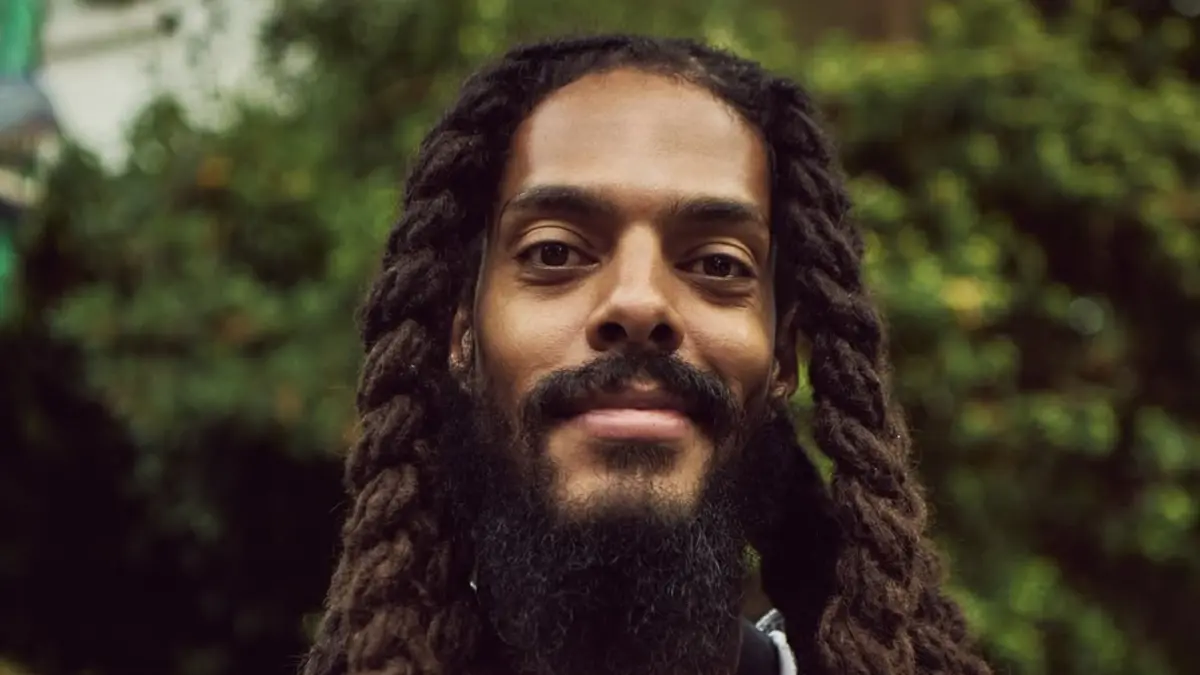
British punk and grime duo Bob Vylan—comprising frontman Bobby Vylan (Pascal Robinson) and drummer Bobb Vylan—have successfully overturned a temporary travel ban that barred them from entering Germany. The ban, which came to light in June when Robinson was detained and subsequently deported upon arriving at a Berlin airport, was officially revoked by German law enforcement authorities following pressure from the band’s legal representatives.
The restriction stemmed directly from the band’s controversial performance at the Glastonbury Festival, where Robinson led the audience in pro-Palestinian chants, including "death to the IDF" and "from the river to the sea, Palestine must be free." These remarks ignited a firestorm of international debate, drawing sharp criticism from advocacy groups and public figures who accused the frontman of antisemitism—allegations that Robinson has categorically rejected, prompting him to launch defamation proceedings against select critics.
Leaked internal police documents obtained by investigative journalists revealed that German authorities had classified Robinson as a threat to "public security and public order," alleging that his rhetoric disseminated antisemitic narratives and acted as ideological justification for extremist elements. However, upon reviewing the official police file, the band’s legal counsel determined there was no valid legal basis for the entry denial. Rather than face a formal court battle, German police quietly reversed the decision, allowing the members of Bob Vylan to resume travel to the country for both professional and leisure purposes.
The resolution of this travel dispute highlights the escalating tensions at the intersection of geopolitics, free expression, and international touring for politically outspoken artists. While Bob Vylan views the reversal as a major victory against state-sponsored intimidation, the episode underscores the enduring fallout from a single festival performance that continues to shape the duo’s global mobility, legal battles, and cultural footprint.
Detailed Chronology: From Glastonbury to Berlin
To understand the sequence of events that led to a British punk musician being temporarily barred from entering a sovereign European Union member state, one must trace a timeline extending across multiple nations, legal inquiries, and geopolitical fault lines.
The Glastonbury Catalyst (June 2025)
The foundational friction point occurred during Bob Vylan’s live-streamed performance at the Glastonbury Festival. Known for their politically charged lyricism and confrontational stage presence, the duo used their platform to voice fierce opposition to the military actions of the State of Israel in Gaza. During the set, frontman Bobby Vylan orchestrated crowd chants that included "death, death to the IDF" (referring to the Israel Defense Forces) and the widely debated slogan "from the river to the sea, Palestine must be free."
Because the performance was broadcast live by the BBC, the audio and visual evidence circulated globally within minutes. The reaction was immediate and polarized. While pro-Palestinian advocacy organizations praised the band for utilizing a major cultural stage to highlight humanitarian crises, pro-Israel groups, media outlets, and political commentators condemned the performance as incitement to violence and a cross into blatant antisemitism.
International Fallout and Investigations
The shockwaves from the Glastonbury set quickly translated into logistical hurdles for the punk outfit:
- United States Visa Scrutiny: The band encountered immediate administrative friction and visa complications concerning their scheduled touring itineraries in the United States.
- Show Cancellations: A number of international promoters, facing intense public pressure and security concerns, opted to cancel forthcoming Bob Vylan live engagements.
- Criminal Inquiries: Despite the public outcry, formal legal hurdles initiated by authorities yielded no criminal charges. UK police investigated the on-stage comments but declined to pursue prosecution. Similarly, when Dutch prosecutors examined comparable remarks made by Robinson during a performance in the Netherlands, they concluded that criminal action was legally unwarranted.
The Berlin Airport Detention (June 2026)
Nearly a year after the Glastonbury controversy, the diplomatic and travel ramifications intensified. In June, Pascal Robinson traveled to Berlin, Germany, intending to visit personal friends and musical collaborators.
Upon landing at a Berlin airport, immigration and federal police officials intercepted the frontman. Rather than being permitted to pass through customs, Robinson was detained, informed of an active travel restriction prohibiting his entry into Germany, and subsequently placed on a return flight to the United Kingdom.
The Intercept Leak and Legal Pivot
For weeks, the precise rationale behind the German entry ban remained obscure, with federal authorities offering minimal public commentary. However, an investigative report published by The Intercept brought transparency to the situation by securing internal German police documentation detailing the operational logic behind the deportation.
Faced with what they characterized as an arbitrary and unlawful restriction, Bob Vylan’s legal team mobilized to challenge the entry ban through the German court system. Yet, before formal litigation could be filed and adjudicated, the German police reversed their administrative stance, dropping the travel ban entirely and restoring the band’s freedom of movement within the country.
Supporting Context & Metrics: Free Speech vs. Public Security
The confrontation between Bob Vylan and the German state brings into sharp focus the complex legal frameworks governing free expression, hate speech, and national security within the European Union, particularly regarding the Israeli-Palestinian conflict.
The German Police Dossier
According to the internal German police file uncovered by The Intercept, the decision to bar Robinson was not made lightly. Law enforcement officials categorized the British musician as a systemic risk. The dossier argued that Robinson’s public platform allowed him to disseminate:
- Antisemitic Narratives and Hamas Propaganda: Authorities claimed the rhetoric used on stage mirrored talking points utilized by proscribed terrorist organizations.
- Radicalization Potential: The police report asserted that Robinson’s messaging carried the capacity to "radicalise certain segments of the population" within Germany.
- Ideological Justification: The document alleged that the musician’s statements could serve as an "ideological justification" for extremist groups or lone-wolf actors.
- Threat to Public Order: Ultimately, the state justified the entry ban under provisions protecting "public security and public order."
Comparative Legal Responses
The German approach stands in stark contrast to the decisions made by legal authorities in the United Kingdom and the Netherlands. While German federal police viewed Robinson’s rhetoric as an imminent public safety threat, investigators in both the UK and the Netherlands reviewed the exact same body of evidence—on-stage statements made at large music festivals—and concluded that the thresholds for criminal incitement or hate speech offenses had not been legally crossed.
This divergence highlights the disparate ways European jurisdictions interpret speech related to the Middle East. Germany, shaped by its historical obligations regarding Holocaust remembrance and post-war security policies, maintains exceptionally stringent protocols concerning public statements perceived as targeting Jewish people or Israeli institutions. Critics, however, argue that these broad administrative powers are frequently weaponized to stifle legitimate political dissent, silence anti-war advocacy, and suppress Palestinian solidarity activism.
Official Statements and Responses
The resolution of the travel ban has prompted strong, principled statements from both the artists and their legal representatives, framing the episode as a critical battleground for civil liberties.
Bob Vylan’s Official Position
In a comprehensive statement released following the lifting of the ban, Bob Vylan did not mince words regarding their treatment by European authorities. They framed the initial deportation not as an isolated administrative error, but as part of a coordinated international campaign to suppress anti-war and pro-Palestinian voices:
"Once the police file was received, it appeared there truly was no legal basis for denial of entry. But before our lawyers could formally file a case with the German courts, the police decided to remove the travel ban, allowing all members of Bob Vylan to travel freely to Germany for work and/or leisure."
The band went on to contextualize the ordeal within a broader sociopolitical framework:
"This is once again another attempt to silence and intimidate those that oppose the ongoing genocide in Palestine. Forcing a reversal by the German authorities is a clear display of how important it is to challenge these intimidation tactics wherever they are found."
Frontman Bobby Vylan’s Personal Rebuttal
Addressing the specific accusations leveled against him in the leaked police report—namely, that he poses a threat to national security and spreads proscribed propaganda—Pascal Robinson dismissed the allegations as baseless and hyperbolic:
"It’s frankly absurd to suggest that I’m a threat to German national security. It’s equally absurd to claim that we spread propaganda on behalf of any proscribed organisation."
Robinson remains defiant, maintaining that his artistic expression and political activism are protected forms of speech aimed at drawing attention to human rights abuses, rather than inciting violence or spreading hatred. Simultaneously, his legal team continues to pursue separate defamation proceedings against prominent critics who have labeled him an antisemitic agitator.
Future Outlook: Touring, Activism, and Legal Precedents
With the German travel ban officially rescinded, Bob Vylan can once again plan European itineraries that include mainland Europe’s largest music market. However, the legacy of the Glastonbury controversy and the Berlin airport detention will undoubtedly leave a lasting imprint on the band’s operational future.
Implications for International Touring Artists
The case serves as a cautionary tale—and a significant legal benchmark—for politically active musicians navigating international borders. As governments across Europe and North America tighten scrutiny over cultural figures engaging in geopolitical commentary, artists face heightened risks of administrative censorship, visa denials, and border detentions.
By successfully forcing the German police to back down without a protracted court trial, Bob Vylan’s legal team has established a valuable precedent: administrative travel bans implemented on vague public security grounds can, and will, be successfully challenged when exposed to rigorous judicial scrutiny and public transparency.
The Ongoing Battle Over Palestine and Free Expression
As Bob Vylan prepares for upcoming live dates, the band shows no signs of muting their political message. Their ongoing refusal to back down from their stance on Palestine ensures that they will remain polarizing figures in contemporary culture. Whether on festival stages or through direct legal action against detractors, Bob Vylan’s ongoing saga highlights an enduring truth of modern punk rock: music, politics, and the law are increasingly colliding on an international stage, with artists and nation-states locked in an ongoing contest over the boundaries of free speech.