Executive Overview
The format of The Traitors is a masterclass in psychological manipulation. Twenty-two individuals enter an isolated castle with a singular, high-stakes mandate: to lie, trust, murder, and banish their way to a cash prize. While the civilian editions of the smash-hit reality format rely on the chaotic friction of absolute strangers, the celebrity variant introduces a volatile new variable into the mix—pre-existing relationships, entrenched industry hierarchies, and deeply ingrained cognitive biases.
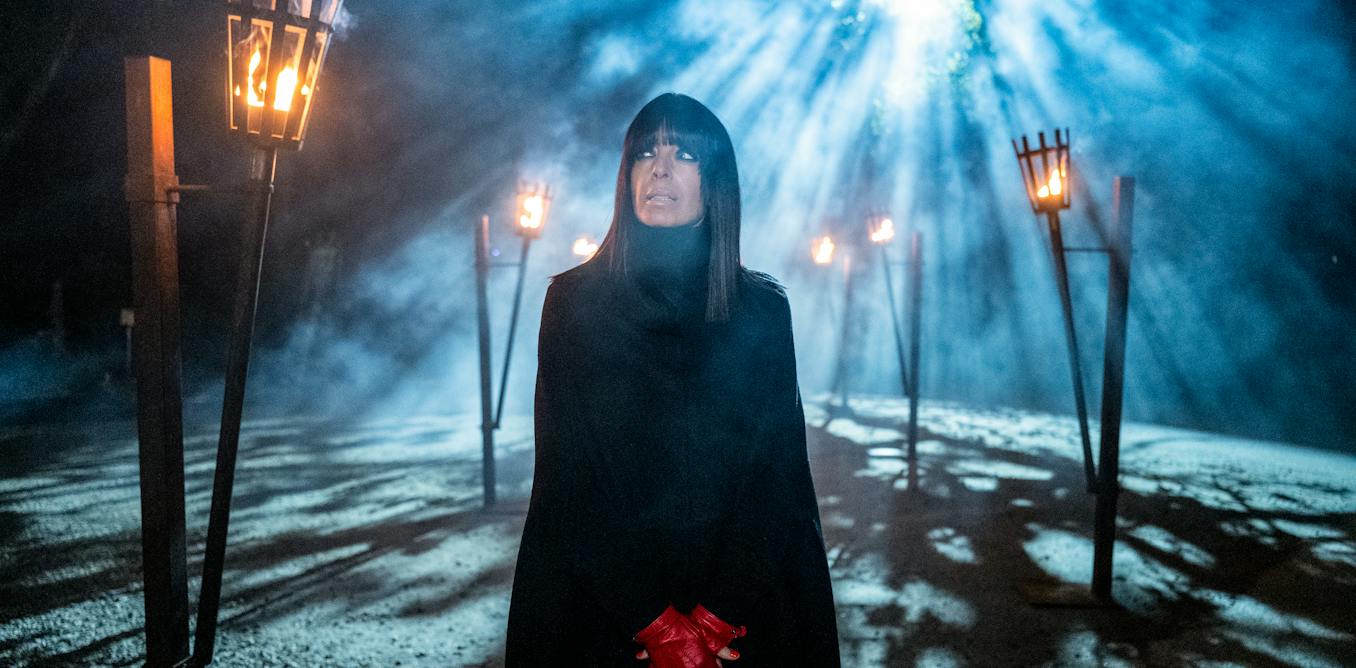
As a fresh roster of famous faces prepares to step into the shadow of host Claudia Winkleman, players must navigate far more than just whispered paranoia in the corridors. They bring with them years of public personas, professional rivalries, friendships, and preconceived notions about who each other are.
Psychologically, this creates a fascinating social laboratory. From the halo and horn effects that make it nearly impossible to suspect beloved comedians, to the "big dog" theory dictating that A-listers are simultaneously too famous to murder yet prime targets for meta-gaming banishments, The Celebrity Traitors is a stark lesson in human perception. To win the ultimate game of deception, celebrities must unlearn a lifetime of social conditioning, sidestep confirmation bias, and actively divorce their professional respect for one another from the brutal reality of the round table.
Detailed Chronology: How the Psychology of the Castle Unfolds
To understand how a season of The Celebrity Traitors plays out from an analytical perspective, it is necessary to examine how psychological biases dictate the lifespan of a contestant within the castle walls—from the initial arrival to the bitter end.
Phase One: The Arrival and First Impressions (The Power of Prior Knowledge)
When civilian contestants walk through the doors of the castle, they start with a blank slate. Every twitch, vocal inflection, and initial greeting is scrutinized in a vacuum. For celebrities, however, that vacuum does not exist.
Before a single round-table accusation is leveled, contestants arrive with decades of accumulated public data. If a player has spent years watching a beloved science communicator like Hannah Fry break down complex topics with charm and factual clarity, a foundational neural pathway is forged: this person is intelligent, reliable, and fundamentally honest. When the game begins, breaking that deeply seated mental association requires an extraordinary leap of cognitive restructuring. Consequently, famous figures often enter the game wrapped in invisible armor—or weighed down by invisible targets—based entirely on their external careers.
Phase Two: Breakfast and the Weaponization of the Halo Effect
The psychological weight of the game hits hardest during the daily breakfast ritual, where surviving players discover who has been "murdered" overnight. Here, the halo effect takes center stage.
The halo effect is a well-documented cognitive bias wherein our overall impression of a person—often shaped by a single positive trait, such as a sharp wit or a disarming sense of humor—influences our feelings and assumptions about their character in entirely unrelated domains. Comedians, by definition, excel at generating instant rapport and positive affect.
Consider the curious case of national treasure Alan Carr during the inaugural celebrity series. Carr’s natural comedic timing and intrinsic ability to make his fellow contestants laugh generated an unshakeable assumption of innocence. Even when Carr was visibly giggling, stumbling over his words, and transparently struggling to maintain a straight face while declaring his status as a "faithful," his peers refused to update their mental models. The positive halo cast by his comedic career shielded him from suspicion, proving that in the castle, charm is a far stronger shield than strategic defense.
Conversely, the horn effect operates as an immediate death sentence. If a contestant is perceived as abrasive, sharp-tongued, or quick to lose their temper during a tense mission, their peers are primed to project negative traits across the board. In the history of The Traitors, contestants who lose their temper at breakfast or during challenges rarely survive the next banishment. The group instantly codes them as erratic, aggressive, and therefore—by virtue of the horn effect—inherently untrustworthy.
Phase Three: The Mid-Game Shift and the "Big Dog" Theory
As the numbers dwindle, direct observation begins to warp under the crushing weight of confirmation bias. Once a player adopts a hypothesis—for instance, "Contestant X is acting shifty, therefore they must be a Traitor"—their brain aggressively filters out contradictory evidence. Every innocent explanation is ignored, and every innocuous sigh or awkward glance is reinterpreted as smoking-gun proof of treason.
It is precisely during this mid-game phase that complex social stratification takes over, giving rise to what contestants Joe Marler and Joe Wilkinson famously dubbed the "big dog" theory during the first celebrity run.
In a civilian game, every player views themselves and their peers on roughly equal footing. In the celebrity version, an undeniable hierarchy of fame exists. Some contestants are household names with decades of cultural capital, while others are up-and-coming talent or specialized experts. This imbalance creates a profound power dynamic.
Initially, the "big dog" theory protects elite stars. During the first celebrity series, the Traitors famously deliberated over whether to "murder" Sir Stephen Fry, ultimately concluding that they simply couldn’t justify killing someone of his stature—it felt too disruptive to the cultural fabric of the show, and perhaps too jarring for the viewing public.
However, this dynamic flips on its head during banishments. Rather than taking the game purely at face value, clever celebrities begin engaging in meta-gaming, second-guessing the television producers. They ask themselves: What would make good television? Who are the producers keeping around? Who is the ultimate "big dog"? This meta-analysis was weaponized to perfection when the celebrities successfully orchestrated the banishment of high-profile Traitor Jonathan Ross. The very fame that protected Ross from an early-morning murder became the neon sign that pointed straight to his banishment.
Supporting Context & Metrics: Cognitive Biases Under the Microscope
To unpack why The Celebrity Traitors yields such distinct behavioral patterns compared to its civilian counterpart, we must examine the underlying sociological and psychological frameworks at play.
The Anatomy of Confirmation Bias and In-Group Favoritism
Psychological literature consistently demonstrates that humans are fundamentally lazy processors of information. When forced to evaluate complex social threats—such as identifying a liar in a high-stakes environment—our brains default to heuristics, or mental shortcuts.
- In-Group Favouritism: Celebrities frequently arrive at the castle with pre-existing alliances forged in green rooms, talk-show sofas, and shared agency rosters. When comedians Rob Beckett and Romesh Ranganathan—collaborators on the BAFTA-nominated Rob & Romesh Vs—enter the game together, their shared history establishes an immediate in-group.
- Out-Group Suspicion: Conversely, those who fall outside these established professional cliques are automatically relegated to the out-group. They face an uphill battle to earn trust, as existing social circles tend to circle the wagons when paranoia sets in.
| Psychological Bias | Definition in Standard Context | Manifestation in The Celebrity Traitors |
|---|---|---|
| Halo Effect | Assuming positive traits in one area imply positive traits elsewhere (e.g., humor equals honesty). | Comedians and beloved national treasures (like Alan Carr) evade suspicion because their public charm is conflated with innocence. |
| Horn Effect | Allowing a single negative trait to color total perception of a person’s character. | Contestants who display abrasiveness or lose their temper are instantly labeled as potential "Traitors" and banished. |
| Confirmation Bias | Favoring information that confirms existing beliefs while ignoring contradictory facts. | Once a player suspects another, every innocuous action is misread as proof of treason, ignoring all defensive evidence. |
| In-Group Bias | Favoring members of one’s own perceived social, professional, or cultural circle. | Established industry duos (e.g., comedy double acts) naturally trust each other over unfamiliar castmates. |
The Glare of the Public Eye and the Fame Trap
Unlike everyday people who return to anonymous lives after filming wraps, celebrities live their lives under a perpetual microscope. This introduces an entirely unique layer of anxiety into The Celebrity Traitors: the fear of public backlash.
An up-and-coming star may hesitate before orchestrating the downfall of a veteran entertainment icon, acutely aware of how fiercely loyal fanbases can be on social media. Ending the game for a beloved cultural figure can carry professional and reputational consequences in the court of public opinion long after the castle gates have closed.
Furthermore, extreme fame breeds a specific brand of psychological defense mechanisms. Highly prolific celebrities—those accustomed to being approached, managed, and perpetually observed—frequently develop heightened skepticism. As psychological research on the burdens of fame suggests, living in the public eye makes individuals hyper-vigilant about the motives of others. When everyone wants a piece of your time, attention, or brand in the real world, trusting a stranger (or a colleague masquerading as a friend) inside a deceptive castle setting goes against every survival instinct an A-lister has cultivated.
Official Statements & Expert Psychological Insights
Behavioral scientists and media analysts have increasingly turned their attention to reality television formats like The Traitors as natural experiments in human trust and deception.
Reflecting on the unique mechanics of the celebrity format, social psychologists note that the blurring lines between real-world relationships and strategic gameplay render traditional tactical frameworks obsolete.
"When you introduce players who already hold complex mental models of one another, you eliminate the blank-slate dynamic that makes classic deduction games work," notes one behavioral researcher specializing in cognitive biases. "Contestants aren’t just reading body language; they are fighting against decades of positive conditioning. If you’ve grown up admiring someone’s intellect or laughing at their jokes every Saturday night, your brain actively resists the evolutionary alarm bells telling you they might be lying to your face."
Industry insiders and casting directors have similarly pointed out that the psychological burden on celebrity contestants is frequently underestimated. Stripped of phones, creature comforts, and the buffering presence of personal teams, these public figures are forced into raw, unfiltered social combat where their professional identity is weaponized against them.
Future Outlook: The Evolution of Celebrity Deception
As The Celebrity Traitors cements its place as a cornerstone of modern event television, the meta-game is bound to evolve. Future casts will not enter the castle blind to the lessons learned by their predecessors.
Future contestants are virtually guaranteed to weaponize the psychological insights outlined above. We can anticipate sophisticated players actively attempting to subvert the halo effect—perhaps by deliberately adopting a slightly abrasive persona to test the limits of the horn effect, or by weaponizing self-deprecation to lower their threat level.
Moreover, as the "big dog" theory matures, future A-listers will need to navigate their own celebrity status with surgical precision. Being too famous makes you a target for meta-gaming banishments, while fading into the background makes you vulnerable to quiet, tactical murders in the night.
Ultimately, the psychological mandate for any celebrity hoping to take home the prize remains paradoxically simple yet impossibly difficult to execute: make people laugh, master your cognitive biases, leave your professional deference at the iron gates, and remember that inside the castle, your closest friend is your most dangerous enemy.