Executive Overview
London’s cultural landscape is shaped by the ghosts of the artistic giants who once walked its streets, but few locations bridge the centuries quite like 25 Brook Street. This unassuming Mayfair townhouse has spent the last quarter-century functioning as a living monument to two revolutionary musicians separated by more than two centuries: the Baroque master George Frideric Handel and the radical rock guitar icon Jimi Hendrix.
This autumn, the institution now officially known as the Handel Hendrix House is marking a major milestone: the 25th anniversary of its public opening as a historic house museum. To commemorate this silver jubilee, the museum has curated an expansive celebratory programme. The centerpiece of these festivities is a high-profile anniversary concert on November 10 at St George’s Hanover Square—Handel’s historical parish church—featuring collaborative performances by two of the UK’s leading early music ensembles, The Brook Street Band and The London Handel Players, alongside acclaimed mezzo-soprano Helen Charlston.
Running parallel to the live music is a newly opened, critically lauded exhibition entitled Hallelujah House: Inside Handel’s HQ. This showcase dives deep into the domestic and creative epicenter where Handel composed some of Western classical music’s most enduring masterworks. Together, the anniversary concert, the exhibition, and the milestone celebrations offer a timely reminder of how a physical space can preserve the ephemeral magic of creative genius. This comprehensive report explores the history of the museum, the details of the anniversary programme, the music slated for the commemorative concert, and the ongoing legacy of London’s most unique musical address.
Detailed Chronology: From Georgian Residence to Dual-Legacy Museum
To understand the weight of the 25th-anniversary celebrations, one must trace the extraordinary timeline of 25 Brook Street and its neighboring attic flat at No. 23. The history of this site is a testament to urban preservation, grassroots cultural advocacy, and the accidental alignments of history.
The Handel Era: 1723–1759
George Frideric Handel moved into the newly built brick terrace house at 25 Brook Street in the summer of 1723. It was the only home he ever owned in England, having arrived in London from Hanover nearly two decades prior and eventually becoming a naturalized British subject in 1727.
For 36 years, this building served as Handel’s creative headquarters. Within its walls, he rehearsed with musicians, managed his opera and oratorio companies, negotiated with librettists and publishers, and composed some of the defining works of the late Baroque period. It was here that he wrote Messiah (1741), Saul, Israel in Egypt, and countless Italian cantatas and instrumental suites. Furthermore, it was in this very house that Handel drew his final breath on April 14, 1759.
The Interim Years and the Commercialization of Mayfair
Following Handel’s death, the building underwent significant structural alterations. Over the centuries, Mayfair transformed from an upscale residential neighborhood into a bustling commercial district. No. 25 Brook Street was converted into retail space on the ground floor, with upper stories partitioned into offices and apartments. For generations, the building’s rich musical pedigree was obscured behind shopfronts and business signage, known only to dedicated music historians and dogged biographers.
The Hendrix Interlude: 1968–1969
By a twist of historical irony, the top-floor flat of the adjacent building—technically 23 Brook Street, though structurally integrated into the upper levels of the same complex—became home to another revolutionary sound-shaper two centuries later. In July 1968, a young American guitarist named Jimi Hendrix moved into the flat with his girlfriend and manager, Kathy Etchingham.
Though Hendrix’s tenure in the flat was relatively brief—lasting roughly until March 1969—it was a period of intense creativity and personal sanctuary. During interviews and press junkets, Hendrix discovered Handel’s blue plaque on the exterior wall of No. 25. Fascinated to learn that a classical master had lived next door, Hendrix reportedly bought a secondhand copy of Handel’s Water Music and Messiah from a local record shop, cementing a symbolic cross-century artistic dialogue between the two residents.
The Campaign for Preservation: The 1990s
By the late 20th century, the fate of 25 Brook Street hung in the balance. Commercial pressures threatened to erase what remained of Handel’s domestic footprint. However, a coalition of musicologists, performers, and preservationists—spearheaded by the Handel House Trust—formed to rescue the building.
In 2000, the Trust acquired the lease to the upper floors of No. 25. Extensive architectural and archaeological investigations were undertaken to peel back centuries of alterations, restoring Handel’s original Georgian rooms to their authentic 18th-century appearance.
Opening Day and the Modern Era: 2001–Present
On November 8, 2001, Handel House officially opened its doors to the general public, welcoming visitors into the composer’s meticulously recreated composition room, bedroom, and rehearsal spaces.
For years, the Hendrix flat served as the administrative offices for the museum. However, following a major Heritage Lottery Fund-backed restoration project completed in 2016, the Hendrix apartment was also restored to its 1968 psychedelic bohemian aesthetic and opened to the public. The institution was subsequently rebranded as the Handel Hendrix House, creating a unified cultural space celebrating two musical icons who lived centuries apart under the same Mayfair roof.
Supporting Context & Metrics: The 25th-Anniversary Programme
The silver jubilee of the Handel Hendrix House is not merely a retrospective; it is an active celebration of live performance and musicology. The centerpiece of the anniversary calendar is the landmark concert scheduled for November 10 at St George’s Hanover Square.
The Anniversary Concert: Repertoire and Performers
St George’s Hanover Square holds profound historical significance for the celebration. Located just a short walk from Brook Street, it was Handel’s local parish church where he worshipped regularly during his decades in London.
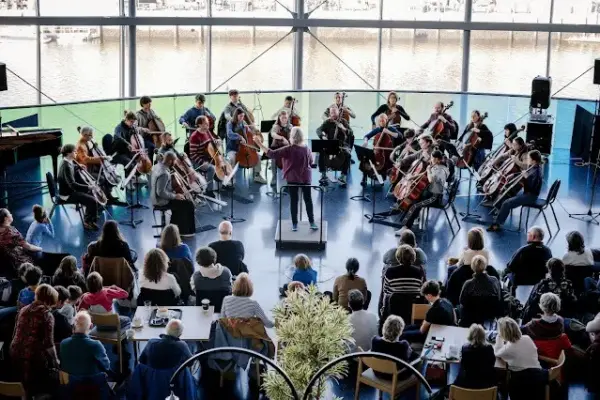
For this special evening, two of Britain’s most respected early music ensembles—The Brook Street Band and The London Handel Players—are joining forces in an unprecedented collaborative performance. The programme has been specifically curated to reflect the music Handel created during his residency at Brook Street.

- Trio Sonata in B minor (HWV 386): Composed in the 1720s and later published in 1733, this work showcases Handel’s mastery of counterpoint and lyrical invention. Musicological analysis reveals that the final Allegro movement shares thematic DNA with the celebrated Chandos Anthems, reflecting Handel’s habit of recycling and refining his own brilliant motifs.
- Sonata in A major (HWV 361): Dating from a similar period, this sonata highlights the expressive capabilities of Baroque violin and continuo, offering a window into the intimate chamber music sessions that likely took place in the parlors of Brook Street.
- Cantata Mi palpita il cor (HWV 132c): Written in London during the 1710s, this dramatic Italian cantata explores the turbulence of unrequited love. The vocal lines will be brought to life by acclaimed mezzo-soprano Helen Charlston, whose interpretations of Baroque repertoire have garnered international critical acclaim.
The Pre-Concert Experience
To elevate the anniversary celebrations, ticket holders are invited to a special pre-concert reception hosted at Handel’s home on Brook Street starting at 5:30 PM on November 10. Guests will have the rare opportunity to wander the candlelit period rooms where Handel composed, before taking the short, atmospheric walk through Mayfair to St George’s Church for the evening’s musical performances.
Hallelujah House: Inside Handel’s HQ
Complementing the live concert is the museum’s headline anniversary exhibition, Hallelujah House: Inside Handel’s HQ. The exhibition serves a dual purpose: it marks 25 years since the house opened to the public, and it provides a deep-dive examination of how the physical structure of 25 Brook Street functioned as the operational center of Handel’s business and artistic empire.
Curated with rare manuscripts, early printed scores, personal artifacts, and contemporary accounts, the exhibition explores the mechanics of 18th-century musical production. Visitors can explore how Handel managed his complex relationships with librettists like Charles Jennens, how he coordinated with copyists in the attic spaces, and how the domestic environment directly fueled his staggering creative output. Reviews of the exhibition have praised its immersive approach, noting that it successfully strips away the marble-bust mythology of the composer to reveal a busy, driven, and intensely practical working artist.
Official Statements and Perspectives
Reflecting on the 25-year journey of the Handel Hendrix House, curators, musicians, and cultural leaders have emphasized the enduring relevance of the space.
Sarah Connolly, Chair of the Handel Hendrix House board of trustees, noted in a statement regarding the anniversary:
"When Handel House first opened its doors a quarter of a century ago, it was a bold experiment in historic preservation. Today, it stands as an irreplaceable cornerstone of London’s cultural identity. To have preserved not only the rooms where Handel forged the soundtrack of the Georgian era, but also the attic where Jimi Hendrix plugged in his amplifier, is a minor miracle. This anniversary is a tribute to the resilience of music and the spaces that hold our collective cultural memory."
Dr. Claire Jones, lead musicologist for the Hallelujah House exhibition, highlighted the unique domestic nature of Handel’s compositional process:
"We often view Handel through the lens of grand cathedral performances or royal water music pageants. But Hallelujah House reminds us that his greatest ideas were first tested within the intimate, wood-paneled walls of Brook Street. It was an office, a rehearsal hall, a publishing house, and a home all rolled into one. Celebrating 25 years of the museum means celebrating the heartbeat of Baroque London."
Performers from both The Brook Street Band and The London Handel Players echoed these sentiments, expressing deep emotion at the prospect of performing Handel’s chamber works in his home parish church. Representatives for the ensembles emphasized that playing period instruments in spaces directly tied to the composer offers an irreplaceable authenticity that resonates with modern audiences just as powerfully as it did in the 18th century.
Future Outlook: Preserving the Legacy for the Next Generation
As the Handel Hendrix House concludes its silver jubilee celebrations, the institution is looking firmly toward the future. Maintaining two historic properties in the heart of central Mayfair presents ongoing logistical, financial, and conservation challenges. However, the success of the Hallelujah House exhibition and the high demand for anniversary events point to a thriving and engaged public eager for authentic historical engagement.
Expanding Educational and Digital Outreach
Looking ahead, the museum’s leadership is prioritizing the expansion of its educational initiatives. Plans are underway to develop enhanced digital access programmes, allowing international scholars and school groups who cannot travel to London to explore the restored period rooms through virtual reality and high-resolution digital archives. Additionally, educational workshops aimed at introducing school-aged children to both Baroque composition and the history of popular music in Mayfair remain a core pillar of the institution’s community outreach.
Sustainability and Historic Conservation
With London’s real estate market in a perpetual state of flux, safeguarding the structural integrity of Nos. 25 and 23 Brook Street remains paramount. Continuous environmental monitoring, delicate woodwork restoration, and textile conservation ensure that the physical fabric of the buildings will survive for future generations of music lovers, historians, and pilgrims.
A Dual Beacon of Sound
Ultimately, the enduring magic of the Handel Hendrix House lies in its improbable duality. Where else in the world can one step from a perfectly preserved 18th-century Georgian parlour—where a wigged master penned the chords of the Messiah—into a vibrant 1960s bohemian garret where rock history was rewritten?
As the notes of the Trio Sonata in B minor echo through St George’s Hanover Square this November, and as visitors continue to stream through the doors of Brook Street to view Hallelujah House, the message is clear: 25 Brook Street is not a static mausoleum, but a living, breathing temple of sound. For 25 years, it has honored the past; with its current jubilee programme, it ensures that the music will never stop.
For full details on the anniversary concert, ticket bookings for the pre-concert reception, and opening hours for the Hallelujah House exhibition, visitors can consult the official Handel Hendrix House website.