In the modern landscape of electronic music production, efficiency is often treated as the ultimate virtue. Producers are routinely encouraged to approach studio sessions armed with a rigorous plan, a defined sonic palette, and rigid deadlines to ensure finished tracks roll off the assembly line. While this method guarantees a reliable output that aligns with contemporary commercial expectations, it frequently drains the joy out of the creative process. It anchors music production to an algorithmic template, prioritizing replication over discovery.
To counteract this sterile predictability, this month we are embracing a radical alternative: having no plan at all.
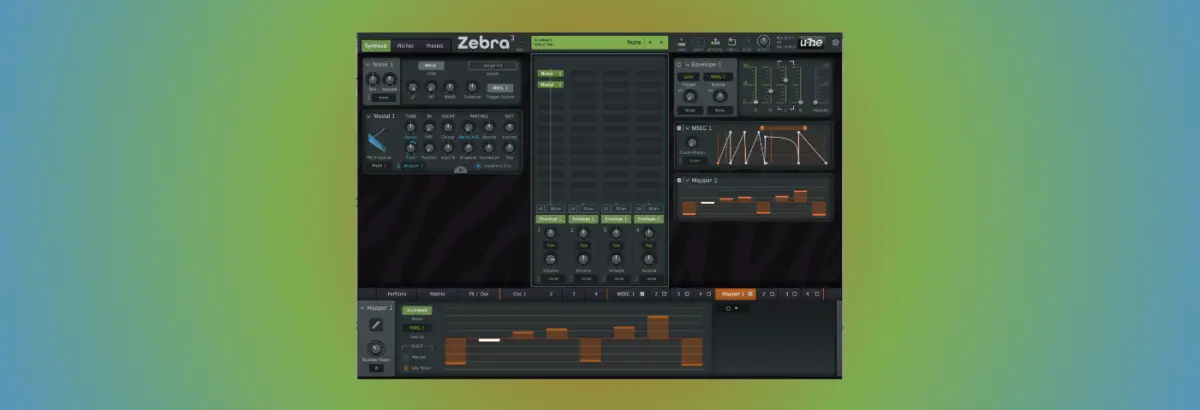
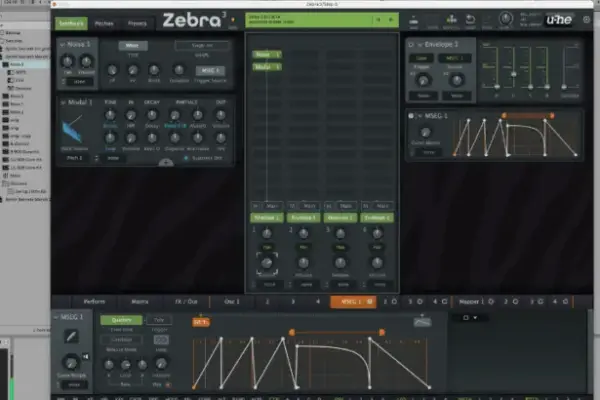
By diving into a new instrument with zero preconceptions—turning knobs simply to see what kind of sonic chaos emerges—producers can unlock unconventional melodies, bizarre timbres, and innovative techniques that would never surface through goal-oriented programming. For this experiment, we turn our attention to Zebra 3, u-he’s long-awaited, ground-up sequel to their legendary wireless modular soft synth. Rather than aiming to recreate a classic commercial patch, we set out on an open-ended expedition across ten distinct stages, demonstrating how raw experimentation can yield professional, characterful results.
To follow along with this masterclass, load up Zebra 3 in your Digital Audio Workstation (DAW), set your project tempo to 127 BPM, and import the project files (WhoKnows.mid and Kick.mp3). Rather than blindly copying our final audio examples immediately, we encourage you to load the same modules specified at each step while applying your own unique settings. Compare your results only at the end of the journey.
Step 1: Initialization (Init)
We begin at ground zero. Open Zebra 3 with a fresh initialization patch, pair it with our MIDI file and backing kick drum, and hit play. Unsurprisingly, the default oscillator configuration sounds remarkably pedestrian—functional, but utterly devoid of character. It serves as our blank canvas.
Step 2: Introducing the FM Oscillator Module
To inject life into the patch, we abandon traditional subtractive workflows in favor of Zebra 3’s advanced Frequency Modulation (FM) oscillator capabilities.
External Modulation Type: Set to Dry.
FM Type: Shifted away from classic linear DX synthesis to TZFM (Through Zero Frequency Modulation), a powerful modern mode.
Mod Depth: Set to 8.
Experimenting with the ratio yields a kaleidoscope of metallic, bleepy artefacts. We settle on a 1.0 : 2.5 ratio, which immediately generates a resonant, striking sonic profile that is almost strong enough to use right out of the box. However, restraint is not our goal today.
Step 3: Modulating FM with an LFO
Next, we harness an internal Low-Frequency Oscillator (LFO) to dynamically modulate the FM engine, setting the Mod Depth to 48.
LFO Time Base: 2 bars (2 / 1)
Trigger Mode:Single
Even with a single sound generator, the patch throbs with complex upper harmonics—a testament to the inherent power of FM synthesis. We test three core LFO waveforms:
Triangle: Smooth, evolving movement.
Sine: Deep, rolling undulations.
Square: Abrupt, aggressive switching. While the square wave produces the least immediately "usable" results in its raw state, its erratic nature overflows with untapped potential. We keep it.
Step 4: Harnessing Feedback
While harmonically rich, the patch remains too polite. By exploring the updated parameters of Zebra 3, we discover the Feedback control. Dialing this up introduces gritty, nonlinear digital distortion before shifting into a sharp, resonant character reminiscent of an EDP Wasp filter around a value of 73.
Step 5 & 6: Deploying the Multimode Filter
The raw resonance achieved via the square LFO and high feedback setting is deeply inspiring, but it urgently requires structural containment. We instantiate Zebra 3’s brand-new multimode filter module and select the Old Time voicing mode paired with a 24dB Low Pass slope. This instantly warms up the digital bite, but leaves the overall envelope static. To gain control, we dial the filter cutoff down to 8.18 Hz, effectively closing the filter completely and leaving the door open for envelope automation.
Step 7: Shaping Dynamics with an Envelope
To transform our sustained drone into a punchy, rhythmic element, we assign a dedicated envelope to the filter cutoff:
Attack: 0 ms
Decay: 1.25 s
Sustain: 31
Release: 96.1 ms
Modulation Depth: 105
Dropping in the Skippy_beat.mp3 backing loop causes the patch to snap into focus, locking into the groove with effortless synergy. Introducing Zebra 3’s internal reverb on a send bus wraps the sound in spatial depth, preparing us for the final touches of polish.
Step 8: Dynamic Overdrive via Envelope 3
While we have achieved precise tonal control, we have sacrificed some of our earlier aggressive edge. We introduce filter Drive, but notice it introduces unwanted harshness on the initial transients.
The solution? Assign a third envelope specifically to the Drive parameter. We set the Drive amount baseline to zero with full modulation depth, leaving the decay wide open while pushing the Attack time to 40 ms. This brilliant routing trick ensures that the overdrive swells in after the initial transient has safely cleared, delivering warmth and bite without clipping or digital harshness.
Step 9: Velocity Tracking for Bounce
As a final modification to the synth engine, we push the Velocity sensitivity on Envelope 3 to its maximum setting. Now, the patch responds organically to the MIDI note data: harder-hit notes trigger heavier overdrive and wider filter openings, instantly instilling a bouncy, dynamic groove into the rhythmic pattern.
Step 10: Post-Processing, Sweeps, and Arrangement
With our core patch locked in, the possibilities for arrangement expansion are endless. Automating the filter cutoff across an eight-bar phrase introduces massive dynamic tension. Furthermore, because multiple envelopes are routed independently, altering Envelope 1’s release time to 3.61 seconds creates lingering, atmospheric tails.
Finally, we explore layering: by reintroducing the buzzy, raw Init patch underneath our main sound—bolstered by an 8-Voice Detuned Unison mode—the patch transforms from a simple bleepy lead into a massive, cinematic hybrid instrument ready for a full production arrangement.
Supporting Context & Metrics: The Psychology of Unplanned Design
The modern digital audio workstation (DAW) environment is a double-edged sword. While infinite track counts, cloud-synced preset libraries, and algorithmic recommendation engines have streamlined the workflow of commercial ghostwriters and pop producers, they have simultaneously fostered a monoculture of sound.
The Algorithmic Homogenization of Sound
Industry data suggests that over 70% of independent electronic music producers rely heavily on factory presets or template-based project files to meet the aggressive output demands of streaming platforms like Spotify and Apple Music. While this ensures commercial viability, neuroscientific studies on creative cognition indicate that goal-directed workflows severely limit divergent thinking—the cognitive process used to generate creative ideas by exploring many possible solutions.
By abandoning the "goal first" paradigm:
Cognitive Load Shifts: Producers stop worrying about mixing constraints and focus entirely on raw signal flow.
Acoustic Discovery Increases: Random parameter modulation exposes sweet spots in software architecture (such as Zebra 3’s TZFM and feedback loops) that preset browsers routinely bypass.
Workflow Longevity Improves: Studio burnout drops significantly when production sessions are treated as playgrounds rather than assembly lines.
Official Statements and Developer Insights
The design philosophy behind Zebra 3 reflects a conscious effort by u-he to build instruments that encourage this exact type of exploratory sound design.
In a recent technical briefing regarding the release of Zebra 3, lead developers emphasized the importance of modular unpredictability:
"With Zebra 3, we didn’t just want to add more wavetables or higher-resolution filters; we wanted to rewrite how modules interact with one another under the hood. Through Zero FM and flexible feedback routing open up zones of instability that reward the curious mind. When you stop trying to recreate a famous synth bass and simply start exploring where the feedback thresholds bleed, that is when true signature sounds are born."
This sentiment echoes throughout the electronic music community. Seasoned sound designers frequently cite "happy accidents"—such as unexpected feedback loops or misrouted LFOs—as the genesis of their most iconic tracks. Soft synths with deep modulation matrices, like Zebra 3, are uniquely positioned to serve as catalysts for these unplanned breakthroughs.
Future Outlook: Reclaiming Play in the Modern Studio
As artificial intelligence begins to infiltrate sample generation, automated mixing, and even preset design, the human element in electronic music production faces an existential crossroads. If software can generate a commercially viable techno lead or lo-fi chord progression in seconds based on a text prompt, what is the value of human production?
The answer lies precisely in the unplanned, the chaotic, and the deeply idiosyncratic.
By dedicating at least one studio session a week to purposeless sound design—loading up complex soft synths like Zebra 3 with a blank slate, ignoring commercial norms, and simply turning knobs to see what happens—producers can cultivate a truly original sonic identity. Efficiency has its place in meeting deadlines, but magic belongs to those willing to get lost in the machine.