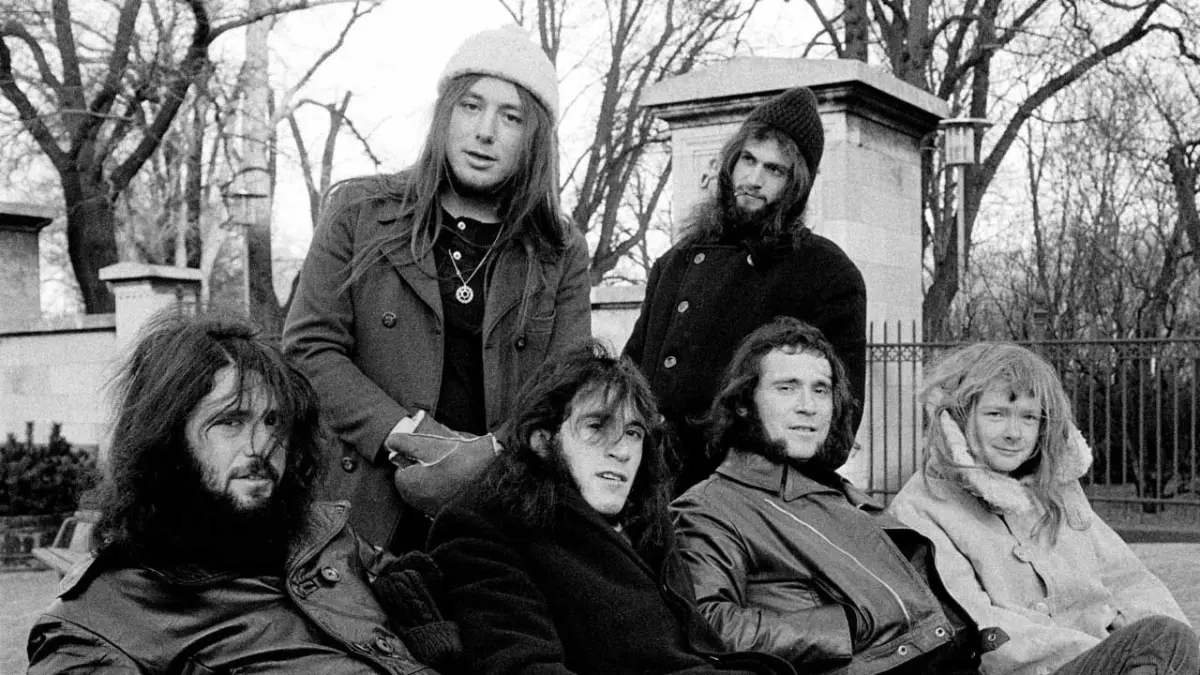
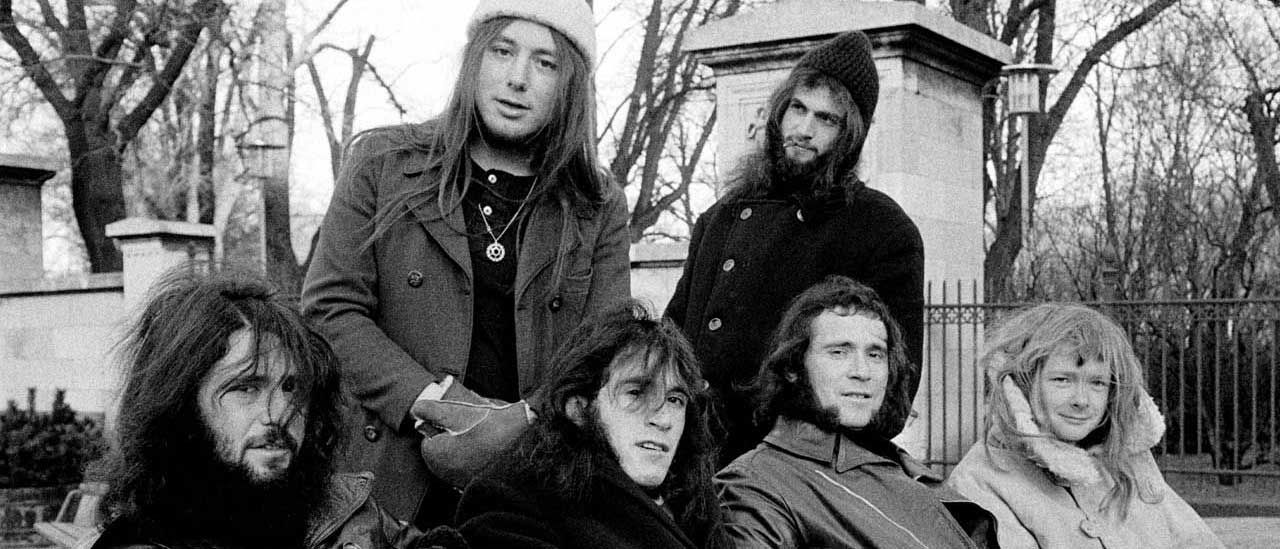
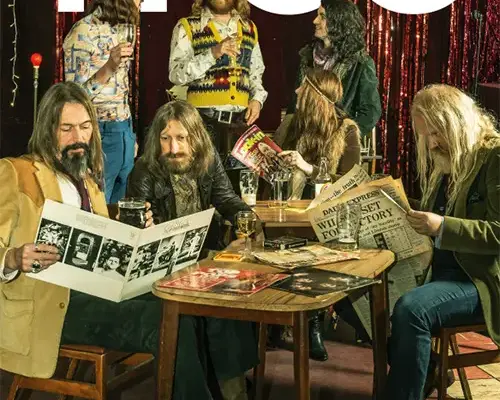
Released in December 1972 via Vertigo Records, Gentle Giant’s fourth studio album, Octopus, stands as one of the most intellectually ambitious artifacts of the 1970s progressive rock movement. Formed by the Shulman brothers—Derek, Ray, and Phil—alongside keyboardist Kerry Minnear, guitarist Gary Green, and drummer John Weathers, Gentle Giant constructed a sonic identity rooted in multi-instrumental virtuosity, polyphonic counterpoint, medieval folk motifs, and high-minded literary allusions.
While contemporaries such as Yes, Genesis, and Pink Floyd captured massive arena audiences, Gentle Giant occupied a distinct niche as a "musician’s band." Octopus—a title deriving from a pun on "eight tracks" (octo-opus)—serves as a primary case study for both the triumphs and the polarization of the progressive rock genre. Incorporating everything from xylophones, Mellotrons, and saxophones to intricate chamber-style vocal fugues, the record carries a reputation for technical bravado tempered by an eccentric, uniquely British sense of self-deprecation.
A retrospective evaluation by the Classic Rock Album of the Week Club re-examined the record’s cultural and musical weight five decades after its original release. Gathering critical analysis, historical context, and formal voting metrics from seasoned rock listeners, the panel awarded Octopus a final composite score of 6.32 out of 10 across 28 evaluated ballots. This evaluation reflects a persistent dichotomy: while musicologists and progressive rock aficionados celebrate the album’s structural brilliance and lasting lineage, casual listeners often find its vocal arrangements and hyper-dense compositions difficult to parse.
Detailed Chronology
[1966–1969] Simon Dupree & The Big Sound (Shulmans achieve pop-psych hit with "Kites")
     │
     ▼
[1970] Gentle Giant Forms ──► Releases self-titled debut (Vertigo Records)
     │
     ▼
[1971–1972] Release of "Acquiring the Taste" & "Three Friends"
     │
     ▼
[Dec 1972] "Octopus" Released ──► Engineered by Martin Rushent; sleeve art by Roger Dean
     │
     ▼
[2015] 50th Anniversary / Modern Era ──► Remix by Steven Wilson highlights spatial fidelity
From Psychedelic Soul to Polyphonic Prog
The genesis of Gentle Giant is rooted in the 1960s British R&B and psychedelic scene. The Shulman brothers, along with drummer Martin Smith, originally achieved commercial visibility as Simon Dupree and The Big Sound, earning a UK Top 10 hit in 1967 with the psychedelic single Kites. Notably, during their touring era, the group briefly employed a young, undiscovered keyboardist named Reginald Dwight—who would later achieve global stardom under the name Elton John.
Dissatisfied with pop commercialism, the Shulmans disbanded the group in 1969 to form Gentle Giant in 1970. Joining forces with Kerry Minnear (a Royal Academy of Music graduate) and Gary Green, the band pledged to expand the boundaries of contemporary music, releasing Gentle Giant (1970), Acquiring the Taste (1971), and Three Friends (1972) in rapid succession.
The Compositional Architecture of Octopus (1972)
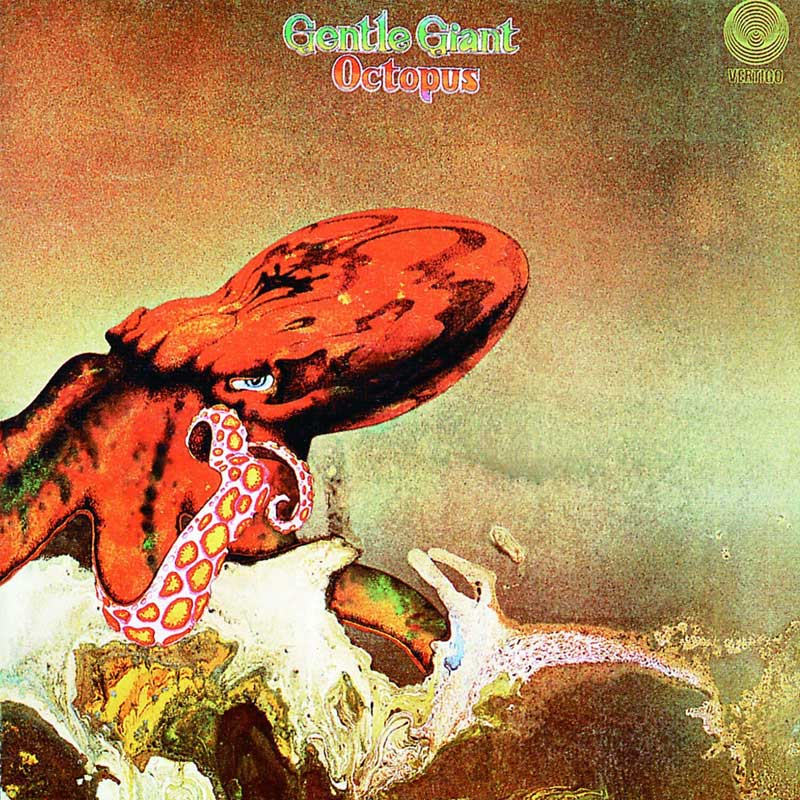
Recorded in late 1972, Octopus marked a turning point for the group. It was engineered by Martin Rushent—who would later gain fame producing synth-pop icons like The Human League—and featured iconic cover artwork designed by Roger Dean for its UK release (with an alternative jar-enclosed octopus illustration by Charles White created for the North American market).
The album’s eight tracks demonstrate a wide range of stylistic influences:
The Advent of Panurge: Inspired by the Renaissance literature of François Rabelais (Gargantua and Pantagruel), this opening track features interlocking vocal counterpoint, abrupt time-signature switches, and rich synth textures.
Raconteur Troubadour: A medieval-tinged composition utilizing violins, cellos, and brass, painting a portrait of a travelling minstrel through chamber-rock arrangements.
A Cry for Everyone: Driven by Gary Green’s heavy guitar riffs and Moog synthesizer flourishes, the track draws thematic inspiration from French existentialist philosopher Albert Camus.
Knots: The album’s technical center-piece, directly inspired by psychiatrist R.D. Laing’s poetic work Knots. It presents complex, four-part vocal polyphony intercut with xylophone and vibraphone solos, standing as a conceptual precursor to Queen’s multi-tracked vocal experiments in Bohemian Rhapsody.
The Boys in the Band: A fast-paced instrumental showcase dedicated to the group’s road crew, built around odd meters and rapid-fire key changes.
Dog’s Life: A satirical acoustic piece utilizing string quartets and soft brass, reflecting on the loyalty and hardships of road life.
Think of Me with Kindness: A soulful, brass-backed ballad sung by Kerry Minnear, offering a quiet emotional contrast to the album’s technical complexity.
River: The closing track, merging avant-garde violin textures, reverse tape effects, and hard-rock guitar solos into an extended, atmospheric piece.
Reissue History and the Steven Wilson Remix
In subsequent decades, Octopus underwent several remasters. Its definitive modern presentation arrived when progressive rock producer and Porcupine Tree frontman Steven Wilson remixed the album into 5.1 Surround Sound and high-resolution stereo. Wilson’s mix unraveled dense instrument overdubs, bringing newfound acoustic clarity to the intricate vocal fugues and subtle percussive elements without compromising the analog warmth of the original 1972 master.
Supporting Context & Metrics
To understand the critical reception of Octopus, it helps to analyze the quantitative and qualitative data gathered during the Album of the Week Club evaluation.
The table below contrasts historical professional critical commentary with the panel’s modern consensus:
Publication / Source
Critical Summary
Key Highlight Track
AllMusic
Over-cluttered arrangements preserved by precise musician execution; has aged surprisingly well.
Knots
Debaser
Rhythmic shifts feel natural over time; proves that complex structures can still rock.
The Boys in the Band
The Rocktologist
A musical puzzle box that rewards repeat listens; dissonant ideas yield striking melodies.
Knots
Album of the Week Club
Highly influential on modern prog, but vocal delivery and academic tone hinder widespread appeal.
The Advent of Panurge / River
Official Statements and Critical Testimonials
The album’s reception highlights a clear split between appreciation for its technical composition and difficulty engaging with its vocal and thematic style.
Contemporary Critical Assessment
"What’s really going on in Gentle Giant’s music is a kind of musical puzzle. The better you get at sorting out the puzzle, the richer the music will be… In ‘Knots’, a hairy, unpleasant, dissonant-sounding thing keeps getting messier until, all at once, one of their most immediate and beautiful melodies pops out at you."
— The Rocktologist Review
"Occasionally, arrangements do get overly cluttered—with each of the six band members doubling up on at least three different instruments, there’s a distinct sense of overdubs for overdubbing’s sake. Follow the key instruments alone, however, and the soundscapes make perfect sense."
— AllMusic Retrospective
Community Panelist Insights
On Technical Virtuosity vs. Accessibility
Philip Qvist: "I can’t fault the musicianship, but the truth is that Octopus didn’t float my boat either. Not a bad album, but it’s barely average. At least it isn’t totally self-indulgent, but it’s still a 5 from me."
Gary Claydon: "True prog. Unmistakably, unequivocally, unapologetically prog… If anybody ever asks you what prog sounds like, just answer ‘Gentle Giant’."
On Vocal Styling and Structural Intricacies
Greg Schwepe: "The vocals seemed too prim and proper, plaintive, a bit genteel, and a bit recitative at times. All prog rock seems to have elements of what you could call ‘chamber music’… but in this case it seemed to take it a bit too far for me. 6 out of 10."
John Davidson: "Gentle Giant are one of those bands whose influence on their genre is much more important than their popularity… The more I have listened to Octopus, the more I like the music, but the vocals and vocal arrangements are a real turn-off. They sound old-fashioned, almost churchy at times."
On Historical Influence and Legacy
Mike Canoe: "Even by prog standards, Gentle Giant seem like a uniquely complex and challenging band to get into. Minstrel vocals blended with instruments like mellophones, Moogs, and vibraphones… Octopus is an album that makes me want to keep trying."
Mark Herrington: "Its influence is clear, with many moments that reminded me of subsequent songs from other bands—from the ‘cartoon chase’ elements of ‘The Boys in the Band’, reflected in Dream Theater’s ‘Endless Sacrifice’, to Haken’s use of a cappella in ‘The Cockroach King’."
Future Outlook: Gentle Giant’s Enduring Legacy
While Gentle Giant disbanded in 1980 after releasing ten studio albums, the musical architecture established on Octopus continues to influence progressive rock, modern progressive metal, and avant-garde composition.
Modern Progressive Metal: Acts like Haken directly credit Gentle Giant’s vocal counterpoint as a blueprint for tracks such as The Cockroach King. Similarly, progressive metal titans Dream Theater frequently mirror the fast-paced, instrumental meter shifts found on The Boys in the Band.
Neo-Prog and Symphonic Rock: 1990s and 2000s progressive revivalists—most notably Spock’s Beard and Big Big Train—adopted Gentle Giant’s signature elements, integrating chamber instrumentation, counterpoint vocals, and brass arrangements into modern formats.
Archival Preservation: Through ongoing spatial audio remixes by engineers like Steven Wilson, alongside physical anniversary box sets, Octopus remains a key educational standard for music production programs analyzing early analog multi-track recording techniques.
Ultimately, Octopus remains a quintessential progressive rock release. It may not offer the easy entry points of traditional hard rock, but for listeners willing to decipher its complex musical ideas, Gentle Giant’s 1972 work remains a monument to pure, uncompromised creative ambition.