Executive Overview
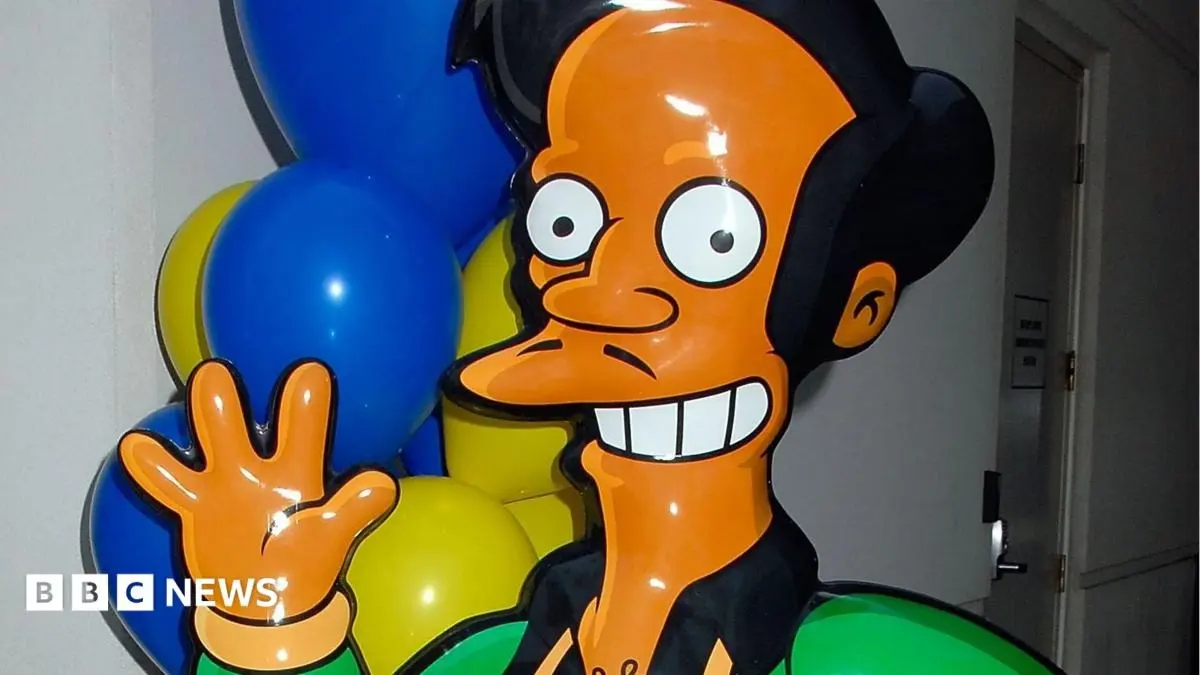
After nearly a decade of silence, forced exile, and intense cultural reckoning, Springfield’s most iconic Kwik-E-Mart proprietor has officially returned to prime-time television. Apu Nahasapeemapetilon—the beloved yet deeply contested convenience store owner who has been a staple of The Simpsons universe since 1990—made his long-awaited speaking return in Sunday night’s episode, titled "The Revengening." Voiced by India-born, US-raised actor Sunil Malhotra, Apu’s comeback marks a watershed moment for the legendary animated series, signaling a deliberate effort by producers to address, remediate, and ultimately reclaim a character caught in the crossfire of modern media representation debates.
The journey to this moment has been arduous. For years, Apu was reduced to a background fixture in Springfield, seen but never heard, following accusations that the character relied on regressive South Asian stereotypes. The controversy reached a boiling point in 2017 with the release of Hari Kondabolu’s critically acclaimed documentary, The Problem with Apu. The backlash ultimately prompted white voice actor Hank Azaria to step down from the role in 2020, opening the door for an extensive behind-the-scenes reassessment of how a modern writers’ room could responsibly reintegrate the character.
Sunday’s episode did not merely reintroduce Apu; it directly confronted the historical tension surrounding his absence through a meta-narrative that blurred the lines between Springfield’s fictional universe and Hollywood’s real-world accountability. With Malhotra stepping into the role—and actress Janina Gavankar taking over the voice of Apu’s wife, Manjula—The Simpsons has charted a new path forward. This comprehensive report explores the chronology of the Apu controversy, the cultural and systemic shifts within the animation industry, the nuances of Malhotra’s casting, and what this high-profile revival means for the future of satirical television.
Detailed Chronology: From Beloved Icon to Cultural Flashpoint
1990–2010s: The Rise of a Springfield Staple
Introduced in the 1990 episode "The Telltale Head," Apu Nahasapeemapetilon quickly evolved from a one-note convenience store clerk into a multi-dimensional, deeply human member of the Springfield community. Over nearly three decades, storylines explored his citizenship journey, his arranged marriage to Manjula, the birth of their octuplets, and his assimilation into American culture while retaining elements of his heritage.
Voiced by white actor Hank Azaria using an exaggerated Indian accent, Apu became a pop-culture touchstone. However, as cultural attitudes toward representation shifted in the late 2000s and 2010s, the character’s origins as a comedic pastiche began to draw critical scrutiny from South Asian media critics and audiences who felt the caricature overshadowed genuine representation.
2017–2018: The Problem with Apu and the Industry Reckoning
The cultural conversation shifted dramatically in 2017 with the release of the documentary The Problem with Apu, produced and hosted by comedian Hari Kondabolu. The film argued that Apu’s characterization was rooted in racial tropes, reinforcing harmful stereotypes that impacted South Asians living in Western societies.
The pressure mounted on The Simpsons production team. In a 2018 episode titled "No Good Read Goes Unpunished," the show attempted to address the controversy directly. Marge reads a sanitized children’s book to Lisa, and when Lisa breaks the fourth wall to point out that a book written decades ago is now politically incorrect, Marge offers a dismissive shrug to the camera: "Some things will be dealt with at a later date," adding, "if at all." The meta-commentary was widely criticized by viewers and critics alike as dismissive of legitimate grievances.
2020: Hank Azaria Steps Down
Recognizing the changing cultural landscape, Hank Azaria announced in early 2020 that he would no longer voice the character. In subsequent interviews, Azaria expressed profound regret over his participation in perpetuating stereotypes, telling Dax Shepherd on the Armchair Expert podcast: "Part of me feels like I need to go around to every single Indian person in this country and personally apologise."
Following Azaria’s departure, Apu was effectively sidelined. While he occasionally appeared as a visual extra in crowd scenes, he did not utter a single line of dialogue for nearly eight years, last speaking in the October 2017 episode "The Serfsons."
2026: The Return in "The Revengening"
After years of silence, a heavily guarded secret within the Fox animation studios was finally revealed on Sunday night. Apu returned to prime-time television in an episode designed to heal old wounds, featuring a brand-new voice actor, a reworked narrative arc, and a clear message of reconciliation from the show’s creative leadership.
Supporting Context & Metrics: The Changing Face of Animation
The decision to recast Apu is part of a broader, industry-wide reckoning regarding representation in animation. For decades, the practice of casting white voice actors to portray characters of color—particularly in comedic ensembles like The Simpsons, Family Guy, and Bob’s Burgers—was an industry standard. However, the social justice movements of the late 2010s accelerated a long-overdue transition toward authentic casting.
| Milestone / Event | Year | Key Figures Involved | Impact on the Industry |
|---|---|---|---|
| The Problem with Apu Released | 2017 | Hari Kondabolu | Sparked global discourse on South Asian representation in media. |
| The Simpsons Addresses Controversy | 2018 | Writers’ Room, Marge & Lisa | Met with backlash for perceived dismissiveness of systemic concerns. |
| Hank Azaria Steps Down | 2020 | Hank Azaria | Set a precedent for veteran actors voluntarily vacating stereotypical roles. |
| Industry-Wide Recasting Wave | 2020–2022 | Various Studios (Fox, Netflix, Bento Box) | Led to the replacement of white actors voicing Black and minority characters (e.g., Family Guy, Big Mouth). |
| Apu’s Return & Recasting | 2026 | Sunil Malhotra, Janina Gavankar, Matt Selman | Marked the definitive return of a sidelined character via authentic representation. |
Industry analysts point out that this shift is not merely about ticking diversity boxes; it reflects an evolution in how long-running intellectual properties maintain relevance in a hyper-connected, multicultural global market. By integrating authentic voices into the creative process, shows like The Simpsons attempt to insulate themselves against charges of cultural obsolescence while offering creators of color a seat at the table.
Official Statements and Behind-the-Scenes Insights
The secrecy surrounding Apu’s return was meticulously maintained by the production team. When new voice actor Sunil Malhotra received the initial call from his agent, his reaction was mixed.
"When my agent called me about a Simpsons audition, I knew exactly what role it was for, and the idea actually made my stomach sink," Malhotra admitted in an interview with Variety. "But admittedly, part of me was also curious. It had been eight years since Apu had spoken on the show, and it got me thinking: Did the writers’ room look different now?"
Malhotra, known for his work in Grey’s Anatomy and The Legend of Korra, engaged in extensive discussions with showrunner Matt Selman and co-executive producer Cesar Mazariegos before accepting the role. He sought reassurance that the character’s return would not lean into retrogressive tropes, but instead acknowledge past missteps and move forward constructively.
"Could they bring him back in a way that acknowledged and apologised for past mistakes? Could I make the character my own, and reclaim him in some way? And could they achieve all of that in an unmistakably Simpsons way that didn’t disappoint fans?" Malhotra asked rhetorically.
Describing the process as a "deeply collaborative experience," Malhotra expressed hope that the narrative would resonate both with die-hard legacy fans and with South Asian viewers who had alienated themselves from the show years prior.
Meanwhile, actress Janina Gavankar—acclaimed for her work in Apple TV+’s The Morning Show—has stepped into the role of Apu’s wife, Manjula, succeeding previous voice talents Jan Hooks and Tress MacNeille. This double-casting solidifies a generational shift in how the Nahasapeemapetilon family is represented within Springfield.
Narrative Breakdown: Inside "The Revengening"
The plot of Sunday’s comeback episode served as a brilliant, self-aware allegory for the cultural storm surrounding Apu.
The narrative kicks off with a mysterious figure wearing a "Daft Monk" Halloween costume—a playful homage to electronic music pioneers Daft Punk. Throughout the episode, this masked individual is repeatedly, almost absurdly, killed off by various careless Springfield residents in slapstick fashion. After a year of enduring this cycle of municipal neglect, the character returns to exact vengeance.
Summoning the entire town to Springfield City Hall, the figure removes his helmet, unmasking himself as Apu.
"I am the man you left for dead. I am the one you pretended never existed," he declares to the stunned crowd.
Apu recounts his harrowing ordeal: nearly killed dozens of times before washing up on the surreal "Island of Forgotten Garbage," where he was ultimately nursed back to health by the notoriously incompetent Dr. Nick Riviera.
Just as Apu prepares to set City Hall ablaze, Marge Simpson steps forward. In a transparent meta-textual moment, Marge acts as a direct mouthpiece for the show’s producers and writers:
"Apu, we’re so sorry we left you for dead. Believe me, we wanted to do the right thing."
Adding to the emotional weight of the scene, Bart Simpson chimes in with adolescent remorse: "But we were so scared, and just didn’t know what to do."
The emotional climax arrives when Homer Simpson offers to sacrifice himself to protect the town, delivering a poignant monologue that reminds viewers of Apu’s foundational importance to the fabric of Springfield:
"You were on our bowling teams, our barbershop quartets, our dad rock cover bands," Homer tells him. "We took you for granted. I took you for granted."
Through this clever framing, The Simpsons successfully weaponized its own history, turning an uncomfortable real-world controversy into a redemptive narrative arc that validated critics, comforted loyalists, and cleared the air for a fresh start.
Future Outlook: What Next for Springfield’s Kwik-E-Mart?
The successful reintroduction of Apu Nahasapeemapetilon raises critical questions about the trajectory of The Simpsons in its fourth decade on the air. By confronting controversy head-on rather than ignoring it or writing the character out permanently, the show’s creative team has demonstrated a willingness to adapt to contemporary ethical frameworks while preserving the anarchic humor that made the series a cultural juggernaut.
Moving forward, fans can expect to see Apu reintegrated into regular Springfield storylines, albeit with a renewed sensitivity to cultural nuance. With Sunil Malhotra guiding the character’s voice and creative direction, Apu is no longer an artifact of 1990s television tropes, but a symbol of how long-running franchises can evolve through listening, accountability, and authentic artistic collaboration.
As television continues to grapple with the tension between nostalgia and progress, the homecoming of Apu stands as a unique case study in media redemption—proving that even in a fictional town as absurd as Springfield, growth, forgiveness, and reinvention are always possible.