Executive Overview
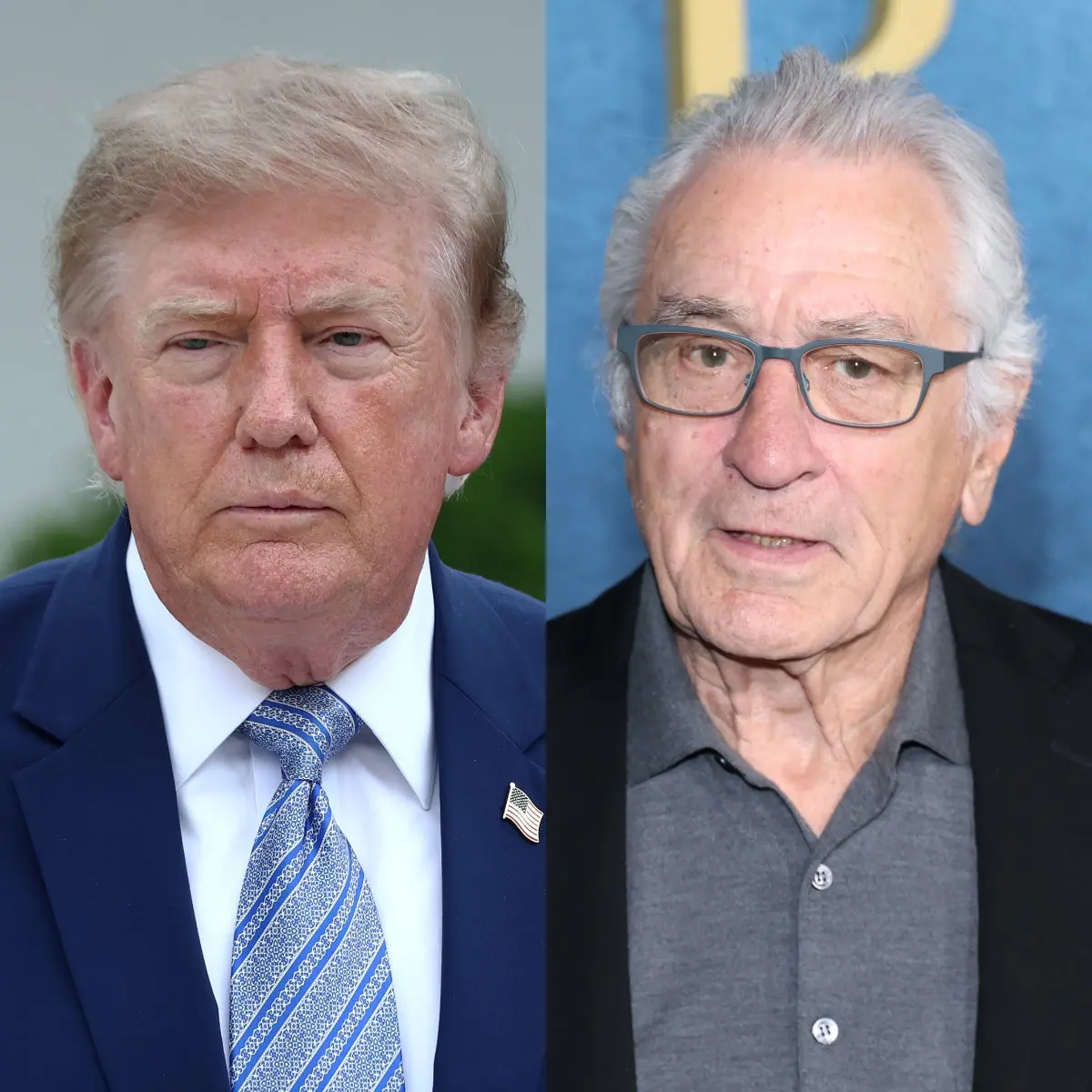
In an era where the boundary between digital fiction and political reality grows increasingly porous, President Donald Trump has once again leveraged generative artificial intelligence to target one of his most prominent and persistent critics: legendary Hollywood actor Robert De Niro.
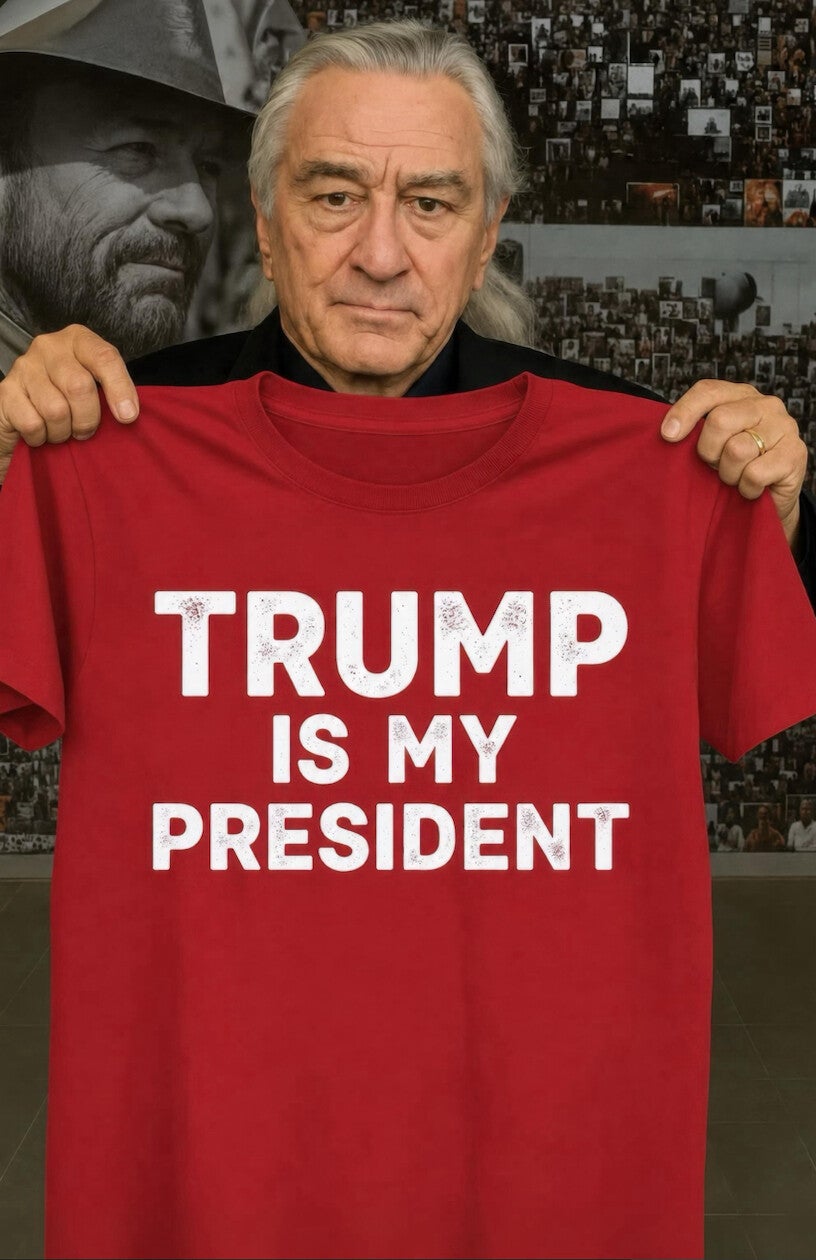
On a Sunday afternoon, the Republican president shared dozens of posts on his Truth Social platform. Among them was an apparently AI-generated image depicting the 83-year-old Academy Award-winning actor holding up a red t-shirt emblazoned with the provocative slogan: "TRUMP IS MY PRESIDENT."
Accompanying the digitally fabricated image was a characteristic jab from the president: "Even this jerk is beginning to get it," framing the post as a satirical or deceptive suggestion that De Niro had experienced a sudden ideological conversion.
This incident is far from an isolated digital prank; rather, it represents a calculated escalation in a multi-year cultural war played out across social media. As artificial intelligence tools become more democratized, accessible, and convincing, political actors are increasingly turning to synthetic media to construct alternate realities. For President Trump, utilizing AI to mock, co-opt, or belittle Hollywood detractors has become a recurring tactic.
This deep-dive investigation examines the collision of high-stakes politics and advanced media manipulation, charting the long history of animosity between the commander-in-chief and the film icon, the growing reliance on AI in modern political communication, and the broader implications for public discourse in a post-truth political landscape.
Detailed Chronology: A History of Hostility
To understand the weight of the recent AI-generated post, one must examine the deep-seated animosity that has defined the relationship between Donald Trump and Robert De Niro for well over a decade. What began as standard ideological friction between a New York businessman-turned-politician and a native Manhattan artist has long since evolved into a bitter, highly publicized feud characterized by personal insults and institutional critique.
The 2016 Flashpoint
The hostility reached a fever pitch during the closing weeks of the 2016 presidential election cycle. As part of a star-studded video campaign urging citizens to vote, De Niro unloaded a blistering, unscripted tirade against the then-candidate. Standing before the camera, the star of Taxi Driver and Raging Bull did not mince words, famously labeling Trump a "pig," a "punk," a "dog," and a "bulls*** artist" who was completely unfit for the highest office in the land.
.jpeg?trim=46,0,353,0&width=1200&height=800&crop=1200:800)
"He talks about how he wants to punch people in the face? Well, I’d like to punch him in the face," De Niro said at the time, capturing the raw, visceral anger felt by many progressive figures in the entertainment industry following Trump’s entry into mainstream politics.
Escalation and Retaliation (2019–2024)
As Trump’s presidency progressed—and continued into his subsequent political campaigns—De Niro’s rhetoric remained uncompromising. In 2019, the actor escalated his attacks, describing the president as "evil" and publicly remarking, "I can’t wait to see him in jail."
By the time Trump secured a return to the political spotlight in the mid-2020s, the actor’s warnings had grown increasingly apocalyptic. In an interview with USA Today last month, De Niro made his stance explicit:
"I don’t even use the word ‘hope’ anymore with [Trump’s] administration. They have to be gotten out. He’s just going to destroy not only the country, but other parts of the world. It’s insane. That’s a big concern of mine, and I think a lot of people now."
Trump, known for rarely letting a slight go unanswered, has returned fire with equal intensity. Over the years, the president has utilized Truth Social to mock the actor’s physical stature, intellectual capacity, and mental state.
In a 2024 post, Trump wrote: "I never knew how small, both mentally and physically, Wacko Former Actor Robert De Niro was." In a separate post that same year, he doubled down: "Robert De Niro has a terminal case of Trump Derangement Syndrome. Such a stupid sounding guy, a low IQ individual!"
Supporting Context & Metrics: The Rise of AI in Political Warfare
The deployment of a synthetic image of Robert De Niro is not a standalone tactical pivot; it is part of a broader, rapidly expanding trend in modern political campaigns: the weaponization of generative artificial intelligence (GenAI).
The Evolution of Political Deepfakes
Over the past several election cycles, political operatives, supporters, and candidates themselves have increasingly embraced synthetic media to bypass traditional public relations channels. While early iterations of political AI consisted primarily of rudimentary audio clips or poorly edited video mashups, the technology has advanced to a point where photorealistic images and videos can be generated in seconds.
According to digital forensics experts, the image shared on Truth Social exhibits classic hallmarks of generative AI manipulation: unnatural lighting consistency on the fabric of the t-shirt, uncanny smoothing of facial textures, and subtle anomalies in the typography of the slogan. Yet, for thousands of social media users scrolling through feeds at high speeds, the immediate visual impact often supersedes technical scrutiny.
A Pattern of Synthetic Mockery
President Trump has demonstrated a consistent willingness to use AI tools to subvert Hollywood critics, framing them within a narrative of psychological instability:
- The "Medical" Intervention (July): Earlier this summer, Trump shared a video on X (formerly Twitter) depicting himself operating in the role of a medical doctor. The satirical, AI-driven clip showed the president "successfully treating" a roster of prominent celebrity critics—including Robert De Niro, Rosie O’Donnell, and Whoopi Goldberg—for what the campaign frequently terms "Trump Derangement Syndrome."
- A History of Hollywood Feuds: De Niro is hardly the only cinematic icon to cross paths with the president. Trump’s ledger of public feuds includes high-profile clashes with Alec Baldwin (whose comedic impersonations on Saturday Night Live drew frequent presidential ire), Brad Pitt (whom Trump publicly mocked following political remarks at international award shows), Meryl Streep (whom he labeled "overrated" following a politically charged Golden Globes speech), and Rosie O’Donnell.
By fusing these long-standing personal grievances with advanced generative tools, the president’s digital strategy effectively creates a parallel digital reality—one where vocal critics are either psychologically unstable or secretly converted supporters.
Official Statements and Industry Reactions
The intersection of celebrity culture, politics, and artificial intelligence has triggered widespread alarm among legal experts, tech watchdogs, and public relations professionals.
The Legal and Ethical Gray Area
As of writing, representatives for Robert De Niro have not issued a formal, detailed legal response to the fabricated image, though sources close to the actor have historically dismissed Trump’s digital provocations as desperate attention-seeking tactics.
However, legal scholars point out that the rapid proliferation of generative AI highlights a glaring vacuum in United States privacy and copyright law. While defamation laws protect individuals from malicious falsehoods that cause tangible harm, the application of AI-generated satire in political discourse often enjoys broad protections under the First Amendment.
.jpeg)
"When a political figure uses synthetic media to falsely portray a private citizen—even a public figure like De Niro—as endorsing a political platform, it crosses a dangerous ethical Rubicon," notes Dr. Elena Vance, a professor of media ethics at Columbia University. "It trains the public to disbelieve their own eyes, fostering an informational ecosystem where truth becomes entirely subjective."
Social Media Governance
Platforms like Truth Social and X operate under vastly different moderation frameworks compared to legacy tech companies like Meta or Google. While mainstream platforms have increasingly introduced mandatory watermarking policies and aggressive labeling systems for synthetic media, alternative and politically aligned platforms often permit or outright encourage the free sharing of unverified, AI-generated memes as a form of political speech and user engagement.
Future Outlook: Navigating the Post-Truth Political Landscape
As the technological capabilities of generative artificial intelligence continue to outpace regulatory frameworks, the incident involving Donald Trump and Robert De Niro serves as a sobering preview of future political campaigns.
The Erosion of Shared Reality
The primary casualty in the age of political deepfakes is not necessarily the reputation of any single actor or politician, but rather the public’s baseline trust in visual evidence. When an 83-year-old actor known for his fierce, unrelenting opposition to a president can be instantaneously re-rendered holding a campaign shirt, the barrier to mass disinformation is effectively eliminated.
Voters are left navigating a chaotic information ecosystem where distinguishing between reality and fabrication requires an exhausting degree of digital literacy.
What Lies Ahead?
Looking forward toward upcoming legislative and presidential cycles, digital security experts predict an exponential increase in synthetic media usage. Campaigns are expected to deploy hyper-realistic audio, video, and imagery not merely as humorous memes, but as targeted strategic weapons designed to suppress turnout, demoralize opponents, and manufacture consensus out of thin air.
For figures like Robert De Niro, the digital mirage is likely just the beginning. As long as Hollywood and Washington remain locked in their deep ideological embrace—and as long as generative AI remains cheap, fast, and accessible—the battle lines will increasingly be drawn not in the halls of Congress or on movie screens, but within the pixelated battlegrounds of the digital feed.