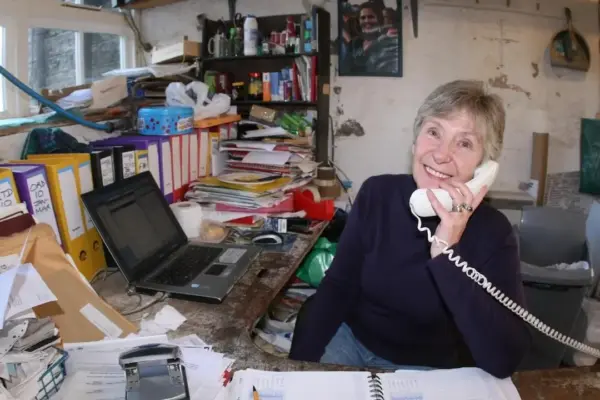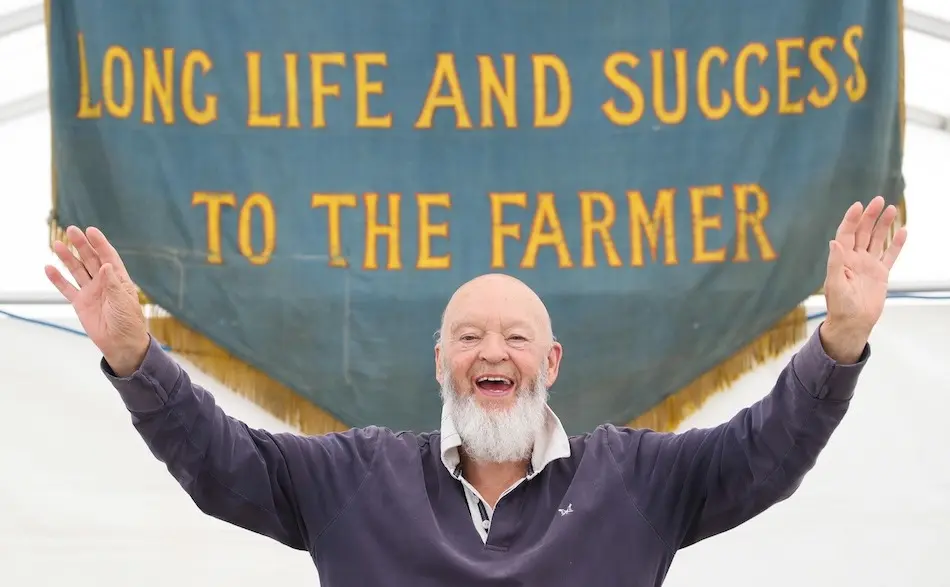
PILTON, SOMERSET — To describe Sir Michael Eavis as a dairy farmer who happened to start a music festival is to drastically understate the seismic cultural impact he has had over the past half-century. As the calendar turns to October 17, 2025, the visionary creator of the Glastonbury Festival marks his monumental 90th birthday. Sitting down for an exclusive, reflective interview at his home in Pilton, captured by photographer Rik Mav, Eavis cuts a figure of remarkable vitality.
To look at him today—sharp-witted, deeply engaged with his surroundings, and bustling with creative energy—is to witness a man whose life’s work has culminated in an institution woven into the very fabric of British history. Yet, as he surveys an empire that spans legendary weekend fields, community housing developments, and supermarket shelves nationwide, his feet remain firmly rooted in the Somerset soil that started it all.
Executive Overview
Sir Michael Eavis’s milestone birthday arrives during a scheduled fallow year for the Glastonbury Festival, offering a rare moment of collective pause for the UK music industry and millions of festivalgoers worldwide. Rather than resting on his laurels, Eavis remains deeply embedded in the creative heartbeat of Pilton, collaborating with artists, managing his dairy operations, and championing local social housing initiatives.
This comprehensive retrospective explores Eavis’s journey from a beleaguered Somerset farmer battling local authorities to the undisputed patriarch of modern counterculture. Through an in-depth examination of his personal reflections, the milestones of Worthy Farm, and the socioeconomic legacy of a festival driven by Methodist principles and political conscience, this article charts the enduring triumph of doing things your way.
Detailed Chronology: From Local Battles to Global Legend
The Early Decades: Seeds of Rebellion (1970–1980s)
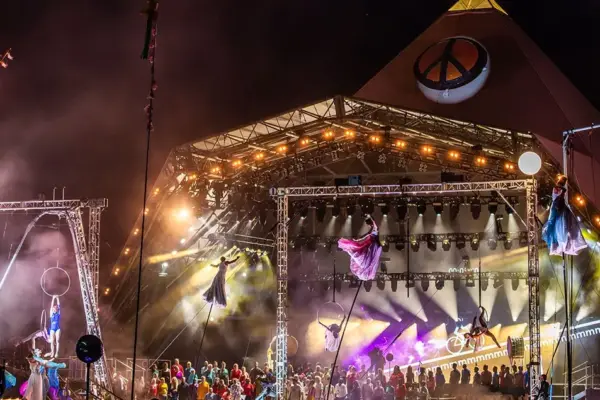
It is difficult for contemporary music fans—accustomed to the slick, corporate-sponsored monoliths of the modern festival circuit—to picture the perilous, improvised origins of Glastonbury. When Eavis hosted the Pilton Pop, Blues & Folk Festival in September 1970 (inspired by seeing Led Zeppelin at the Bath Festival), admission was £1 and included free milk from the farm.
However, the road from that inaugural gathering of 1,500 people to global supremacy was fraught with existential peril. For years, Eavis found himself locked in bureaucratic and ideological warfare with local councils, magistrates, and the police.
"I think the main thing is that, in those days, I was always at war with the council and the village and the local magistrates and the police," Eavis recalls. "And it came good. Which is extraordinary, really. But the fight was really what made it work, there’s no doubt about that. It was certainly worth it!"
Threats of closure loomed large over the early decades. Eavis vividly remembers the chairman of the magistrates delivering a chilling ultimatum: "If you do this again, you’ve had it." Yet, driven by an unshakeable stubbornness and a fierce belief in communal gathering, he pressed forward, transforming local resistance into legendary resilience.
The Ascendancy of Worthy Farm (1990s–2010s)
As the decades progressed, Glastonbury evolved from a countercultural hippie haven into the undisputed crown jewel of the global festival calendar. Eavis navigated the turbulent waters of commercialization, security regulations, and changing musical landscapes while fiercely retaining the festival’s independent spirit.
Key milestones cemented its mythical status: unforgettable headliners, transformative mud-soaked years, and the introduction of groundbreaking performance spaces like Arcadia and the dedicated creative workshops led by visionaries like Joe Rush. Through it all, Eavis maintained a philosophy that the most recent iteration of the festival was always the best one, a testament to his ability to continually reinvent and adapt.
The Modern Era and the Fallow Year (2020–Present)
Entering his ninth decade, Eavis has largely transitioned the day-to-day oversight of the festival to his daughter, Emily Eavis, yet his passion remains undimmed. Reflecting on the most recent festival, his eyes light up when discussing the headliners. His personal highlight? Neil Young’s spellbinding Saturday night performance.
"He was so good," Eavis says with palpable admiration. "He really loves performing here and he played such a great set."
Though 2025 marks a fallow year—a vital environmental and agricultural rest period for Worthy Farm—Eavis’s diary remains packed. Recent visits with creative collaborators like Joe Rush and the Arcadia team prove that his appetite for artistic synergy has not waned.
Supporting Context & Metrics: The Dual Empire of Milk and Music
To understand Sir Michael Eavis is to understand the duality of Worthy Farm: a working agricultural enterprise that seamlessly coexists with the world’s most famous temporary city.
The Dairy Connection and the Co-op Triumph
Long before fields echoed with the sounds of 200,000 revellers, Eavis’s lifeblood was dairy farming. Today, that legacy thrives through a partnership with Wyke Farms. The milk produced by Worthy Farm’s prized dairy herd is processed into premium cheddar, distributed to hundreds of Co-op stores across Great Britain.
Eavis’s childlike wonder at this commercial ubiquity remains charmingly intact. He recounts a journey to Scotland on the train:
"When we got off in Glasgow, there was a Co-op shop just over the road. So I decided to pop across just to see if they had the cheese. They did! It was all over the shelves! Isn’t that wonderful?"
Philanthropy, Social Housing, and Community Impact
Beyond music and milk, Eavis’s greatest pride rests in his profound commitment to social equity. Eschewing the temptation to hoard wealth, Glastonbury Festival has consistently funnelled millions of pounds into charitable causes, supporting organizations like Greenpeace, WaterAid, and Oxfam.
Closer to home, Eavis’s vision manifested in the construction of 52 social houses in Pilton, designed specifically to ensure that local families and working people are not priced out of their own village. The project received national acclaim when football legend and broadcaster Gary Lineker visited to open the development.
"Gary Lineker came to open the houses, and he really saw the value of them. He did a lovely interview about them and it went everywhere," Eavis reflects. "I think my mother would be proud of me for the houses too. They look lovely on a sunny day. I drive that way out of the village, you know, and I see the sun shining out on them and think, ‘How did all this happen?’"
Official Statements & Philosophical Foundations
At the core of Glastonbury’s enduring cultural relevance is its unwavering political and moral compass. Eavis has never shied away from using the festival as a platform for global activism, environmentalism, and social justice. When asked whether his Methodist upbringing provided the ideological bedrock for this ethos, his answer is swift and unequivocal: "I’m sure it is."
This moral framework has allowed the festival to transcend mere entertainment. It functions as a town square for modern Britain—a place where political discourse, charitable fundraising, and artistic expression intersect on a grand scale.
Today, the festival commands such colossal demand that Eavis acknowledges a humbling reality: "At this point, it feels like you could put a million tickets on sale and they’d still sell out." Yet, despite its corporate-sized footprint, the soul of the event remains stubbornly grassroots, anchored by the values of its founder.
Future Outlook: Celebrating 90 Years ‘My Way’
As Sir Michael Eavis prepares to celebrate his 90th birthday surrounded by family, friends, and villagers in Pilton, the festivities promise to feature a quintessential touch of showmanship. True to form, the birthday boy has plans to take the stage and perform three songs with his band.
When pressed on the setlist, Eavis maintains a playful secrecy, though he concedes that Frank Sinatra’s anthemic “My Way” is a strong contender for the lineup.
Given a life defined by stubborn resilience against local magistrates, revolutionary agricultural ventures, and the monumental creation of a global cultural phenomenon, it is hard to imagine a more fitting soundtrack. Sir Michael Eavis did not just build a festival; he built a monument to human persistence, community, and joy—and he built it entirely his way.