Executive Overview
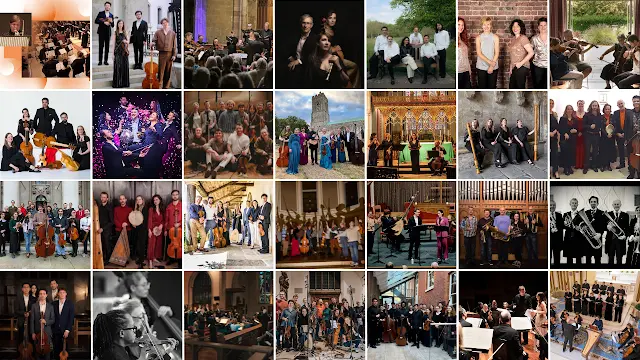
In an era where the contemporary arts sector continually battles funding deficits, commercial pressures, and the lingering infrastructural challenges of the post-pandemic landscape, the Continuo Foundation continues to serve as an indispensable lifeline for historical performance practice in the United Kingdom. In its landmark 12th funding cycle, announced in September 2026, the Foundation has injected £105,000 into 28 distinct Early Music projects. This latest wave of financial backing will directly support 68 live performances spanning 46 unique geographic locations, alongside five high-profile recording projects designed to permanently capture these ephemeral sonic explorations.
Since its inception at the height of the global health crisis in 2020, the Continuo Foundation has achieved an astonishing philanthropic footprint. Having raised and distributed £1.3 million, the organization has successfully underwritten 885 concerts across 289 distinct locations throughout England, Scotland, Wales, and Northern Ireland. Furthermore, its investments have catalyzed 63 recording projects, resulting in 40 commercially released albums that enrich the global discography of historical performance.
Grant Round 12 demonstrates a deliberate and strategic pivot toward generational renewal. By allocating 40% of its total funding to ten recently formed ensembles—including five debut recipients formed entirely since 2020—the Foundation is not merely preserving historical artifacts; it is actively underwriting the future of the profession. These grants provide critical scaffolding for young musicians, funding not only live performance fees but also the professional audio and video production assets required to secure future commercial bookings, attract promoters, and establish a viable footprint in a competitive marketplace.
From ambitious cross-community choral collaborations in Belfast to the resurrection of marginalized female composers in Cambridge and the deployment of archaic 19th-century wind instruments like the serpent, Round 12 proves that Early Music in the UK is vibrant, fiercely innovative, and deeply committed to cultural accessibility.
Detailed Chronology & Repertoire Highlights: Unearthing Hidden Masterpieces
The 28 projects selected for Grant Round 12 reflect an extraordinary breadth of musicological curiosity, spanning from the Renaissance courts of the Tudors to the vibrant parish galleries of Victorian England. Several standout productions illustrate the sheer geographical and artistic ambition unlocked by the Continuo Foundation’s support.
Expanding Horizons: Period-Instrument Masterpieces in Northern Ireland
For decades, audiences in Northern Ireland have faced acute geographical and logistical barriers in experiencing large-scale choral and orchestral masterworks performed on period instruments, largely due to a scarcity of local historical performance specialists. Round 12 directly addresses this deficit through two landmark undertakings.
- The Ulster Consort and St Matthew Passion: The grant makes possible an exceptionally ambitious plan by the Ulster Consort to perform Johann Sebastian Bach’s monumental St Matthew Passion in Northern Ireland. This undertaking requires overcoming significant logistical hurdles, including the mobilization of specialized period-instrument players in a region where such resources are historically scarce. The performance promises to be a watershed moment for classical music audiences in the province, offering a historically informed realization of Bach’s spiritual masterpiece that has rarely been heard live on period instruments in the region.
- Sestina Music and Monteverdi’s Vespers of 1610: Also based in Northern Ireland, Sestina Music has been awarded funding to bring Claudio Monteverdi’s breathtaking Vespers of 1610 to Belfast. This production exemplifies the foundation’s commitment to community integration and mentorship. Sestina will combine its core professional Early Music specialists with its elite "Next Generation Artists" and—in a ground-breaking first—local choristers drawn from the parish choirs of St George’s, St Polycarp’s, and St Peter’s. This synthesis of elite historical performance practice with grassroots choral participation bridges professional and community spheres, fostering deep local engagement.
Rediscovering Marginalized Voices: Maddalena Lombardini and Anne Boleyn
Historical musicology has undergone a profound reckoning in recent years regarding the systematic exclusion of female composers and performers from the traditional canon. Round 12 champions this corrective scholarship through two fascinating projects.
- The Cambridge String Quartet and Tales of Maddalena: Turning its attention to the nascent genre of the string quartet in the late 18th century, the Cambridge String Quartet has devised a program centered on the little-known Venetian composer Maddalena Lombardini. Lombardini’s six string quartets were published in 1769 at a time when the genre was still in its infancy. To contextualize the performance at King’s College, Cambridge, the concert will be accompanied by a rare public display of first-edition musical parts. Crucially, a portion of the Continuo grant will be dedicated to professional multi-camera filming, ensuring that the project generates high-grade promotional video content to introduce the ensemble—and Lombardini’s pioneering music—to international promoters and digital audiences.
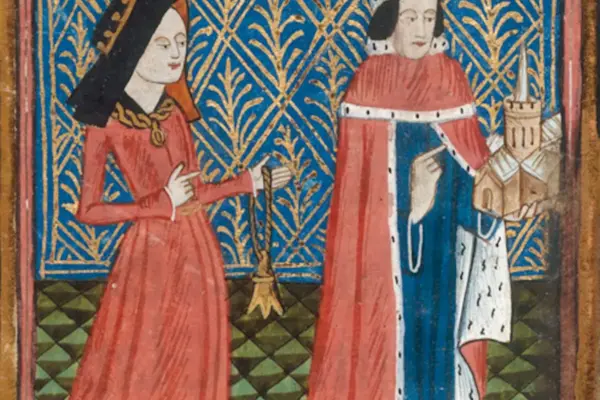
- Fontanella Recorder Quartet and A Falcon Fallen: The recorder ensemble Fontanella presents A Falcon Fallen, a deeply atmospheric program that traces the turbulent, tragic life of Anne Boleyn through the musical lens of the royal manuscript associated with her, currently preserved at the Royal College of Music. By pairing historical narrative with the intimate, haunting timbre of a consort of recorders, the project breathes new life into political and cultural artifacts of the Tudor court.
Archival Resurrections: From Roman Baroque to Victorian Parish Galleries
The scope of Round 12 extends from high Baroque rediscovery to the idiosyncrasies of 19th-century vernacular music-making.
- Ardour Baroque’s Antonio Luigi Baldassini Recording: In a major musicological coup, Ardour Baroque has secured funding for a world-premiere commercial recording of trio sonatas by the obscure Roman composer Antonio Luigi Baldassini. By placing Baldassini’s works alongside those of his legendary contemporaries Arcangelo Corelli and George Frideric Handel, the ensemble aims to re-evaluate the ecology of 18th-century Roman musical life, demonstrating that brilliance flourished far beyond the canon’s most famous names.
- Queen Victoria’s Consort and the West Gallery Music Association: Stepping forward into the 19th century, Queen Victoria’s Consort and the West Gallery Music Association are collaborating to recreate the vibrant, rustic soundscape of English parish church music circa 1840. Eschewing modern orchestral instruments, the performers will utilize an eccentric array of period rarities—including the serpentine-shaped serpent, the brassy keyed bugle, and the cavernous English bass horn—to restore the authentic, earthy texture of early Victorian rural worship.
Supporting Context & Metrics: The Anatomy of a Philanthropic Engine
To fully understand the weight of the £105,000 disbursement in Round 12, one must analyze the broader socio-economic and structural dynamics governing the UK’s classical music sector.
The Funding Crisis in the Arts
In recent years, traditional institutional funding streams for classical music in the United Kingdom have contracted significantly. Cuts to regional arts councils, coupled with escalating operational costs—including venue hire, insurance, transport, and instrument maintenance—have placed independent ensembles under existential strain. Large-scale symphonic organizations often absorb available public subsidies, leaving nimble, project-based period-instrument ensembles to navigate an increasingly hostile financial climate.
Quantifying the Continuo Impact
Since its formation in the shadow of the COVID-19 pandemic in 2020, the Continuo Foundation has operated as a uniquely agile and responsive philanthropic vehicle. Its metrics speak volumes:

- Total Capital Disbursed: £1.3 million across 12 grant cycles.
- Live Performance Reach: 885 concerts subsidized across 289 distinct geographic locations, ensuring that world-class historical performance is not siloed within major metropolitan hubs like London, Edinburgh, or Manchester, but is actively brought to rural communities, cathedral towns, and underserved regions.
- Discographical Legacy: 63 recording projects supported, culminating in 40 commercially distributed albums that permanently enrich the global cultural archive.
- Democratizing Geographic Access: By deliberately funding projects in regions historically starved of period-instrument infrastructure—such as Northern Ireland and remote corners of England and Wales—the Foundation acts as a cultural equalizer.
Investing in the Next Generation
A defining characteristic of Grant Round 12 is its explicit structural bias toward emerging talent. With 40% of the total round funding channeled into ten newly formed groups, and five ensembles receiving grants for the very first time, the Foundation is directly countering the "experience paradox" that plagues young musicians.
In today’s market, young ensembles cannot secure paid engagements without an established professional track record, yet they cannot build a track record without performance opportunities and high-quality promotional media. By funding not just the artistic fees of these young groups, but also professional audio recordings and HD video production, the Continuo Foundation provides a vital bridge. These digital assets empower emerging artists to pitch successfully to international festivals, secure management representation, and build sustainable careers.
Official Statements & Industry Perspectives
The announcement of Grant Round 12 has drawn widespread acclaim from across the British classical music community, highlighting the indispensable nature of grassroots philanthropic support in maintaining the UK’s status as a global hub for early music excellence.
Artistic directors and ensemble leaders have been quick to praise the Foundation’s holistic approach to grant-making. Representatives from the Ulster Consort noted that undertaking a masterpiece of the scale of Bach’s St Matthew Passion in a region with limited period-instrument infrastructure would have remained an unrealized ambition without the financial underwriting and moral backing of the Continuo Foundation. Similarly, Sestina Music emphasized that the integration of local parish choristers into a high-level professional performance of Monteverdi’s Vespers represents community outreach in its purest, most musically rigorous form.
Musicologists and educational partners have also lauded the Foundation’s commitment to archival recovery. By financing projects like the Cambridge String Quartet’s exploration of Maddalena Lombardini and Fontanella’s sonic excavation of Anne Boleyn’s manuscript, the Foundation is actively rewriting the historical narrative, proving that early music is a dynamic, evolving field capable of uncovering vital perspectives that resonate with modern audiences.
Furthermore, industry commentators have underscored the profound psychological and professional boost that the grants provide to the post-2020 generation of musicians. In an environment where systemic instability forces many talented instrumentalists to abandon performance careers, the Continuo Foundation offers a tangible safety net that rewards artistic innovation, historical rigor, and entrepreneurial enterprise.
Future Outlook: Sustaining the Momentum of Historical Performance
As the Continuo Foundation looks beyond its 12th grant round, the organization stands as a model for modern arts philanthropy: targeted, agile, transparent, and unswervingly committed to artistic excellence. However, the immense volume of high-quality applications received in Round 12 serves as a poignant reminder of the sheer scale of unmet need within the sector.
The demand for period-instrument performance in the UK has never been higher, driven by an increasingly sophisticated audience eager for authentic interpretations of familiar repertoire and thrilling encounters with unperformed historical manuscripts. Yet, the financial pressures facing independent artists show no signs of abating.
The Foundation’s ongoing success underscores the necessity for continued philanthropic investment from private donors, trusts, and corporate partners. If the UK is to maintain its hard-won reputation as a global capital for historical performance, the infrastructure built by the Continuo Foundation over the past six years must be protected, scaled, and sustained.
By ensuring that young musicians have the resources to launch their careers, that forgotten composers are given a voice, and that audiences in every corner of the British Isles can experience the transformative power of live early music, the Continuo Foundation is not merely preserving the past—it is actively composing the future.
Full details regarding all 28 grantees, upcoming concert dates, and ticket links from Grant Round 12 can be explored directly on the Continuo Foundation Website.