Executive Overview
In an era dominated by digital transformations, virtual reality simulations, and high-definition streaming, the ways in which audiences consume classical music are undergoing a profound metamorphosis. While technological institutions leverage VR headsets to mimic the sensation of performing within a symphonic body, a groundbreaking live-performance initiative is taking a remarkably organic approach to the same conceptual challenge. Titled Inside the Orchestra, this innovative project strips away the digital intermediary to offer audiences a genuinely visceral, acoustic-first experience: the chance to sit directly among the musicians of a live orchestra during a working rehearsal.
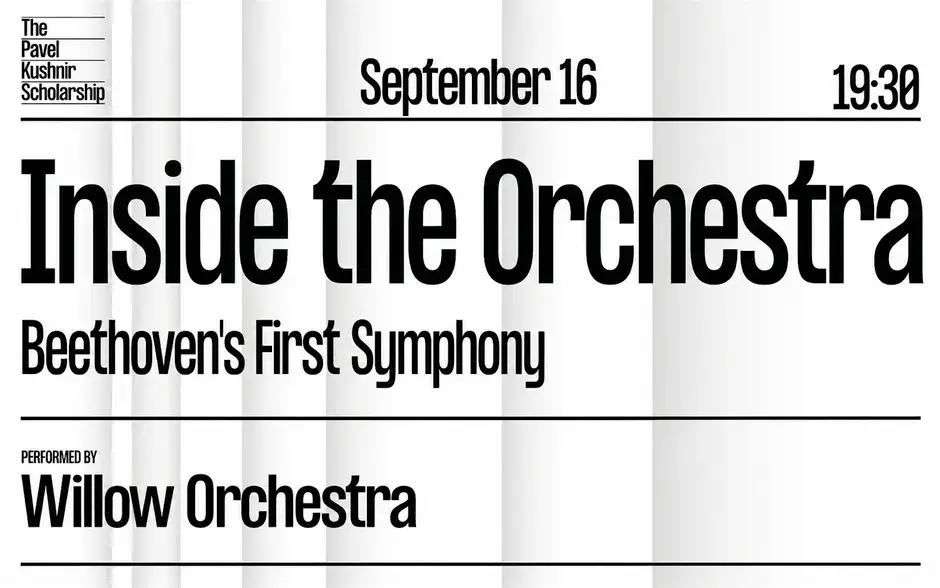
Organized by the Pavel Kushnir Scholarship—a London-based initiative founded in memory of the tragic and courageous Russian pianist and political dissident Pavel Kushnir—the event represents a convergence of cutting-edge audience engagement and profound social advocacy. On Wednesday, September 16, 2026, at the historic Annunciation Church near Marble Arch in London (W1H 7AH), conductor Bogdan Skrypka will lead the Willow Orchestra through a public, immersive rehearsal of Ludwig van Beethoven’s Symphony No. 1 in C major, Op. 21.
Rather than occupying traditional auditorium seats positioned at a polite distance from the stage, attendees during the first half of the evening will take up positions physically integrated within the string, woodwind, brass, and percussion sections of the orchestra. This radical seating rearrangement abandons the passive spectator model, transforming audience members into active participants who can feel the physical vibrations of cellos, observe the intricate breath control of woodwind players, and witness the non-verbal communication between section leaders and the conductor at micro-distances.
Following this rare behind-the-scenes laboratory of music-making, the evening transitions into a more familiar yet newly illuminated format. After the interval, the audience will move to traditional seating to hear the Willow Orchestra perform the complete symphony from an external perspective. By bookending the experience with these two vantage points—from the inside out and the outside in—Inside the Orchestra fundamentally reshapes the dynamic between performer and listener. Furthermore, the event serves as a living monument to Pavel Kushnir, raising awareness and critical funding for the scholarship program that bears his name, dedicated to rescuing young musical talent from the zones of conflict and authoritarian repression in Ukraine, Russia, and Belarus.
Detailed Chronology and Event Structure
To fully appreciate the ambition of Inside the Orchestra, one must examine the meticulously designed arc of the September 16, 2026 event at the Annunciation Church. The evening is intentionally structured to deconstruct the traditional concert-going experience, turning a standard orchestral performance into an educational and sensory excavation.
Phase One: Arrival and Spatial Integration
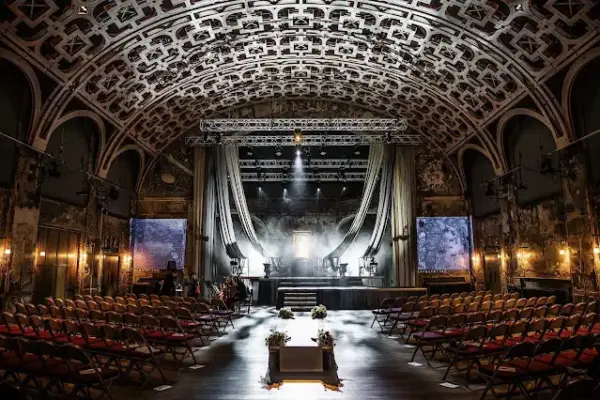
Upon entering the soaring acoustic space of the Annunciation Church at Marble Arch, attendees who have secured specialized immersive tickets will not be directed to pews or chairs facing an altar-like stage. Instead, under the guidance of front-of-house staff and orchestra management, participants will be ushered directly onto the performance floor.
Here, chairs are interspersed among the musicians of the Willow Orchestra. A violin enthusiast might find themselves seated mere feet from the principal second violin, surrounded by the swirling articulation of bowing arms. A lover of low brass will feel the physical concussions of the French horns and timpani reverberating through the floorboards and chest cavities. This spatial integration immediately alters the psychological barrier between artist and spectator. The musicians are no longer distant, flawless icons on a pedestal; they are breathing, sweating, working artisans navigating the granular challenges of musical execution.
Phase Two: The Working Rehearsal (The "Inside" Experience)
Led by conductor Bogdan Skrypka, the first half of the evening is resolutely unpolished. This is not a dress rehearsal designed merely to run through the pieces without interruption; it is a genuine, transparent working session.
- Unmasking the Process: Audiences will witness the stop-and-start nature of orchestral preparation. Skrypka will interrupt the ensemble to address intonation issues in the woodwinds, demand tighter rhythmic precision in the transition between the Adagio molto and Allegro con brio of the first movement, and balance the dynamic weight of the lower strings against the soaring upper themes.
- Acoustic Realities: From a standard concert hall seat, the sound of an orchestra merges into a unified, blended wave of acoustic energy. From inside the orchestra, the listener experiences the raw, unmixed reality of acoustic physics. The individual timbres of gut and steel strings, the reedy buzz of oboes, and the percussive attack of the timpani arrive at the ear asynchronously, creating a complex, three-dimensional spatial audio map that no recording technology can genuinely replicate.
- Visual Communication: Participants will observe the subtle visual lexicon of the orchestra—the breathing cues of wind players, the shared glances between concertmaster and conductor, the physical tension and release required to shape a Classical-era phrase.
Phase Three: The Interval and Perspective Shift
Following the intense, microscopic intimacy of the working rehearsal, a scheduled interval allows the audience to decompress and transition. During this intermission, participants move from the performance floor to traditional auditorium seating within the church.
This spatial migration is a critical pedagogical and artistic component of the project. Having spent the first hour experiencing the Beethoven symphony as a collection of localized, microscopic sonic events from within the machine, the audience will now re-experience the identical musical material from a macro-perspective.
Phase Four: The Complete Performance (The "Outside" Experience)
In the second half of the evening, the Willow Orchestra performs Ludwig van Beethoven’s Symphony No. 1 from start to finish as a unified, polished artistic statement.
For the audience, this performance will carry a radically altered resonance. Every nuance heard from the traditional seats—the crisp Classical-era staccatos, the playful syncopations of the third-movement Menuetto, and the triumphant risoluto explosions of the finale—will now be contextualized by the intimate knowledge gained earlier in the evening. The listener knows the physical effort, the correction of errors, and the human collaboration that went into every single bar of music. The boundary separating the observer from the creator has been permanently dissolved.
Supporting Context & Metrics: The Crisis of Classical Audiences and the Legacy of Pavel Kushnir
Inside the Orchestra does not exist in a vacuum; it responds directly to contemporary shifts in audience sociology, the evolution of classical concert programming, and a deeply urgent geopolitical reality in Europe.

The Evolution of Audience Engagement
Over the past two decades, cultural institutions worldwide have grappled with declining and aging classical music audiences. Traditional concert formats—characterized by silent, motionless audiences sitting in rows while gazing at distant performers—have increasingly been viewed as archaic, alienating younger demographics who crave interactivity, transparency, and authenticity.
Projects like the Philharmonia Orchestra’s virtual reality initiatives (which allow users to don VR headsets and sit within a digital simulation of a live orchestra) prove that there is an overwhelming public appetite for the perspective of the musician. However, while VR offers technological novelty, Inside the Orchestra leverages the irreplaceable power of the human element. By utilizing a real, live orchestra in an acoustic architectural space, the project bridges the gap between digital-age curiosity and authentic human connection.
The Genesis of the Pavel Kushnir Scholarship
The emotional and moral core of the event stems from the Pavel Kushnir Scholarship, an organization whose very existence is a testament to the high cost of artistic freedom in the 21st century.
Pavel Kushnir was a brilliant Russian classical pianist, musicologist, author, and teacher whose life was abruptly and tragically cut short by state repression. Stationed in Birobidzhan, in the Russian Far East, Kushnir utilized a YouTube channel—which at the time of his arrest boasted a meager five subscribers—to broadcast impassioned, eloquent denunciations of the Russian invasion of Ukraine, totalitarianism, and the destruction of human liberty.
In May 2024, Kushnir was arrested by the Russian Federal Security Service (FSB) under charges of "justifying terrorism." He was subjected to brutal conditions of detention, leading to a hunger strike that pushed his frail body to the brink. On July 27, 2024, Pavel Kushnir died in a Russian detention center at the age of 39. His death sent shockwaves through the international artistic community, laying bare the perilous reality faced by artists who refuse to remain silent in the face of state-sponsored aggression.
In response to this tragedy, the Pavel Kushnir Scholarship was established in London to transform mourning into constructive, life-affirming action. The charity provides critical financial support, mentorship, and educational pathways for young music students displaced by war and political persecution from Ukraine, Russia, and Belarus. By enabling these gifted young artists to commence or continue their studies across the United Kingdom, Europe, and the United States, the scholarship ensures that Kushnir’s legacy of uncompromising artistic integrity and anti-war advocacy endures.
Official Statements and Artistic Visionary Perspectives
While the administrative and philanthropic framework of the event is rooted in heavy historical gravity, the artistic execution relies on the vitality and collaborative spirit of modern musicianship.
Conductor Bogdan Skrypka, who will helm the Willow Orchestra for this ambitious endeavor, has long championed educational transparency in classical music. In pre-event artistic briefs, Skrypka and project organizers have emphasized that Beethoven’s Symphony No. 1 serves as the ideal vehicle for this experiment. Composed at the cusp of the 19th century as Beethoven stepped out from the towering shadows of Haydn and Mozart, the First Symphony is a work of youthful exuberance, structural experimentation, and audacious harmonic shifts. It is music in the process of breaking boundaries—making it a perfect metaphor for an event designed to break down the traditional boundaries of the concert hall.
Cultural commentators and music critics have similarly lauded the initiative. Writing in leading classical music journals, analysts have noted that projects like Inside the Orchestra represent the future of arts philanthropy and audience development. By tying ticket sales and public engagement directly to a cause that defends persecuted artists, the project elevates the concert experience from mere entertainment to an act of cultural solidarity.
Future Outlook: Reimagining the Concert Hall Experience
As Inside the Orchestra prepares to welcome its audiences on September 16, 2026, at the Annunciation Church, arts administrators, educators, and orchestral planners across Europe are watching closely. The implications of this project extend far beyond a single evening of Beethoven.
Scalability and Replicability
The success of the Marble Arch event could establish a new blueprint for community orchestral engagement. Orchestras constrained by traditional subscription models may increasingly adopt "inside-out" rehearsal formats to attract younger audiences, demystify symphonic music, and foster a deeper emotional bond between patrons and players. By transforming the rehearsal room into a shared public space, ensembles can cultivate a more knowledgeable, passionate, and loyal supporter base.
The Ongoing Mission of the Kushnir Scholarship
Crucially, the event serves as a vital fundraising and awareness-raising platform for the Pavel Kushnir Scholarship. As geopolitical conflicts persist and authoritarian regimes continue to crack down on dissenting artists, the need to rescue, relocate, and support young musicians becomes ever more critical. Every ticket purchased for Inside the Orchestra directly contributes to the scholarship’s endowment, ensuring that the next generation of musical talent is not silenced by tyranny.
In uniting the raw, acoustic brilliance of Beethoven’s early masterpiece with the urgent human rights mission of the Pavel Kushnir Scholarship, Inside the Orchestra achieves something remarkable. It reminds us that music is not merely a product consumed in passive silence, but a living, breathing, collaborative human endeavor—one that demands our presence, our empathy, and our unwavering defense of artistic freedom.
Event Summary & Ticketing Information
- Event Inside the Orchestra: Beethoven’s First Symphony
- Organizer: The Pavel Kushnir Scholarship
- Performing Ensemble: The Willow Orchestra
- Conductor: Bogdan Skrypka
- Date: Wednesday, September 16, 2026
- Venue: Annunciation Church, Marble Arch, London, W1H 7AH
- Ticketing & Registration: Full details and ticket reservations are available via Eventbrite.
- Scholarship Information: Learn more about the charitable mission at the Pavel Kushnir Scholarship Official Website.