Executive Overview
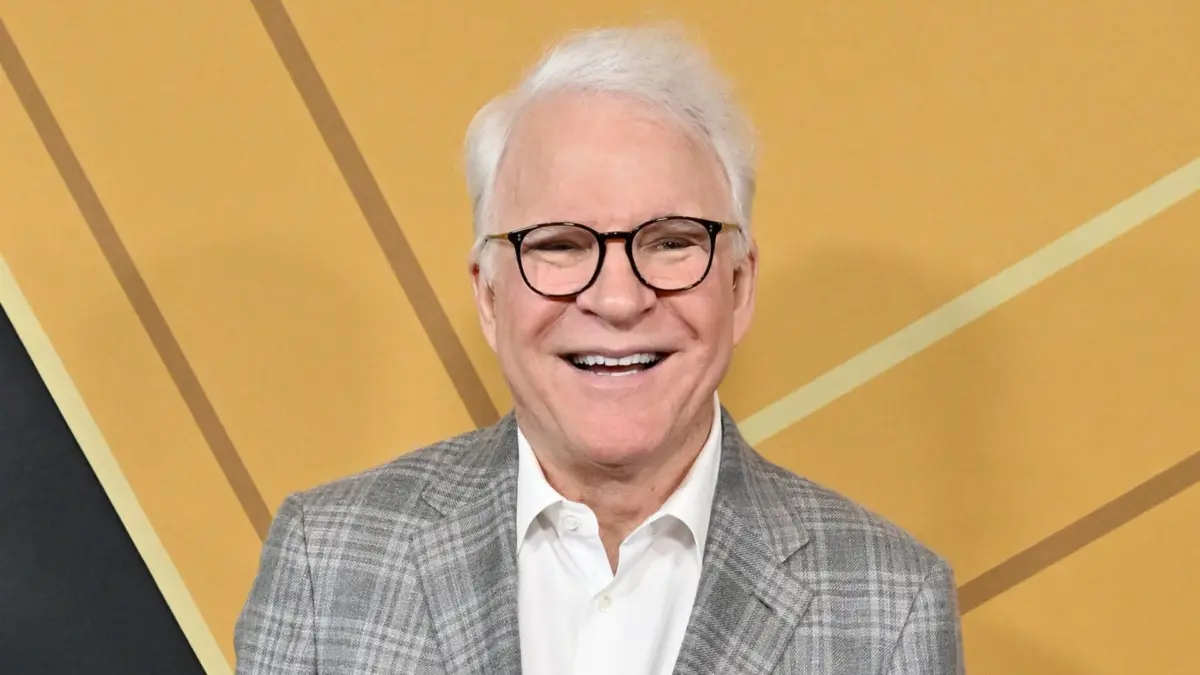
For over half a century, Stephen Glenn Martin has occupied a rare echelon in the American entertainment landscape. He is not merely a comedian, an actor, a writer, or a musician—he is all of these simultaneously, operating at the absolute apex of each discipline. As of late 2026, Steve Martin’s estimated net worth hovers around $150 million, according to financial tracking updates from industry benchmarks like Celebrity Net Worth. This represents a steady, calculated climb from the roughly $140 million figures cited earlier in the decade.
Yet, reducing Martin’s financial legacy to a single headline figure fails to capture the intricate tapestry of his professional life. His wealth is the byproduct of an unprecedented multi-decade career that stretches from the magic counters of Disneyland in the 1950s to the writer’s room of The Smothers Brothers Comedy Hour, through blockbuster cinematic hits of the 1980s and 1990s, and into contemporary streaming triumphs like Hulu’s Only Murders in the Building.
Furthermore, Martin’s balance sheet is fortified by assets far removed from Hollywood soundstages. He is a discerning connoisseur of high art with a collection estimated by experts to be worth anywhere from $50 million to $100 million, alongside a carefully curated real estate portfolio. This comprehensive analysis breaks down the anatomy of Steve Martin’s fortune, examining how raw earnings, savvy investments, and enduring creative reinvention forged one of the most resilient financial empires in modern show business.
Detailed Chronology: From Waco to Worldwide Stardom
The Formative Years (1945–1967)
Born in Waco, Texas, on August 14, 1945, Martin moved with his family to Southern California during his childhood. His early working life provided foundational lessons in timing, audience engagement, and performance. As a teenager, he worked at Disneyland—initially selling guidebooks and later transitioning to the park’s magic shop. It was among the display cases of tricks and illusions that a young Martin mastered sleight of hand, physical comedy, and the rudimentary mechanics of audience manipulation, skills he would later parlay into his revolutionary anti-comedy stand-up routines.
Simultaneously, he cultivated an interest in philosophy and theater at Porterville College and California State University, Long Beach, before transferring to UCLA. Academia, however, soon took a backseat to the magnetic pull of professional entertainment.
The Television Writer and Stand-Up Breakthrough (1967–1978)
In 1967, at the age of 22, Martin caught his first major break when he was hired as a writer for The Smothers Brothers Comedy Hour. His contributions to the groundbreaking variety show were recognized swiftly; in 1969, the writing team won a Primetime Emmy Award. This early validation set the trajectory for a career that would be defined by high-level writing before ever leaning heavily into marquee performance.
Throughout the 1970s, Martin transitioned from behind-the-scenes writer to avant-garde stand-up comedian. Eschewing traditional joke-setup-punchline structures, he performed in packed arenas wearing a white suit, playing the banjo, and shouting non-sequiturs like "Well, excuuuuse me!" His comedy albums—such as Let’s Get Small (1977) and A Wild and Crazy Guy (1978)—achieved massive commercial success, turning him into a cultural phenomenon and establishing his initial wave of substantial wealth.
Cinematic Ascent and Mainstream Domination (1979–2000s)
Martin’s leap to the silver screen cemented his financial status. The watershed moment arrived in 1979 with The Jerk, directed by Carl Reiner. Co-writing and starring in the feature, Martin commanded an upfront salary of roughly $600,000 coupled with a lucrative percentage of the film’s profits.
The Jerk unlocked a multi-decade run of box office dominance. Throughout the 1980s and 1990s, Martin starred in an unbroken string of hits, including Planes, Trains and Automobiles, Parenthood, L.A. Story, and the massive commercial juggernaut Father of the Bride (1991). By the turn of the millennium, he was commanding top-tier quote salaries, peaking commercially in 2006 when he earned an estimated $25 million to star in The Pink Panther, supplemented by an additional $3 million for co-writing the screenplay.
Supporting Context & Metrics: Decoding the Wealth
While gross box office figures and reported salaries make for dazzling headlines, financial analysts emphasize the vast canyon separating a star’s gross paycheck from their actual net worth.
Gross Earnings vs. Net Wealth
Private contracts, agent commissions, legal retainers, business management fees, and federal and state taxes routinely consume a significant percentage of an entertainer’s upfront earnings. For instance, a reported $600,000 per-episode salary for a television project does not land cleanly in the actor’s personal bank account.
Factors contributing to the nuanced estimation of Martin’s $150 million net worth include:
- Residuals and Syndication: Decades-old films like The Jerk and Father of the Bride continue to generate quiet, reliable passive income streams through global television syndication and streaming licensing.
- Touring Overheads: Live comedy tours—such as his celebrated partnership with Martin Short—generate staggering gross box-office receipts (often hundreds of thousands of dollars per venue), but production costs, venue splits, and crew salaries temper the net intake.
- Real Estate Volatility: Property values fluctuate based on market conditions, and carrying costs for legacy properties require consistent capital management.
The Fine Art Portfolio
Perhaps the most volatile—and potentially lucrative—pillar of Martin’s wealth is his world-class art collection. Beginning with the purchase of an Ed Ruscha painting in the late 1960s, Martin evolved from an enthusiastic spectator into a deeply respected collector and occasional museum curator.
His holdings span masterworks by:
- Edward Hopper (including Hotel Window, which Martin sold at Sotheby’s in 2006 for a staggering $26.9 million)
- Pablo Picasso
- Willem de Kooning
- Roy Lichtenstein
- David Hockney
- Lucian Freud
Industry analysts estimate his total art portfolio to be valued between $50 million and $100 million. Because art values fluctuate with global market demand and pieces are periodically bought, sold, or donated, this asset class remains a dynamic and largely unliquidated store of wealth.
Real Estate Holdings
Martin’s physical properties have likewise appreciated handsomely over decades of stewardship. In 1995, he acquired a Beverly Hills estate for $3.175 million; today, local market conditions place its value north of $10 million. He strategically expanded his footprint in 1997 by purchasing an adjacent 1.1-acre parcel for $995,000, which he subsequently sold in 2019 for approximately $2.22 million. His former tropical retreat in St. Barts was listed at $7.78 million prior to its sale in 2015.
Official Statements and Industry Perspective
Steve Martin has consistently maintained a fiercely guarded privacy regarding his personal balance sheet. Unlike corporate executives or publicly traded founders, creative artists are under no regulatory obligation to disclose their financial statements. Every figure published by outlets such as Forbes, Celebrity Net Worth, and Parade represents an informed estimate synthesized from historical salary reports, real estate public records, auction house results, and industry insider disclosures.
In interviews, Martin has frequently deflected inquiries about his wealth, choosing instead to focus public discourse on his artistic evolution. Whether discussing his transition into bluegrass music—which yielded five Grammy Awards from 15 nominations and led him to establish the Steve Martin Prize for Excellence in Banjo and Bluegrass—or his late-career renaissance as a television creator, Martin treats his craft as an ongoing pursuit rather than a ledger of past acquisitions.
This ethos was underscored by the Academy of Motion Picture Arts and Sciences when he was presented with an Honorary Academy Award at the 2013 Governors Awards, an acknowledgment that honored a career defined by artistic fearlessness across multiple mediums rather than box-office accumulation alone.
Future Outlook: The Next Chapter
As of late 2026, Steve Martin shows no signs of professional deceleration. His creative partnership with Martin Short continues to fill major amphitheaters and arenas nationwide, proving that his comedic chemistry remains a potent live-entertainment commodity.
Concurrently, his streaming success with Hulu’s Only Murders in the Building—where he serves as co-creator, writer, executive producer, and co-star alongside Short and Selena Gomez—has entered historic territory. Hulu’s confirmation of the show’s sixth season, featuring a major setting shift from New York to London and a scheduled premiere date of December 8, 2026, signals that Martin remains at the vanguard of modern television production.
This upcoming transatlantic chapter opens the door for potential contract renegotiations, likely resetting his per-episode compensation scale and ensuring that his primary source of earned income will continue to expand. Combined with a quietly appreciating art collection, robust literary royalties from his numerous books and plays, and a pristine reputation built over nearly six decades, Steve Martin’s financial foundation is secure. His trajectory remains a masterclass in how artistic versatility, financial discipline, and relentless reinvention can build and sustain a legendary modern empire.