Executive Overview
In the volatile landscape of the entertainment industry, few figures achieve the rare distinction of maintaining both critical relevance and commercial stability across seven decades. As of 2026, filmmaker and entrepreneur Ronald William Howard commands an estimated net worth of $200 million.
While pop culture history largely remembers him as Opie Taylor on The Andy Griffith Show or Richie Cunningham on Happy Days, Howard’s true legacy extends far beyond his early days as a wholesome television icon. By strategically pivoting behind the camera, Howard transitioned into one of Hollywood’s most trusted and bankable directors. His cinematic achievements—highlighted by an Academy Award for Best Director for A Beautiful Mind—are matched by a sophisticated business acumen.
Through his co-founding role in Imagine Entertainment alongside producer Brian Grazer, Howard moved past the traditional paycheck-to-paycheck actor’s trap. By embracing corporate ownership, diversified real estate holdings, and multi-platform media production, he built a financial engine that continues to generate multi-millions annually. This profile explores the trajectory of Howard’s life, detailing the milestones of his career, the mechanics of his business empire, and the enduring influence he wields in modern Hollywood.
Detailed Chronology: A Life Spent on Set
Early Roots and Child Stardom (1954–1973)
Born in Duncan, Oklahoma, on March 1, 1954, Ron Howard was practically born into the theatrical trade. His parents, Rance Howard and Jean Speegle Howard, were both working actors, ensuring that Ron’s earliest memories were framed by soundstages and scripts. After securing minor toddler roles, his career changed trajectory in 1960 at the age of six, when he was cast as Opie Taylor on CBS’s The Andy Griffith Show.
The series ran for eight seasons, turning Howard into one of the most recognizable and beloved children in American television history. Rather than succumbing to the typical pitfalls of child stardom, Howard maintained a grounded perspective, later enrolling in the School of Cinematic Arts at the University of Southern California (USC). Though he left before graduating to pursue directing full-time, his foundational years on television provided him with an invaluable masterclass in pacing, camera framing, and audience appeal.
The Happy Days Era and the Leverage of Fame (1974–1980)
As his childhood fame cooled, Howard secured a second wave of television immortality in 1974 when cast as Richie Cunningham in ABC’s Happy Days. The sitcom became a cultural touchstone of the 1970s, anchoring Howard in the public consciousness through 1980.
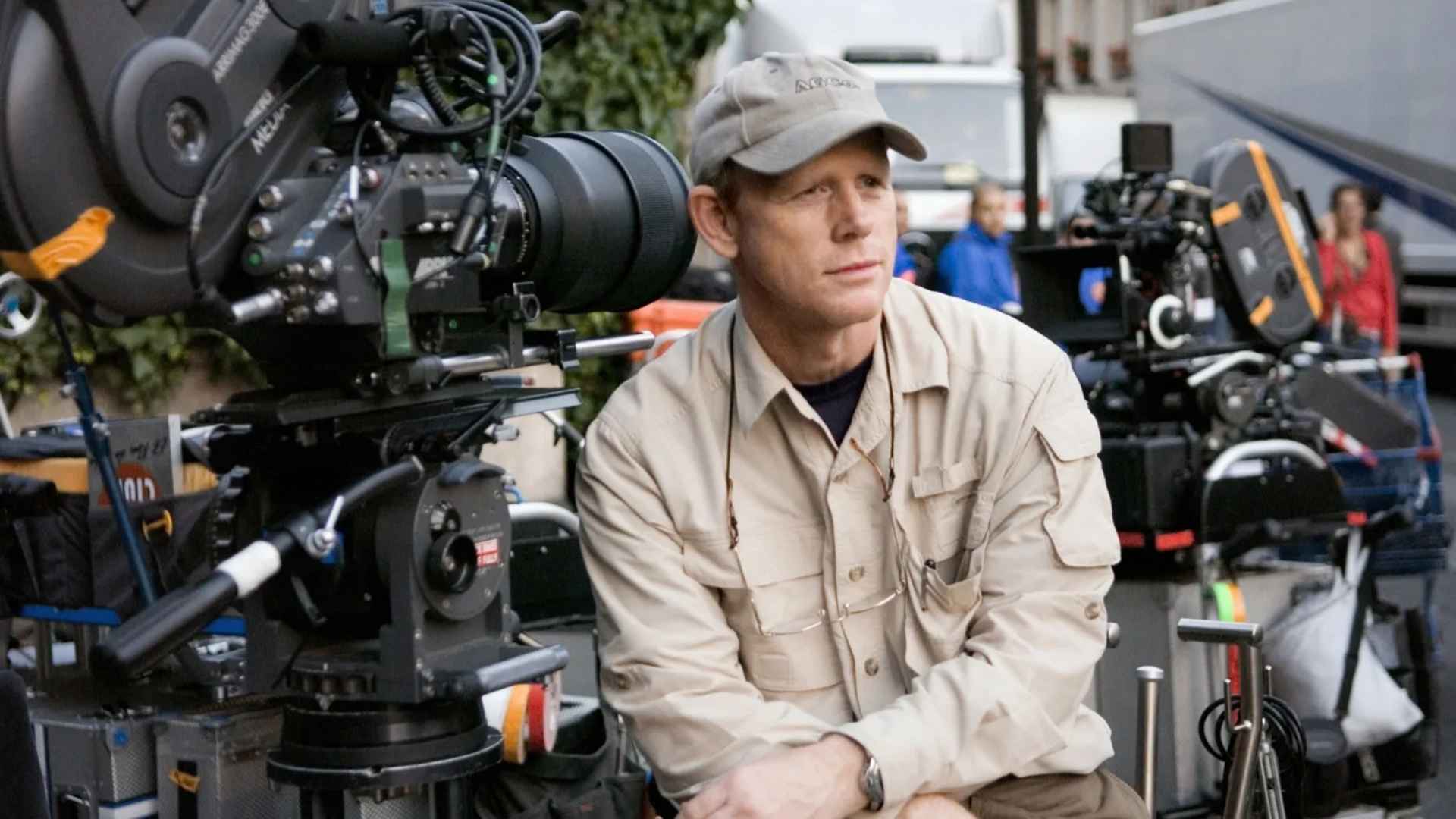
More importantly, playing Richie gave Howard unprecedented industry leverage. Instead of letting his prime-time fame drift, he leveraged his household name recognition and studio relationships to transition into filmmaking. In an era when former child stars rarely managed to establish credibility behind the camera, Howard used his acting capital to direct his first feature film, the low-budget comedy Grand Theft Auto (1977), proving to skeptical studio executives that he could safely manage a production set.
Transition to Elite Directing and Blockbuster Success (1981–2000s)
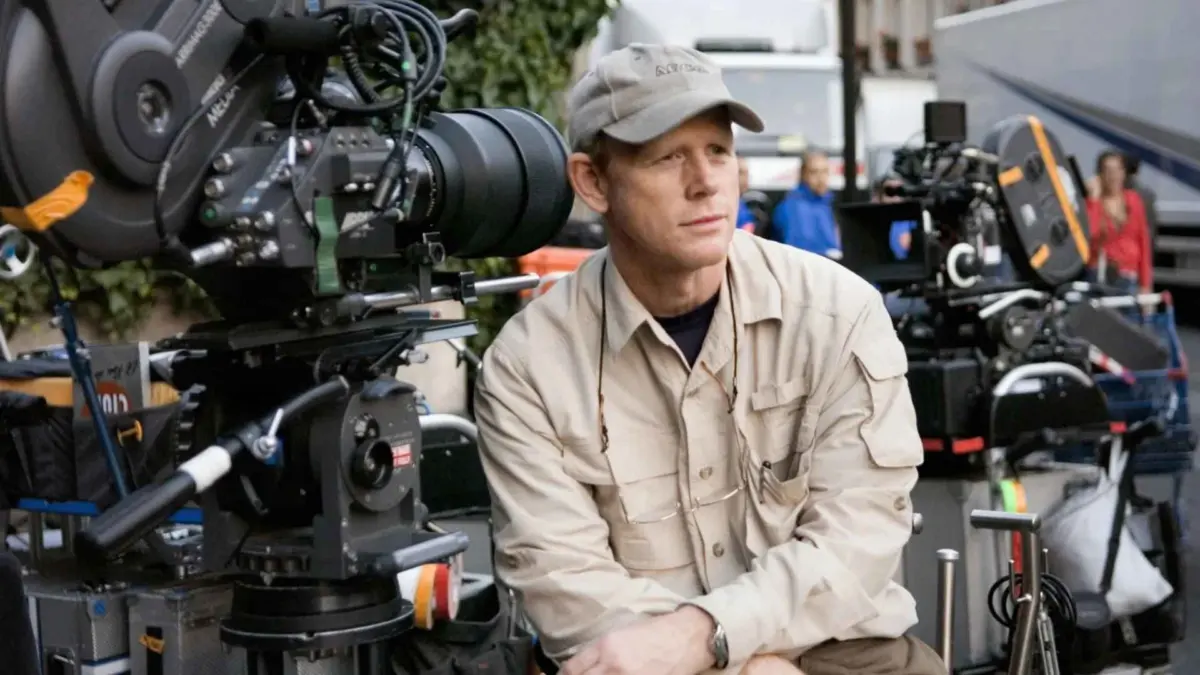
Howard’s transition from television icon to elite feature film director was swift. He helmed a string of commercially viable and critically praised films throughout the 1980s and 1990s, including Splash (1984), Cocoon (1985), Parenthood (1989), and Backdraft (1991).
His career hit its commercial peak with the 1995 historical space drama Apollo 13, which grossed over $355 million worldwide and cemented his status as a premier studio filmmaker capable of balancing technical wizardry with emotional resonance. This momentum carried him into the 2000s, where he directed massive global blockbusters like The Da Vinci Code (2006) and its sequels, alongside deeply personal, character-driven dramas.
Supporting Context & Metrics
Financial Architecture and Income Streams
Howard’s $200 million net worth is the result of diversified wealth accumulation. While his base directing fee for major studio films typically ranges between $10 million and $20 million, his total annual income fluctuates significantly depending on production cycles, backend box office bonuses, and corporate distributions. Financial trackers estimate his average annual earnings to be roughly $30 million, positioning him well above the baseline of traditional working directors.
Professional Profile: Ronald William Howard
| Detail | Information |
|---|---|
| Full Name | Ronald William Howard |
| Net Worth | $200 million (2026 estimate) |
| Date & Place of Birth | March 1, 1954 — Duncan, Oklahoma |
| Physical Attributes | Height: 5 ft 9 in (175 cm) |
| Primary Professions | Actor, Director, Producer, Executive |
| Primary Wealth Generators | Film Directing, Imagine Entertainment, Real Estate Holdings |
| Spouse | Cheryl Howard (Married June 1975) |
Academy Awards and Critical Validation
Howard’s commercial success has been repeatedly validated by high-level industry accolades. His crowning cinematic achievement arrived in 2001 with A Beautiful Mind, a biographical drama based on the life of mathematician John Nash. The film earned four Academy Awards, with Howard personally taking home the Oscars for Best Director and Best Picture.
These accolades transformed his career standing. Critical acclaim of this magnitude provides a filmmaker with long-term leverage, shielding them from industry slumps, attracting elite talent, and securing massive studio commitments for decades to come.
The Real Business Engine: Imagine Entertainment
While Howard’s directing fees are substantial, his true financial engine is institutional ownership. In 1985, Howard and producer Brian Grazer founded Imagine Entertainment, an independent film and television production company.
[Ron Howard & Brian Grazer]
         │
         ▼
[Imagine Entertainment Portfolio]
    ├── Feature Films (Apollo 13, A Beautiful Mind)
    ├── Television Hits (Empire, 24, Arrested Development)
    └── Strategic Partnerships (Raine Group $100M Investment)
By owning a major stake in Imagine, Howard earns revenue from dozens of concurrent projects rather than relying solely on the films he personally directs. The company has produced an expansive roster of hits, including 24, Arrested Development, Empire, and Friday Night Lights.
The institutional value of this enterprise was underscored in 2016 when the New York-based Raine Group acquired a major stake through a $100 million capital investment. This transaction crystallized the reality that in modern Hollywood, intellectual property ownership vastly outperforms a standard director’s salary.
Real Estate Portfolio
Beyond entertainment, Howard has maintained a conservative yet lucrative real estate portfolio, acquiring high-value properties and holding them through appreciation cycles.
- Greenwich, Connecticut Estate: Howard owned a sprawling suburban estate that he ultimately sold in 2014 for $27.5 million.
- New York City Apartment (The Eldorado Building): Purchased in 2004 for $5.6 million, Howard and his wife listed the landmark property in 2017 for $12.5 million, later reducing the asking price to $11.5 million. Public records indicate the family has retained ownership of the asset, demonstrating a buy-and-hold strategy designed to hedge against broader market volatility.
Official Statements & Industry Developments
Recent corporate movements surrounding Imagine Entertainment have kept Howard in financial headlines. In 2022, London-based investment firm Centricus Asset Management entered advanced talks to acquire a majority stake in Imagine Entertainment, with industry reports valuing the studio between $600 million and $800 million. Although that specific transaction stalled amid a broader contraction in media dealmaking, the underlying library valuation remained exceptionally high.
By 2024, as merger and acquisition activity reignited across Hollywood, Imagine engaged J.P. Morgan to field new strategic offers. Financial backers like the Raine Group remain central to these ongoing negotiations.
Crucially, corporate disclosures emphasize that potential sales transactions are intended to fund future growth rather than prompt an exit. Both Ron Howard and Brian Grazer remain operationally committed to running the day-to-day creative operations of Imagine Entertainment, ensuring that their institutional footprint remains active regardless of equity shifts.
Furthermore, Howard’s personal life reflects the same stability that defines his professional choices. He and his wife, Cheryl Howard, celebrated their 50th wedding anniversary in June 2025, maintaining one of the longest-running marriages in the entertainment industry. Their family legacy persists through their children—including actress and director Bryce Dallas Howard—and his brother, veteran actor Clint Howard, ensuring the family’s deep-rooted connection to cinema remains intact.
Future Outlook
As the entertainment industry navigates the digital streaming era, artificial intelligence integration, and shifting box office economics, Ron Howard’s strategic positioning offers a masterclass in longevity.
Unlike many of his contemporaries who rely exclusively on upfront talent fees, Howard’s multi-tiered business model—anchored by Imagine Entertainment’s extensive intellectual property library, consistent studio directing fees, and stable real estate holdings—guarantees financial insulation. While he has largely stepped away from acting (aside from selective, prestige cameos, such as his appearance in the Apple TV+ series The Studio in 2025), his output as a director and producer shows no signs of slowing down.
At age 72, Ron Howard stands not merely as a relic of Hollywood’s past golden television eras, but as a blueprint for modern entertainment entrepreneurship. By combining early career fame with disciplined financial diversification, institutional ownership, and creative adaptability, he has cemented a permanent, highly secure $200 million legacy at the pinnacle of American cinema.