Executive Overview
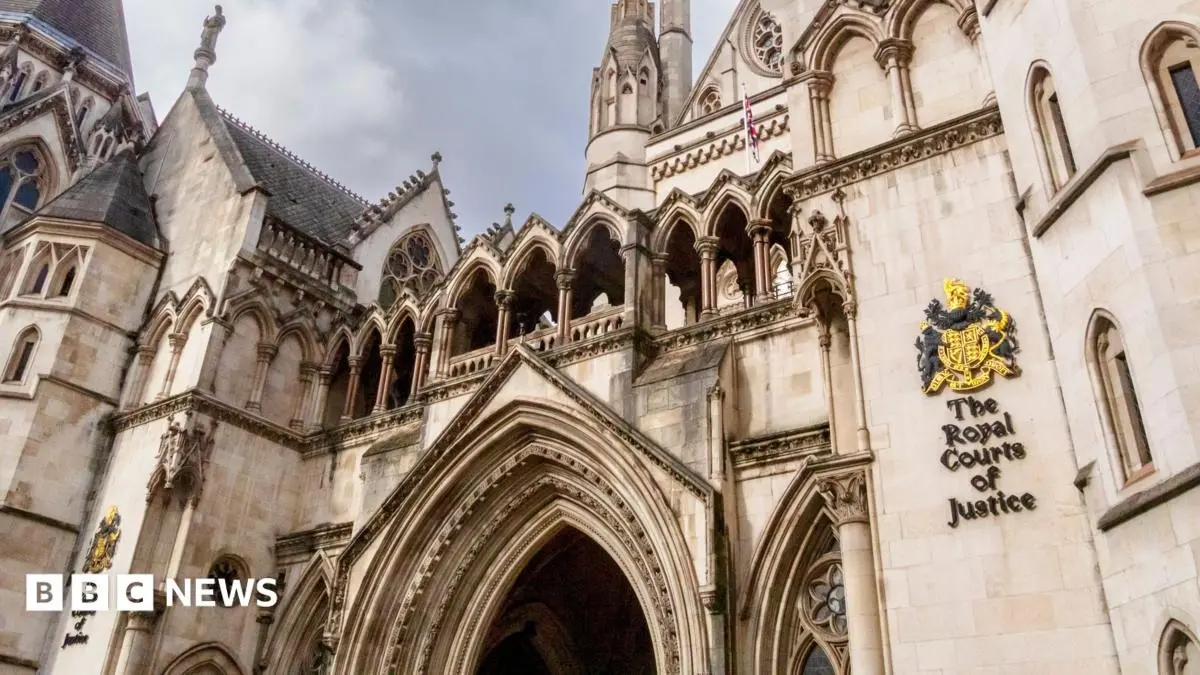
In a high-stakes legal showdown unfolding at the High Court of Justice, an unnamed celebrity has launched an aggressive bid to secure a permanent injunction against two major British media organizations—ITN and The Guardian. The legal action is designed to prevent the publication of the celebrity’s identity alongside explosive allegations that he abused his prominent status over a prolonged period to pursue inappropriate sexual relationships with a large cohort of young women and teenagers.
The proceedings, presided over by Mr. Justice Nicklin, pit the fundamental right to freedom of expression and public interest journalism directly against the right to life, mental health preservation, and the protection from devastating "trial by media." During the opening day of the trial, the claimant’s legal representatives presented a grim warning to the court: the immediate publication of the allegations and his association with them would "highly likely lead him to commit suicide."
This argument has triggered a complex balancing act under English law, forcing the judiciary to weigh the severe, imminent threat to an individual’s life against the public’s right to be informed about systemic power imbalances and potential predatory behavior within the entertainment industry. While the celebrity strenuously denies utilizing his power, fame, and professional standing to forge manipulative relationships with vulnerable minors and young adults, media defendants argue that the risk to his life can be mitigated through specialized inpatient medical treatment and that public interest considerations overwhelmingly favor publication.
As the legal arguments unfold, the case raises profound questions regarding the intersection of media ethics, mental health vulnerabilities in high-profile litigation, and the threshold required for courts to grant lifelong or interim anonymity orders. With the presiding judge emphasizing the gravity and complexity of the issues at hand, the judiciary faces a monumental task in delivering a verdict that balances human safety with journalistic accountability.
Detailed Chronology of the High Court Proceedings
The Genesis of the Injunction Application
The legal maneuvering began behind closed doors as the celebrity’s legal team sought emergency interim relief to block ITN and The Guardian from running investigative reports detailing historical allegations of sexual impropriety. As investigative journalists approached the celebrity for comment—a standard journalistic practice ensuring the right of reply—the gravity of the impending exposure became apparent. Recognizing that publication would trigger an acute psychological crisis, the legal team mobilized to secure interim non-disclosure protections, setting the stage for the full trial that commenced on Tuesday.
Day One of the High Court Trial
The trial opened before Mr. Justice Nicklin in the High Court, drawing intense scrutiny from legal scholars, media watchdogs, and civil liberties advocates. The atmosphere in the courtroom was charged as the claimant’s legal counsel laid out the human cost of the impending media storm. They argued that the celebrity’s anticipated drastic reaction was not a tacit admission of guilt or a response to the inherent truth of the allegations—which he categorically denies—but rather a catastrophic terror of "trial by media."
Counsel emphasized that the modern media ecosystem, amplified by social media platforms and hyper-accelerated news cycles, creates an inescapable tribunal where due process is bypassed, and public condemnation is swift and irreversible. For an individual whose entire identity and livelihood are tethered to public adoration and professional reputation, the sudden collapse of that reality represents an existential threat.
Medical Evidence and the Risk Mitigation Debate
Central to the claimant’s case on Tuesday was a comprehensive medical report commissioned specifically for the court proceedings. The assessment evaluated the celebrity’s psychological stability and quantified the direct suicide risk associated with the public unmasking and the subsequent dissemination of the allegations.
According to the medical findings submitted to Mr. Justice Nicklin, inpatient psychiatric treatment could provide "significant, but not complete mitigation of the risk." The medical experts testified that a structured therapeutic environment, potentially lasting for several months, had "a realistic potential to reduce the risk" of self-harm to manageable levels. However, the report stopped short of guaranteeing safety, underscoring the volatile nature of acute psychological distress induced by public shaming and loss of status.
The Media Defense and Counter-Arguments
In fierce opposition, the legal representatives for ITN and The Guardian mounted a robust defense of journalistic freedoms. They contended that while the claimant’s mental health struggles are a matter of judicial concern, the existence of a "suicide risk" cannot and should not serve as an absolute veto against public interest reporting.
The defense argued that the risk factors identified by the medical experts could be adequately managed through appropriate clinical interventions, institutional support, and controlled environments. Furthermore, they asserted that there was no valid legal or factual basis "to restrain the publication of public interest journalism," emphasizing that allegations involving the abuse of power, celebrity status, and predatory behavior toward young women carry a profound public interest that overrides individual harm considerations.
Supporting Context & Metrics: The Legal and Media Landscape
To understand the weight of the current High Court proceedings, one must examine the legal frameworks governing privacy, freedom of expression, and the balancing act courts must perform under the European Convention on Human Rights (ECHR).
The ECHR Framework: Article 8 vs. Article 10
The core legal tension in this case revolves around two competing articles of the Human Rights Act 1998, which incorporates the ECHR into UK domestic law:
- Article 8 (Right to Respect for Private and Family Life): Protects an individual’s autonomy, physical and psychological integrity, and reputation. In cases involving severe reputational damage and catastrophic mental health impacts, Article 8 is heavily invoked to justify the suppression of personal information.
- Article 10 (Freedom of Expression): Protects the right to hold opinions and to receive and impart information and ideas without interference by public authority. For media organizations, Article 10 underpins the vital role of the press as a "public watchdog."
When these two rights collide, English courts do not grant automatic priority to either. Instead, judges are required to undertake an intense, fact-specific proportionality test. They must evaluate whether the infringement on privacy is justified by the public interest of the publication, and conversely, whether suppressing the information represents a disproportionate curtailment of free speech.
The Threshold for Anonymity and Injunctions
Securing a pre-publication injunction (often referred to in UK legal history as a "super-injunction" or privacy injunction) is exceptionally difficult. Under Section 12(4) of the Human Rights Act, courts must have particular regard to the importance of the freedom of expression and, where proceedings relate to material claimed to be journalistic, the public interest in the publication of the material.
Furthermore, courts are historically skeptical of attempts to use suicide threats as a mechanism to gag the press, while simultaneously acknowledging that the preservation of human life is the paramount duty of the state and its judiciary. The inclusion of detailed medical reports assessing inpatient mitigation strategies represents a sophisticated evolution in privacy litigation, attempting to bridge the gap between abstract psychological claims and empirical psychiatric evaluations.
The Phenomenon of "Trial by Media"
The phrase "trial by media," frequently cited by the celebrity’s legal team, describes a systemic cultural and digital phenomenon where public accusation functions as a de facto conviction. In the digital age, allegations against public figures are immediately amplified across global platforms, often stripped of nuance, context, or the presumption of innocence.
Psychological literature cited in similar media-privacy cases suggests that individuals facing sudden, catastrophic reputational collapse experience a profound loss of identity, cognitive overload, and acute trauma. The legal team’s argument underscores that the fear is not merely of legal jeopardy, but of the social, psychological, and professional annihilation that accompanies unmitigated media scrutiny before any formal judicial trial can take place.
Official Statements and Judicial Observations
The gravity of the case has drawn careful, measured commentary from the bench, alongside steadfast positions from the opposing legal counsels.
Mr. Justice Nicklin’s Remarks
Presiding over the case, Mr. Justice Nicklin emphasized the immense complexity and national importance of the legal battle. Acknowledging the profound human stakes involved for all parties, the judge stated:
"There is significant public interest in these proceedings, and this is a difficult and important case. The court must determine it fairly, on the evidence and legal submissions."
Recognizing the acute risk of jigsaw identification—where fragmented details published across different reports inadvertently reveal a protected individual’s identity—Mr. Justice Nicklin issued a direct appeal to the press and the broader public:
"The court urges the press and public not to speculate about the man’s identity."
This directive underscores the judiciary’s commitment to maintaining the integrity of the legal process while interim deliberations are ongoing. Premature exposure of the celebrity’s name would render the entire court application moot, inflicting irreversible harm regardless of the final legal judgment.
Arguments from the Claimant’s Legal Team
The celebrity’s advocates framed the case not merely as a matter of personal privacy, but as a defense against disproportionate and destructive public exposure. They reiterated that the man firmly denies the allegations levied against him, which accuse him of leveraging his celebrity status and power imbalance to initiate inappropriate relationships with teenagers and young women over an extended period.
According to his representatives, the rush to publish these unproven claims ignores the devastating psychological vulnerability of their client, arguing that standard media ethics must account for the immediate and catastrophic threat to human life.
Arguments from ITN and The Guardian
Representing the media defendants, defense counsel maintained that the public’s right to know about systemic misconduct involving powerful public figures must supersede the individual’s comfort or health vulnerabilities, provided those risks can be managed. They argued that accepting suicide threats as an effective bar to investigative journalism would create a dangerous precedent, potentially allowing any high-profile individual facing serious allegations to suppress reporting simply by demonstrating acute psychological distress.
Future Outlook and Broader Implications
As the trial continues, the outcome of this High Court battle will send shockwaves through the British media landscape and establish a crucial legal precedent regarding the intersection of press freedom and psychiatric vulnerability.
Potential Judicial Outcomes
Mr. Justice Nicklin faces several distinct legal pathways in delivering his judgment:
- Granting the Permanent Injunction: The judge could rule that the severe, life-threatening risk to the claimant, supported by medical evidence of inpatient mitigation, outweighs the public interest in immediate publication, resulting in a permanent restraint on the defendants.
- Refusing the Injunction with Conditions: The court could rule in favor of the media organizations, determining that the public interest is paramount, while potentially mandating a delayed publication window to allow psychiatric support structures to be put in place for the claimant.
- Partial Injunction or Anonymity Extensions: The court might permit certain reporting while maintaining specific restrictions to protect against the most harmful elements of speculative media coverage.
Precedent for Future Media Litigation
Should the media defendants prevail, it will reinforce the principle that public interest journalism concerning the abuse of power cannot be gagged by psychological distress claims, provided due journalistic diligence is observed. Conversely, a ruling in favor of the celebrity could expand the legal recognition of mental health vulnerabilities as a decisive factor in privacy and injunction applications, potentially altering how news organizations approach investigations into high-profile figures.
Regardless of the verdict, the case serves as a stark reminder of the volatile friction points within modern democratic societies: the unyielding demand for institutional accountability and transparency versus the ethical obligation to protect human life and psychological well-being from the crushing weight of digital-age public scrutiny. As Mr. Justice Nicklin continues his deliberations, all eyes remain fixed on the High Court, awaiting a decision that will define the boundaries of privacy and free speech for years to come.