Executive Overview
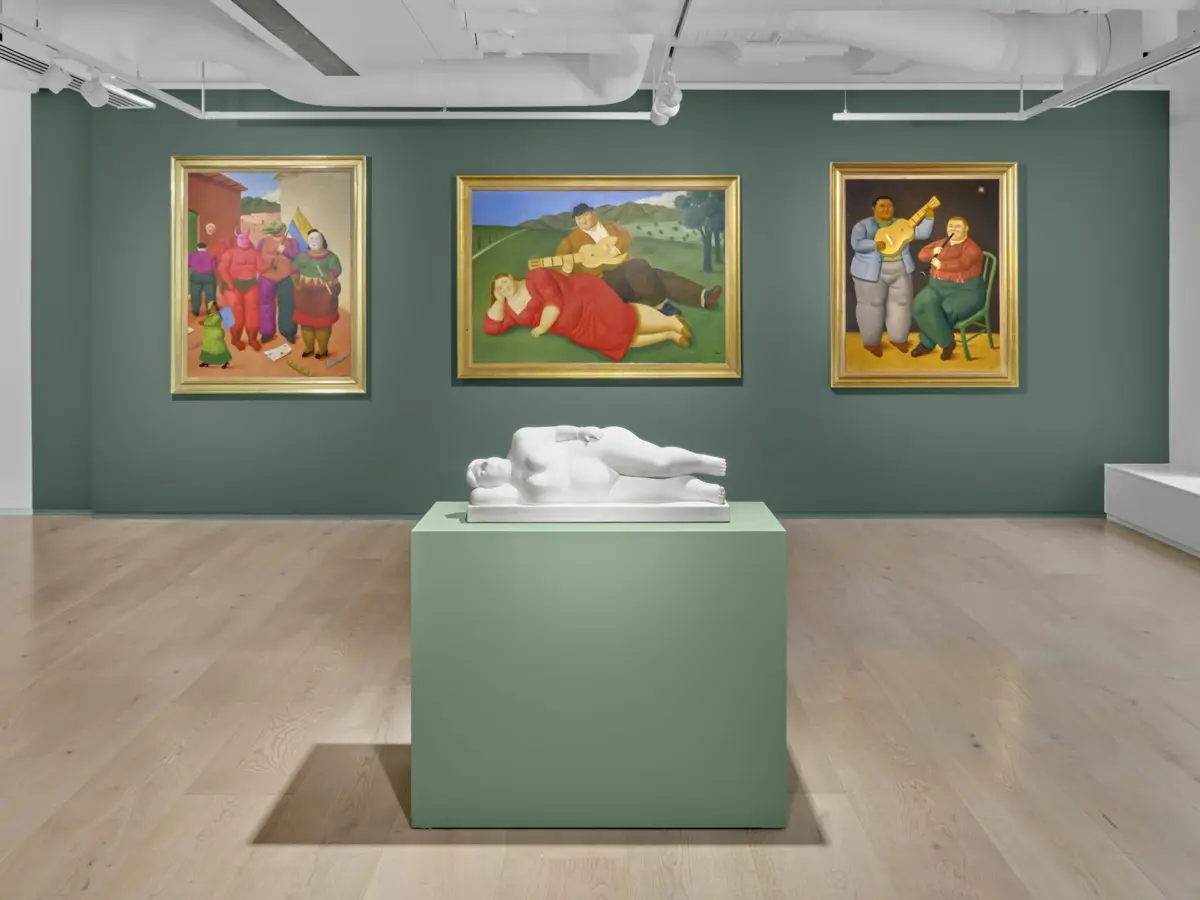
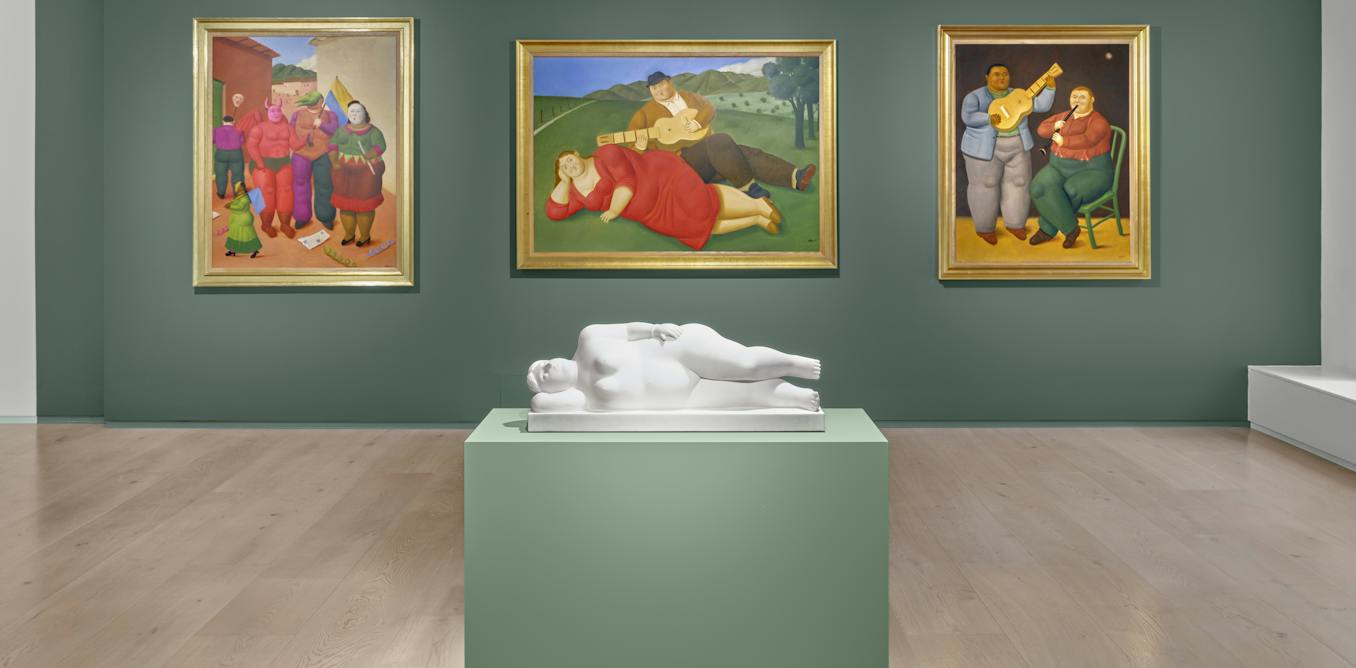
For the first time in over a decade, London’s art scene is hosting a dedicated solo exhibition celebrating the life and enduring legacy of one of Latin America’s most iconic visual artists. Titled Fernando Botero: In Praise of an Amplified World, the landmark showcase at the Opera Gallery London brings together a sweeping, cross-media collection of paintings and sculptures spanning an extraordinary 70-year career.
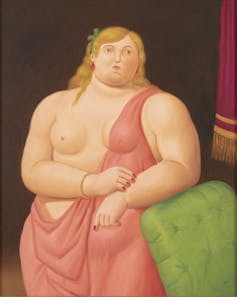
Encompassing works from the 1960s right up to the Colombian master’s passing at the age of 91 in 2023, the exhibition offers British audiences a rare, comprehensive look at the evolution of Boterismo—a signature aesthetic defined by voluptuous, inflated proportions, vibrant palettes, and profound socio-political subversion. Far from being mere caricature or exercises in whimsical playfulness, Botero’s monumental forms use scale as a fundamental principle of representation. By manipulating volume, the artist confronts historic European canons, critiques human brutality, parodies institutional power, and imbues the ordinary with a striking, immortal gravity.
Running through November 22, the exhibition serves as both a retrospective tribute to a titan of modern art and a timely re-evaluation of a creator who spent his life challenging the viewer’s gaze, assumptions, and societal comforts.
Detailed Chronology: From Medellín to Madrid and the Birth of Boterismo
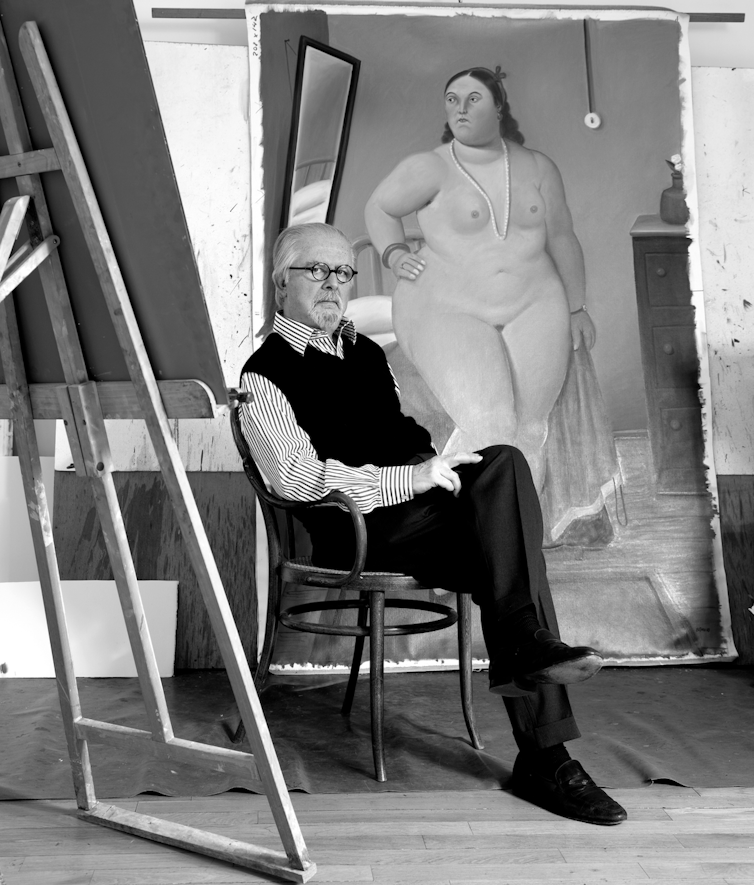
To understand the works on display at the Opera Gallery, one must trace the geographic and artistic trajectory of Fernando Botero (1932–2023). Born in Medellín, Colombia, Botero’s formative years were steeped in the visual textures of South America, contrasted later by exposure to classical European masterpieces.
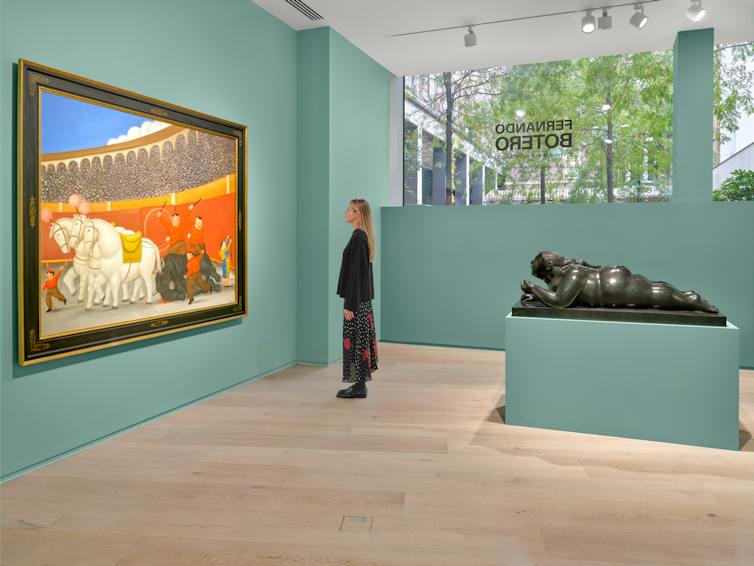
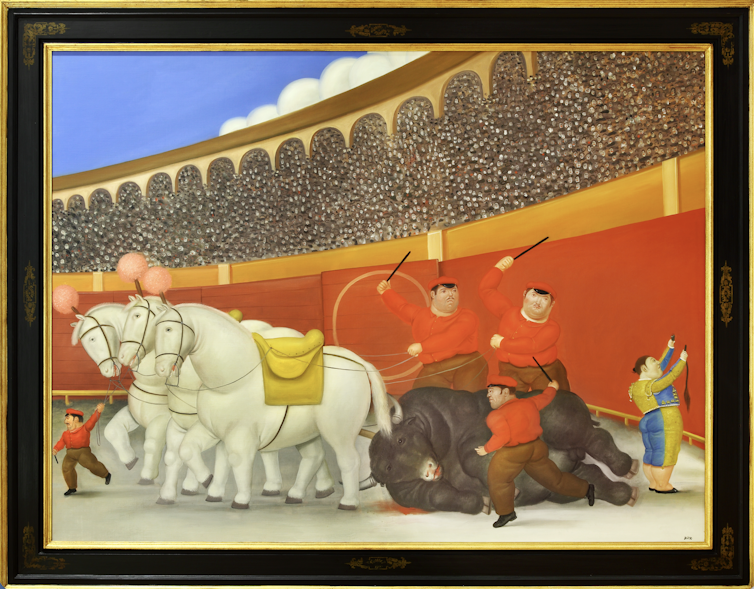
In his youth, Botero famously spent two years training as a matador—an experience that left an indelible mark on his visual vocabulary, injecting his later canvases with the raw theatricality, stark violence, and structural precision of the bullring. However, his ambitions lay firmly on the canvas.
The European Awakening and Bodegón con Mandolina
At the age of 20, Botero relocated to Spain, immersing himself in the Prado Museum in Madrid. There, he relentlessly copied the old masters, engaging in a lifelong dialogue with art history. Velázquez, Goya, and the Renaissance titans became his interlocutors.
The turning point of his career occurred in 1957 with the creation of his groundbreaking painting, Bodegón con Mandolina (Still Life with Mandolin). While rendering a conventional musical instrument, Botero instinctively altered its proportions, shrinking the soundhole while vastly expanding the body. In doing so, he experienced a revelation: changing the physical proportions of an object fundamentally alters how it is perceived by the human eye.
Reflecting on this intuitive leap decades later in 1992, Botero noted:
"An artist is attracted to certain types of form without knowing why. You adopt a position intuitively; it is only later that you try to rationalise or even justify it."
Maturation of the Style: The 1960s to the 1980s
By the time he painted Autorretrato a la edad de 1 anno (Self-Portrait at One Year Old) in 1966—a work featured prominently in the London exhibition—Botero was well into his thirties and had fully codified his revolutionary stylistic language. Volume was no longer a mere stylistic device; it was the true subject of his art.
Throughout the 1970s and 1980s, Botero’s subjects expanded from isolated still lifes and portraits into sweeping cultural and political commentaries. The violence and upheaval of the Colombian drug wars, centered around his native Medellín, began to seep into his compositions. Works like El Arrastre (The Drag, 1984) captured the brutal aftermath of a bullfight, mirroring the stylistic lineage of Francisco Goya to comment on human cruelty, civic decay, and institutional indifference.
The Later Years and Final Masterpieces
Botero continued producing remarkable material right up until his death in 2023. The pieces included from the twilight of his career—such as the 2017 painting Concierto Campestre (Country Concert) and the diminutive 2023 sculpture Flautista (Flutist)—demonstrate that his fascination with scale, musicality, and human relationships never waned. Even in his nineties, Botero retained the artistic vigor to disrupt visual expectations and provoke critical thought.
Supporting Context & Metrics: Decoding Boterismo
The Opera Gallery exhibition features a carefully curated cross-section of Botero’s oeuvre, inviting viewers to move past the superficial amusement often associated with his inflated figures and engage with the deeper mechanics of his visual language.
Size, Subversion, and Spatial Politics
Botero’s mastery lies in his weaponization of scale. In classical European painting, human figures were frequently deployed to give scale, narrative focus, and meaning to sweeping landscapes or grand interiors. Botero systematically inverts this paradigm.
- Concierto Campestre (2017): In this pastoral scene, a monumental courting couple dominates the foreground entirely. The surrounding landscape is rendered almost incidental, pushed to the margins to force the viewer’s undivided attention onto the emotional and physical weight of the human subjects.
- A Couple (2014): Subverting traditional gender dynamics, this canvas depicts a woman physically towering over a seated man. Yet, their hands are interlocked, and the table before them holds a slice of watermelon and two soft fruits—historic Renaissance symbols of female sensuality and the body. By stripping away the materialistic clutter and possessions found in the classical paintings he parodies, Botero highlights raw human connection.
- Girl with Cat (1989): Referencing a time-honored artistic trope, Botero avoids both Victorian sentimentalism and the sexualization of youth. Instead, the monstrous, inflated proportions of both the girl and the feline create an arresting, unsettling atmosphere. The almost-human features of the cat directly challenge the viewer’s expectations, transforming an innocent domestic portrait into a psychological puzzle.
Dialogue with History and Regional Context
To a British audience, Botero’s voluminous forms occasionally draw domestic comparisons to the work of folk painter Beryl Cook. However, art critics note critical distinctions: Botero’s color schemes are markedly brighter, his compositions less overtly comedic, and his draughtsmanship far more rigorous. His bright palettes actively heighten the disruptive psychological impact of his scenes.
Furthermore, his engagement with religious and political institutions remains sharp. Works like Prelados Bañándose en un Rio (Bathing Bishops in a River, 1968) directly reference the second episcopal conference of Latin America in Medellín and the concurrent rise of liberation theology—a movement urging the Catholic Church to actively champion the struggles of the impoverished. By depicting bishops fully or partially submerged in a river, Botero visually captures the tumultuous institutional currents sweeping through South America at the time.
Official Statements and Curatorial Perspectives
The significance of bringing Botero’s work back to the British capital cannot be overstated. Galleries and cultural commentators have emphasized the rarity and educational value of hosting a solo exhibition of this magnitude in London.
Representatives from the Opera Gallery note that In Praise of an Amplified World was curated to encapsulate the full breadth of Botero’s philosophical outlook. The exhibition does not shy away from the darker, more critical undertones of his career, even if it omits his most visceral political portfolios, such as the infamous Abu Ghraib series.
Instead, the gallery’s selection emphasizes Botero’s central thesis: that volume possesses an emotional resonance capable of dignifying the ordinary, mocking the pompous, and memorializing the marginalized.
Art historians associated with the exhibition have underscored that Botero’s inflated figures should not be read merely as caricatures of weight, but rather as manifestations of spatial generosity. By expanding his subjects, Botero grants them a monumental presence that demands the viewer’s acknowledgment, ensuring they cannot be easily overlooked or dismissed.
Future Outlook: The Legacy of a Master in a Post-Botero World
As the international art community continues to process the loss of Fernando Botero in September 2023, exhibitions like the one at Opera Gallery London play a vital role in cementing his long-term historical standing.
For decades, Botero stood somewhat outside the rigid, trend-driven machinery of contemporary avant-garde movements, choosing instead to hone a singular, instantly recognizable visual language rooted in figurative tradition and humanist satire. His work bridges the gap between Latin American cultural identity and European art history, creating a universal idiom that transcends geographic boundaries.
Looking forward, the market and scholarly appraisal of Botero’s work are poised for sustained growth. As retrospective exhibitions travel globally and introduce his monumental sculptures and vibrant canvases to younger generations of art lovers, the true depth of Boterismo is finally being recognized beyond its superficial reputation for corpulence.
Fernando Botero: In Praise of an Amplified World stands as a testament to an artist who spent seven decades proving that volume is not just a physical property, but a vehicle for poetry, politics, and humanity.
- Exhibition Details: Fernando Botero, in Praise of an Amplified World is open to the public at the Opera Gallery, London, until November 22.