Executive Overview
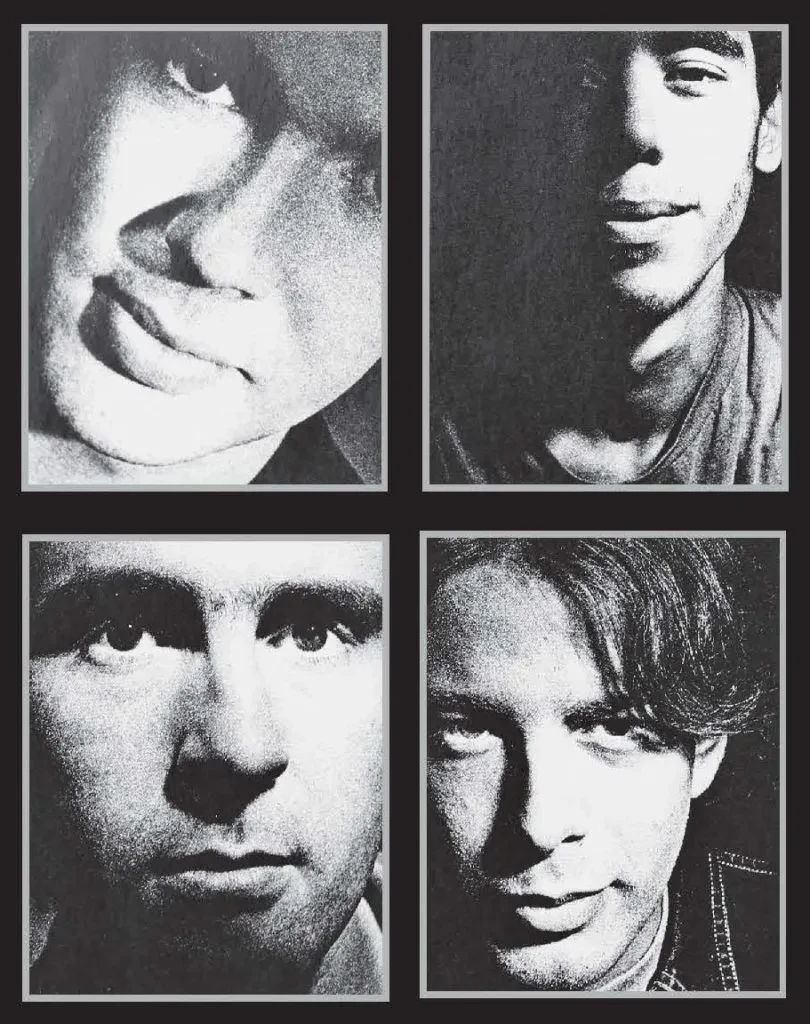
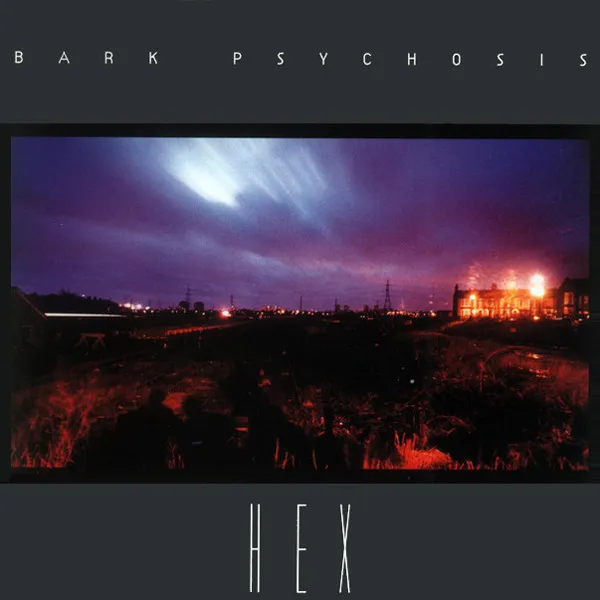
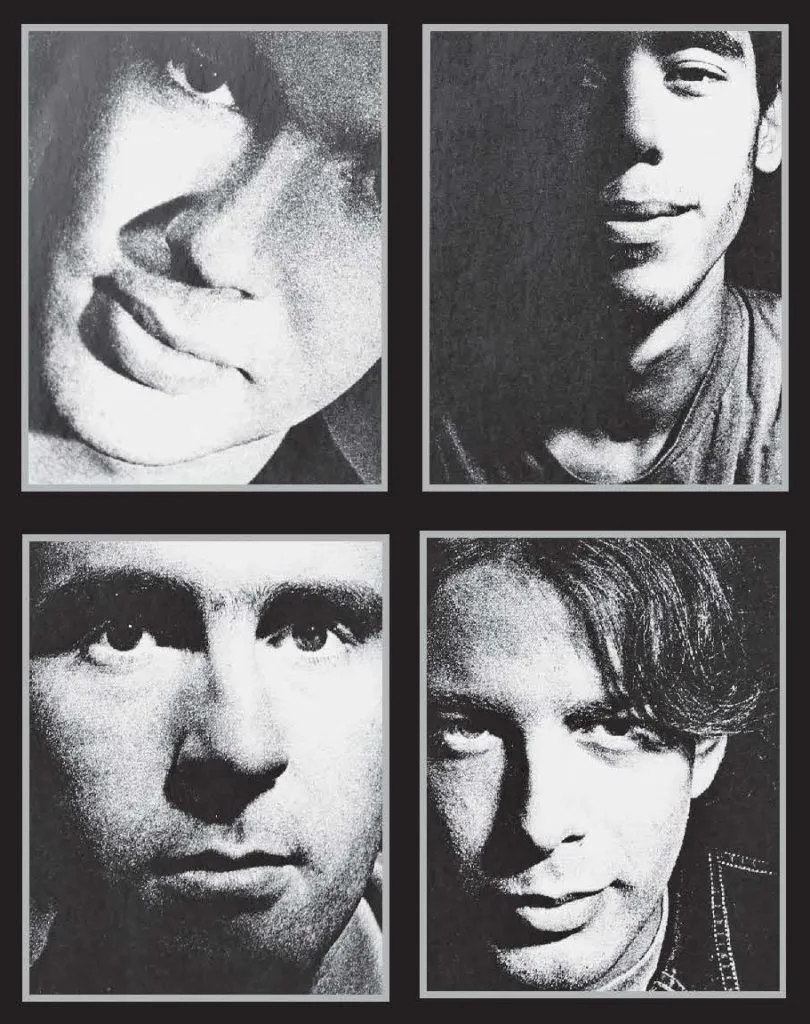
Forty years after its genesis in the sprawling, working-class districts of London, Bark Psychosis remains one of the most enigmatic and foundational entities in the alternative music landscape. Formed in 1986 by school friends Graham Sutton and John Ling when they were just fourteen years old, the band inadvertently helped architect the genre now broadly defined as post-rock. Their seminal 1994 debut long-player, Hex, remains a landmark achievement—a masterclass in tension, ambient introspection, and visceral, dynamic instrumentation that wove a gloomy yet glimmering spell across the UK underground.
Yet, the trajectory of Bark Psychosis was never defined by commercial expediency or conventional careerist milestones. Marked by long periods of radio silence—including a twenty-year gap between Hex and its successor, ///CODENAME: dustsucker—the band’s history is inextricably bound to the uncompromising creative vision of its founding leader, Graham Sutton.
In a candid, retrospective interview with journalist Chris Wheatley, Sutton reflects upon four decades of sonic exploration, examining the accidental formation of the band in North and East London squats, the torturous creative crucible that birthed Hex, his brief yet influential detour into drum ’n’ bass under the moniker Boymerang, and his subsequent reinvention as a sought-after record producer for acts such as The Delays, These New Puritans, and British Sea Power. Far from looking back with nostalgia, Sutton frames his career through a lens of raw instinct: a lifelong pursuit guided, above all else, by the purest of artistic motives.
Detailed Chronology
1986–1989: Genesis in the Margins of North and East London
The foundations of Bark Psychosis were laid not in professional recording studios or prestigious arts colleges, but in the domestic bedrooms and teenage bedrooms of suburban London. For Sutton, music was an omnipresent domestic force.
"There was always music in my house," Sutton recalls. "My mum had a copy of Rubber Soul, which I played to death. I used to fall asleep listening to Sgt. Pepper’s… Music has been this thread that’s pulled me through life."
At fourteen, this early immersion hardened into vocation. Alongside school friend John Ling, Sutton approached music-making with what he describes as "mania." Armed with a basic tape recorder and a rudimentary drum machine, the pair committed themselves entirely to the craft.
The turning point from youthful hobby to intentional career occurred at a CND (Campaign for Nuclear Disarmament) benefit gig at the legendary Sir George Robey pub in Finsbury Park. Buoyed by the performance, Sutton made a life-altering decision: he would leave school immediately after completing his GCSEs and drag Ling into a full-time musical partnership.
As Sutton relocated from East London to Edgware in North London, the logistical realities of building a band set in motion a nomadic lifestyle. To facilitate rehearsals and songwriting sessions with Ling, Sutton began commuting back and forth before eventually joining Ling in a series of squats. They ultimately settled in a notorious squatting community on Claremont Road, Leyton—a volatile, counter-cultural environment that would soon face eventual clearance for the M11 link road extension, but which temporarily served as the raw, unpolished crucible for early Bark Psychosis compositions.
It was during this subterranean period that the group’s early lineup coalesced. Seeking a drummer, the duo placed an advertisement in a local music shop, successfully recruiting Mark Simnett. Soon after, through the revolving door of the London underground scene, they crossed paths with vocalist Sue Page, whose ethereal, detached vocal delivery would anchor their earliest recorded output.
1990–1992: The Cheree Records Era and the Cultivation of Sound
The band’s entry into the physical record market was catalyzed by a quintessential London underground chance encounter. While waiting on the platform at South Woodford station, Sutton struck up a conversation with Nick Allport and Vinita Joshi, a couple who operated an independent fanzine and micro-label under the banner Cheree Records.
Sensing a kindred spirit, Allport and Joshi took Sutton under their wing. In 1990, Cheree released Bark Psychosis’s inaugural 12-inch singles: All Different Things and Nothing Feels. These early releases established the group’s embryonic sonic footprint—a drifting, atmospheric hybrid of organic instrumentation and textural, lingering melancholy.
Cheree envisioned a full-length album, but internal fractures quickly surfaced. The label brought in outside backers whom Sutton and his bandmates fundamentally distrusted. Salvation arrived via Gerald Palmer, former manager of the legendary space-rock outfit Spaceman 3. Palmer intervened, successfully negotiating the band out of their Cheree obligations and steering them toward a more sympathetic home with 3rd Stone Records.
By 1992, the expanded lineup—bolstered by the addition of keyboardist Daniel Gish—released the Manman EP and the extraordinary single Scum. Clocking in at an uncompromising 21 minutes, Scum was a sprawling epic that blurred the boundaries between experimental noise-rock, ambient drift, and cinematic jazz soundscapes.
Reflecting on this uncompromising era, Sutton notes:
"A lot of it came from being quite wilful, wanting to do something that was our own and nobody else’s. Nothing was guided by any sort of idea of a career; it was just, ‘How does this feel? Do we feel good doing this?’ For better or worse, it was done with the purest of motives."
1994: Hex and the Destruction of a Band
Seeking a larger canvas for their burgeoning ambitions, Bark Psychosis signed to Circa Records, a subsidiary of Virgin. Building upon the sonic experiments of Scum—which had been recorded live inside the resonant, sacred acoustics of St John’s Church in Stratford—Sutton formulated an intricate, multi-tiered production methodology for their debut full-length.
"I came up with the idea that we’d lay down some frameworks, then there’d be a stage of overdubbing in the church," Sutton explains of the Hex sessions. "Then there’d be a further process of sequencing. Finally, there would be touch-ups and vocals, then we’d mix it."
Simultaneously, Sutton embraced the nascent technological revolution of affordable digital sampling, integrating textural found-sound elements into the band’s organic core.
Released in 1994, Hex was greeted with critical reverence by the UK music press, who struggled to categorize its quiet-loud dynamics, mournful trumpet lines, and hypnotic pacing. Yet, commercial success eluded the album; it peaked at a modest No. 48 on the UK Independent Albums Chart.
More significantly, the creation of Hex came at an unsustainable human cost. Sutton poured every ounce of his psychological and physical stamina into the project, operating under the assumption that it would be his only opportunity to leave a permanent artistic statement.
"It took such a lot out of us," Sutton recalls. "I felt very strongly that this might be our only shot at this, so I’m going to give it my absolute everything. The process of making it destroyed the band."
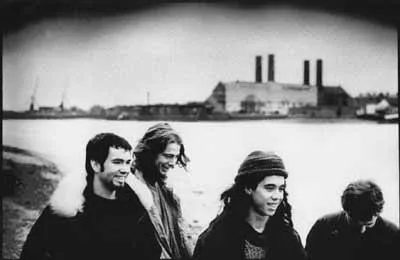
Internal tensions proved fatal to the original lineup. Daniel Gish departed mid-session, and John Ling left shortly after the album’s completion. Though Sutton and Simnett attempted to keep the live entity breathing through sporadic touring, the emotional momentum had evaporated.
1997–2004: Boymerang, Parlophone Fallout, and ///CODENAME: dustsucker
With Bark Psychosis effectively dormant, Sutton’s restless creative compass pointed toward the emergent, high-velocity rhythms of the UK’s mid-90s drum ’n’ bass revolution. Operating under the alias Boymerang, Sutton discarded organic rock instrumentation in favor of frantic breakbeats, sub-bass pressure, and cinematic string arrangements. The project yielded the acclaimed 1997 album Balance Of The Force, released via Parlophone.
However, electronic music proved to be another temporary station. Almost overnight, Sutton felt an internal mandate to return to song-based, atmospheric composition. He began writing material that would eventually form the second Bark Psychosis record—a decision that horrified his major-label paymasters at Parlophone.
"Parlophone weren’t very happy, but I felt like I didn’t have any choice," Sutton states. "If it doesn’t feel right, I can’t do it."
A protracted bureaucratic standoff ensued. Parlophone refused to release the recordings, initiating a grueling multi-year legal battle that saw Sutton fighting simply to reclaim ownership of his own art. Once the rights were finally secured, ///CODENAME: dustsucker was ultimately released through Fire Records in 2004—a full decade after Hex. Featuring Sutton alongside a rotating collective of collaborators, the album proved that the distinct Bark Psychosis DNA—sophisticated, patient, and melancholic—remained entirely intact.
Supporting Context & Metrics
To fully contextualize the trajectory of Bark Psychosis and Graham Sutton, several historical, geographical, and commercial data points must be considered:
- Formation Date: 1986 (London, UK)
- Key Lineup (The Hex Era): Graham Sutton (vocals, guitars, keyboards, production), John Ling (bass), Mark Simnett (drums), Daniel Gish (keyboards).
- Foundational Releases:
- All Different Things (Cheree Records, 1994 / 12" single)
- Nothing Feels (Cheree Records, 1994 / 12" single)
- Manman EP (3rd Stone Records, 1992)
- Scum (3rd Stone Records, 1992 / 21-minute single)
- Hex (Circa / Virgin, 1994 / Debut LP — Peaked at No. 48 on the UK Independent Albums Chart)
- Balance Of The Force (Released under the moniker Boymerang via Parlophone, 1997)
- ///CODENAME: dustsucker (Fire Records, 2004 / Sophomore LP)
- Geographic Milestones: East London roots, Claremont Road squat (Leyton), recording sessions at St John’s Church (Stratford).
- Production Discography (Post-Bark Psychosis): Following his entry into professional production, Sutton has helmed projects for high-profile alternative acts including The Delays (Faded Seaside Glamour, 2004), These New Puritans, and British Sea Power.
Official Statements & Key Quotations
The philosophy of Graham Sutton is anchored in radical artistic autonomy, anti-careerism, and an unyielding commitment to intuitive creation. Below are the definitive statements from Sutton regarding his career:
- On the Lifelong Bond to Music:
"There was always music in my house. My mum had a copy of Rubber Soul, which I played to death. I used to fall asleep listening to Sgt. Pepper’s… Music has been this thread that’s pulled me through life."
- On the Teenage Urge to Form the Band:
"It was like this mania. I thought: this is what I’m here to do."
- On the Pure Intentions of Early Recordings:
"A lot of it came from being quite wilful, wanting to do something that was our own and nobody else’s. Nothing was guided by any sort of idea of a career; it was just, ‘How does this feel? Do we feel good doing this?’ For better or worse, it was done with the purest of motives."
- On the Psychological Toll of Making Hex:
"It’s been enormously gratifying that people still ask me about Hex, because I know how much went into it, and it was done for no other reason, no other purpose, than to try and do something as good as we could make it. So, the fact that people get something out of it, well, that’s nice."
- On Rejecting Commercial Expectations:
Reflecting on a famous postcard sent by Geoff Travis of Rough Trade bearing the words: ‘CAN YOU MAKE ME A HIT?’ — "It seemed like the most ridiculous, bizarre request."
Future Outlook
As the conversation turns toward the contemporary landscape, Sutton has firmly established himself as one of modern British alternative music’s most respected behind-the-scenes architects. Following his baptism-by-fire production work on The Delays’ debut album, his production schedule filled rapidly via word-of-mouth recommendations, leading to landmark collaborations with vanguard artists such as These New Puritans (including their critically lauded Domino release, Crooked Wing) and British Sea Power.
When pressed by interviewers on the definitive question—whether the world will ever witness a third Bark Psychosis studio album—Sutton’s response is characteristically pragmatic, free of false promises or manufactured reunion hype.
"I don’t know," he says with a smile. "I’m just enjoying doing what I’m doing. And besides… I haven’t got the time!"
For an artist who spent his formative years squatting in Leyton, battling major-label executives for ownership of his masters, and sacrificing his mental health on the altar of a 1994 masterpiece, Sutton’s current state is one of hard-earned peace. Bark Psychosis may remain a finite, frozen monument in the history of post-rock, but its ripples continue to influence every dissonant chord, ambient drone, and atmospheric crescendo echoing through the underground today.