Executive Overview
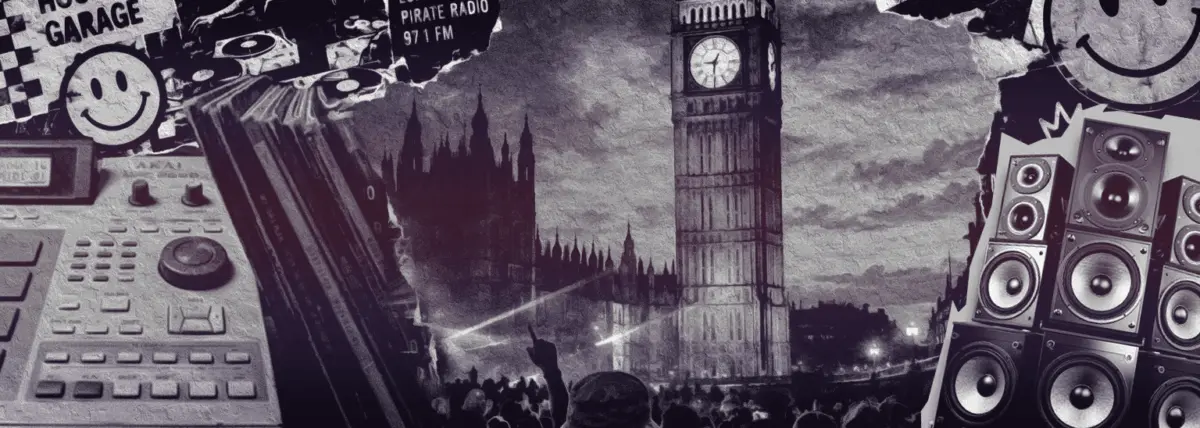
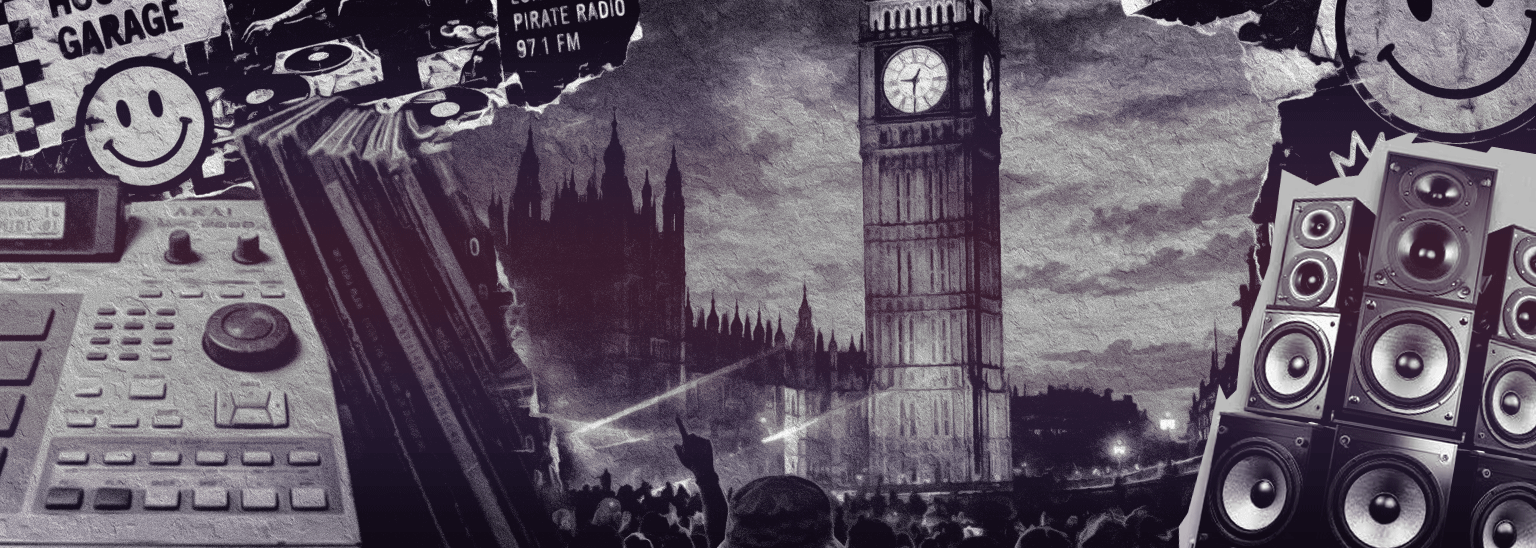
The enduring legacy of UK Garage (UKG)—and its most distinctive subgenre, 2-step—lies at the intersection of multicultural British identity, raw experimentation, and deep rhythmic innovation. Born out of the late-1990s pirate radio underground and refined in smoke-filled home studios across London and the UK, UKG offered an idiosyncratic counterweight to imported American house and techno. While scenes in Chicago and Detroit laid foundational electronic blueprints, British producers subverted standard four-on-the-floor rigidity. They injected a swung, syncopated, and deeply human pulse into dance music that has continually recaptured global imaginations, finding modern validation on contemporary festival main stages from Coachella to Sonar.
Today, UK Garage is experiencing a massive global resurgence, spearheaded by modern torchbearers like Sammy Virji, yet the genre’s canopy remains vast. It spans the intricate US imports of Todd Edwards’ sample-choir epics, homegrown four-four bassline anthems like Ripgroove, soulful 2-step crossovers like Movin’ Too Fast, and even industrial, wobbly continental crossovers like Timo Maas’s Dooms Night remix.

However, it is the unmistakably homegrown sound of 2-step that represents the crown jewel of UK dance music innovation. Characterized by its signature missing beat—the absent kick on the third beat of the bar—2-step relies heavily on intricate rimshots, humanized swing, and rhythmic breathing room.

This analytical masterclass breaks down the anatomy of a professional 2-step drum pattern. Drawing inspiration from modern rolling aesthetics like Rose Holland’s Solid On The Ground, this guide provides a step-by-step architectural breakdown of crafting tight, timeless 2-step beats using Ableton Live. From transient shaping and off-grid programming to complex bar-eight structural edits, producers will learn how to build dynamic, fatigue-resistant grooves capable of locking down any dancefloor.

Detailed Chronology: The Anatomy of a 2-Step Production Workflow
Crafting a professional 2-step beat requires a meticulous, layered approach to rhythm design. Unlike rigidly quantized techno or straightforward house styles, 2-step lives and dies by its micro-timing, velocity manipulation, and frequency separation.

[Kick Foundation] ---> [Rimshots & Syncopation] ---> [Hats & Rattles] ---> [Structural Edits]
 (Body & Weight)          (Tonal Bounce)             (Top-End Air)         (Arrangement Transitions)
Step 1: The Kick Foundation
The foundation of any UK Garage track begins with kick drum selection and placement, which diverges sharply from standard club genres. UKG kicks require short release tails and distinct acoustic profiles; they deliberately eschew deep, booming sub-frequencies in favor of punchy mid-range presence and high-frequency thwack. This crucial design choice leaves ample frequency headroom for deep, rolling sub-basslines while providing the necessary transient space for the swung, syncopated rhythm section to breathe.

- Source Selection: Load Ableton Live’s Kick 70s 1 sample into your drum rack. This sample delivers the acoustic weight and mid-range character essential for the core groove.
- Basic Pattern Programming: Program the primary pattern with two kicks per bar—landing solidly on beat 1 and beat 1.3.3. On every fourth bar, introduce an additional kick on beat 4.4.3.
- Velocity Dynamics: Give this fourth-bar kick a slightly elevated velocity value to emphasize the characteristic "skip" in the rhythm, signaling the transition into the next measure.
- EQ Management: Apply a high-pass filter (HPF) with a steep slope, cutting frequencies roughly between 100Hz and 140Hz to surgically remove muddy sub-harmonics.
- Adding Bounce with Layering: Introduce a second, more synthetic sample—Live’s Club Kick—to supply contemporary bounce. Set the volume of the Club Kick approximately 10dB lower than the Kick 70s 1, ensuring the acoustic kick provides the primary meat of the sound while the synthetic layer adds flavor.
- Micro-Timing: Program the secondary kick skips entirely by ear and off the strict MIDI grid, introducing micro-timing fluctuations that generate authentic human feel. The combined kick pattern should loop seamlessly over a two-bar phrase.
Step 2: The Rimshot Engine
While the kick provides forward momentum, the rimshot engine drives the characteristic 2-step shuffle. The percussive elements do not require traditional acoustic rimshot samples; any dry, woody, or knocking transient will suffice, provided it remains short, controlled, and balanced in the high-mid spectrum.

- Core Placement: Rim placement is remarkably consistent across classic 2-step arrangements, traditionally landing on every second beat. Because rimshots carry considerable tonal character, layer two distinct samples together: Rim 3k Sharp and Rim 90s MPC.
- Pattern Variation: To prevent repetitive listening fatigue over longer phrases, delete every fourth instance of the Rim 90s MPC sample, opening up dynamic space across your two-bar loop.
- Skippy Rhythms: Introduce fast, skippy auxiliary rim patterns designed to propel the groove forward. Program these manually using Live’s Rim DMX Fast 2 sample, pitched down by precisely three semitones to anchor its weight in the mix.
- Call and Response: Add a secondary pattern utilizing the Rim LDre 2 sample, similarly pitched down by three semitones. Alternate these two rim sounds across the grid to establish an engaging question-and-answer dynamic across the one- and two-bar boundaries.
- Advanced Melodic Tuning: For heightened rhythmic complexity, duplicate both skippy rim samples onto dedicated secondary drum lanes. Pitch the copied notes one semitone up or down, redistributing select hits to create melodic percussive patterns that dance around the master clock.
Step 3: High-End Air: Hats, Rattles, and Shakers
The top-end shimmer of a world-class 2-step beat relies on a sophisticated composite of closed hats, tambourines, shakers, and auxiliary metallic noises. While historical production methods often relied on sampling entire loops from disparate vinyl records, modern DAW workflows allow producers to construct custom high-end textures from clean sample libraries.

- Hat Length Discipline: Regardless of whether your pattern uses straight sixteenth notes, swung sixteenths, or purely off-beat placements, sample length discipline remains paramount. Even open hats must be truncated into short, punchy transients.
- Open Hat Construction: Begin with two short open hat samples—Hihat Open Ironman and High Open Machine Hard—programmed on the off-beats. Add a single longer sustain note and a short skip note to the High Open Machine Hard lane to further reinforce the two-bar cyclical structure.
- Tambourine Shakes: Implement a dynamic call-and-response tambourine layer active during the second half of each bar, stretching the sample duration slightly on every second bar. Utilize a Tambourine Sampled at 86 bpm sample, pitching it up by +8.44 semitones to lock effortlessly into your project tempo.
- Textural Filling: Sprinkle a curated selection of reversed shakers, filtered open hats, and metallic noise bursts into the rhythmic gaps. Exercise restraint to avoid overfilling the frequency spectrum or excessively repeating identical sample triggers.
- Transient Management: When utilizing reversed shakers or hats, be mindful of transient masking. Because reversed samples feature their loudest acoustic peaks at the end of the file rather than the initial trigger point, slide these files forward on the timeline so their dynamic impact aligns cleanly with the grid without clashing against your kick and rim transients.
Step 4: Arrangement Edits and Bar-Eight Transitions
Dance floor engagement depends heavily on variation, dynamic shifts, and seamless arrangement transitions. In 2-step production, this is achieved through calculated arrangement edits—strategically dropping out kicks, rims, or hats at the end of four- or eight-bar phrases and injecting complex fill rolls.

- Kick Rolls: Construct high-velocity rolls using the Club Kick sample, progressively shortening the note intervals over the course of a single bar to build tension. Leave a brief pocket of absolute silence immediately before the downbeat of the next eight bars, dropping out the primary kick drum pattern entirely during the roll to maximize contrast.
- Perpetual Dropouts: At the culmination of an eight-bar block, silence the rimshots, open hats, and select auxiliary percussion elements to cleanse the sonic palette.
- Cymbal Accents: Integrate short, highly tuned Roland TR-909 crash cymbals at the precise start of each eight-bar phrase, supplementing them with skippy, gated crash hits at the phrase endings to underscore your structural edits.
- Anticipation Engineering: Reintroduce the primary rimshot on the very final beat of bar eight. This subtle production trick creates psychological expectation, drawing the listener forcefully into the subsequent phrase.
Supporting Context & Metrics: Cultural Heritage and Production Psychology
The Multicultural Roots of UK Dance Music
The genesis of 2-step in the late 1990s was part of a broader British cultural movement. Alongside jungle, drum and bass, and dubstep, 2-step proved that the UK underground flourished most brilliantly when drawing upon its rich multicultural immigrant heritage—blending Jamaican sound system culture, American R&B vocal aesthetics, and European house music sensibilities—rather than passively mimicking American commercial trends. Pirate radio stations such as Rinse FM, Deja Vu FM, and Ice Cream Records served as crucial testing grounds where dubplates were spun at accelerated pitches, forcing producers to write drums specifically tailored to frantic club environments.

Ergonomics and Production Fatigue
Working within a genre defined by micro-timing and dense high-frequency content creates unique ergonomic challenges. Prolonged exposure to high-frequency transients and tightly compressed mid-range frequencies rapidly accelerates auditory fatigue. To maintain objectivity throughout the mixing and arrangement process, producers should implement strict workflow management protocols:

- Frequency Blindness Prevention: Set physical break timers every 45 to 60 minutes to rest your ears.
- The "Sleep On It" Rule: If frequency blurring or ear fatigue sets in during complex editing phases, cease work immediately. Revisit the project fresh the following morning (or after several days) to allow both your hearing and the track to breathe.
Official Industry Insights & Professional Best Practices
Top-tier producers working within the UKG revival space emphasize several core mixing philosophies to ensure their productions translate effectively from studio monitors to massive club sound systems:

- Dynamic Headroom: Resist the temptation to excessively brickwall individual drum buses during the tracking stage. 2-step relies on micro-dynamics; over-compression crushes the swing and flattens the vital push-and-pull relationship between the kick and the rimshot.
- Monaural Low-End Management: Keep all kick drum foundations, sub-basslines, and primary rhythmic transients strictly mono below 150Hz. This preserves phase coherence and guarantees maximum acoustic impact on large club sound systems.
- Intentional Silence: As veteran UKG producers frequently note, what you leave out of a 2-step beat is just as important as what you put in. The genre’s hypnotic quality stems entirely from the rhythmic space carved out around the missing beats.
Future Outlook: The Global Trajectory of UK Garage
As electronic music consumption shifts toward increasingly syncopated, groove-driven formats, the structural blueprints of 2-step production are proving remarkably resilient. Far from remaining a nostalgic artifact of 1990s pirate radio, modern UK Garage continues to mutate. Contemporary producers are fusing classic 2-step drum programming with hyperpop vocal processing, ambient soundscapes, and heavy-hitting modern sound design.

By mastering the foundational techniques of kick placement, rimshot layering, high-end hat management, and dynamic arrangement edits, modern bedroom producers and professional mix engineers alike can construct tracks that honor the genre’s pirate radio heritage while commanding the largest festival stages of the future. The bounce is timeless—and with the right workflow discipline, your beats will remain solid on the ground.