Executive Overview
Imagine a world where horses solve complex calculus equations with their hooves, dogs tap out complete philosophical treatises, and livestock possess a devout understanding of Catholic theology. To the modern reader, these claims sound like the setup for a surrealist fantasy novel. Yet, a little over a century ago, some of the most respected minds in philosophy, physics, and early psychology took these assertions deadly seriously.
At the turn of the 20th century, the boundary between rigorous empirical science and the occult was remarkably porous. Elite scientists—including Nobel laureates and foundational philosophers—ventured into parlors, seances, and stables to investigate "psychic phenomena" in humans. Naturally, their curiosity soon expanded to the animal kingdom. Figures like Oxford philosopher F.C.S. Schiller and renowned Russian brain researcher Vladimir Bechtereev engaged in intense academic debates over whether horses and dogs could perform mathematical feats through innate supernormal intelligence or telepathic links with their owners.
While these historical episodes are often dismissed today as historical curiosities or outright farps, a deeper investigation reveals a profound irony. The rigorous attempts of early psychical researchers to debunk, verify, and measure paranormal claims in animals catalyzed monumental breakthroughs in mainstream science. Investigations into "thinking animals" like the famous German horse Clever Hans directly led to the discovery of the "Clever Hans effect"—a cornerstone of experimental bias control. Furthermore, the methodological paranoia required to test telepathy helped mid-century researchers invent randomization, a foundational pillar of modern experimental design and clinical trials. This is the chronicle of how humanity’s brief, desperate flirtation with animal telepathy accidentally helped build the bedrock of modern empirical science.
Detailed Chronology: A Century of Animal Intellect and the Paranormal
The Turn-of-the-Century Obsession with the Unseen
During the decades bridging the 19th and 20th centuries, rapid technological innovations were fundamentally rewriting humanity’s understanding of reality. The invention of the telegraph made instantaneous global communication a reality; the discovery of X-rays revealed that human eyes could suddenly peer through solid flesh; and electromagnetic waves proved that invisible forces constantly saturated the atmosphere.
Given this dizzying backdrop of unseen powers, it is perhaps unsurprising that elite intellectuals became fascinated by "psychic phenomena." Prominent figures organized into formal investigative bodies, such as the Society for Psychical Research (SPR) founded in London in 1882. Esteemed physicists—such as J.J. Thomson, the 1906 Nobel laureate in physics who discovered the electron—performed controlled experiments to test the validity of mediums. Philosophers like C.D. Broad attended seances, seriously debating the mechanics of precognition and clairvoyance.
Importantly, these were not marginal charlatans operating in the shadows. They were academic heavyweights whose work shaped contemporary thought. Concepts still hotly debated in academic philosophy today, such as C.D. Broad’s "growing block theory" of time (which posits that the past and present are fixed, but the future remains fundamentally unwritten), trace their lineage directly to this era of intense psychical inquiry.
Enter the Equine Mathematicians and Thinking Dogs
As research into human extrasensory perception (ESP) gained momentum, scholars inevitably turned their gaze toward the animal kingdom. If humans possessed latent telepathic or intellectual faculties, why couldn’t domestic animals—our closest companions—share in these supernormal traits?
This question captivated Friedrich Canning Scott Schiller (1864–1937), an influential philosopher at the University of Oxford and a founding father of pragmatism—the philosophical framework evaluating the truth of a theory based on its practical consequences in the real world. Schiller became a prominent champion of psychical research, penning the entry on the subject for the Encyclopædia Britannica. Within that entry, he dedicated significant space to "equine mathematicians," animals allegedly capable of solving intricate arithmetic problems by tapping out answers with their hooves.
By 1914, Schiller’s focus shifted from horses to a celebrated canine: Rolf, "the thinking dog of Mannheim," residing in southwestern Germany. Rolf reportedly utilized his paws to tap out complex mathematical calculations. More astonishingly, through a specialized spelling code mapping paws to letters and syllables, Schiller claimed Rolf was capable of composing entire, coherent sentences. On one notable occasion, Schiller alleged that Rolf used his tapping code to articulate his deep Catholic faith to a visiting priest.
The Great Theoretical Divide: Innate Genius vs. Telepathy
The proliferation of "thinking animals" forced a schism among psychical researchers. How were these feats possible?
Two primary schools of thought emerged:
- Innate Animal Intellect: One faction argued that animals harbored hidden, evolutionary advanced intellectual capacities that had long been suppressed or overlooked by human arrogance.
- Telepathic Transmission: Another camp argued that animals were acting as passive conduits.
Among the proponents of the latter theory was Vladimir Bechtereev, a pioneering Russian scientist renowned for monumental discoveries regarding memory architecture and brain structure. Bechtereev examined Rolf and dismissed the notion that the dog possessed autonomous intellectual or mathematical genius. Instead, Bechtereev argued that the entire phenomenon was telepathic: the dog’s owner was subconsciously or consciously broadcasting the answers directly into the animal’s mind.
Schiller attempted to settle these fierce debates through the lens of his pragmatic philosophy. He argued that endless abstract speculation was sterile; a theory must be judged by its practical application. Schiller famously challenged the community with a dose of practical reality: If Rolf was genuinely a mathematical prodigy, why did he never apply arithmetic to everyday canine life? If the dog was a professed Catholic, why had he never been spotted attending Sunday mass?
The Rise of Parapsychology and Lady Wonder
As the 1920s bled into the 1930s, the scientific study of the paranormal shifted its institutional epicenters. Joseph Banks Rhine (1895–1980) and his wife, Louisa Rhine (1890–1983), established the controversial field of modern parapsychology, publishing their landmark volume Extra-Sensory Perception in 1934 and founding the Parapsychology Laboratory at Duke University. Their systematic, quantitative approach to testing large numbers of subjects laid foundational methodologies later adopted by modern statistics.
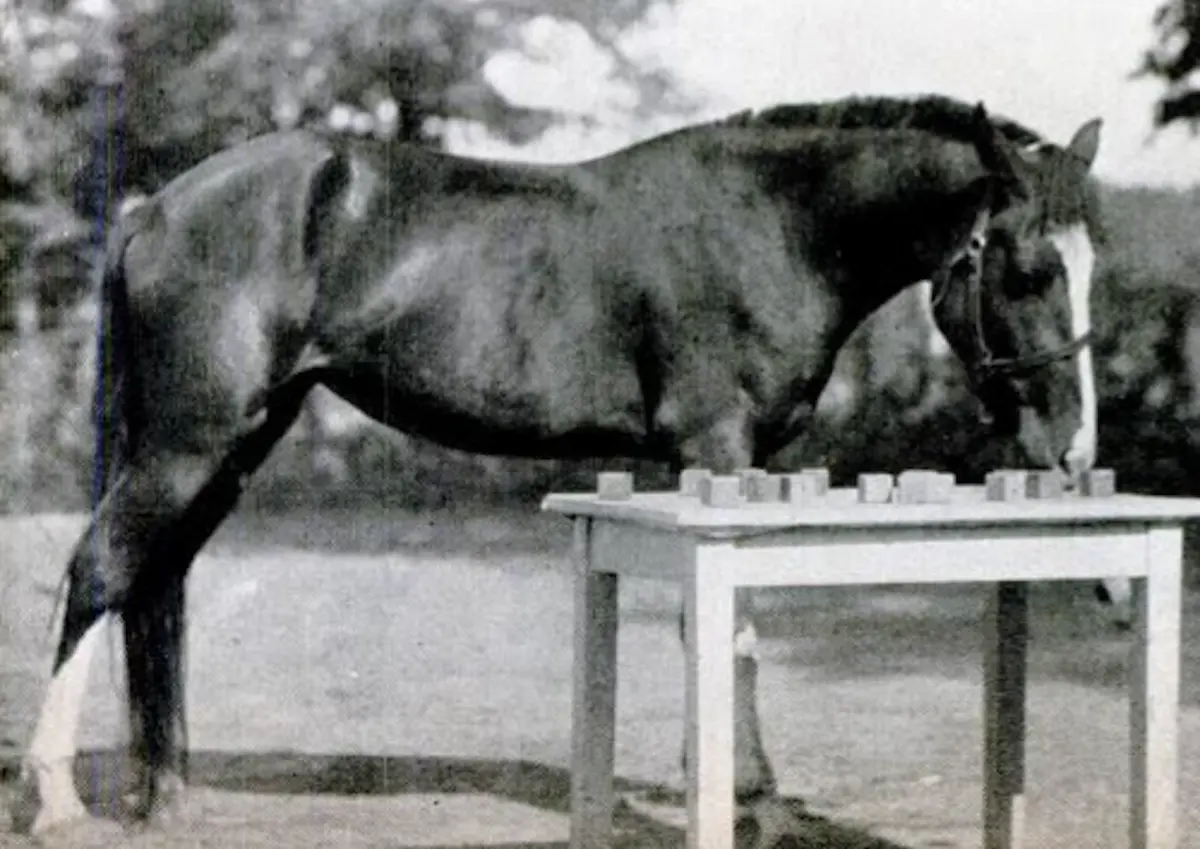
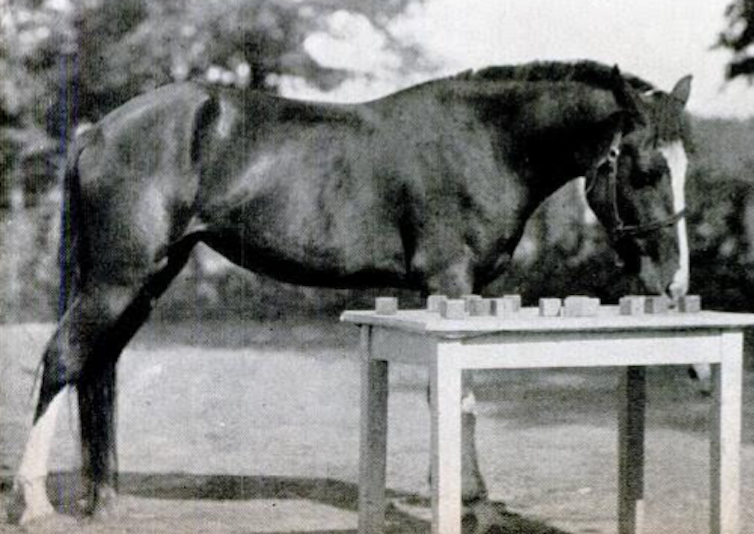
In 1929, the Rhines turned their investigative apparatus toward Lady Wonder, a remarkably famous horse residing in the United States. Lady Wonder drew massive crowds, supposedly possessing the ability to forecast future events, solve arithmetic problems, and accurately tell time. Her method involved using her soft muzzle to press against specialized lettered and numbered blocks arranged on a wooden frame.
Yet, as public fascination peaked, the scientific community grew increasingly restless, demanding rigorous controls to unmask what was truly happening behind the curtain of these miraculous animal performances.
Supporting Context & Metrics: Unmasking Clever Hans and the Birth of Randomization
The Clever Hans Phenomenon
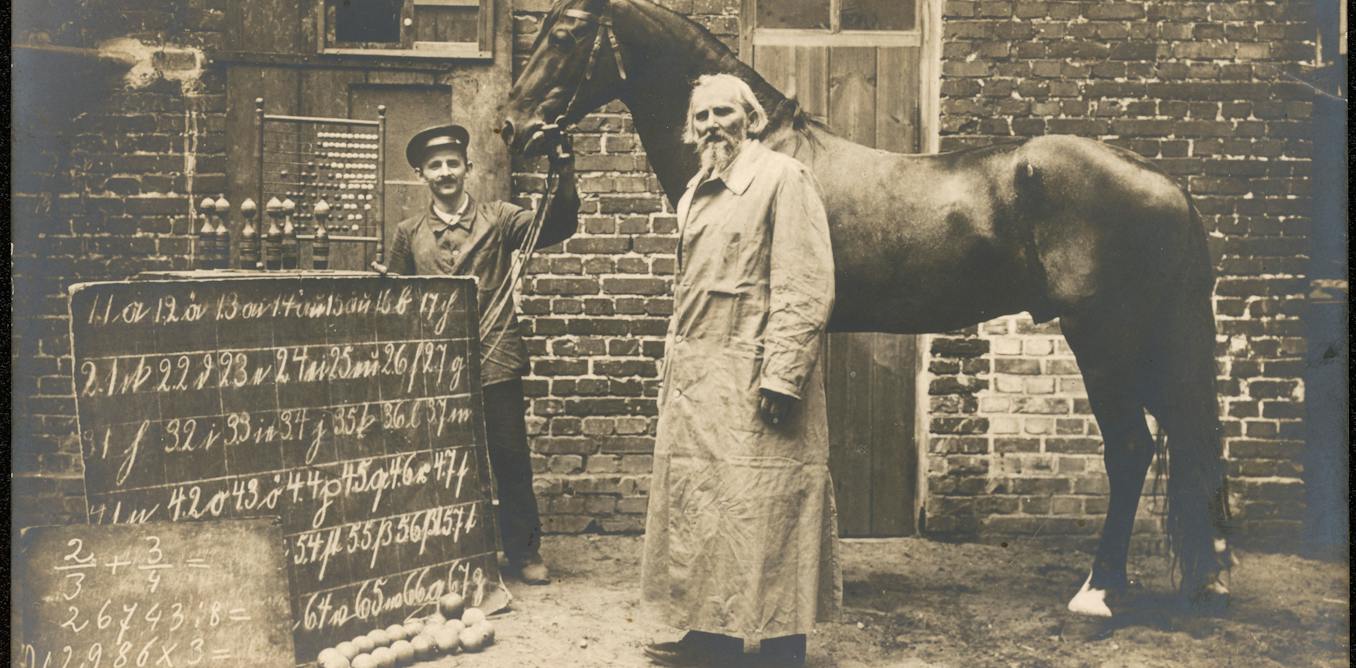
While American audiences flocked to see Lady Wonder, the most famous mathematically gifted animal in history had emerged decades earlier in Germany: Clever Hans (Der Kluge Hans). Owned and trained by Wilhelm von Osten, a high school mathematics teacher, Hans was a magnificent Orlov Trotter horse who toured Germany demonstrating an uncanny ability to add, subtract, multiply, divide, read, spell, and determine the calendar date.
Hans answered questions posed verbally or in writing by tapping his hoof. Crowds were mesmerized, and the academic establishment took notice. Carl Stumpf (1848–1936), one of the founding fathers of modern psychology, established a multidisciplinary commission to evaluate the horse’s cognitive claims.
Stumpf dispatched his brilliant doctoral research assistant, Oskar Pfungst, to conduct controlled, rigorous behavioral experiments on Hans. Pfungst systematically dismantled the illusion of equine intellect through methodical isolation. He discovered that Hans could consistently provide correct answers only under two precise conditions:
- The human questioning the horse must already know the answer.
- Hans must be able to visually observe the questioner.
When Pfungst blindfolded the horse or ensured the questioner stood out of Hans’s line of sight, the horse’s mathematical accuracy plummeted to zero.
Defining the "Clever Hans Effect"
Pfungst’s meticulous observations revealed a subtle psychological mechanism. As von Osten (or any questioner) waited for Hans to finish tapping his hoof, the human would unconsciously tense their body, lean forward slightly, and alter their breathing patterns. The moment Hans reached the correct number of taps, the human would subtly relax—perhaps even imperceptibly lifting their head or relaxing their posture in anticipation of the final tap.
Hans was not performing arithmetic; he was an absolute master of reading human micro-expressions and postural shifts. He was simply watching the human body like a hawk, tapping his hoof until he detected the physical cue that signaled "stop."
Pfungst’s discovery birthed the Clever Hans effect, a foundational concept in behavioral science and methodology. It describes how researchers, through poorly designed experiments, can unintentionally signal their expectations to their subjects, thereby contaminating the data and manufacturing false positive results.
The Unexpected Gift: The Birth of Randomization
Pfungst’s total demolition of Clever Hans’s supernatural credentials helped clear the field of psychical research from mainstream academic institutions. However, the legacy of these investigations left an indelible, surprisingly positive mark on the architecture of science.
Prior to the late 19th and early 20th centuries, experimental design was often sloppy. Researchers would select test subjects, assign control groups manually, or present stimuli in predictable patterns, frequently letting their personal biases dictate the parameters of a study.
The obsessive efforts of psychical researchers attempting to isolate genuine telepathy from background noise changed everything. To test whether a human or animal was truly receiving telepathic transmissions without visual or auditory cues, researchers had to ensure that neither the tester nor the subject could anticipate the sequence of stimuli. This necessity drove the invention and mathematical formalization of randomization—the practice of determining the order or allocation of experimental trials entirely by chance.
As historian Ian Hacking noted in his seminal studies on the origins of randomization, the desperate quest to prove or disprove telepathy forced scientists to realize that human consciousness is easily swayed by unconscious expectations. By introducing randomized sequences, researchers successfully neutralized observer bias. Today, randomization stands as the unyielding gold standard across every scientific discipline, from double-blind pharmaceutical drug trials to sociological surveys—a direct procedural descendant of early 20th-century paranormal investigations.
Official Statements and Historical Perspectives
To understand the intellectual turbulence of this era, one must examine the dialogue between its leading figures. The tension between open-minded philosophical exploration and ruthless empirical skepticism defined the period.
"Pragmatism teaches us that we must look to the practical consequences of our theories. If a dog can truly master arithmetic or profess the Catholic faith, those profound intellectual states must manifest in practical alterations to its daily life. Until an animal applies mathematics to forage for bones or seeks out ecclesiastical sanctuary, we are dealing not with genuine metaphysics, but with parlor tricks and projection."
— F.C.S. Schiller, Philosopher and Early Member of the Society for Psychical Research (Circa 1914)
Reflecting on the psychological illusions that captured the scientific community, Oskar Pfungst emphasized the terrifying ease with which trained human observers can be deceived by their own subtle physical cues:
"The animal is neither a calculator nor a mind-reader; it is a mirror reflecting the unconscious muscular tension of its master. The marvel is not that the horse can think, but that man is so utterly blind to the physical language his own body speaks to the world every second of the day."
— Oskar Pfungst, Research Assistant to Carl Stumpf, Verhalten des Pferdes (1907)
Future Outlook: Parapsychology’s Legacy in Modern Science
As we look toward the future of scientific inquiry, the bizarre history of turn-of-the-century animal telepathy offers a profound lesson in epistemological humility.
While parapsychology has largely retreated from mainstream university departments—with Duke’s historic Parapsychology Laboratory long since shuttered—the methodological tools forged during those eccentric early years remain more vital than ever. In an era plagued by replication crises, cognitive biases, and algorithmic echo chambers, the spirit of Oskar Pfungst is desperately needed.
Modern researchers across artificial intelligence, animal cognition, and behavioral psychology continuously guard against the modern incarnations of the Clever Hans effect. When evaluating sophisticated machine learning models that allegedly "reason" or display human-like linguistic comprehension, contemporary computer scientists must rigorously test whether the AI is truly mastering logic or merely exploiting statistical patterns present in human prompt-writing—the digital equivalent of reading a trainer’s postural shift.
Ultimately, the quest to verify telepathic horses and mathematical dogs reminds us that science is not merely a collection of immutable facts, but an evolving, self-correcting methodology. By daring to investigate the most absurd and improbable frontiers of the imagination, turn-of-the-century thinkers stumbled into the dark—and accidentally forged the blinding light of modern experimental rigor.