Executive Overview
For centuries, the British political and cultural landscape has been shaped not merely by flesh-and-blood actors, but by carefully engineered phantoms. Long before the advent of television broadcasts, viral social media algorithms, or memetic warfare, British writers discovered a potent truth: audiences often connect more deeply with a fictional creation than with a conventional essayist.
In the 18th century, authors repeatedly invented elaborate personas—ranging from eccentric astrologers and globe-trotting philosophers to green parrots and sharp-tongued midwives—to intervene in the pressing debates of their day. What typically began as localized jests, ad-hominem attacks, or passing cultural critiques frequently outlived their original purposes. Through serial publication and continuous public engagement, these figures accumulated rich personalities, intricate histories, and fiercely loyal audiences. They evolved into trusted, independent voices through which readers could parse an increasingly chaotic world.
This historical lineage offers a vital interpretive framework for understanding modern political oddities. Figures such as Count Binface—the satirical electoral candidate who famously faced off against Boris Johnson in 2019 and remains a persistent fixture of British democracy—are not isolated postmodern anomalies. Rather, they represent the direct continuation of a venerable British tradition.
By hiding behind a mask of absurdity, contemporary satirists utilize the exact mechanism that powered Georgian periodicals: creating a durable public identity that transcends the initial joke, affording an outsider perspective capable of piercing political hypocrisy with impunity.
Detailed Chronology: The Evolution of the Satirical Persona
The evolution of the satirical persona from a weaponized prank into a beloved public institution spans centuries of publishing history and political upheaval. Tracing this timeline reveals how transient jokes metamorphosed into enduring cultural touchstones.
1708: The Bickerstaff Hoax and the Birth of Isaac Bickerstaff
The modern history of the British satirical persona arguably begins in 1708 with Jonathan Swift. Operating under the pseudonym Isaac Bickerstaff, Swift launched an elaborate hoax aimed squarely at discrediting John Partridge, a prominent and popular London astrologer.
Swift, writing as Bickerstaff, published a series of mocking predictions, culminating in the precise forecast of Partridge’s death on a specific date. When the appointed hour passed, Swift published accounts confirming the astrologer’s demise, throwing Partridge into frantic, public denials. The public largely embraced the fictional astrologer, and Partridge’s protests only fed further material to Swift’s satirical apparatus.
1709–1711: The Tatler and Character Autonomy
Recognizing the untapped potential of Swift’s creation, politician and journalist Richard Steele adopted the moniker Isaac Bickerstaff a year later to serve as the fictional editor of The Tatler (1709–1711).
Over hundreds of issues, Bickerstaff expanded far beyond his origins as a tool to torment an astrologer. Steele molded him into an elderly bachelor, scholar, and "philomath" (lover of learning). Bickerstaff’s distinct personality provided a consistent, comforting, and authoritative voice for commentary on contemporary fashion, manners, and politics. By the time Steele shuttered the publication in 1711—feeling he had exhausted the creative possibilities of the character—Bickerstaff had completely outgrown the satire that birthed him. Readers had developed a genuine emotional attachment to the old bachelor himself.
1746: Eliza Haywood and The Parrot
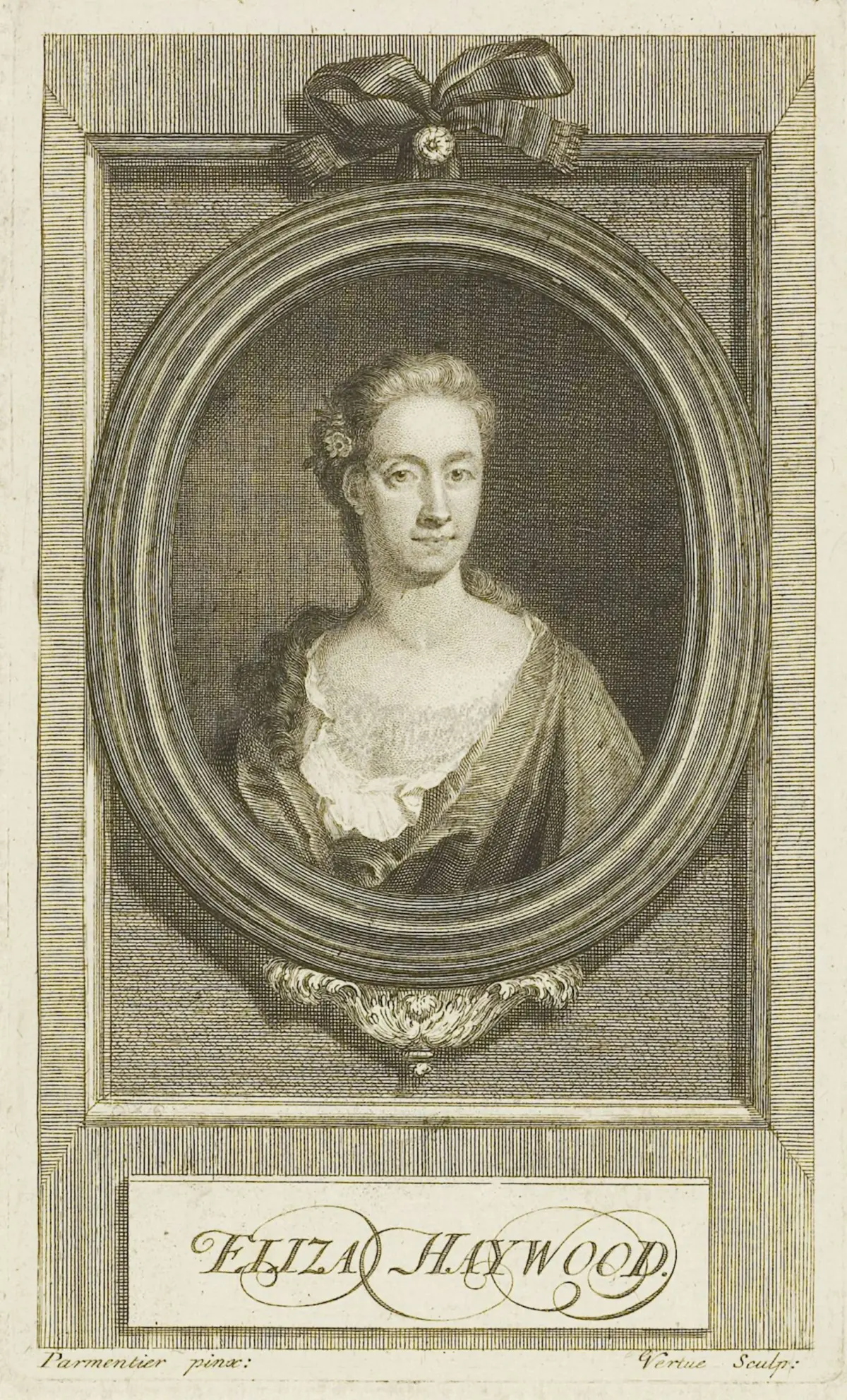
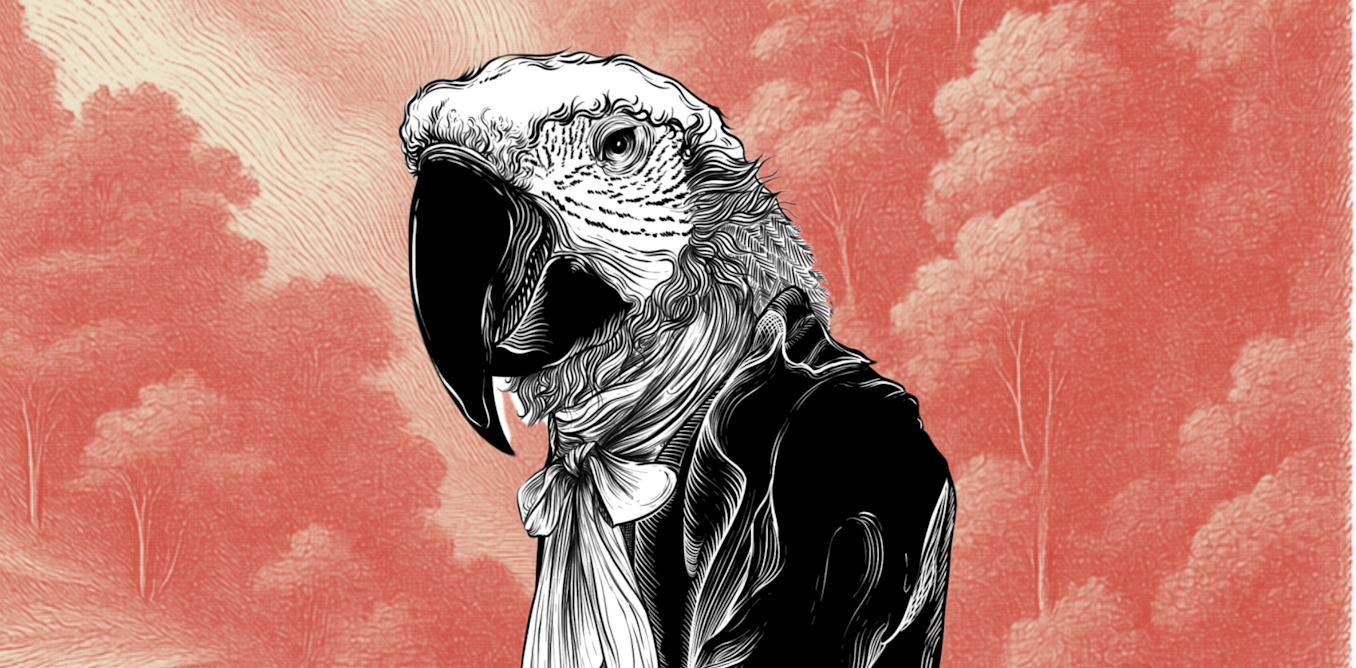
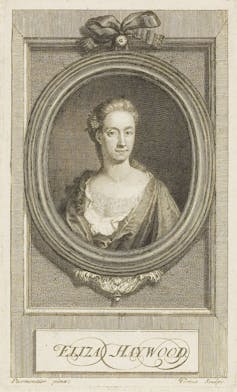
In 1746, writer Eliza Haywood pushed the boundaries of the persona format with The Parrot, a periodical supposedly authored by Poll, a worldly green parrot with decades of international observation under his wings.
By speaking through the voice of a bird, Haywood brilliantly subverted the misogynistic "pretty prattler" trope—a derogatory dismissal used by contemporary critics to paint intellectually ambitious women as mere mindless mimics of men. Instead of a mindless squawker, Poll delivered sophisticated, razor-sharp arguments challenging the irrational prejudices of Georgian society.
1751–1753: Christopher Smart and The Midwife
Playwright and poet Christopher Smart adopted a similarly subversive strategy through his creation, Mary Midnight, the fictional editor of The Midwife (1751–1753). Operating as a practicing midwife with a taste for vicious satire, Smart found a liberating outlet for opinions, social critiques, and playful mischief that his respectable public persona as a Cambridge scholar and conservative poet forbade.
Midnight’s popularity exploded to such an extent that Smart eventually stepped onto the London stage to perform as her in person, demonstrating how a fictional editorial construct could successfully break the bounds of print to become a live public entertainer.
1762: Oliver Goldsmith and The Citizen of the World
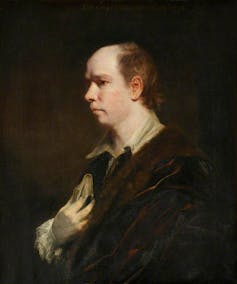
Shifting the geographical perspective, Oliver Goldsmith introduced Lien Chi Altangi in 1762 through The Citizen of the World. Originally published in the daily Public Ledger, Altangi was cast as a visiting Chinese philosopher navigating London.
While initially designed to mock Britain’s fashionable, superficial obsession with the "exotic" East, Altangi rapidly evolved. Positioned firmly outside British cultural norms, the philosopher possessed the unique ability to make familiar, everyday British customs look utterly bizarre. His epistolary dispatches offered incisive critiques of social inequality, religious hypocrisy, and political absurdity.
2019–Present: The Rise of Count Binface
Leaping forward more than two-and-a-half centuries, the lineage finds its modern iteration in Count Binface. Emerging onto the national stage during the 2019 general election—where he stood against then-Prime Minister Boris Johnson—the chrome-domed space warrior positioned himself as a vessel to expose the inherent absurdities of modern British politics.
Rather than fading away as a one-off election stunt, Binface has steadily returned for successive electoral campaigns, steadily accumulating a robust political history, an unmistakable aesthetic, and a trusted public voice.
Supporting Context & Metrics: The Mechanics of Satirical Longevity
To fully understand why characters like Count Binface resonate so powerfully today, one must examine the mechanics that allowed 18th-century writers to transform disposable jests into durable cultural icons.
The Psychology of Repetition and Continuity
Satire often relies on immediate shock value, but satirical endurance relies on repetition. When a writer deploys a fictional persona across multiple issues, columns, or election cycles, readers begin to map a consistent psychology onto the construct.
In the 18th century, periodicals like The Tatler and The Midwife were published weekly or multi-weekly. This high frequency forced readers to invite these characters into their domestic spaces on a regular basis. Over time, the repetition of tone, quirks, and moral viewpoints transformed the persona from a functional tool into an intimate acquaintance.
Modern political campaigns operate on a similar psychological frequency. A single satirical stunt during an election is easily forgotten as a fleeting novelty. However, a decade of sustained appearances—such as those logged by Count Binface across multiple electoral contests—establishes a durable persona. Audiences learn to trust the character’s baseline reactions to political chaos, allowing the satirist to deploy the figure against entirely new targets without wasting time re-establishing their identity.
The Power of the Outsider Lens
A recurring element across all successful satirical personas is their calculated marginalization. Whether an aging bachelor, a green parrot, an immigrant philosopher, or an intergalactic space traveler, these characters operate from the fringes of polite society.
- Eliza Haywood’s Poll utilized the status of a talking animal to highlight the absurdity of racism and xenophobia. In one notable essay, Poll marveled at human hypocrisy regarding skin color: "How I could laugh now," he laments, "if I took half as much pleasure in ridiculing the follies of mankind, as you do in those of each other!" By framing his critique through the perspective of a bird whose green feathers were simply a product of nature, Haywood exposed the arbitrary nature of human prejudice.
- Oliver Goldsmith’s Lien Chi Altangi used his foreign gaze to dismantle British pretensions. His letters frequently targeted the glaring moral contradictions of the British populace—most notably their sentimental affection for household pets contrasted with their ruthless, industrial cruelty toward animals processed for food. "Would you believe it," Altangi asks, "I have seen the very men who have boasted of their tenderness; at the same time devouring the flesh of six different animals tossed up in a fricassee."
- Count Binface operates on the exact same principle. Dressed in sci-fi regalia, he views Westminster politics not as a sacred democratic ritual, but as an intergalactic farce. His outsider status grants him the rhetorical freedom to articulate truths that conventional politicians and traditional journalists often dance around.
Official Statements & Academic Insights
Scholars of literature and media history have increasingly recognized the profound continuity between Georgian print culture and modern satirical performance. Academic analyses emphasize that the mask of fiction does not diminish the seriousness of the argument; rather, it amplifies it.
Cultural historians studying the intersection of 18th-century periodicals and modern performance note that fictional personas serve as safety valves for political anxiety. As archival research into publications like The Parrot and The Midwife demonstrates, writers frequently used fictitious entities to bypass rigid censorship laws and social expectations.
In her analysis of Eliza Haywood’s work, literary scholar Professor Ros Ballaster notes that animal personas allowed female authors to bypass the patriarchal constraints of the public sphere:
"By speaking through the voice of a non-human observer, writers could critique the very architecture of prejudice without exposing themselves to direct, ad-hominem silencing. The mask provided safety, but more importantly, it provided a platform where marginal voices could command mainstream intellectual authority."
Similarly, media analysts tracking the phenomenon of "joke candidates" in British elections argue that figures like Count Binface fulfill a crucial democratic function. Rather than undermining the electoral process, they reflect public disillusionment with hyper-sanitized, poll-tested political rhetoric.
Political communication experts emphasize that when trust in traditional institutional voices hits historic lows, audiences gravitate toward transparently fictional or satirical constructs because honesty is embedded in their very artificiality. A politician in a tailored suit can lie with impunity; a space warrior with a waste-paper basket on his head makes no secret of his absurdity, paradoxically rendering him one of the most reliable commentators in the room.
Future Outlook: The Enduring Legacy of the Mask
As political discourse increasingly migrates to fragmented digital ecosystems, hyper-personalized social media feeds, and highly polarized media channels, the lessons of 18th-century satire remain startlingly prophetic.
The writers who crafted Isaac Bickerstaff, Poll the parrot, Lien Chi Altangi, and Mary Midnight could not have foreseen televised electoral debates, viral video clips, or political campaigns waged through internet memes. Yet, they grasped a fundamental constant of human psychology that digital-age satirists continue to exploit: arguments are vastly more persuasive when they are given a face, a distinct personality, and a memorable voice.
Count Binface may appear to be a peculiarly modern political phenomenon, born of 24-hour news cycles and viral internet culture. Yet, beneath the chrome helmet and the satirical manifesto lies a centuries-old technology of persuasion.
As long as institutional politics produces hypocrisy, absurdity, and pompous self-seriousness, satirists will reach for masks. And as history proves, audiences will continue to listen to the phantoms on the fringes long after the conventional politicians have faded from memory.