Executive Overview
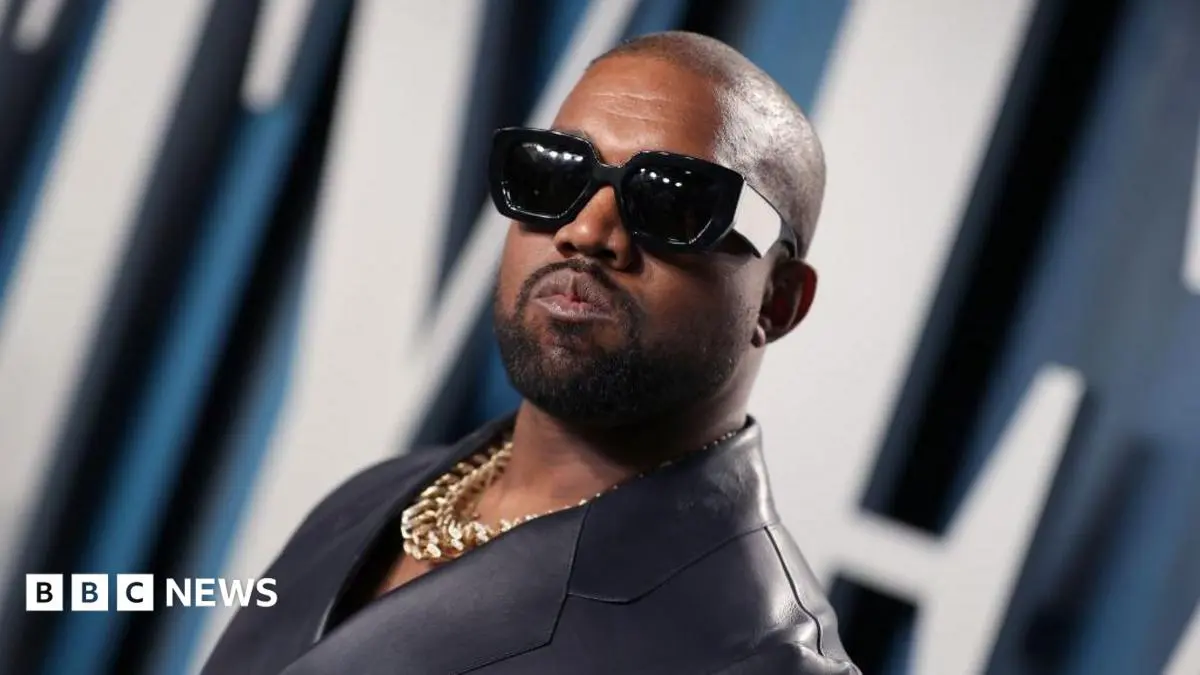
In what marks a watershed moment for the contemporary cultural landscape, the multifaceted artist formerly known as Kanye West—now legally recognized as Ye—is scheduled to perform two colossal concerts at the 70,000-capacity Gazprom Arena in St. Petersburg, Russia, this October. This unprecedented engagement makes the Grammy Award-winning hip-hop mogul the most prominent Western star to stage a commercial performance within the Russian Federation since the country’s full-scale invasion of Ukraine more than four years ago.
The announcement, made on a Monday morning, sent immediate shockwaves through the international entertainment industry. Tickets for the twin St. Petersburg dates vanished within hours of release, despite a complex pricing structure ranging from 9,000 roubles (approximately £78) for nosebleed sections up to an eye-watering 160,000 roubles (£1,394) for premier VIP experiences. The sheer velocity of the ticket sales underscores Ye’s enduring, albeit highly polarizing, global drawing power, even as his relationship with Western markets remains deeply fractured.
This high-profile Russian residency unfolds against a backdrop of aggressive attempts by the artist to salvage his career, personal brand, and global public image following a prolonged series of antisemitic diatrips, hate speech, and pro-Nazi public remarks that alienated long-standing corporate partners, collaborators, and millions of fans worldwide. While Ye issued a public apology in January—attributing his erratic, offensive statements and behavioral spirals to the enduring impacts of a past brain injury alongside diagnosed bipolar disorder—the road to redemption across Western Europe and North America has proven arduous, erratic, and frequently blocked by political and social resistance.
By pivoting toward Russia—a nation largely isolated from mainstream Western cultural exchange due to ongoing international sanctions, corporate boycotts, and geopolitical condemnation—Ye is charting a controversial, high-stakes trajectory. This move places him at the intersection of geopolitical maneuvering, celebrity controversy, and a shifting global entertainment economy where traditional Western norms no longer apply.
Detailed Chronology: From European Rejections to the St. Petersburg Announcement
To understand the weight of Ye’s upcoming performances in Russia, one must examine the turbulent timeline of his recent touring efforts and the systemic roadblocks he has encountered across Europe throughout the past year.
The Stalled Summer Tour
Earlier this year, Ye attempted to mount a major European stadium and arena tour designed to re-establish his dominance as a live performer. However, the initiative faltered under the weight of mounting public outrage, municipal cancellations, and tightened security profiles. Promoters and venue operators in multiple democratic nations faced immense pressure from civil rights organizations, local governments, and grassroots coalitions demanding the cancellation of shows tied to an artist who had openly praised Adolf Hitler and espoused vicious antisemitic conspiracy theories.
The crisis reached a definitive head in the United Kingdom. The organizers of the long-running, prestigious Wireless Festival—where Ye had been locked in as the marquee headliner across all three nights of the multi-day event—were forced to cancel his appearances after the British government intervened. The UK Home Office formally denied the rapper entry into the country, issuing a definitive statement declaring that Ye’s presence and public platform would not be "conducive to the public good." This rare invocation of immigration exclusion laws effectively slammed the door shut on one of Europe’s most lucrative music markets.
Cascading Cancellations Across the Continent
The UK ban was not an isolated incident. Across continental Europe, a domino effect of cancellations swept through the tour itinerary:
- France: Local authorities and venue managers quietly pressured promoters to scrap high-profile dates in Paris and Marseille.
- Poland: Public outcry led to the cancellation of a planned stadium show in Warsaw.
- Italy: Historic venues and municipal councils rescinded preliminary agreements following vocal protests from local Jewish communities and anti-fascist organizations.
- Czech Republic: Promoters pulled the plug on an arena date in Prague citing safety and reputational concerns.
Despite this wave of cancellations, the tour was not a total washout. Ye managed to successfully execute dates in several European and Eurasian territories where political will, laxer regulatory environments, or independent promoters allowed the shows to proceed. Concerts in Spain, Portugal, the Netherlands, Turkey, and Albania went ahead largely as planned, proving that a dedicated, resilient core of international fans remained willing to overlook or compartmentalize the artist’s rhetorical transgressions.
The Russian Connection and Gosha Rubchinskiy
Rumors of a potential Russian concert residency have swirled within entertainment circles for well over a year. The speculation intensified dramatically in 2024, when Ye traveled to Moscow to celebrate the birthday of controversial Russian fashion designer Gosha Rubchinskiy. Rubchinskiy, who serves as the head designer for Ye’s Yeezy brand, has deep ties to the post-Soviet fashion world, and his partnership with the American rapper provided a direct, informal cultural bridge to Moscow’s elite creative circles.
While that initial 2024 trip was ostensibly focused on fashion, industry insiders noted that exploratory talks regarding a major Russian concert run began during those closed-door meetings. Over the subsequent months, logistics were quietly finalized, culminating in Monday’s official confirmation that St. Petersburg’s Gazprom Arena would host the historic two-night stand.
Supporting Context & Metrics: The Cultural and Economic Vacuum in Russia
The decision by a tier-one Western superstar of Ye’s magnitude to perform in Russia carries profound symbolic and economic weight, highlighting the stark bifurcation of the global entertainment industry since February 2022.
The Great Western Exodus
Prior to Russia’s invasion of Ukraine four years ago, Moscow and St. Petersburg were mandatory stops on the global touring circuits of virtually every major Western musical act. Stadium-filling titans—including the Red Hot Chili Peppers, Lana Del Rey, Muse, Metallica, and System of a Down—routinely sold out massive Russian venues, integrating the country seamlessly into international pop-culture flows.
However, the onset of the war radically transformed this landscape. In a coordinated display of corporate and moral alignment, major multinational record labels (including Universal Music Group, Sony Music Entertainment, and Warner Music Group) suspended all operations, commercial releases, and promotional activities within the Russian Federation. Promoters severed ties, and global booking agencies pulled their rosters out of the region to comply with sweeping international sanctions and to avoid severe reputational damage in their primary Western markets.
The Rise of B-List Acts and Alternative Circuits
As the war dragged on and the initial wave of high-profile cultural boycotts stabilized into a permanent deep freeze, a vacuum emerged within the Russian live entertainment market. Domestic concert demand remained high among Russian youth and urban consumers starved of international entertainment, but the supply side was severely constrained.
To fill this void, Russian promoters turned to alternative pipelines. Over the past three years, the artists venturing into Moscow and St. Petersburg have largely consisted of B-list acts, niche performers, and figures marginalized within the mainstream American industry:
- Hip-Hop and R&B Acts: Performers such as Tyga, DaBaby, Akon, and pro-Trump rapper Lil Pump have made headline-grabbing trips to perform in Russian clubs and arenas, finding lucrative payouts in a market devoid of Western competition.
- Jason Derulo’s Tour Stop: Pop and R&B star Jason Derulo drew significant media attention when he performed high-profile concerts in both St. Petersburg and Moscow, subsequently announcing to local fans that he intended to return as part of his broader 2026 world tour.
Within this modified ecosystem, Ye’s arrival represents an entirely different order of magnitude. Unlike the B-list artists who have trickled into the country, Ye is a globally defining cultural icon, billionaire fashion entrepreneur, and musical innovator whose entry into the Russian market shatters the informal taboo that has kept top-tier Western talent away from the federation since 2022.
Official Statements and Sociopolitical Reactions
The announcement of Ye’s Gazprom Arena residency has triggered a fascinating spectrum of responses from Russian political figures, highlighting the deep internal contradictions and cultural anxieties within the country regarding Western influence.
Conservative Backlash and Nationalist Skepticism
While the Russian public demonstrated an insatiable appetite for the concerts by buying out the 70,000-capacity venue within hours, the country’s conservative and nationalist political establishment has greeted the news with a mixture of hostility, paternalism, and ideological suspicion.
Vitaly Milonov, a notorious and flamboyant conservative Russian lawmaker known for his ultra-nationalist views and aggressive moral policing, voiced vocal opposition to the rapper’s conventional hip-hop setlist. In a widely circulated video statement that captured the anti-Western sentiment prevalent among hardline Russian nationalists, Milonov suggested that the American superstar should fundamentally alter his performance to align with traditional Russian cultural values.
"Maybe after this he’ll stop his disgusting antics and become a normal person," Milonov remarked in his video statement, arguing that a true rehabilitation for the controversial American would involve shedding Western decadence in favor of performing traditional Russian songs. Milonov’s comments reflect a broader, underlying tension: while the Russian state and local entrepreneurs are eager to secure high-profile Western validation, conservative ideologues remain deeply suspicious of foreign cultural imports, viewing figures like Ye through a lens of moral contamination.
Public and Fan Sentiment
In stark contrast to political figures like Milonov, tens of thousands of Russian music consumers view Ye’s arrival as a rare, triumphant reconnection with global culture. Social media platforms within the Runet have been flooded with excitement, with fans expressing relief that a living legend is willing to bypass Western geopolitical pressures to bring his world-class production directly to St. Petersburg. For many young Russians, attending the Gazprom Arena shows is viewed not through a political lens, but as a long-awaited celebration of boundary-pushing hip-hop artistry that has otherwise been stripped from their local concert calendars.
Future Outlook: Global Repercussions and Career Trajectory
As October approaches, the impending St. Petersburg concerts stand as a defining crucible for Ye’s future career path and the broader geopolitics of global entertainment.
The Geopolitical Risk Calculus
By intentionally booking a massive residency in Russia, Ye has effectively severed whatever tentative bridges remained with the mainstream Western music industry. While artists frequently tour in nations with controversial human rights records or authoritarian governments, performing in Russia under current wartime conditions carries a distinct, radioactive stigma in North America and Western Europe.
For Ye’s corporate backers, fashion partners, and remaining Western affiliates, the St. Petersburg shows present a severe public relations challenge. Industry analysts suggest that any hopes of a traditional American or Western European comeback tour have likely been permanently extinguished by this move. By cementing an alliance with a market officially ostracized by the West, Ye is signaling a strategic pivot toward alternative global spheres of influence—embracing regions where his controversies are either ignored, minimized, or utilized as a badge of anti-establishment defiance.
The Psychological and Medical Dimension
Underpinning this entire commercial gamble is the ongoing narrative surrounding Ye’s mental health. His public attribution of his hate speech and erratic behavior to a past brain injury and bipolar disorder offered a medical explanation, but it has done little to convince institutional gatekeepers in the West to reinstate his cultural platform. Whether the St. Petersburg residency represents a cathartic creative outlet for an isolated artist, or a desperate commercial maneuver to monetize an alienated fanbase, remains a subject of intense debate among music critics and cultural commentators.
What Lies Ahead
When the lights go down at the 70,000-capacity Gazprom Arena this October, the cultural shockwaves will reverberate far beyond the borders of Russia. For Ye, the concerts will serve as a definitive test of whether an artist can successfully bypass Western cancellation by cultivating a parallel empire in sanctioned territories. For the global entertainment industry, the event stands as a stark reminder that in an increasingly fractured, multipolar world, cultural isolation is never absolute—and that controversies capable of closing doors in London and Paris can simultaneously open stadium gates in St. Petersburg.