Executive Overview
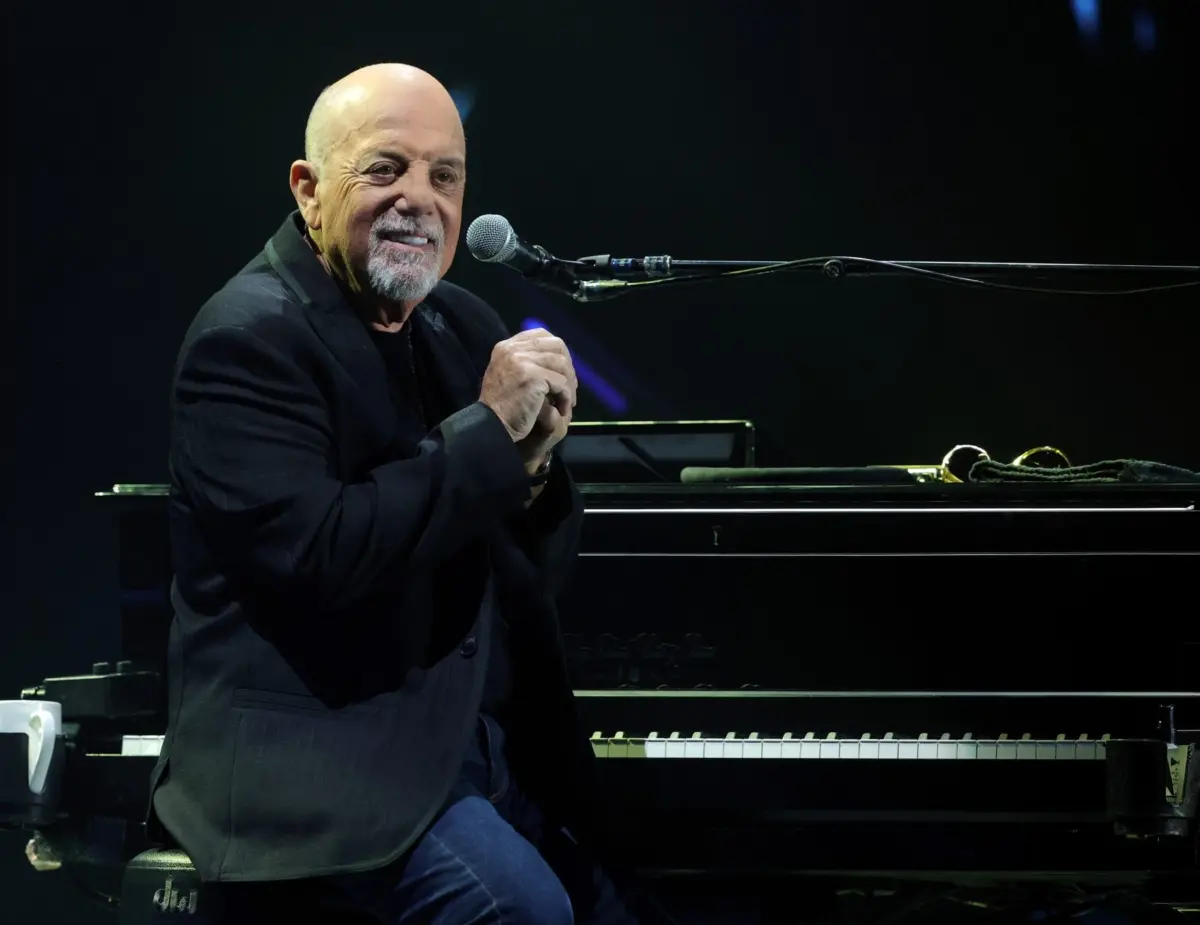
In a rare, intimate, and deeply candid broadcast, legendary American singer-songwriter Billy Joel stepped behind the microphone last Thursday, September 24, for his first-ever live call-in special on SiriusXM’s exclusive The Billy Joel Channel. Broadcasting from the heart of his musical universe, the Rock & Roll Hall of Famer spent the hour interacting directly with fans from across the United States. While the evening was ostensibly designed to celebrate his monumental catalog—spanning decades of timeless anthems, deep cuts, and piano-driven masterpieces—the conversation naturally gravitated toward the headlines that have dominated his recent personal life: his ongoing battle with a neurological disorder, the agonizing decision to cancel his 2025 touring schedule, and his candid reflections on the contemporaries who shaped his life and career.
At 77 years old, the "Piano Man" proved to be as sharp, self-deprecating, and musically articulate as ever. Rejecting sensationalized media narratives surrounding his health, Joel offered an unvarnished update on his diagnosis of Normal Pressure Hydrocephalus (NPH), detailing the realities of living with a brain shunt and the difficult medical advice that has temporarily sidelined his legendary live performances. Beyond his medical journey, Joel reflected on the ghosts of rock-and-roll history, revealing the profound grief he still feels over the 1980 murder of John Lennon—an artist he wished he could have performed alongside—while sharing the surprising urban inspirations behind some of his most enduring early songs, including 1973’s "Captain Jack."
The special, which runs through October 1 on SiriusXM Channel 93, offered a poignant reminder of why Joel remains one of the most beloved and enduring figures in popular music history: an artist who, even when facing physical vulnerability, maintains an unbreakable, conversational bond with the audience that built his legacy.
Detailed Chronology
The Call-In Event: A Setting of Intimacy and Transparency
The landmark broadcast marked a departure from the traditional promotional interview circuit. Instead of sitting down with a mainstream media anchor, Joel opted for direct dialogue with the public, taking calls facilitated by SiriusXM producers. Opening the special with characteristic self-deprecation—joking that he possessed a "face made for radio"—Joel immediately set a relaxed tone.
Throughout the hour, he answered questions covering a vast emotional landscape: from his daily culinary preferences (his go-to bagel order) to the intimate backstory of naming his youngest daughter, Remy. Periodically, Joel would interrupt the Q&A to sit at his piano, hammering out bouncy basslines or chord progressions to jog his memory regarding specific arrangements, transforming the radio studio into an impromptu living room concert.
Unpacking the NPH Diagnosis
The most critical moments of the broadcast arrived when callers shifted the focus to Joel’s health. The 2025 touring season had been abruptly canceled due to medical directives, leaving millions of fans worldwide in a state of anxious speculation. The silence was broken when a caller named Dave from Pennsylvania expressed his well wishes, quickly followed by Mary from Texas, who directly asked for a status update.
"I know people are worried about me because they read that I have a brain disorder, which sounds a lot worse than it actually is," Joel told the listening audience. "I’m OK. My balance isn’t that good. Lost a little bit of my hearing, but that may have to do with my age, too, and the rock and roll life and the loud volume probably didn’t help. But I’m fine. I want people to not have to worry about me. I’m OK. And I appreciate your call."
The discussion reached an unexpected level of depth when another caller from Pennsylvania revealed that she, too, had been diagnosed with NPH several years prior. This prompted a deeply empathetic exchange between the legendary musician and the fan regarding the cornerstone treatment for the condition: the surgical implementation of a brain shunt.
Joel didn’t shy away from the visceral horror of the medical recommendation he had initially received. When doctors first suggested a shunt to drain excess intracranial pressure caused by the buildup of cerebrospinal fluid, Joel’s reaction was characteristically blunt.
"I understand your trepidation about that particular procedure," he told the caller. "When I was diagnosed with NPH, they recommended a shunt be implanted. I asked them, ‘What does that entail?’ Well, ‘We drill a hole through your skull, then we shove a drain into your brain to drain off excess fluid.’ I said, ‘Nnnah, I think I’ll pass on that.’"
However, after performing his own exhaustive research and noticing a progressive decline in his spatial awareness—often describing his balance issues as feeling permanently "on a boat"—Joel ultimately consented to the surgery. He reported that the procedure left him with a "little bump" on his head, but more importantly, it yielded tangible improvements in his cognition, hearing, and balance, urging the caller to seriously consider the operation if her condition had been caught early enough.
Musical Regrets and Lost Collaborations
Shifting from medical trials to artistic milestones, a listener from Racine, Wisconsin, posed a speculative question: Given that Joel has shared the stage with an extraordinary pantheon of rock royalty—including Paul McCartney, Bruce Springsteen, Elton John, Sting, and pop sensation Olivia Rodrigo—was there anyone he deeply regrets never having the chance to perform with?
Without hesitation, Joel named former Beatle John Lennon.
"I would have liked to have performed with John Lennon. And when he was shot, that was a horrible, horrible thing for me," Joel said, referencing Lennon’s tragic assassination outside his Manhattan apartment on December 8, 1980. "It was like… he was like my older brother to me. So, John Lennon would have been one of them."
Joel also expressed profound admiration for British keyboardist and singer Steve Winwood. While the two artists collaborated remotely on the track "Getting Closer" from Joel’s 1986 studio album The Bridge, they never shared a live stage.
"I always admired Steve Winwood. I thought he was a great keyboard player, great singer," Joel reflected. "Always loved his recordings, but that would have been somebody I would have liked to work with, too. Yes. Luckily, I got to work with some people like Ray Charles and McCartney and Sting, who’s a phenomenal musician."

The Origins of "Captain Jack"
The retrospective nature of the special also provided a window into Joel’s early songwriting genius. Responding to inquiries about the darker, grittier narratives of his early 1970s output, Joel broke down the genesis of "Captain Jack," a staple track from his breakout 1973 album Piano Man.
Explaining the inspiration to Mary from Texas, Joel recalled looking out the window of his modest Oyster Bay, Long Island apartment directly across from a housing project, where he routinely observed illicit drug transactions playing out in plain sight. Moving to the piano, he demonstrated the song’s signature bouncy, syncopated baseline.
"It’s a little bit symphonic of a theme, and I always wanted to do something with that, and the subject of the song seemed to fit with that particular theme, and that’s how it got written," he explained, seamlessly blending autobiography with structural composition.
Supporting Context & Metrics
To fully understand the gravity of Billy Joel’s current medical situation and the significance of his SiriusXM broadcast, it is necessary to examine the intersection of aging within the rock-and-roll industry, the clinical realities of Normal Pressure Hydrocephalus, and Joel’s unparalleled commercial footprint.
Understanding Normal Pressure Hydrocephalus (NPH)
Normal Pressure Hydrocephalus is a neurological condition characterized by the abnormal accumulation of cerebrospinal fluid (CSF) in the brain’s ventricles. While CSF normally cushions the brain and spinal cord, an excess buildup creates intracranial pressure that can damage surrounding brain tissue.
- The Clinical Triad: NPH typically manifests through three primary symptoms: gait disturbances (the balance and walking issues Joel described as feeling "on a boat"), cognitive impairment (ranging from mild memory loss to executive dysfunction), and urinary incontinence.
- Prevalence and Demographics: NPH predominantly affects adults aged 60 and older. It is frequently misdiagnosed as Alzheimer’s disease, Parkinson’s disease, or general age-related decline because its symptoms closely mimic those neurodegenerative disorders.
- The Shunt Procedure: The standard surgical intervention involves inserting a flexible plastic tube (a shunt system) into the brain’s ventricles to redirect excess CSF to another part of the body—typically the abdominal cavity—where it can be safely absorbed. While highly effective when caught early, the procedure carries surgical risks, explaining Joel’s initial reluctance.
The Toll of Touring on Aging Rock Icons
Billy Joel’s health struggles highlight a broader conversation within the music industry regarding the physical demands placed on legacy artists. Decades of exposure to high-decibel stage environments, rigorous travel schedules, and the physical exertion of live instrumentation take a cumulative toll on the human body.
Medical professionals treating Joel advised him that continuing his high-intensity live performance schedule could exacerbate neurological strain and accelerate hearing loss. This guidance directly precipitated the painful decision to scrap his planned 2025 concerts, interrupting a late-career renaissance that had recently seen him complete a historic, decade-long residency at New York City’s Madison Square Garden.
Commercial Footprint and Legacy Metrics
- Career Span: Spanning over six decades, Joel’s career began in earnest with his solo debut Cold Spring Harbor in 1971.
- Sales and Chart Success: Joel is one of the best-selling music artists of all time, having sold more than 160 million records worldwide. He ranks as the fourth-best-selling solo artist in the United States.
- Accolades: He was inducted into the Songwriters Hall of Fame in 1992, the Rock and Roll Hall of Fame in 1999, and received the prestigious Kennedy Center Honors in 2013, alongside numerous Grammy Awards.
Official Statements
The SiriusXM call-in special served as the primary official communication channel for Billy Joel regarding his health status. Rather than relying on public relations statements or social media posts mediated by management, Joel chose an unscripted, direct-to-consumer medium.
On His Current Health Status:
"I know people are worried about me because they read that I have a brain disorder, which sounds a lot worse than it actually is. I’m OK. My balance isn’t that good. Lost a little bit of my hearing… But I’m fine. I want people to not have to worry about me."
On the Reality of Brain Surgery:
"When I was diagnosed with NPH they recommended a shunt be implanted. I asked them, ‘What does that entail?’ Well, ‘We drill a hole through your skull, then we shove a drain into your brain to drain off excess fluid.’ I said, ‘Nnnah, I think I’ll pass on that.’… [After getting it] I noticed my cognition, hearing and balance were improved."
On His Musical Brotherhood with John Lennon:
"I would have liked to have performed with John Lennon. And when he was shot, that was a horrible, horrible thing for me… It was like, he was like my older brother to me."
Future Outlook
As the music world processes the revelations from The Billy Joel Channel special, the immediate future for the legendary musician remains centered on health preservation, recovery, and quiet reflection rather than large-scale commercial touring.
- Touring Status: Following the cancellation of his 2025 concert dates, there has been no official indication from Joel’s camp regarding a return to the live stage. Medical professionals have urged caution, and while Joel’s cognitive functions and general well-being have stabilized following his shunt surgery, the rigorous physical demands of arena-scale rock tours remain an improbable venture in the near term.
- Media and Archival Engagement: SiriusXM’s dedicated channel—running through October 1—has demonstrated the immense value of direct, curated engagement with Joel’s massive fanbase. Future projects may lean more heavily toward curated audio retrospectives, songwriting deep dives, and radio specials rather than physical performances.
- Legacy Preservation: With his studio catalog preserved and his status as an American cultural icon permanently cemented, Billy Joel enters his late seventies with a renewed focus on personal peace. By stepping behind the microphone to reassure his fans directly, Joel has closed the loop on decades of speculation, proving that while the "Piano Man" may be taking a well-deserved rest from the road, his voice—and his connection to the public—remains entirely intact.