Executive Overview
Singer, actress, and Broadway performer Betty Who was forced to withdraw from her high-profile appearances at the inaugural "The Festival"—widely billed as the "Coachella for Broadway"—after contracting a severe E. coli infection. The 34-year-old artist, born Jessica Newham, revealed the diagnosis via social media on Tuesday, August 18, detailing a harrowing medical ordeal that she described as "maybe the sickest I’ve ever been."
The three-day cultural convergence, held at the Hutton Brickyards in upstate New York, brought together musical theater royalty and pop crossover acts from August 14 to August 16. However, Newham’s sudden incapacitation necessitated eleventh-hour programming shifts. Despite her absence from the stage, organizers managed to reconfigure her scheduled performances—which included a coveted Day One main lineup slot, a late-night campfire sing-along, and the world-premiere showcase of her original musical, Love Somebody—highlighting the resilience and collaborative spirit of the theatrical community. This report provides a comprehensive examination of the incident, the clinical reality of E. coli infections, the cultural impact of The Festival, and the broader trajectory of Newham’s multi-hyphenate career.
Detailed Chronology: From First Symptoms to the Road to Recovery
The chain of events leading to Newham’s hospitalization and subsequent recovery unfolded over a grueling nine-day period in mid-August. According to the artist’s public disclosures, her health began to deteriorate just prior to her scheduled departure for New York’s Ulster County, where The Festival was set to take place.
- Pre-Departure (Mid-August): Newham began experiencing anomalous physical discomfort and systemic fatigue before leaving for the Hudson Valley. Operating with professional commitment and a determination to fulfill her contractual and artistic obligations, she chose to board a flight on Thursday, August 13, intending to "tough out" the symptoms.
- Arrival in New York (Thursday, August 13): Upon landing in New York, the artist recognized that her condition had escalated past the point of endurance. The physiological warning signs were immediate and severe, forcing her to seek urgent medical evaluation rather than proceeding to festival rehearsals or soundchecks.
- The Festival Weekend (August 14–August 16): As thousands of musical theater enthusiasts converged on the Hutton Brickyards—a chic riverfront hotel and industrial event space overlooking the Hudson River—festival organizers quietly scrambled. Newham was slated to perform on the main stage during opening night, host an intimate late-night campfire sing-along, and showcase Love Somebody, a new musical featuring music and lyrics written by the artist herself. Instead, production teams engaged in emergency re-programming, seamlessly absorbing the logistical blow of her absence while expressing deep concern for her health.
- Return Home and Diagnosis (Mid-Week): Upon returning home following the festival weekend, Newham underwent diagnostic testing that confirmed the root cause of her illness: a virulent strain of E. coli. Confined to bed rest, the singer detailed the debilitating nature of the infection, noting that she was temporarily unable to keep fluids down and subsisting entirely on broth.
- Public Disclosure and Recovery Update (Tuesday, August 18): Taking to Instagram Stories on day nine of her illness, Newham published a candid update featuring a photograph from her bed. While confirming she was "so much better than [she] was when [she] was in NY," she conceded that she was still "not quite in fighting shape." True to her eclectic interests, she noted that she was keeping herself mentally occupied during convalescence by following the on-court action at the Cincinnati Open tennis tournament.
Clinical Realities of E. coli Infections in Performance Professionals
While Escherichia coli (E. coli) is commonly referenced in public health discourse regarding foodborne illness, the clinical spectrum of the bacteria is broad, complex, and potentially life-altering. According to guidance from the Cleveland Clinic, E. coli represents a diverse group of bacteria that normally inhabit the gastrointestinal tracts of humans and warm-blooded animals. While many strains are harmless or even beneficial components of a healthy gut microbiome, pathogenic strains can cause severe localized and systemic infections.
Pathophysiology and Transmission
Pathogenic E. coli strains are typically categorized by their virulence factors and mechanisms of disease. Infection commonly occurs through the ingestion of contaminated food or water, or via person-to-person contact in environments where hygiene protocols are compromised. Once introduced into the gastrointestinal tract, toxic strains can colonize the mucosal lining, releasing enterotoxins or cytotoxins that disrupt normal cellular function.
Clinical Manifestations
The clinical presentation of a severe E. coli infection includes:

- Gastrointestinal Distress: Acute, watery, or bloody diarrhea accompanied by intense cramping and abdominal pain.
- Systemic Symptoms: High fever, persistent nausea, and severe vomiting, which frequently lead to acute dehydration and electrolyte imbalance.
- Secondary Complications: In severe cases, certain Shiga toxin-producing strains can lead to hemolytic uremic syndrome (HUS), a dangerous condition characterized by kidney failure and destruction of red blood cells.
For a performing artist, whose livelihood depends entirely on physical stamina, vocal projection, and rigorous travel schedules, a systemic gastrointestinal infection presents a catastrophic disruption. The inability to maintain hydration directly compromises vocal cord integrity and muscular control, making performance an impossibility. Newham’s public commentary—noting that she was "a mile away throwing up" while fans looked for her at the festival grounds—underscores the stark contrast between the glamorous exterior of the entertainment industry and the vulnerable reality of biological illness.
Supporting Context & Metrics: The Landmark Debut of "The Festival"
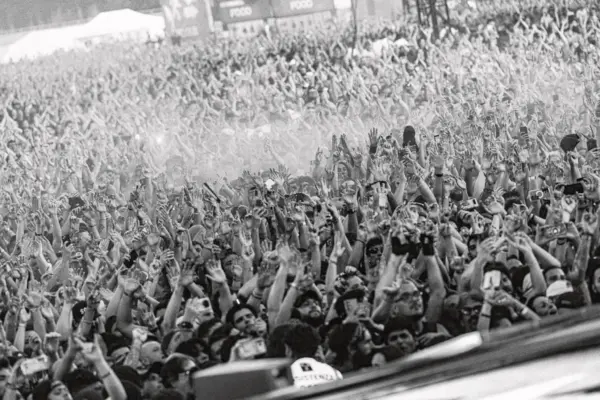
The inaugural iteration of The Festival arrived as a watershed moment for the American theatrical landscape. Billed widely in media and industry circles as the "Coachella for Broadway," the three-day destination event aimed to redefine how musical theater is consumed, celebrated, and experienced outside traditional proscenium arch theaters.
Venue and Atmosphere
Hosted at the historic Hutton Brickyards in Kingston, New York, the festival utilized its sprawling industrial-chic riverfront acreage to offer an immersive, open-air environment. By removing theatergoers from darkened auditoriums and placing them against the scenic backdrop of the Hudson River, the event successfully cultivated a relaxed, community-driven festival atmosphere typically reserved for contemporary pop and indie-rock gatherings.
Star-Studded Lineup
The curatorial ambition of The Festival was reflected in its roster, which bridged generations of Broadway icons and contemporary crossover stars. Attendees were treated to performances and appearances by:
- Theatrical Legends: Audra McDonald, Kelli O’Hara, and Brian Stokes Mitchell.
- Contemporary Icons: Alex Newell, Eva Noblezada, and Betty Who.
- Cult-Classic Alumni: Original Rent cast luminaries Adam Pascal and Anthony Rapp.
The New Works Incubator
Beyond concerts and high-profile vocal performances, The Festival functioned as an incubator for theatrical innovation. A cornerstone of this initiative was the dedication of platform space to new musical works in development. Betty Who’s scheduled unveiling of Love Somebody—for which she served as composer and lyricist—was positioned as a major selling point for industry insiders and fans eager to witness the evolution of her songwriting capabilities within a theatrical framework. The ability of the festival’s production staff to pivot and adjust schedules in the wake of her medical emergency demonstrated high-level operational efficiency in managing a complex, multi-stage live event.
Official Statements and Industry Reactions
The professional response to Newham’s medical crisis underscored the deep respect and affection held for the artist within both the pop music and Broadway communities.
In her social media statements, Newham went out of her way to praise the administrative and production teams behind The Festival. "Everyone at the festival was amazing," she wrote, expressing gratitude for their compassionate handling of the crisis. "They took such good care of me and were so gracious about re-programming all my songs at the last minute. I was devastated tbh."

Festival organizers and fellow participants reciprocated this grace, issuing supportive statements that prioritized the artist’s health over logistical hurdles. While the sudden absence of a major headliner and the cancellation of a high-profile musical preview present significant scheduling challenges for any festival director, the collaborative ethos of the Broadway community ensured that the weekend proceeded without rancor. Industry observers noted that the transparent, vulnerable manner in which Newham communicated her illness—peppered with self-deprecating humor and candid updates from her sickbed—further endeared her to a fanbase accustomed to her authentic online presence.
Future Outlook: Career Trajectory and Return to the Stage
As Betty Who continues her convalescence, industry analysts are looking ahead to her next professional moves. Newham’s career has been characterized by a fearless ability to pivot across mediums, successfully translating a thriving synth-pop recording career into legitimate theatrical acclaim.
A Proven Multihyphenate
Newham’s journey into the theatrical world reached a major milestone in 2023 when she made her Broadway debut as Persephone, the queen of the underworld, in Anaïs Mitchell’s critically acclaimed musical Hadestown. Her performance earned praise from critics and theatergoers alike, proving that her distinct vocal timbre and charismatic stage presence translated seamlessly from arena pop tours to the intimate storytelling demands of the Great White Way.
Musical Theater Composition
The development of Love Somebody—her self-penned musical showcased in concept form at The Festival—signals an exciting new chapter as a theatrical creator. By stepping behind the creative desk to write music and lyrics, Newham is positioning herself not merely as a performer-for-hire, but as a foundational contributor to the future canon of new American musicals.
Upcoming Schedule and Recovery Milestones
While the E. coli infection has temporarily sidelined her touring and promotional obligations, medical professionals anticipate a full recovery once the systemic effects of the bacterial infection are fully cleared and hydration and nutritional levels are restored.
For her legions of fans—who affectionately tracked her nine-day battle via social media—the primary sentiment is one of relief and anticipation. As Newham transitions from bed rest and tennis match-watching back to active physical conditioning, the entertainment world awaits her eventual return to the spotlight, confident that her trademark resilience will ensure her next artistic venture is worth the wait.