Executive Overview
Nearly a decade after the curtain fell on McKinley High, the musical comedy-drama that defined a television generation is officially staging a comeback. Disney and Hulu have confirmed that Glee—the critically acclaimed, Emmy Award-winning cultural touchstone created by Ryan Murphy, Brad Falchuk, and Ian Brennan—is set to return to television screens.
Premiering originally on Fox in May 2009, Glee captivated a global audience with its high-energy musical numbers, satirical look at American high school archetypes, and its earnest, albeit sometimes chaotic, exploration of teenage marginalization. Running for six seasons and producing 121 episodes until its conclusion in March 2015, the series transcended traditional television norms to become a veritable pop-culture phenomenon. It launched the careers of a diverse ensemble cast, generated massive commercial success in the music industry, and sparked vital cultural conversations regarding LGBTQ+ rights, disability representation, and mental health.
The official announcement, disseminated via the franchise’s legacy social media channels on Wednesday, marks the culmination of years of fan speculation, industry rumors, and intermittent conversations among the show’s creators and alumni. Series co-creator Ryan Murphy recently revealed that a reboot script has already been drafted alongside longtime collaborators Falchuk and Brennan. Furthermore, Murphy has reportedly been in active dialogue with approximately ten original cast members, gauging their interest and availability for a return to the halls of McKinley High—or whatever modern iteration the writers have devised.
However, the path to a Glee revival is layered with complexity, nostalgia, and solemn reflection. While core alumni such as Lea Michele and Jane Lynch have expressed unbounded enthusiasm for stepping back into their iconic roles, the project must navigate the emotional shadows cast by the tragic premature passings of foundational cast members Cory Monteith, Mark Salling, and Naya Rivera. As the entertainment industry pivots heavily toward familiar intellectual property and nostalgia-driven revivals, the Glee reboot faces the formidable challenge of honoring its groundbreaking legacy while establishing a fresh, relevant narrative voice for a cynical, hyper-connected modern audience.
Detailed Chronology: From Cult Pilot to Global Phenomenon and Beyond
2009–2011: The Genesis and Meteoric Rise
The journey of Glee began long before its pilot aired following the American Idol season finale on May 19, 2009. Conceived by Ryan Murphy, Brad Falchuk, and Ian Brennan—who originally wrote the concept as a feature film script in 2005 before realizing it was better suited for television—the pilot introduced viewers to Will Schuester (Matthew Morrison), a Spanish teacher at the fictional William McKinley High School in Lima, Ohio. Inspired to restore the school’s defunct glee club, "New Directions," to its former glory, Schuester recruits a ragtag band of social outcasts.
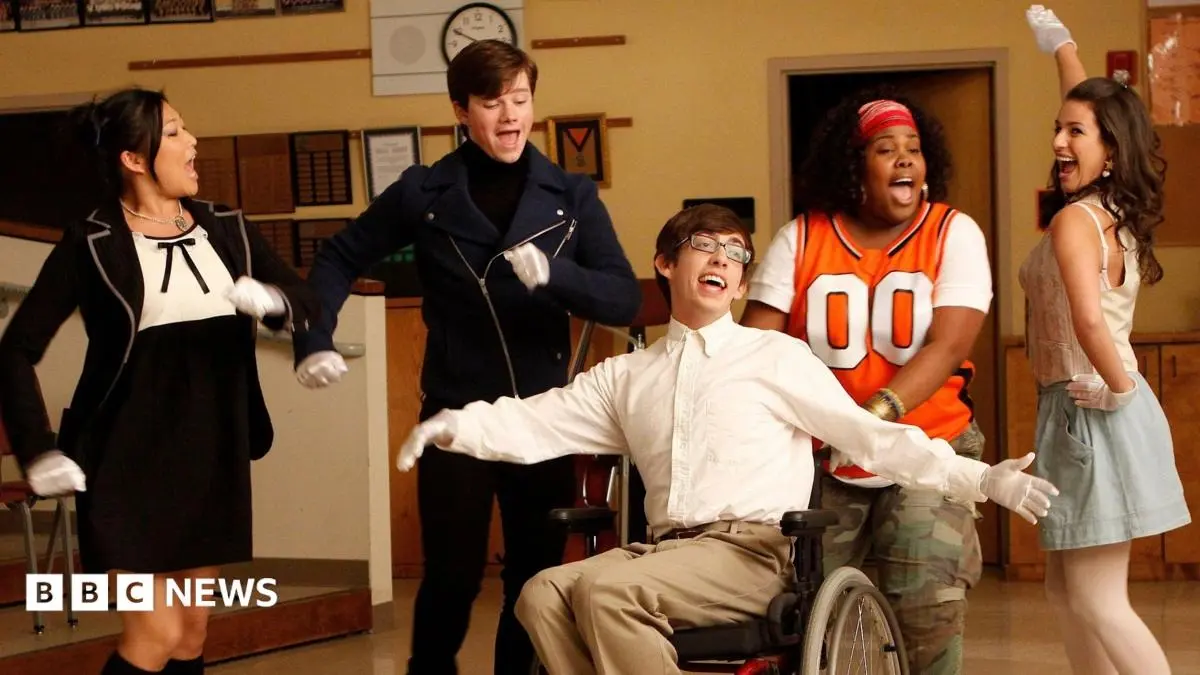
The early episodes established a razor-sharp satirical tone, blending biting dark comedy reminiscent of Murphy’s previous work on Nip/Tuck with wholesome, earnest musical numbers. The ensemble cast was anchored by unknown and Broadway-trained talent: Lea Michele as the fiercely ambitious, theater-obsessed Rachel Berry; Cory Monteith as Finn Hudson, the conflicted jock torn between football popularity and his secret love for singing; Chris Colfer as Kurt Hummel, a fashion-forward countertenor navigating the perils of homophobia; Amber Riley as Mercedes Jones, a powerhouse vocalist fighting for recognition; Kevin McHale as Artie Abrams, a wheelchair-bound guitarist; and Jenna Ushkowitz as Tina Cohen-Chang, a goth aspiring singer with a stutter.
Completing the principal dynamic was Jane Lynch as Sue Sylvester, the tyrannical, tracksuit-wearing cheerleading coach who served as the show’s primary antagonist, delivering scathing insults with deadpan precision.
By its second season, Glee was not merely a television show; it was a runaway freight train. The series swept pop culture, securing critical praise, multiple Emmy and Golden Globe awards (including the 2010 Golden Globe for Best Television Series – Musical or Comedy), and invitations to perform at the White House.
2012–2015: Creative Pivots, Graduation, and the Twilight Years
As the series progressed, Glee faced a structural hurdle inherent to high school narratives: its characters had to graduate. Seasons 4 and 5 introduced a fractured narrative model, alternating between McKinley High—introducing a new generation of "misfit" students like Melissa Benoist’s Marley Rose—and New York City, where Rachel, Kurt, and Santana Lopez (Naya Rivera) pursued their artistic ambitions in the cutthroat worlds of NYADA and Broadway.
While this dual-setting approach attempted to sustain the show’s longevity, it diluted the tight-knit ensemble chemistry that had defined the earlier seasons. Ratings steadily declined from their Season 2 peak of over 10 million live viewers, and the show faced increased scrutiny for erratic plotting, heavy-handed moralizing, and behind-the-scenes tensions among cast members.
Compounding these creative challenges were devastating real-world tragedies. In July 2013, Cory Monteith died of a toxic combination of heroin and alcohol at the age of 31. The show addressed his passing in the emotionally searing Season 5 tribute episode, "The Quarterback," which served as both an in-universe farewell to Finn Hudson and a genuine grieving process for the cast and crew.
Despite these trials, Fox permitted the creative team to bring the series to a deliberate close. The truncated sixth and final season returned primarily to McKinley High, transforming the school into a performing arts magnet under the leadership of Rachel Berry and Will Schuester. The series finale, aired on March 20, 2015, offered a flash-forward glimpse into the characters’ futures, cementing Glee’s place in television history.
2015–2024: The Hiatus, Legacy, and Ongoing Tragedies
In the years following its conclusion, Glee maintained a persistent cultural footprint, largely driven by streaming availability and the passionate devotion of its fan base, known collectively as "Gleeks." However, the brand was continually touched by off-screen controversies and further tragedy.
In 2018, Mark Salling died by suicide following his guilty plea to federal child pornography charges. Then, in July 2020, Naya Rivera accidentally drowned while boating with her young son in Lake Piru, California. Rivera’s death devastated the Glee community, casting a long, somber shadow over the legacy of the show and leading many surviving cast members and fans to declare that any future reunion or revival would be emotionally impossible.
Supporting Context & Metrics: The Numbers That Defined "Glee"
To fully understand the magnitude of the Glee reboot, one must examine the unprecedented commercial and cultural metrics the original series achieved at its height.
- Billboard Hot 100 Dominance: Between 2009 and 2015, the Glee cast placed an astonishing 207 songs on the US Billboard Hot 100 chart. For a brief period in 2010, the cast surpassed The Beatles as the non-solo act with the most charted entries in the history of the chart—a record they held until Drake surpassed it years later.
- Music Sales: The cast released multiple soundtrack albums through Columbia Records, collectively selling millions of copies worldwide and earning multiple RIAA Gold and Platinum certifications. Their cover of Journey’s "Don’t Stop Believin’" became a cultural anthem anew, introducing classic rock tracks to a digital-native demographic via iTunes and Spotify.
- Awards and Accolades: Over its six-season run, Glee garnered 19 Emmy Awards (predominantly in creative arts and guest acting categories, including wins for guest stars Gwyneth Paltrow and Neil Patrick Harris) and won the Golden Globe for Best Television Series – Musical or Comedy in both 2010 and 2011. Jane Lynch secured an Emmy Award in 2010 for her portrayal of Sue Sylvester.
- Touring and Film: The commercial juggernaut expanded beyond the small screen in 2010 and 2011 with live concert tours across the United States, UK, and Ireland. The 2011 concert tour was captured in the 3D concert film Glee: The 3D Concert Movie, grossing over $18.9 million worldwide.
- Social Impact: Long before mainstream corporate discourse embraced intersectional representation, Glee boldly spotlighted LGBTQ+ teenagers, characters with physical disabilities, and discussions surrounding eating disorders, teen pregnancy, and racial identity in a suburban American high school setting.
Official Statements and Cast Reactions
The announcement of the Hulu/Disney reboot has triggered a wave of commentary, excitement, and cautious introspection from the show’s creators and surviving principal cast members.
Ryan Murphy’s Vision
Speaking recently to Entertainment Tonight, co-creator Ryan Murphy confirmed that the machinery behind the reboot is already in motion. Murphy revealed that he, Brad Falchuk, and Ian Brennan have finalized a script for the new project.
"It’s very sweet, and they all had a lot of questions, but they all were very enthusiastic about the idea," Murphy stated, noting that he has maintained open lines of communication with roughly ten original cast members to gauge their participation.
Murphy’s involvement ensures that the reboot will retain the distinct theatrical DNA, fast-paced comedic timing, and unapologetic melodrama that characterized the original run.
Lea Michele: Ready to Return to New York (or Lima)
Lea Michele, whose portrayal of Rachel Berry propelled her to international stardom, has consistently voiced her enduring affection for the character and the series. In a recent interview with E! News, Michele expressed immediate willingness to step back into character.
"I will always love Glee," Michele affirmed. "I love Ryan Murphy. It just holds such a special place in my heart for me… I will follow Ryan wherever he goes."
Given Rachel’s trajectory in the series finale—where she achieved her Broadway dreams and won a Tony Award—it remains to be seen whether Michele’s character would serve as a mentor, a school administrator, or a visiting guest artist in the reboot’s narrative structure.
Chris Colfer on the Weight of Absence
Conversely, Chris Colfer—who played the trailblazing, sensitive Kurt Hummel—offered a more nuanced and reflective perspective during a recent interview with Bustle. While acknowledging the fervor of the fandom, Colfer pointed directly to the emotional and physical absence of Naya Rivera as a profound hurdle.
"It was a really tough show to do, and it would be really hard to do it now that Naya is gone," Colfer noted. "But I do know that Glee fans would probably come after me with pitchforks and jazz hands if I said no. So I don’t know, but hopefully I’ll have more information and I can actually think about it."
Colfer’s comments underscore the heavy sentimental baggage attached to the franchise. For millions of viewers, the chemistry between Santana Lopez, Kurt Hummel, Rachel Berry, and Finn Hudson was irreplaceable. The reality of stepping onto a Glee set without Monteith, Salling, and Rivera presents an undeniable emotional gravity for the returning alumni.
Recent Reunions
The enduring bond among the surviving cast members was recently highlighted in London at the Royal Albert Hall. On Sunday, Darren Criss—who fan-favorite character Blaine Anderson joined the show in Season 2—brought out Chris Colfer as a surprise guest during his concert. The duo treated the audience to a nostalgic duet of "Baby It’s Cold Outside," sending shockwaves of excitement through the global Glee fandom and serving as an impromptu physical preview of the camaraderie that a reboot could bring back to screens.
Future Outlook: What to Expect from the "Glee" Revival
As Disney and Hulu prepare to officially roll out production on the Glee reboot, several key questions remain regarding format, casting, tone, and narrative direction.
1. Revival, Reboot, or Legacy Sequel?
Industry analysts are currently debating whether the project will follow the "legacy sequel" model—where original cast members return in supporting capacities to mentor a brand-new generation of high school performers—or if it will adopt an anthology-style reset focusing on a completely new institution. Given Murphy’s dialogue with original cast members, a hybrid model seems most likely: blending legacy characters (such as Rachel, Kurt, and Sue Sylvester) with fresh-faced newcomers navigating the vastly different landscape of 2020s high school culture.
2. Navigating Modern High School Realities
When Glee premiered in 2009, social media was in its infancy, smartphones were not yet ubiquitous in classrooms, and LGBTQ+ representation on broadcast television was considerably scarcer. A 2020s reboot will need to address a drastically transformed adolescence defined by TikTok culture, algorithmic anxiety, shifting identity paradigms, and post-pandemic educational hurdles. Whether Murphy and his team can capture the same lightning-in-a-bottle campiness while addressing contemporary socio-political realities will determine the show’s critical reception.
3. Musical Landscape
The original series was a pioneer in turning soundtrack curation into a secondary revenue stream and a cultural conversation piece. The reboot will undoubtedly leverage Disney’s vast musical catalog alongside contemporary pop hits, indie-pop breakouts, and Broadway standards. However, recreating the specific viral magic of an a cappella mashup or a theatrical showstopper in an era dominated by hyper-fragmented music consumption will require acute creative precision.
Conclusion
The announcement of the Glee revival proves that while the bell may have rung on McKinley High in 2015, the cultural appetite for unadulterated musical optimism, high-stakes teenage drama, and show choir anthems has never truly faded. As Ryan Murphy, Disney, and Hulu move forward with scripting and casting, millions of "Gleeks" across the globe are left with only one thing to say: Don’t stop believin’.