Executive Overview
For centuries, the grand museums of Europe have stood as towering monuments to human history, housing treasures that span millennia and continents. In recent years, a significant cultural shift has taken place within these institutions: a new willingness to confront, discuss, and document the colonial histories and contested acquisition methods of their collections. Provenance research—the tracing of an object’s history from its creation to the present day—has become a cornerstone of modern museology. Exhibitions now frequently feature wall texts detailing how artifacts were excavated, bought, bartered, or seized during periods of imperial expansion.
However, a fundamental chasm separates the acknowledgement of history from the redistribution of power. Simply explaining how an object entered a Western museum does not question who should control it, nor does it address who holds the authority to produce knowledge about the past.
This deep-seated institutional inertia is most visibly embodied by the enduring disputes over cultural heritage: the Parthenon Marbles in London, the Nefertiti Bust in Berlin, the Treasure of Priam in Moscow, and the Benin Bronzes scattered across various capitals. While European institutions have grown increasingly adept at framing these items through self-reflective historical narratives, they frequently use that very transparency as an endpoint. Once the backstory of an acquisition is neatly cataloged, the object remains where it is, and the holding institution retains total authority over access, display, and academic interpretation.
This article explores the complexities of the modern restitution debate. It examines the distinction between legal possession and moral legitimacy, critiques the mechanics of modern loan proposals, and investigates the structural inequalities in research access that continue to dictate how global heritage is governed.
Detailed Chronology of Key Contested Artifacts
To understand the friction between European holding institutions and claimant nations, it is vital to trace the historical trajectories of some of the world’s most debated antiquities. The legal arguments of today are tethered to the shifting geopolitical landscapes of the 19th and early 20th centuries.
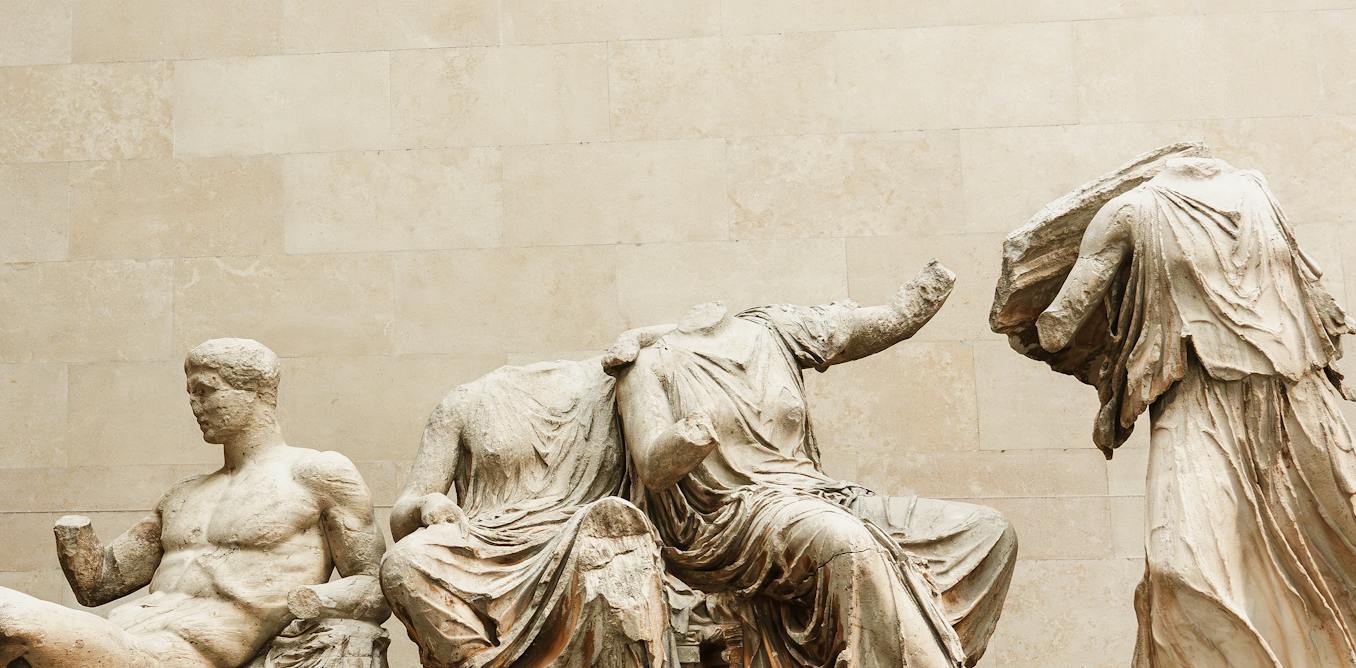
1. The Parthenon Marbles (447 BC – 432 BC)
- 447 BC–432 BC: Sculptures and architectural fragments are created under the direction of Phidias to adorn the Parthenon on the Athenian Acropolis.
- 1801–1812: Thomas Bruce, 7th Earl of Elgin and Britain’s ambassador to the Ottoman court, removes approximately half of the surviving Parthenon sculptures from the Acropolis using a disputed Ottoman permit.
- 1816: Lord Elgin sells the marbles to the British government, which subsequently houses them in the British Museum.
- 1983: Greece submits its first official, formal request for the permanent repatriation of the sculptures.
- 2023: The Vatican Museums voluntarily return three Parthenon fragments directly to Greece as an outright gift, bypassing the loan model.
- October 2026: George Osborne, chair of the British Museum, proposes an alternating display arrangement between London and Athens, a suggestion systematically rejected by the Greek government, which refuses to acknowledge British ownership claims.
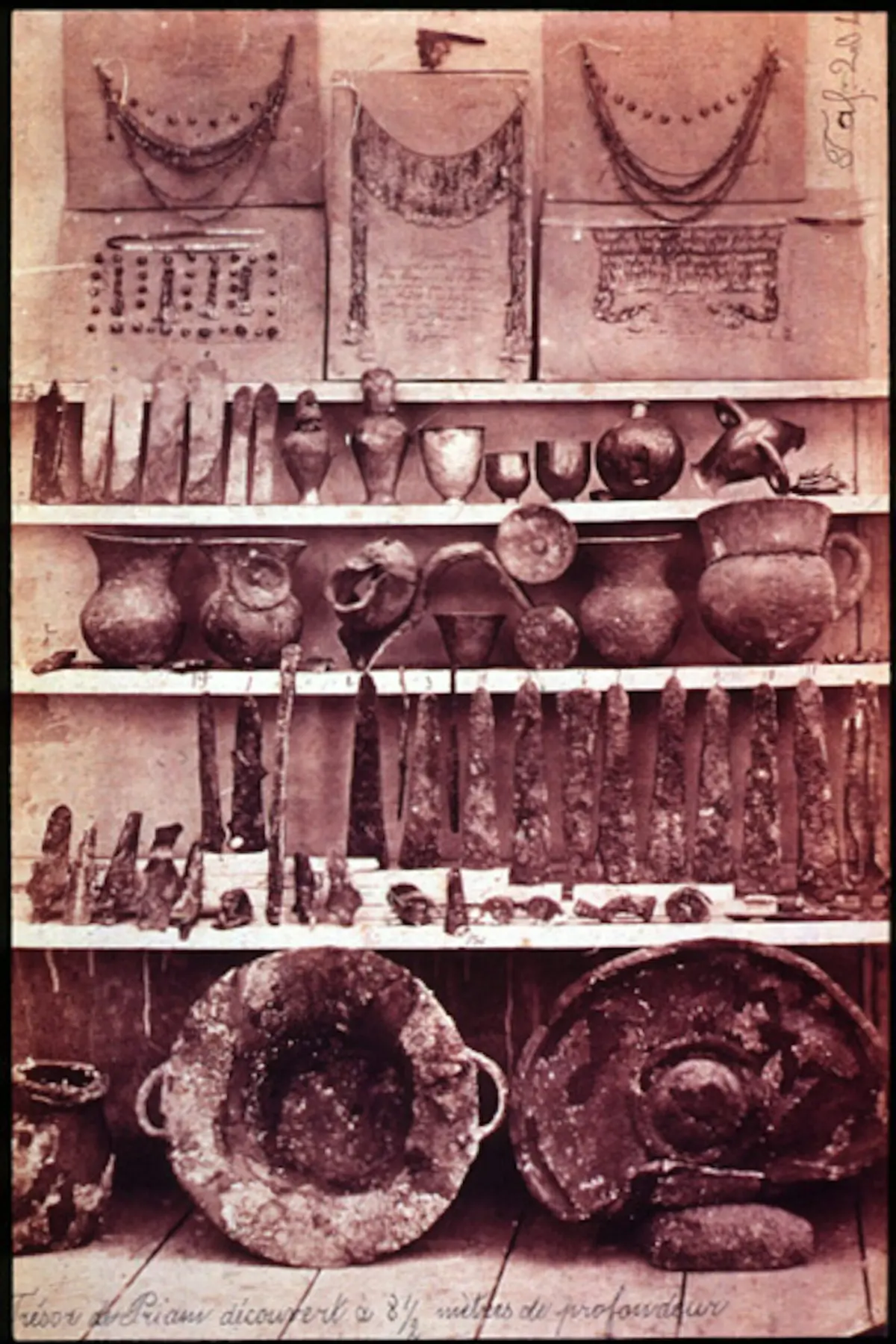
2. The Treasure of Priam (Troy, c. 2nd–3rd Millennium BC)
- 1873: German amateur archaeologist Heinrich Schliemann illegally smuggles a trove of gold and ancient artifacts—dubbed "Priam’s Treasure"—out of the Ottoman Empire, initially taking them to Germany.
- 1945: As World War II draws to a close, the Red Army loots the finds from Berlin and transports them to the Soviet Union.
- Present Day: The artifacts reside in the Pushkin Museum in Moscow. While Germany has voiced mild claims for their return, the diplomatic pursuit lacks urgency. Turkey, the site of the original excavation, has little diplomatic leverage to secure their repatriation, though the newly opened Troy Museum in Turkey has symbolically designated a room for them in anticipation of an improbable return.
3. The Bust of Nefertiti (c. 1370 BC – 1330 BC)
- 1912: Discovered during German excavations at Amarna on the east bank of the Nile led by Ludwig Borchardt.
- 1913: The bust is allocated to Germany under the partage system, a colonial-era legal framework that divided archaeological finds between foreign excavators and local authorities (in this case, under Egyptian administration).
- 1933: Formal negotiations initiated by Egypt for the return of the bust break down.
- Present Day: The bust remains housed in the Neues Museum in Berlin, where German museum authorities routinely frame it as an "ambassador of Egyptian art" to the world.
4. The Benin Bronzes (Late 19th Century)
- 1897: A British punitive expedition sacks the Royal Palace of the Kingdom of Benin (modern-day Nigeria), looting thousands of brass plaques, sculptures, and ritual objects.
- 2022: The German institution Stiftung Preußischer Kulturbesitz transfers ownership of 512 Benin objects back to Nigeria. Crucially, a significant portion remains in Berlin on a long-term loan, proving that deaccessioning legal ownership does not automatically mean emptying museum galleries.
Supporting Context and Metrics: Legal Versus Legitimate
The core argument deployed by institutions like the British Museum centers on two pillars: legality and universalism. First, they argue that acquisitions made under past sovereign authorities—such as the Ottoman Empire or colonial administrations—were lawful at the time. Second, they champion the concept of the "universal museum," asserting that encyclopedic institutions safeguard cultural heritage for all of humanity, transcending national borders.
However, both arguments face severe scrutiny in the 21st century.
The Fallacy of Historical Legality
Legal continuity across centuries of profound political transformation cannot simply be asserted; it must be rigorously argued. The geopolitical reality that permitted Lord Elgin to extract marbles from a province of the Ottoman Empire bears no resemblance to the modern nation-state of Greece, which was founded in 1830.
Furthermore, legal compliance under a coercive imperial framework does not equate to moral legitimacy. As legal and ethical scholars frequently point out, laws of the 19th century were drafted and enforced by imperial powers to facilitate resource extraction. Treating historical legality as an impenetrable shield allows institutions to bypass the ethical question of whether those laws were just or fair to the populations whose heritage was removed.
The Myth of Universal Access Through Universal Ownership
The claim that universal access requires universal ownership is thoroughly undermined by practical precedents. The 2023 decision by the Vatican Museums to unconditionally gift three Parthenon fragments back to Athens demonstrated that returning stolen or disputed items does not diminish a museum’s educational value. Neither the Vatican’s scholarly prestige nor its visitor engagement suffered as a result of the transfer.

Moreover, the favored modern compromise—the long-term loan—often serves to reinforce existing power imbalances. When European institutions offer to "lend" disputed artifacts back to their countries of origin, the underlying condition usually requires the claimant nation to formally acknowledge the holding museum’s legal ownership.
This creates an asymmetrical dynamic:
- One party holds the physical objects and dictates the conditions of transport, security, and display.
- The other party must negotiate within a legal and conceptual framework it fundamentally rejects.
Sharing access is not synonymous with sharing authority. A loan normalizes the status quo, forcing a sovereign nation to borrow its own ancestral heritage on terms dictated by a foreign institution.
Official Statements and Institutional Perspectives
The debate surrounding the restitution of cultural property is characterized by sharply contrasting rhetoric from museum administrators, government officials, and international heritage advocates.
- George Osborne, Chair of the British Museum (October 2026): Proposing an alternating display model for the Parthenon Marbles between London and Athens, Osborne framed the initiative as a modern diplomatic bridge: "We are exploring arrangements where the marbles could spend time in both Athens and London, allowing audiences in both cities to appreciate these shared masterpieces without getting bogged down by 19th-century legal battles."
- Greek Prime Ministerial Offices (September 2026 response): Rejecting comparisons to unrelated artifact sharing agreements (such as the Bayeux Tapestry template proposed by British officials), the Greek government maintained a firm stance: "Greece does not negotiate its foundational cultural sovereignty. Any arrangement that presupposes British ownership of the Parthenon sculptures is a non-starter. The reunification of the monuments must be absolute and unconditional."
- Hermann Parzinger, President of the Prussian Cultural Heritage Foundation (reflecting on the 2022 Benin Bronze transfer to Nigeria): Highlighting a path forward that separates ownership from exhibition, Parzinger noted: "Transferring ownership of the Benin Bronzes to Nigeria was an act of historical rectitude. It demonstrates clearly that museums in the West do not need to hold titles of ownership in order to remain vibrant hubs for global research, partnership, and display."
Future Outlook: Beyond Provenance and Exhibition
As the cultural heritage sector navigates the remainder of the 2020s, the conversation around restitution must evolve beyond basic provenance accounting. Knowing how an object arrived in a European museum is merely the starting point. The deeper, unaddressed question involves the structural architecture of the global art and academic complex.
Who Controls the Infrastructure of Knowledge?
True equity in heritage management requires looking beyond the physical artifacts to examine the surrounding infrastructure:
- Archives and Laboratories: Who controls the conservation laboratories where fragile antiquities are analyzed?
- Financial Resources: Which institutions command the multimillion-dollar acquisition budgets, endowment funds, and grant structures?
- Academic Authority: Whose interpretations dominate global academia, textbooks, and museum wall texts?
If a museum returns an artifact but retains a monopoly on the historical narrative, the colonial distribution of knowledge remains intact. Restitution that fails to address these structural disparities changes far less than it promises.
The Path Forward for Archaeology and Museology
The challenge for modern archaeology is not simply to look back with a critical eye at the imperial ambitions of 19th-century pioneers like Heinrich Schliemann or Lord Elgin. Rather, the discipline must examine how contemporary museum structures continue to shape the questions asked, the resources allocated, and the narratives promoted.
A sustainable future for international heritage requires three essential commitments:
- Radical Transparency: Continuing and expanding rigorous, unvarnished provenance research accessible to the public and international scholars alike.
- Genuine Collaboration: Establishing co-curatorial partnerships and governance models with source communities and descendant nations, shifting power from gatekeepers to cultural custodians.
- Reconsideration of Ownership: Cultivating a institutional willingness to relinquish legal ownership where historical evidence and ethical imperatives warrant it—proving, as Germany did with the Benin Bronzes, that holding title is not a prerequisite for preserving global access.
Until Western institutions move past the comforting confines of historical explanation and curated transparency, the colonial past will remain precisely that: curated, governed, and controlled on their own terms.