Executive Overview
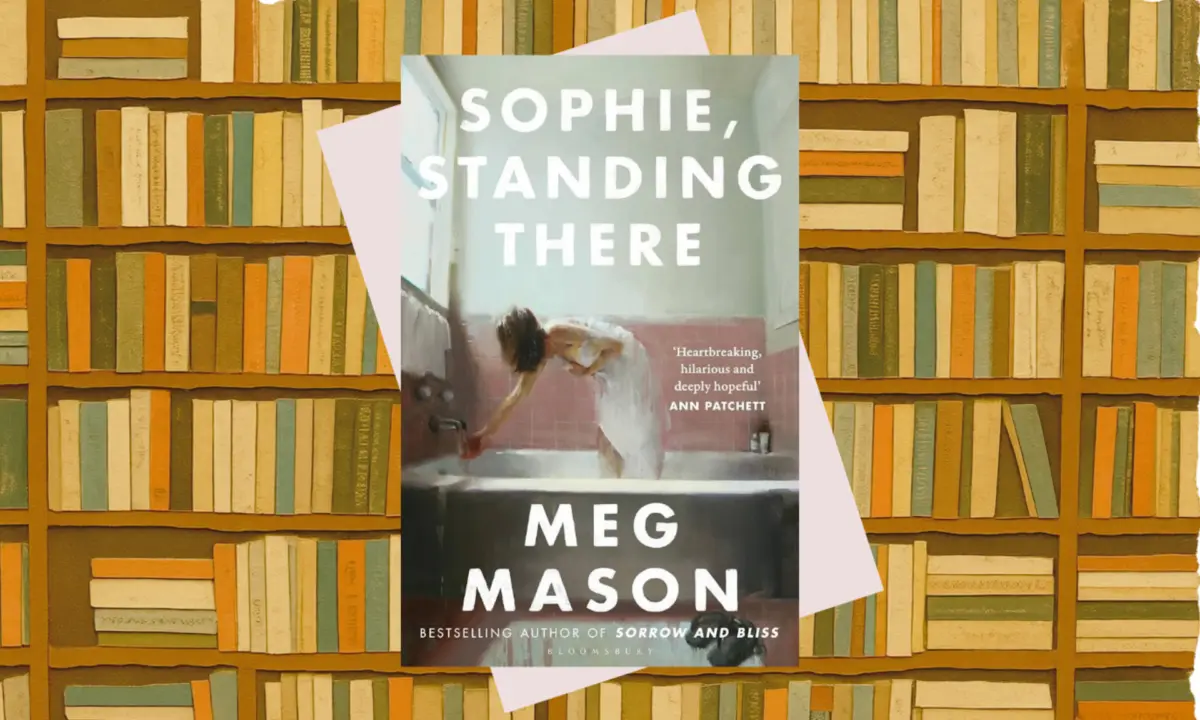
In the literary landscape of contemporary fiction, few authors capture the quiet, lacerating intersections of domestic collapse and mental paralysis quite like Meg Mason. Following the explosive international success of her breakout novel, Sorrow and Bliss, Mason returns with Sophie, Standing There—a work that trades some of the manic, dark humor of its predecessor for a profound, agonizingly detailed study of passivity, grief, and self-effacement.
Marketed broadly as a bittersweet exploration of loneliness, chaos, and human connection, Sophie, Standing There has divided critics while captivating readers. Set against the precarious, transient backdrop of the literary festival circuit, the novel centers on Sophie, a seasonal sound technician whose life has been put on hold to service the ambitions of others. Opening with an act of casual cruelty—her husband abruptly ends their marriage while she is in the shower—the novel plunges the reader into an intense, claustrophobic internal monologue.
While early reviews have drawn parallels to Virginia Woolf, Bridget Jones, and contemporary “sad-girl fiction,” a deeper reading reveals the structural DNA of a Jane Austen comedy of manners filtered through a modern lens of psychological exhaustion. Sophie is not merely a passive observer; she is a "witness-protagonist" trapped within her own narrative, paralyzed by a lack of self-worth, financial precarity, and the lingering trauma of a failed IVF journey.
This article offers an exhaustive examination of Mason’s latest triumph, analyzing its intricate character mechanics, its sharp satire of the modern literary industry, its stylistic lineage, and the polarizing structural choices that have made it one of the most talked-about releases of the year.
Detailed Chronology and Narrative Architecture
To understand Sophie, Standing There is to understand the deliberate, often grueling pacing with which Mason unfurls her protagonist’s reality. The narrative does not rush to comfort the reader or provide neat narrative resolutions. Instead, it mirrors Sophie’s own emotional stagnation.
The Inciting Incident and the Weight of Waiting
The novel opens in media res following the termination of Sophie’s marriage. The separation is executed with a cold, administrative callousness by her husband—an event communicated to the reader with minimal initial exposition. Sophie is left to grapple with the immediate practical fallout: housing instability, financial distress, and the logistical nightmare of working seasonal, low-paying roles in the hyper-competitive world of literary festivals.
Rather than diving headfirst into a roaring quest for independence, Sophie retreats inward. She dwells on the minutiae of daily survival. Her life is dictated by the mundane friction of the physical world:
- Egg sandwiches dripping inelegantly onto clothes
- Cold, tiled bathrooms
- The tactile warmth of dogs leaning against her legs
- Loose leggings, electric car chargers, flickering light switches, and carefully curated playlists
This microscopic focus on domestic and professional debris is not mere window-dressing; it is the scaffolding of Sophie’s psychological defense mechanism. By obsessing over the physical environment, she avoids confronting the vast, yawning chasm of her failed marriage and her grief over failed IVF treatments.
The Festival Circuit and the Anatomy of Obsession
As the narrative progresses, Sophie secures work as a sound technician at an upcoming high-profile literary festival. It is here that the plot introduces its most volatile catalyst: a surprise replacement headliner—a fiercely successful female author whom Sophie has long idolized.
This revelation sparks a strange, idiosyncratic obsession. Sophie’s internal monologues drift toward bizarre fantasies, such as lacing microphone wires under the author’s clothing. Yet, these transgressive thoughts are consistently undercut by Sophie’s own internal rules and self-doubt; she cannot push these fantasies to an erotic conclusion because she is entirely unaccustomed to viewing herself as a sexual agent, let alone one attracted to women.
This obsessive fixation serves as a proxy for Sophie’s deeper, unmet desire for visibility. Beautiful, profoundly unhappy, and structurally incapable of advocating for herself, Sophie projects her desperate need for salvation onto a stranger, mistaking proximity to greatness for personal transformation.
The Late Revelations and the Climax of Inaction
Throughout the vast majority of the novel, plot elements are conveyed with painstaking slowness. Critical details regarding Sophie’s backstory and the precise mechanics of her marital breakdown are withheld until late in the narrative.
When these revelations finally arrive, they do so with a swiftness that has sparked debate among literary critics. Some reviewers argue that the hasty unpacking of Sophie’s past leaves certain psychological scars underexplored. However, this formal choice is profoundly aligned with Sophie’s characterization: lifelong habits of suppression and self-effacement rarely unravel in orderly, cinematic waves. They burst forth violently, catching both the character and the reader off-guard.
It is only through this late-stage confrontation with truth—and the eventual, chilling revelation of what the title Sophie, Standing There truly implies—that Sophie’s persistent inaction comes into sharp, painful focus. Only then is she granted the emotional vocabulary necessary to begin forgiving herself and others.
Supporting Context, Literary Lineage, and Metrics
The "Witness-Protagonist" Tradition
Literary critics have noted Sophie’s rare status as a self-effacing main character, placing her in the lineage of the "witness-protagonist"—figures who observe central plots from the margins, much like Nelly Dean in Wuthering Heights or Nick Carraway in The Great Gatsby.
However, Mason subverts this archetype. While Nelly and Carraway generally observe the transformative or destructive effects of events on others while subtly steering the narrative from the periphery, Sophie’s gaze is relentlessly turned inward. The novel conveys her life with such intimate, suffocating proximity that her passivity feels far more perplexing—and at times, more uncomfortable—to observe.
Satire of the Literary Industrial Complex
Beyond its psychological depth, Sophie, Standing There functions as a biting satire of the contemporary literary festival ecosystem. Drawing clear parallels to Mason’s own rapid rise to literary prominence, the novel exposes the unglamorous underbelly of the arts world:
- Festival employees who skim through books rather than reading them
井 Author gossip, petty rivalries, and institutional backstabbing - Impolite, arrogant headliners who treat technical support staff as invisible fixtures
Through this lens, Mason critiques an industry that publicly celebrates empathy, human connection, and emotional intelligence, while privately perpetuating precarity, burnout, and class divides among its labor force.
Comparative Critical Reception
| Review Metric / Dimension | Sorrow and Bliss (2021) | Sophie, Standing There (2026) |
|---|---|---|
| Humor & Tone | Darkly comedic, sharp, manic | Quieter, more melancholic, tender |
| Pocagonist Energy | Volatile, searching, distressed | Static, introspective, paralyzed |
| Core Themes | Mental illness, marriage, memory | Loneliness, passivity, self-forgiveness |
| Literary Comparisons | Nora Ephron, Ottessa Moshfegh | Virginia Woolf, Jane Austen, Bridget Jones |
| Critical Consensus | Runaway bestseller, universally lauded | Polarizing pacing, deeply admired prose |
While the overwhelming majority of reviews have praised the novel’s emotional honesty, a vocal minority of critics have found the reading experience unsettling. Some have argued that the object of Sophie’s obsession remains frustratingly distant, while others reiterate that the hurried climax disrupts the meditative rhythm established in the opening chapters. Yet, proponents argue that this very dissonance is the point: real psychological healing is rarely harmonious; it is jagged, inconvenient, and delayed.
Official Statements and Authorial Intent
In recent interviews surrounding the launch of Sophie, Standing There, Meg Mason has spoken candidly about the thematic shifts between her works. Where Sorrow and Bliss examined the cascading effects of an undiagnosed mental illness on a marriage, her latest work investigates the quieter, more insidious erosion of selfhood that occurs when an individual willingly makes themselves secondary in their own life.
"We spend an immense amount of cultural energy examining the loud breakdowns—the divorces, the public failures, the dramatic reinventions," Mason noted during a recent literary festival appearance. "I wanted to write about the person who doesn’t break loudly. I wanted to write about the person who stands perfectly still in the middle of the room while everyone else dances around her, and ask: what does it cost to be so small that nobody notices when you disappear?"
Addressing the comparisons to Austen and Woolf, Mason emphasized her fascination with the domestic trap: "The domestic everyday is where true psychological warfare takes place. It’s not the grand tragedy that breaks us; it’s the cold bathroom, the spilled soup, the unwashed coffee mug left on the counter by someone who has already decided to stop loving you. That is where Sophie lives."
Publishing houses and booksellers have similarly rallied around the release, noting that pre-orders for Sophie, Standing There have shattered expectations, outperforming the initial launch window of Sorrow and Bliss across several major international territories. Industry analysts attribute this surge to the ripening of Mason’s readership base, which has grown increasingly hungry for fiction that tackles middle-aged female vulnerability without sentimentality or tidy redemptive arcs.
Future Outlook and Cultural Impact
As Sophie, Standing There cements its place on international bestseller lists, its long-term cultural footprint is becoming clear. The novel is already generating significant chatter regarding upcoming screen adaptations, with industry insiders whispering about potential feature-film or limited-series treatments that could capture the claustrophobic brilliance of Sophie’s internal world.
More importantly, the novel is shifting contemporary conversations surrounding the "sad girl" literary subgenre. By anchoring her narrative in a protagonist who is older, economically vulnerable, and profoundly unglamorous in her grief, Mason has expanded the boundaries of what stories about female loneliness are allowed to look like.
For readers, Sophie, Standing There acts as both an mirror and a test of patience. It demands that we sit with discomfort, that we forgive our own past inactions, and that we look past the polished surfaces of people’s lives to find the messy, fragile humanity underneath. As Mason expertly demonstrates, the hardest part of life is not surviving the storm—it is learning how to move once the rain has finally stopped.