Executive Overview
For nearly a century and a half, the architecture of professional tennis was defined by a specific physical duality: the battle between the explosive reach of the two-handed backhand and the balletic, sweeping arc of the single-hander. Ever since the inaugural Wimbledon Championship in 1877, a male player wielding a one-handed backhand had featured in the singles semi-finals of every single Grand Slam tournament.
That 149-year statistical streak came to a definitive, sobering end at the US Open when Stefanos Tsitsipas, the final remaining single-hander in the men’s singles draw, was eliminated in the round of 16.
This is not merely a transient statistical anomaly; it is a profound watershed moment for the sport. It marks a decisive break with the historical origins of lawn tennis and represents the grim culmination of a five-decade-long evolutionary drift toward double-handed mechanics. The sheer dominance, reliability, and tactical utility of the two-handed backhand have eclipsed its single-handed counterpart to such an extent that the latter is now staring down functional extinction at the elite level.
While sporting evolution is often natural—mirroring how Dick Fosbury revolutionized the high jump in 1968 with his eponymous "flop" and relegated the traditional straddle technique to the history books—the disappearance of the single-hander carries distinct cultural and strategic losses. Tennis is not just losing a difficult stroke; it is bleeding variety, aesthetic grace, and historical continuity.
Detailed Chronology: The Rise, Peak, and Fall of the Single-Hander
Era of Inception (1877–1970s)
In the pioneering days of lawn tennis, the single-handed backhand was the default biometric reality. Driven by wooden rackets with small head sizes and gut strings that offered minimal elasticity, players had no physical choice. Generating force required the leverage of a full body rotation channeled through a single outstretched arm. Legends of the early and mid-20th century—from Bill Tilden to Rod Laver—mastered the art, using the shot not merely as a defensive stabilization tool, but as an aggressive weapon to set up approaches to the net. The stroke was intertwined with the dominant tactical philosophy of the era: serve-and-volley.
The Seismic Shift (1970s–2000s)
The seeds of the single-hander’s decline were planted in the 1970s and 1980s with the advent of players like Björn Borg and Chris Evert, who popularized the double-handed backhand. Originally viewed by traditionalists as an unorthodox or "baseball-style" stroke, the two-hander quickly proved its worth under pressure. It offered superior structural integrity against high-bouncing balls and allowed players to generate instantaneous power while scrambling on the run.
Despite this burgeoning trend, the single-hander fought a valiant rear-guard action. Through the 1990s and early 2000s, iconic practitioners like Pete Sampras, Gustavo Kuerten, and later, Roger Federer, proved that the single-hander could still conquer the tennis world. Federer, in particular, elevated the shot to a high art form, wielding it as a pristine sword to collect 20 Grand Slam titles and dominate the global consciousness of the sport.
The Breaking Point (2000s–Present)
Federer’s mid-career dominance ran into an immovable object: Rafael Nadal. The Spanish left-hander unlocked the fatal vulnerability of the single-handed backhand through the deployment of unprecedented levels of heavy topspin.
By targeting Federer’s backhand flank with high-trajectory, aggressively spinning cross-court forehands, Nadal forced the Swiss maestro either to retreat deep behind the baseline or to strike the ball at shoulder height—an awkward, energy-sapping biomechanical position for any single-hander.
[Nadal's Heavy Topspin Forehand]
       │
       ▼ (Bounces high above shoulder level)
[Single-Hander's Flank]
       │
       ├─► Option A: Retreat behind baseline (Loss of court positioning)
       └─► Option B: Strike at shoulder height (High error rate, acute fatigue)
As equipment manufacturers refined polyester strings, enlarged racket heads, and court surfaces were systematically slowed down to optimize televised rallies, Nadal’s template became the industry standard. The single-hander, unable to easily cope with the relentless barrage of high-bouncing topspin, began its terminal slide down the rankings.
Supporting Context & Metrics: Biomechanics and Technological Shifts
To understand why the single-hander is vanishing, one must examine the intersection of human biomechanics and modern tennis technology.
Biomechanical Demands
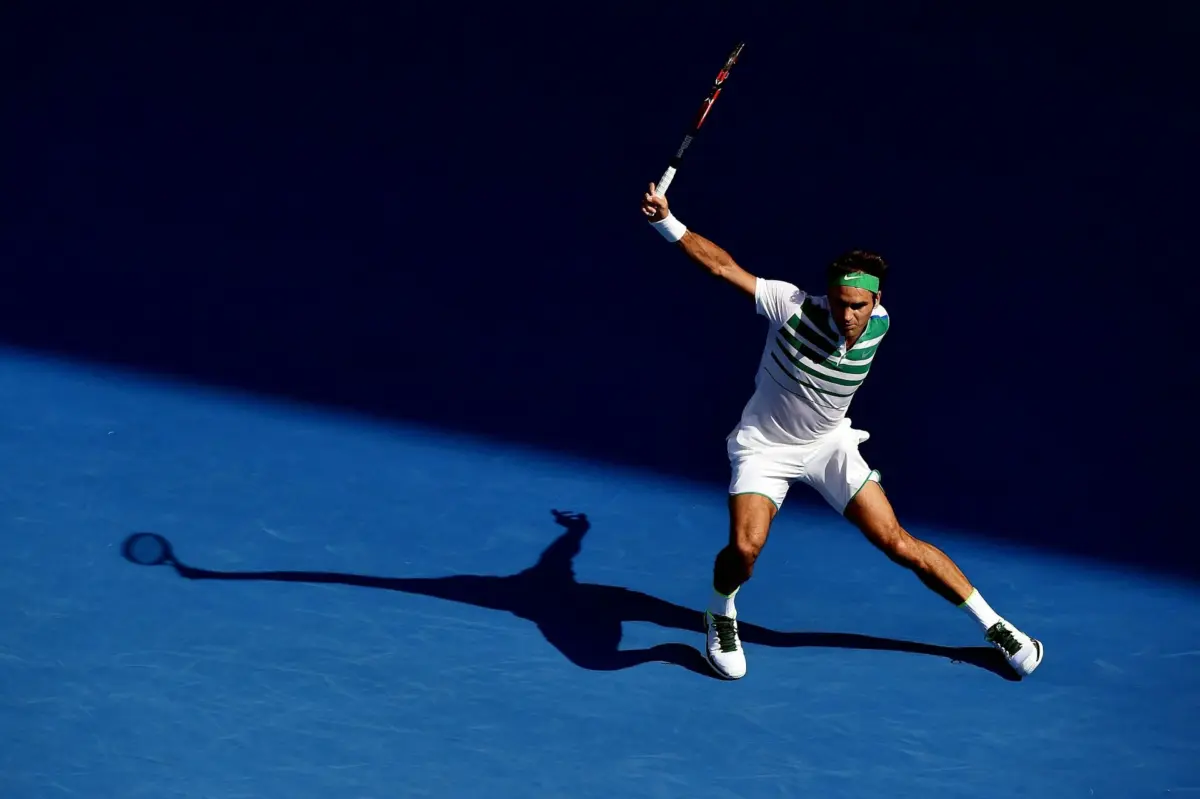
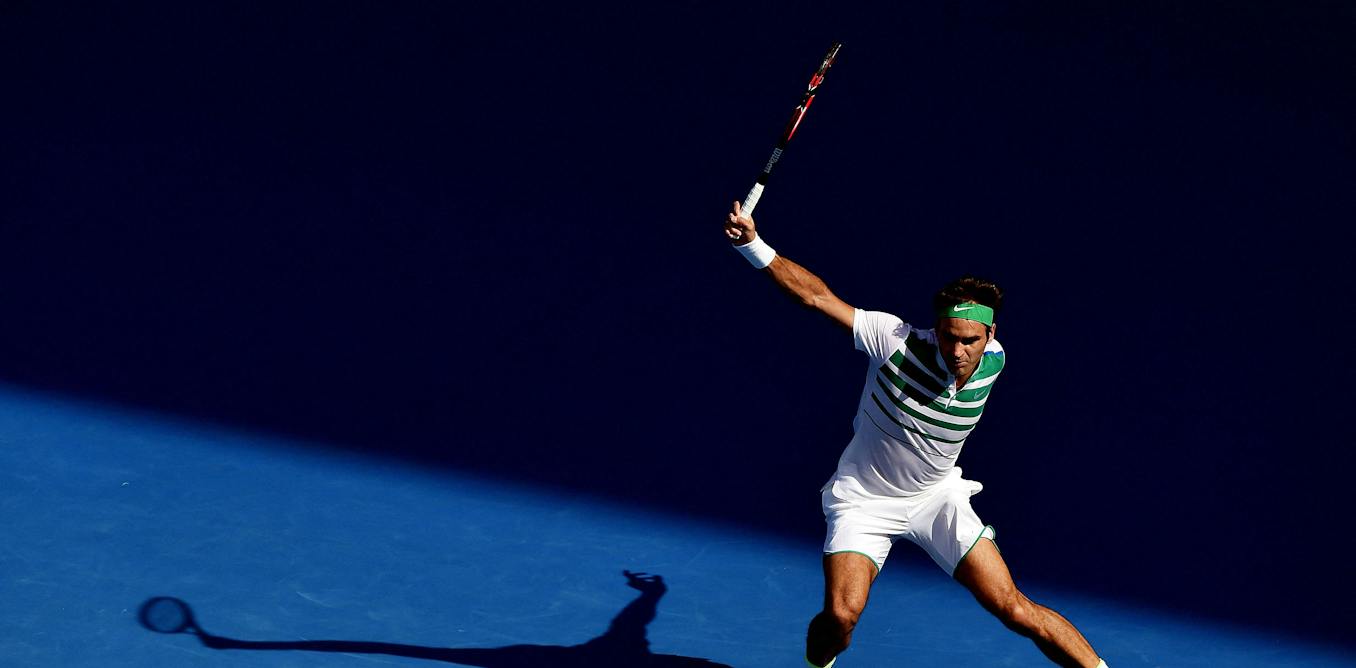
The execution of a one-handed backhand is an exercise in complex kinetic sequencing. The player’s non-dominant hand initiates the stroke by pulling the racket back to coil the hips and shoulders. As the ball enters the hitting zone, the non-dominant hand releases, and the racket whips forward through the ball, while the trailing arm extends in the opposite direction to act as a crucial aerodynamic and physical counterbalance.
Its elite exponents—Federer, Stan Wawrinka, and Justine Henin—could produce explosive, flat, or sliced power through a seamless synthesis of flow, balance, and hyper-precise timing.
However, this precision comes with a steep penalty. Without a second hand on the throat of the racket to absorb shock and guide the path, the single-hander requires extraordinary arm strength, core stability, and micro-second timing. A fraction of a millisecond’s hesitation results in a mishit, a weak reply, or an outright error.
Conversely, the two-handed backhand acts as a double-lever system. It provides immense structural stability, making it far more forgiving under defensive pressure and dramatically reducing the learning curve for young players. Coaches at junior academies increasingly steer prospects toward the two-hander because it yields faster competitive returns and lower physical strain during developmental years.
The Technological Catalyst
The decline of the single-hander cannot be separated from the material evolution of tennis equipment:
- Polyester Strings: Introduced en masse in the late 1990s and 2000s, "poly" strings allowed players to swing violently across the back of the ball, imparting extreme "snap-back" effect and generating astronomical RPMs (revolutions per minute) of topspin.
- Racket Innovation: Modern carbon-composite frames feature expanded sweet spots and larger head sizes, enabling players to generate pace and heavy spin even when hitting off-center.
- Court Homogenization: The global standardization of hard courts and the slowing of grass and clay surfaces have favored baseline grinders over net-rushers, punishing the single-hander’s historically weaker defensive postures.
Official Statements & Industry Perspectives
The tennis community is deeply divided over the implications of this structural shift, with former champions and sports scientists weighing in on the cultural and tactical ramifications.
Roger Federer, whose name is permanently synonymous with the beauty of the single-hander, has voiced clear apprehension about the trajectory of the sport. In recent interviews addressing the demographic cliff facing the shot, Federer expressed hope that young players would continue to defy the odds and keep the tradition alive. "It’s such an iconic part of tennis history," Federer noted. "I always hope that the next generation sees the value in keeping that variety and elegance alive on the tour."
However, performance analysts and modern coaches argue that sentimentality cannot override efficiency. Speaking on the tactical evolution of the game, elite biomechanists point out that elite tennis is a meritocracy driven by optimization.
"Sports do not preserve techniques out of a sense of museum curation," explains Dr. Marcus Vance, a sports science researcher specializing in racquet sports. "When the risk-reward ratio of a stroke shifts so dramatically due to advances in string technology and opponent tactics, players migrate toward the path of least resistance and highest win probability. The two-hander is simply a superior survival tool in the modern baseline-centric game."
Future Outlook: Can the Single-Hander Be Saved?
The death of the single-handed backhand is often framed as an inevitable Darwinian outcome of athletic evolution. Yet, industry critics argue that this view ignores a fundamental truth: tennis players do not evolve in a vacuum; they respond directly to the environmental conditions and regulatory frameworks established by governing bodies.
Just as the sport allowed tactical diversity to narrow, it permitted the virtual extinction of the classic serve-and-volley game. The strategic tension that once defined tennis’s greatest rivalries—the clash between the net-rushing attacker and the baseline retriever (typified by Björn Borg versus John McEnroe, or Pete Sampras versus Andre Agassi)—has been flattened. Today’s top-tier men’s and women’s circuits are dominated by variations of the baseline counter-puncher.
Crucially, the decline of the single-handed backhand and the death of serve-and-volley tennis are intimately linked. The single-hander was historically the weapon of choice for net-rushers because its mechanics allowed for rapid transitions into forward movement, superior sliced approach shots, and diverse angle creation.
If tennis authorities wish to arrest this slide toward tactical and technical homogeneity, intervention is required. Analysts have proposed several regulatory levers that could restore viability to the single-hander and reintroduce stylistic diversity into the professional game:
- Speeding Up Court Surfaces: Introducing faster, lower-bouncing surfaces at major tournaments would neutralize the lethality of extreme, high-arcing topspin, rewarding players who can drive through the ball cleanly—a natural domain of the single-hander.
- String and Ball Regulation: Mandating lower-tension string restrictions or utilizing de-energized balls could curb the extreme RPM counts currently dominating baseline rallies, reducing the punishing shoulder-high bounce that terrorizes single-handers.
Without intentional structural reforms by the International Tennis Federation (ITF) and the ATP/WTA tours, elite tennis risks becoming a monoculture. The disappearance of the single-handed backhand is more than the loss of a difficult shot; it is the fading of a vital artistic and tactical counterweight in a sport that increasingly prioritizes brute baseline efficiency over transcendent grace.