Executive Overview
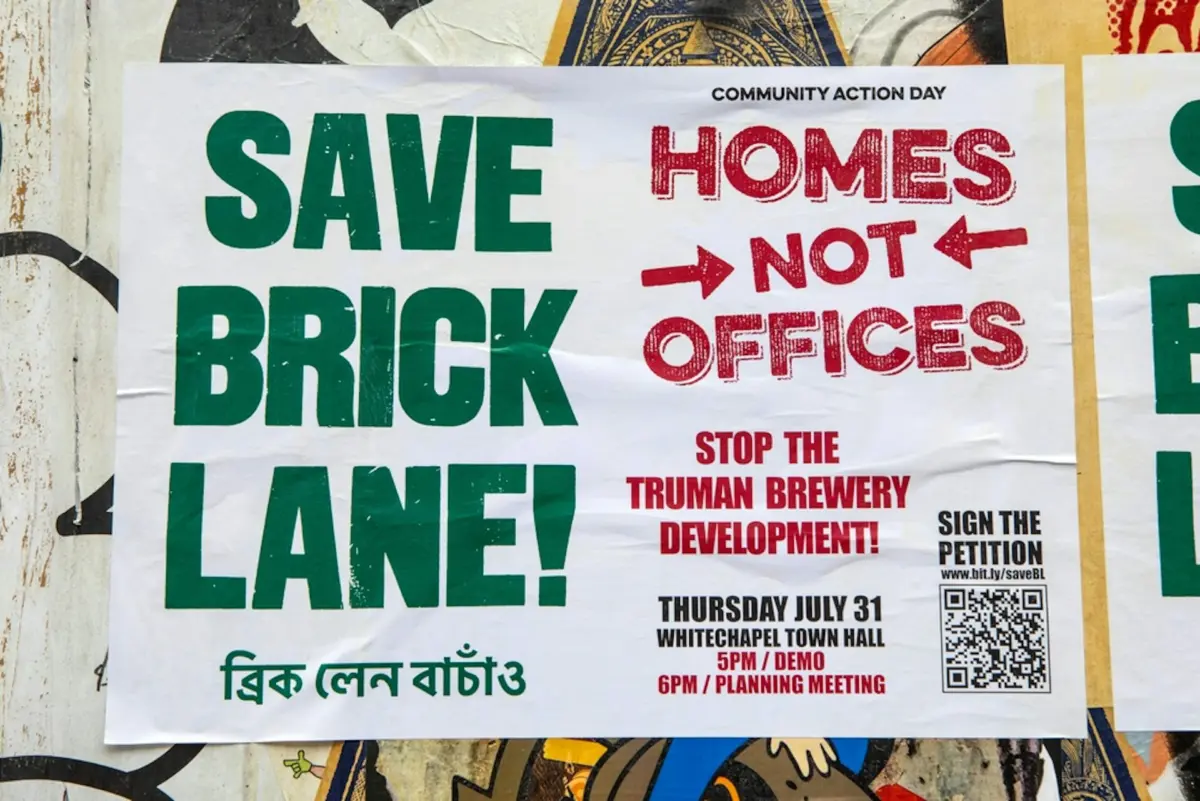
The approval of a specialized data centre on the historic site of the Truman Brewery in east London marks a watershed moment in the intersection of urban planning, national digital strategy, and community preservation. Long celebrated for its vibrant cultural fabric, Curry Houses, and deep-rooted Bangladeshi heritage, Brick Lane became the unlikely epicenter of a high-stakes national planning dispute.
When Housing Minister Matthew Pennycook issued a decision letter on behalf of Secretary of State Angela Rayner approving the £500 million project, it dealt a decisive blow to local campaigners, heritage groups, and Tower Hamlets Council. The decision underscored a hard-nosed reality of modern infrastructure: when national economic priorities collide with hyper-local preservation efforts, the government’s push for digital growth and critical infrastructure will frequently take precedence.
Data centres—once viewed as functional, out-of-sight utility boxes hidden away in industrial parks—have increasingly become prized urban assets. Classified as Critical National Infrastructure (CNI) by the UK government, these facilities are subject to intense geographic constraints. Because lightning-fast data transmission is the lifeblood of modern financial markets, proximity to urban financial districts remains paramount.
The Truman Brewery project brings these competing tensions into sharp focus. On one side stood a community fighting to protect its cultural identity, combat acute local housing shortages, and prevent runaway gentrification. On the other stood developers and central government planners grappling with the acute, nationwide demand for high-speed digital infrastructure, high-value financial services, and post-Brexit economic competitiveness. This case study signals a broader transformation across the United Kingdom: the virtualization of the economy is actively reshaping our physical cities, forcing historic neighborhoods into direct competition with the digital age.
Detailed Chronology of the Dispute
From Industrial Powerhouse to Creative Hub
The Truman Brewery, situated along the bustling thoroughfare of Brick Lane, is a landmark deeply woven into London’s commercial history. Founded in the 17th century, the brewery expanded aggressively throughout the 18th and 19th industrial centuries, driven largely by surging metropolitan demand for porter beer. However, as consumer tastes shifted and industrial competition intensified during the 20th century, the enterprise entered a protracted decline, culminating in its permanent closure in 1989.
In 1995, the sprawling estate was acquired for private redevelopment, setting off a new chapter in its existence. Rather than being razed for sterile commercial blocks, the site evolved organically into one of east London’s premier creative hubs. Over the ensuing decades, it housed independent art galleries, design studios, eclectic retail shops, restaurants, bustling weekend markets, and renowned live music venues.
The Shift Toward Corporate Master Plans
The fragile status quo of the estate shifted dramatically in 2021, when developers floated a proposal for a major shopping centre on the underused parcels of the historic site. The plan instantly mobilized local residents, independent traders, and architectural heritage groups, giving birth to the passionate "Save Brick Lane" campaign. Faced with sustained, highly vocal opposition, that specific retail-led proposal was ultimately abandoned.
Undeterred, the site’s owners—Truman Estates—returned with a far more comprehensive, multifaceted master plan. In August 2024, they formally submitted planning applications encompassing a blend of commercial offices, retail outlets, public leisure spaces, residential housing, and a 5,200 square-meter, 3-megawatt (MW) data centre.
While small by the standards of modern hyperscale facilities—which often stretch into tens or hundreds of megawatts to service resource-hungry artificial intelligence models—the inclusion of a data centre within a dense inner-city cultural district immediately sounded alarm bells among urban planners and preservationists.
The Stalemate and the Non-Determination Appeal
As local opposition swelled, Tower Hamlets Council failed to render a formal decision on the master plan within the statutory timeline. Seizing upon this delay, Truman Estates lodged a non-determination appeal directly with the Planning Inspectorate, bypassing local municipal control.
In July of the previous year, Tower Hamlets’ Strategic Development Committee formally debated the proposals. Although municipal planning officers recommended approval, local councillors made it clear they would have rejected the scheme outright. They cited severe risks to local heritage, potential disruptions for small independent businesses, and a glaring lack of substantive new housing.
Campaigners noted that the council’s own draft local plan had previously earmarked the wider site for up to 800 residential homes to help alleviate the borough’s desperate housing crisis. However, national planning inspectors assigned "limited weight" to this draft policy, citing a lack of detailed economic evidence proving that a purely housing-led alternative was financially viable for the private landowners. The approved compromise scheme ultimately included a modest 44 apartments, of which just 11 are designated as affordable housing, and only six allocated for social rent.
The Public Inquiry and Ministerial Sign-Off
An exhaustive public inquiry was convened in October to evaluate the developer’s appeal, hearing expert testimony and fierce objections from local authorities, community coalitions, and the landowners.
The drawn-out saga finally reached its conclusion on July 29, when Housing Minister Matthew Pennycook released a detailed decision letter greenlighting the controversial data centre. The ruling validated the developer’s strategy while frustrating local aspirations to prioritize land for community-led social infrastructure.
Supporting Context & Metrics
The Urban Housing vs. Digital Infrastructure Dilemma
The dispute over the Truman Brewery highlights an ongoing structural crisis in British urban planning: the intense competition for scarce metropolitan land. Tower Hamlets suffers from one of the most acute housing shortages in the United Kingdom. Local activists argued passionately that installing a low-density data centre on prime urban real estate was a tragic missed opportunity to deliver hundreds of desperately needed social homes.
Furthermore, critics raised serious questions regarding the ecological and infrastructural sustainability of placing digital facilities in densely populated neighborhoods. Data centres are notorious for their voracious appetites for electricity and their reliance on water-intensive cooling systems. Critics warned that integrating a digital server farm into the urban core of east London could place unnecessary, compounding strain on local utility networks, sewage systems, and power grids.
The Geography of Ultra-Low Latency
Defenders of the scheme, however, emphasize that geography remains the single most critical variable in the modern digital economy. While many massive data centers are constructed on cheap, edge-of-town greenfield sites—frequently sparking their own intense planning battles, such as the £1 billion development in Iver, Buckinghamshire—urban co-location facilities serve an entirely different purpose.
Presented in the planning filings as a "retail co-location" facility, the Truman Brewery data centre is tailored for high-speed clients, including prominent legal practices, online gaming operations, and financial services firms. In these industries, digital performance is measured in microseconds. As author Michael Lewis famously documented in Flash Boys, shaving mere milliseconds off transaction speeds can translate into millions of pounds of commercial advantage in high-frequency trading.
Tower Hamlets sits directly adjacent to the City of London and Canary Wharf, forming the beating heart of the UK’s financial and professional services sector. The borough generates the third-largest economic output of any local authority in the country, with financial and business services accounting for roughly £11 billion in economic output and supporting some 160,000 jobs. For central government planners, this economic ecosystem was too vital to ignore.
Official Statements & Policy Shifts
Weighing Economic Value Against Community Identity
In his definitive decision letter, Housing Minister Matthew Pennycook acknowledged the gravity of the local objections, explicitly noting that Secretary of State Angela Rayner had carefully reviewed community concerns regarding the potential disruption to Brick Lane’s distinctive cultural character and its Bangladeshi community.
To mitigate these concerns, officials highlighted specific design accommodations within the approved master plan. For instance, the six newly created social rent homes were specifically engineered to accommodate larger Bangladeshi heritage families typical of the local demographic.
Nevertheless, Pennycook assigned "significant weight" to the undeniable economic dividends of the project. He framed the data centre not as an isolated technological box, but as vital infrastructure designed to supply low-latency digital plumbing for London’s world-leading financial and professional services market.
National Infrastructure and the Reclassification of "Sheds"
The broader implications of the Truman Brewery decision extend far beyond the borders of Tower Hamlets. The case signals an assertive government willingness to override local democratic preferences when they conflict with national digital imperatives.
Since 2024, data centres have been formally classified as Critical National Infrastructure (CNI) in the United Kingdom. This designation places them on an administrative footing comparable to power stations, water treatment plants, and national transport networks. Under the updated National Planning Policy Framework (NPPF), local planning authorities are instructed to recognize the acute national demand for secure, high-capacity data architecture.
Although traditional planning terminology continues to categorize data centres under standard industrial use classes—such as Class B8 for "storage and distribution"—they are no longer viewed simply as mundane warehouses. They are now recognized as high-value nodes in the global information economy. Because location is dictated by fiber-optic trunk lines, power substations (such as the historic Osborn Street substation nearby), and proximity to end-users, these facilities must increasingly be integrated into dense urban landscapes.
Future Outlook: The New Battleground for City Land
The successful push for the Truman Brewery data centre serves as a bellwether for urban development across major metropolitan centers in the coming decade. It signals that data centres can no longer be dismissed as invisible, out-of-town boxes tucked away in rural industrial parks.
As artificial intelligence, cloud computing, and high-frequency financial trading continue to expand exponentially, digital infrastructure has transformed into a dominant urban land-use battleground. Municipalities across the UK and Europe will increasingly find themselves forced to arbitrate bitter land-use conflicts where capital-intensive digital infrastructure competes directly with affordable housing, heritage preservation, and local cultural identity.
Ultimately, the transformation of a 17th-century east London brewery into a modern data hub illustrates a profound economic truth: the virtual economy is entirely dependent on physical space. As long as financial institutions, tech conglomerates, and digital service providers demand instantaneous connectivity, historic neighborhoods like Brick Lane will remain on the frontline of the digital revolution—caught in an ongoing tug-of-war between the preservation of local heritage and the relentless momentum of national economic growth.