Executive Overview
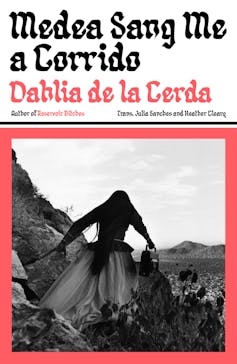
In an era saturated with literary re-examinations of classical antiquity—most notably a recent summer-long cultural discourse fixating on the archetypes of Homer’s Odyssey—contemporary Mexican literature offers a jagged, defiant counterpart. Enter Medea Sang Me a Corrido by acclaimed Mexican writer Dahlia de la Cerda, translated brilliantly into English by Julia Sanches and Heather Cleary.
Rather than setting sail across the wine-dark sea, de la Cerda’s narrative anchors itself firmly in the asphalt, dust, and grit of contemporary Mexico, transposing the terrifying, infanticidal Greek sorceress Medea into a modern-day barrio. In this vivid reimagining, Medea is no longer merely a mythological footnote of ancient vengeance; she is transformed into an iconic, snake-tattooed queen of the streets who prowls through narratives in a custom-painted, modified automobile. Dressed head-to-toe in black, she serves as a catalyst, an unsettling companion, and an empathetic facilitator for ordinary people navigating profound personal and societal turning points.
Published by Scribe Publications, the book comprises six interconnected narratives. The first five stories follow distinct characters caught in the crosshairs of systemic violence, poverty, love, and loss, while the final piece acts as a concluding reflection—a corrido (ballad) sung by Medea herself. In this culminating chapter, she reflects upon the lives she has intervened in, witnessed, and profoundly altered.
Crucially, Medea Sang Me a Corrido is not merely an exercise in literary pastiche. It is a politically charged, deeply empathetic exploration of survival under siege. By interweaving classical myth with the vernacular of modern Mexican street culture, Mexican political history, and the musical traditions of the corrido, de la Cerda constructs a visceral portrait of contemporary life. The book avoids the trap of glamorizing the cartels—a pitfall common in modern narcocorridos—instead focusing sharply on the quiet, agonizing resilience of ordinary individuals. Accessible yet profoundly layered, written with a clarity designed to resonate even with new literacy learners, the novel has emerged as one of the most compelling works of transnational fiction in recent years.
Detailed Chronology & Narrative Architecture
To fully appreciate the structural genius of Medea Sang Me a Corrido, one must examine the architecture of its six interconnected narratives. While the book is frequently debated as to whether it constitutes a true novel or a short story cycle, its narrative coherence is undeniable. Each story can stand completely on its own, yet together they form a seamless mosaic anchored by the recurring presence of Medea.
The Setting: San Miguelito in Aztlán
The operational theater for all six stories is San Miguelito, a fictionalized, mid-sized city located within Aztlán. In Chicano and Mexican-American lore, Aztlán is far more than a geographical designation; it is a mythical homeland. Tracing its historical roots to the ancestral cradle of the Aztecs—who are believed to have originated in the American Southwest before migrating south into central Mexico—Aztlán was reclaimed in the political consciousness of the 1960s. During the Chicano Civil Rights Movement, activists weaponized the concept of Aztlán to articulate a shared cultural identity that transcended the geopolitical scar of the U.S.–Mexico border.
In de la Cerda’s hands, Aztlán becomes a surreal yet hyper-realistic landscape characterized by what she terms "violence and resistance in equal measure." It is a place where systemic border walls and violent socio-political fractures collide with deep-seated communal healing. As Medea observes of the territory:
"In Aztlán, a woman can cry or scream in pain or sing from happiness; she can feel everything or nothing, and there will always be someone there to validate her experience."
The Episodes of Intervention
Across the first five stories, readers are introduced to a rotating cast of characters facing catastrophic life events. These vignettes do not shy away from bodily realities and societal horrors; they feature births, clandestine abortions, devastating deaths, and the creeping dread of disappearances.
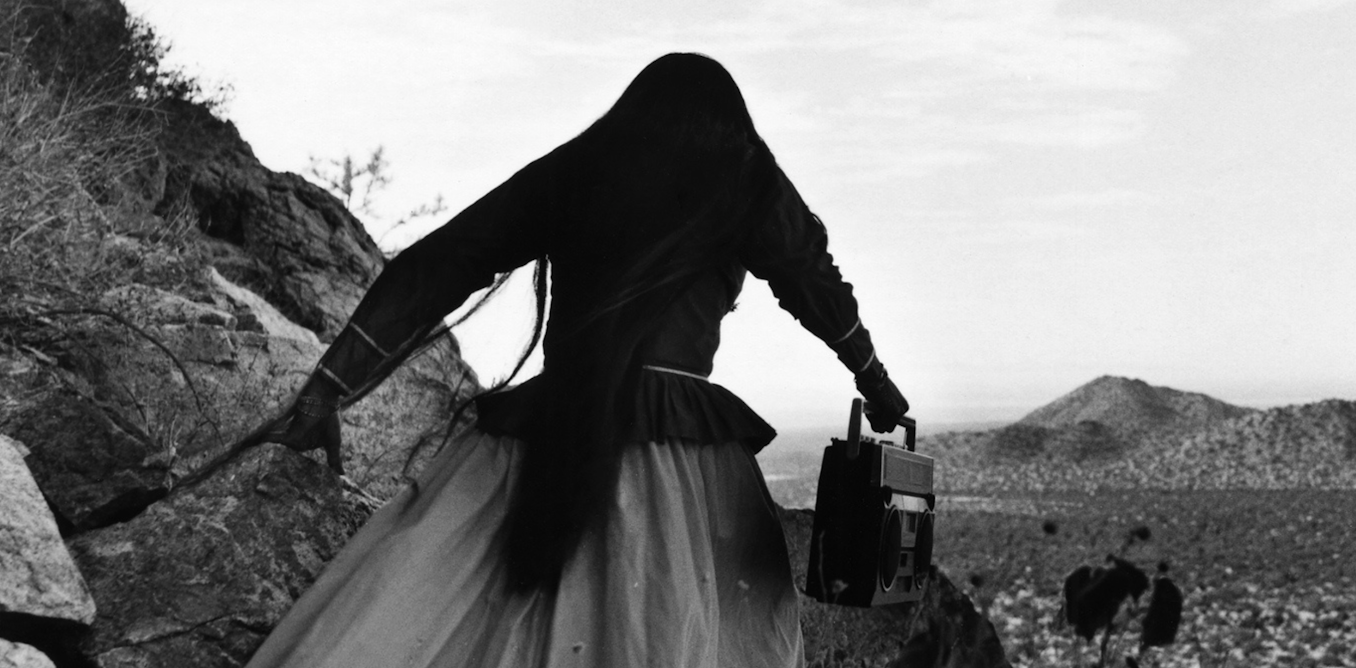
Medea enters these lives not as a savior riding to the rescue in a conventional sense, but as a mirror, a provocateur, and an equalizer. She rolls up in her modified, custom-painted car, radiating a dangerous energy. She is the embodiment of the mala madre (bad mother)—the darkest iteration of the Medea myth, who not only murdered her own children out of betrayal and spite, but who refuses to permit their father, Jason, to bury them.
In a nation like Mexico, where the forced disappearance and murder of children and young adults have generated national trauma of cataclysmic proportions, Medea is a profoundly unsettling avatar. She represents the absolute rupture of maternal sanctity, yet her presence in San Miguelito offers a strange, dark comfort. She does not judge the broken women and men she encounters; instead, she validates their grief, anger, and transgression.
The Final Chord: Medea’s Corrido
The sixth and final narrative shifts perspective entirely, functioning as Medea’s personal corrido. Here, she unpacks the thematic beats, teachings, and lingering echoes of the preceding five stories, weaving them together with her own mythic biography and her sojourn in Aztlán.
By framing her conclusion as a corrido, de la Cerda deliberately invokes a rich, historically resonant musical tradition. Rooted in Spanish medieval balladry, the corrido blossomed into a distinctively Mexican art form during the 19th-century post-independence era. Traditionally, these ballads served as oral newspapers and fireside entertainment for troops during the Mexican Revolution, celebrating wily, Robin Hood-esque underdogs who outsmarted corrupt authorities and fought for the common good.
Historically, corridos were a masculine domain. While some addressed women, very few were authored or sung from a female perspective. By giving Medea her own corrido, de la Cerda subverts the patriarchal boundaries of the genre. Moreover, she distances her work from modern narcocorridos, which frequently glamorize cartel violence and criminal syndicates. Medea’s ballad is instead an epic of survival—a human-scale exploration of how ordinary people endure under the boot of systemic oppression.
Supporting Context, Metrics & Cultural Landscape
To understand the cultural resonance of Medea Sang Me a Corrido, one must analyze the socio-political matrix from which it springs, as well as the technical triumphs of its translation and musical world-building.
The Musical Soundscape
Sound and rhythm are not merely decorative elements in de la Cerda’s prose; they are foundational to her world-building. The text is layered with a carefully curated musical score that evokes a precise socio-cultural soundscape. From nostalgic vintage hits to contemporary popular anthems, the soundtrack of San Miguelito grounds the reader directly in the lived reality of its inhabitants.
This musicality serves a dual purpose. First, it acts as an immediate marker of authenticity, establishing the cultural milieu of the characters. Second, it aligns with de la Cerda’s stated pedagogical and political philosophy regarding her readership.
Writing for the Margins
In numerous interviews, de la Cerda has spoken candidly about her community work, including her literacy programs with incarcerated individuals. Crucially, these experiences directly influence her authorship. She writes with new and developing literacy learners explicitly in mind.
This commitment manifests as a deliberate stylistic choice: while her prose is layered with historical, mythic, and musical references, the language itself is remarkably accessible. There is no academic obfuscation or elitist gatekeeping in her writing. Instead, de la Cerda achieves a rare literary alchemy: a prose style that possesses absolute clarity of purpose while capturing the raw, unvarnished texture of authentic lived experience. Her work proves that political urgency and literary sophistication do not require dense, exclusionary syntax.
The Translators’ Craft: Bridging Idioms
Translating Dahlia de la Cerda is no small feat. Following their acclaimed work on her 2005 collection, Reservoir Bitches, translators Julia Sanches and Heather Cleary faced the monumental task of rendering de la Cerda’s stylistic and linguistic dexterity into English without neutralizing its edge.
The original Spanish text relies heavily on raw, informal Mexican street slang and hyper-local vernacular. Rather than smoothing these rough edges into standard, homogenized English, Sanches and Cleary made the courageous and artistically sound decision to preserve the grit of the original. They utilized precise English equivalents where appropriate, while retaining key Spanish terms and regional slang. This approach invites the English-language reader to lean into the cultural specificity of Aztlán rather than flattening it for foreign consumption. The result is a vibrant, pulse-pounding translation that honors the authentic voices of the characters.
Official Statements & Critical Reception
The literary community has received Medea Sang Me a Corrido as a major milestone in contemporary international fiction, praising its fearless synthesis of classical archetype and modern social critique.
In promotional materials and critical reviews, Scribe Publications and literary critics have emphasized the novel’s unique positioning within the broader landscape of global myth-retellings. While retellings of Greek and Roman classics have crowded bestseller lists in recent years, few have dared to inject these archetypes into the bleeding edge of contemporary geopolitical struggles, such as the militarization of borders and the human cost of the drug wars.
Translators Julia Sanches and Heather Cleary have elaborated on their collaborative process in various literary podcasts and interviews, noting that de la Cerda’s prose demands an ear attuned to both high literary tradition and the cadences of oral storytelling.
"Dahlia does not write from an ivory tower," Sanches noted in a recent interview discussing their translation strategy. "She writes from the streets, from the prisons, from the margins where survival is an act of daily resistance. Our job as translators was to ensure that the heartbeat of her Spanish—its humor, its profanity, its absolute refusal to look away from trauma—remained entirely uncompromised in English."
Literary scholars tracking de la Cerda’s trajectory since Reservoir Bitches have noted that Medea Sang Me a Corrido marks a maturation of her thematic concerns. Where her earlier work focused intensely on the systemic violence inflicted upon women and marginalized bodies in Mexico, her latest work expands outward into mythic territory, suggesting that the tragedies of today are merely modern iterations of ancient, eternal conflicts between state power, familial betrayal, and individual agency.
Future Outlook & Literary Significance
As Medea Sang Me a Corrido continues to find its footing in the international literary marketplace, its long-term impact on transnational literature promises to be profound.
Expanding the Canon of Mythic Retellings
For decades, the adaptation of classical Greek mythology—particularly stories involving figures like Odysseus, Achilles, and Medea—has been dominated by Eurocentric perspectives. De la Cerda’s novel shatters this monopoly. By demonstrating that the desperate, incandescent rage and sorrow of Medea find an authentic home in the contemporary Mexican barrio, the book opens doors for other marginalized literary traditions to converse with classical antiquity on their own terms. It challenges Western-dominated literary establishments to recognize that myth does not belong exclusively to the ancient Mediterranean; it belongs to anyone who has ever survived a catastrophe.
The Evolution of Political Fiction in Latin America
Furthermore, de la Cerda’s work signals a vital evolution in how contemporary Latin American literature addresses systemic violence. By steering clear of the sensationalism that often plagues narco-fiction, she centers the narrative on the emotional and communal resilience of ordinary people. The book’s success suggests a growing global appetite for literature that refuses to reduce Latin American experiences to flat stereotypes of cartel warfare, instead offering complex portraits of mutual aid, compassion, humor, and tragic beauty.
Upcoming Projects and Translation Impact
With Sanches and Cleary proving themselves to be master translators of de la Cerda’s fiercely idiosyncratic voice, literary analysts anticipate that Medea Sang Me a Corrido will pave the way for increased translation and distribution of cutting-edge Mexican feminist literature into the Anglosphere. As border walls continue to rise globally and conversations surrounding migration, displacement, and state-sanctioned violence dominate political discourse, works like de la Cerda’s—bridging myth and gritty realism—will remain indispensable guideposts for understanding the human spirit under pressure.
In sum, Medea Sang Me a Corrido is far more than a clever literary exercise. It is a howling, singing, weeping testament to the enduring power of story. As Medea cruises through the dusty streets of San Miguelito in her customized car, she leaves behind a trail of broken conventions and undeniable truths, reminding readers that even in the darkest landscapes of modern violence, the human voice—raw, unbowed, and lyrical—will always find a way to sing its own corrido.