Executive Overview
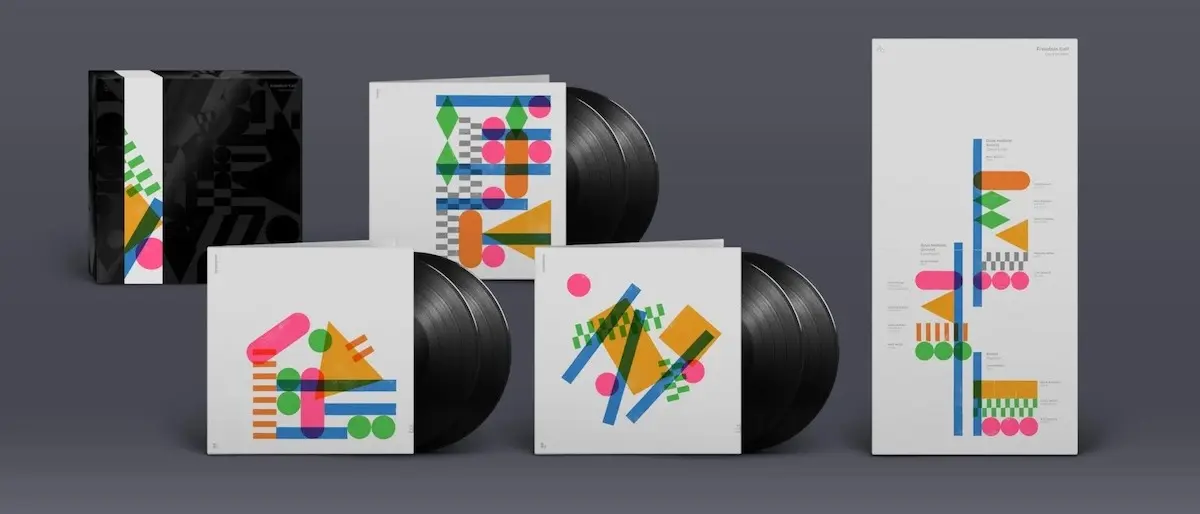
For nearly six decades, the double bass has found its most articulate, intellectually rigorous, and emotionally resonant voice in the hands of Dave Holland. Arriving to coincide with the legendary bassist, composer, and bandleader’s 80th birthday, the monumental archival box set Freedom Call (released via Edition Records) offers far more than a retrospective glance. Spanning six meticulously curated LPs (or three CDs), this release captures three distinct, highly revered ensembles—his Sextet, Quintet, and the electrifying cross-genre project Prism—in previously unreleased live performances.
Rather than serving as a dusty historical curio for completists, Freedom Call presents jazz as a living, breathing, and perpetually evolving dialogue. It underscores Holland’s status not merely as a master virtuoso who helped rewrite the rhythmic and harmonic vocabulary of modern music alongside Miles Davis, Chick Corea, and Anthony Braxton, but as one of the defining bandleaders of the 20th and 21st centuries. In an era marked by fleeting trends and superficial commercialism, Holland’s career stands as a testament to the power of artistic integrity, deep listening, and collective trust. Freedom Call is a triumph of archival curation, offering both an invaluable education for newcomers and a deeply rewarding revelation for lifelong devotees.
Detailed Chronology: Six Decades of Invention
To understand the magnitude of Freedom Call, one must trace the extraordinary trajectory of a musician who has consistently refused to rest on his laurels. Holland’s journey is a foundational chapter of modern jazz folklore, tracing an arc from the smoky basement clubs of 1960s London to the vanguard of global improvised music.
The Crucible of the Avant-Garde and Miles Davis
Born in Wolverhampton, England, Holland immersed himself in the vibrant London jazz scene of the mid-1960s before a fateful night in July 1968. While performing in the support band opposite the Bill Evans Trio at Ronnie Scott’s, Holland caught the ear of Miles Davis. Davis, seeking to replace the departing Ron Carter, immediately enlisted the 21-year-old bassist.
This appointment thrust Holland into the white-hot center of jazz’s electric revolution. His woody, commanding acoustic bass provided the vital anchor for landmark recordings that dismantled conventional jazz idioms, including In A Silent Way, Bitches Brew, Jack Johnson, and Live-Evil. Yet, rather than spending his career trading on his association with Davis, Holland charted an uncompromisingly independent course. The 1970s saw him exploring fearless abstraction and structural experimentation with Chick Corea’s visionary avant-garde quartet, Circle, alongside saxophonist Anthony Braxton and drummer Barry Altschul.

The ECM Era and the Art of the Ensemble
Holland’s subsequent association with ECM Records yielded some of the most enduring recordings in contemporary acoustic jazz. Whether anchoring intimate trios, expansive quintets, or his Grammy-winning Big Band, Holland developed a compositional style that was instantly recognizable: rhythmically adventurous yet deeply swinging, structurally intricate without ever slipping into academic sterility.
Crucially, Holland understood that great bandleading is rooted in fostering long-term relationships. Musicians such as Robin Eubanks, Steve Nelson, Chris Potter, Kevin Eubanks, Eric Harland, Nate Smith, and Craig Taborn became trusted collaborators, their unique musical voices woven permanently into Holland’s evolving lexicon. Freedom Call documents three golden eras of these collaborative relationships, capturing ensembles operating at the absolute pinnacle of their creative powers.
Supporting Context & Metrics: Inside the Freedom Call Box Set
Edition Records has approached Freedom Call with a level of curatorial care and material craftsmanship that sets a new benchmark for archival jazz releases. Mastered by Steve Fallone at Sterling Sound, the audio quality bridges the gap between the immediacy of a sweaty club performance and the pristine clarity of a studio session.
+---------------------------------------------------------------------------------+
|                         FREEDOM CALL: BOX SET METRICS                           |
+----------------------+----------------------------------------------------------+
| Format Options       | 6-LP Vinyl Box Set / 3-CD Edition                        |
| Featured Ensembles   | Sextet (Unity), Quintet (Synergism), Prism (Freedom)     |
| Key Collaborators    | Chris Potter, Steve Nelson, Robin Eubanks, Craig Taborn, |
|                      | Kevin Eubanks, Eric Harland, Nate Smith, Mulgrew Miller  |
| Mastering Engineer   | Steve Fallone (Sterling Sound)                           |
| Label                | Edition Records                                          |
+----------------------+----------------------------------------------------------+
Part One: Sextet – Unity
Formed in 2006, Holland’s Sextet expanded his compositional palette by incorporating pianist Mulgrew Miller alongside a front line of Robin Eubanks (trombone), Alex Sipiagin (trumpet), and Antonio Hart (alto saxophone), anchored by drummer Eric Harland.
Unity captures this orchestral-leaning ensemble at its peak. Familiar compositions from studio albums like Pass It On (2008)—such as "Fast Track," "Lazy Snake," and "Modern Times"—transform entirely in a live setting. The written themes act merely as launchpads for expansive, conversational improvisations. The late Mulgrew Miller’s piano playing provides exquisite harmonic sophistication and emotional grounding, while Harland’s elastic drumming redefines the rhythmic landscape.

Part Two: Quintet – Synergism
If the Sextet showcased Holland’s arranger’s mind, Synergism strips the format back to highlight the peerless chemistry of his legendary chordless Quintet (featuring Chris Potter, Steve Nelson, Robin Eubanks, and Nate Smith).
Operating without a piano, the group carved out a transparent, airy sonic landscape where Steve Nelson’s shimmering vibraphone and Chris Potter’s jaw-dropping saxophone lines floated seamlessly over the rhythm section. Tracks like "Pathways," "Easy Did It," and "Full Circle" reveal a band that treated every performance as an open-ended exploration. Nate Smith’s drumming infuses the complex meters with an infectious, deep-pocket groove, proving why this iteration remains one of the defining working bands of 21st-century jazz.
Part Three: Prism – Freedom
Refusing to be trapped by his own acoustic legacy, Holland formed Prism in the early 2010s to explore the outer edges of contemporary music. Bringing together guitarist Kevin Eubanks, keyboard visionary Craig Taborn, and drummer Eric Harland, Prism drew fluidly from modern jazz, progressive rock, and electronic textures.
Freedom captures the quartet pushing familiar material—such as "A New Day," "Evolution," and "Confirmation Bias"—into visceral, high-energy territory. Craig Taborn’s shifting electronic and acoustic keyboard soundscapes, paired with Kevin Eubanks’ blues-inflected, unpredictable guitar lines, demonstrate that Holland’s creative curiosity remained entirely undiminished well into his seventies.
Official Statements and Curatorial Philosophy
The release of Freedom Call has prompted widespread reflection from critics, fans, and the musicians who shared the stage with Holland. In the box set’s comprehensive liner notes penned by Holland himself, the bassist emphasizes that the core philosophy of his career has never been about technical dominance, but rather about creating an egalitarian space for shared expression:

"Leadership in jazz is not about control; it is about trust. You write the architecture, you invite the right voices into the room, and then you step back and listen. The music only truly comes alive when everyone has the freedom to reshape it."
Industry analysts and jazz historians have lauded Edition Records for bringing these long-vaulted recordings to light. Dave Stapleton, founder of Edition Records, noted in a label statement:
"Releasing a project of this scale is a responsibility. These aren’t just outtakes; they are masterclasses in group interaction and composition. To present Dave Holland’s legacy at this level of physical and sonic fidelity for his 80th birthday is an honor that defines our label’s mission."
Future Outlook: The Enduring Resonance of a Living Legend
As Dave Holland marks his 80th milestone, Freedom Call serves as a powerful reminder that true artistic vision transcends chronological age. In an industry increasingly obsessed with youth and transient virality, Holland’s career offers a masterclass in slow-burn longevity, integrity, and continuous reinvention.
The impact of these unearthed recordings will undoubtedly ripple across the contemporary jazz landscape. For young bassists and composers entering the field, Freedom Call establishes an unattainable yet essential blueprint: how to balance rigorous intellectual architecture with unbridled emotional warmth; how to honor the tradition of the jazz masters while looking relentlessly forward; and how to build musical relationships that deepen over decades rather than fading after a single album cycle.

Great music does not merely survive the passage of time; it gathers it. Each return to these recordings brings echoes of past eras while remaining vibrantly relevant to the present moment. With Freedom Call, Dave Holland has given the global jazz community a treasure trove of inspiration, ensuring that his extraordinary musical conversation will continue to resonate for generations to come.