Executive Overview
The musical landscape of the North East of England has long existed in a state of splendid, defiant isolation. For decades, this geographic remove and cultural oversight have fostered a fiercely independent breed of folk musicians. Untethered by metropolitan trends, artists from this region tend to grow in exploratory, jagged directions.
From the orchestral winding sheets of The Unthanks to the eccentric, visionary fantasias of Richard Dawson—whose work bridges the gap between the Incredible String Band and Captain Beefheart—the region’s traditional DNA is routinely contaminated by hardcore punk, psychedelia, experimental jazz, and outsider pop. The resulting sonic hybrids are part mineral, part animal: strange, organic, and entirely vital.
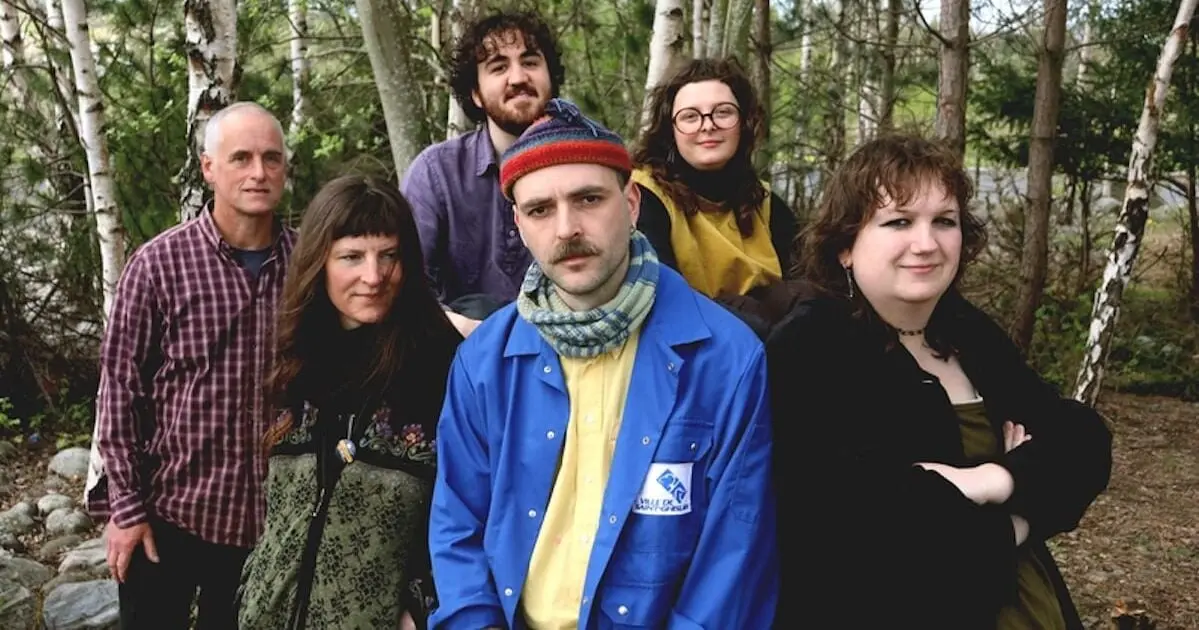
Enter Powtes, a six-piece ensemble helmed by Gus Beamish that stands at the vanguard of this movement. Their upcoming self-released album, Destroying A Living, slated for release on August 7, 2026, is not merely a collection of traditional arrangements; it is a sprawling, deeply atmospheric sonic monument to the dispossessed common folk of Britain’s history and the liminal topographies that have been corseted and plundered by centuries of enclosure and profiteering.
Drawing its name from the Fenland word for "eel," the album summons the damp, haunting spectre of the Fens, channeling the ecstasy of group improvisation through the stark, hypnotic austerity of the drone. With comparisons to the anthropological depth of Richard Dawson’s acclaimed Peasant and The Glass Trunk, alongside the ragged, sensory glory of Daisy Rickman, Destroying A Living arrives as an uncompromising masterwork of modern British folk.
Detailed Chronology: The Evolution of the North Eastern Underground
To understand the gravitational pull of Powtes, one must trace the lineage of the North East’s fertile underground music scene—a lineage steeped in institutional history, counter-cultural defiance, and cross-genre contamination.
The Crucible of Newcastle University
A vital engine room for this creative output has been the traditional music honours degree programme at Newcastle University. Though recently discontinued, the programme served as a hothouse for virtuosic talent and academic cross-pollination. Its tutors included legendary folk figures such as Louisa Killen, whose monumental 1975 album Bright Shining Morning remains an unsung masterpiece of British traditional music.
Graduates and affiliates of this ecosystem—alongside self-taught outsiders—went on to forge a distinct regional identity. Figures like Kathryn Tickell, Paul Smith, Steve Malley, Beth Jeans Houghton, Jazzfinger, and Nev Clay built a porous boundary between orthodox folk history and avant-garde exploration.
The Rise of Phil Tyler and the Sacred Harp Tradition
Among the key players in this sprawling network is Phil Tyler, a musician whose commitment to traditional forms is matched only by his exploratory zeal. Alongside his wife, Cath, Phil has spent years championing and spreading the communal, unvarnished power of sacred harp singing across the UK.
It is this same open-throated approach to traditional themes that Tyler brings to Powtes. As a member of the six-piece band alongside Beamish, Tyler helps anchor a sound where ancient vocal traditions collide head-on with contemporary, textural experimentation.
Destroying A Living: Anatomy of a Concept Album
Destroying A Living is structured less like a standard record and more like an immersive historical drama. The album’s title track sets a grim, cinematic tone, recounting the story of two brothers working under cover of night on land that has been privatized and parcelled up from beneath them.
When rumbled by a heavy-handed landowner, the brothers resort to fatal violence, utilizing the very shovels of their trade. Powtes dramatizes this narrative through pathetic fallacy, generating musical arrangements that mirror the emotional and physical dynamics of the action. Stabbing, visceral strings ladder upward into symphonic swirls, mimicking the frantic panic of the confrontation.
Track by track, the record maintains this high narrative and sonic standard:
- "Hirings": Beamish’s keening alto tells the harrowing tale of a worker locked in a cyclical trap of alcoholic hardship. Peter Bourne’s lugubrious trombone coats the track in a thick layer of doldrums, while Beamish’s stark, single-note guitar solo counterpoints Katy Sillem’s arcing penny whistle, creating an atmosphere of exhilaratingly heavy weather.
- "The Wage": This track showcases the album’s gorgeously organic, live-in-the-room feel. Emily Toth’s diaphanous harp tangles delicately with Beamish’s banjo, set against a backdrop of rich vocal harmonies and shimmering violin harmonics.
- "The Use": The ten-minute album closer serves as an epic ode to the "brackish and sullen and obstinate" East Anglian wetlands. These were the very fens drained by profiteering land barons during the 17th century—an act of ecological and cultural destruction that wiped out an ancient ecosystem stretching back across Doggerland, the prehistoric ice age land bridge that once connected England to mainland Europe.
Supporting Context & Metrics: Cultural Geography and the Enclosure Acts
The socio-political underpinnings of Destroying A Living are deeply rooted in the history of British land ownership, class struggle, and environmental alteration.
The Fenlands and the Erasure of the Commons
The Fens of East Anglia have long occupied a unique psychological space in the British imagination. Before wholesale drainage projects transformed them into regimented agricultural flatlands, the Fens were a watery labyrinth of meres, reed beds, and shifting islands. They sustained a distinct culture of independent "fenmen"—wildfowlers, fishermen, and reed-cutters who lived largely outside the jurisdiction of feudal and state authority.
The 17th-century drainage schemes, spearheaded by speculative land barons and foreign engineers (such as Cornelius Vermuyden), sought to turn these "wastelands" into profitable agricultural commodities. In doing so, they dispossessed the common folk, destroyed an entire way of life, and severed humanity’s connection to an ecosystem tens of thousands of years old.
By framing their album around these forgotten histories, Powtes engages in a vital form of musical archaeology. They are not merely playing tunes; they are singing back to the ghosts of Doggerland, restoring a voice to those erased by the march of industrial and agricultural capitalism.
Production and Ensemble Dynamics
Musically, Destroying A Living relies on a dynamic interplay between traditional instrumentation and avant-garde textures. The metrics of the ensemble performance are striking:
- Lineup: 6 core members bringing together guitars, banjos, harps, trombones, penny whistles, and soaring vocal harmonies.
- Acoustic Philosophy: Recorded with a raw, organic ethos that captures the room acoustics, allowing the listener to feel the "warp and weft of their collective humanity."
- Genre Blending: A seamless synthesis of British folk song structures, drone-based minimalism, free-form group improvisation, and cinematic soundscaping.
Official Statements & Critical Reception
While official press releases and band statements for Destroying A Living remain closely guarded ahead of its August 2026 release, early critical assessments within the underground folk community have positioned the record as a watershed moment for modern traditional music.
The Critical Consensus
Reviewers have drawn immediate parallels between Powtes and the heavy-hitting innovators of the contemporary UK folk revival:
"The ambition of its social anthropology is reminiscent of Richard Dawson’s Glass Trunk and Peasant albums, while the depth and sensuality of the ensemble performances bring to mind the ragged glory of Daisy Rickman."
This lineage places Powtes firmly within a movement that treats folk music not as a museum piece, but as a living, breathing, and often contentious political weapon. The fusion of Beamish’s harrowing narrative songwriting with the group’s drone-heavy, improvisational outbursts has been praised for its uncompromising emotional weight.
The Role of Human Curation in the Digital Age
As listeners navigate an increasingly saturated and algorithmically driven streaming landscape, projects like Powtes represent a vital antidote to homogenous discovery playlists. Publications such as KLOF Mag have increasingly focused on human-curated platforms—such as their companion Substack publication KLOF Mag Selects and the weekly Monday Morning Brew playlist—to ensure that ambitious, culturally significant works like Destroying A Living find their rightful audience without being flattened by corporate recommendation engines.
Future Outlook: The Road to August 7, 2026
As the release date for Destroying A Living approaches, anticipation is building across the independent music community. Powtes is poised to challenge prevailing notions of what a folk record can achieve structurally, politically, and sonically.
Live Performance and Immersive Spatial Audio
Given the intensely organic, room-bound feel of the recordings, speculation is mounting regarding how Powtes will translate these complex historical narratives to the live stage. The combination of drone-state repetition, acoustic delicacy (harp, banjo, penny whistle), and explosive theatricality (such as the violent, string-laden climax of the title track) promises a striking live experience. Performances are expected to focus heavily on intimate, acoustically rich spaces where the ensemble’s collective breathing and instrumental interplay can be felt in real-time.
A Landmark for Contemporary British Folk
Destroying A Living arrives at a time when questions of land ownership, ecological crisis, and working-class heritage are once again surging to the forefront of cultural discourse. By looking backward to the drained fens of the 17th century and the primordial expanses of Doggerland, Powtes has constructed a mirror for the modern age.
This is not polite, heritage-industry folk music designed for background listening at a country pub. It is a dense, thorny, deeply researched sonic monument that demands active engagement. For those willing to dive into its brackish, obstinate waters, Destroying A Living promises to be one of the most arresting and important independent releases of 2026.
Destroying A Living is self-released on August 7, 2026, and will be available on Compact Disc (CD) and Digital Download via the official Powtes Bandcamp page.