Executive Overview
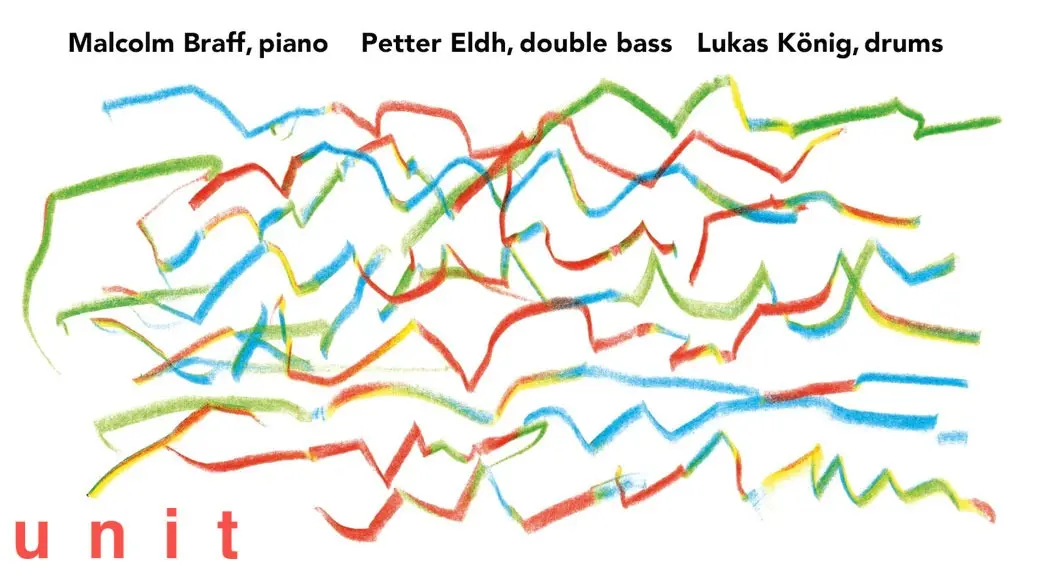
In the contemporary landscape of improvised music, few releases dare to dismantle conventional notions of rhythm, duration, and ensemble identity with the surgical precision and visceral joy found on Outside. Featuring the visionary pianist Malcolm Braff alongside the restless creative force of Swedish bassist Petter Eldh and the explosive, whiplash styling of Austrian drummer Lukas König, the album is a masterclass in modern European jazz experimentation. Yet, calling Outside a mere jazz record would be to undersell its broader cultural and physical ambitions.
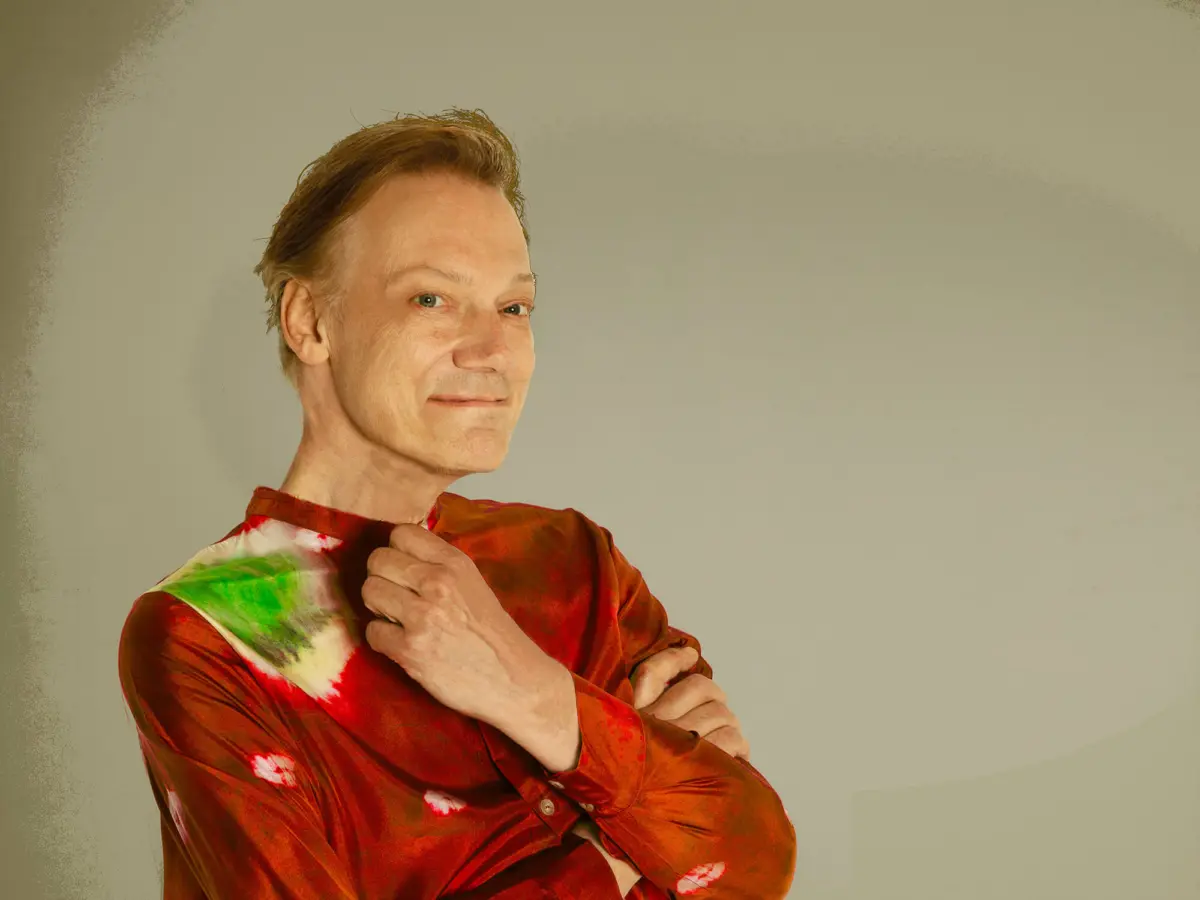
Clocking in with the compact duration of an extended play (EP), the recording proves that musical weight has little to do with physical length. Instead, it offers a dense, highly concentrated exploration of time as a non-linear wave rather than a rigid, ticking clock. At the heart of this sonic ecosystem is Malcolm Braff—a pianist, educator, and philosopher whose career has spanned continents, from his birth in Rio de Janeiro and upbringing in West Africa to his current artistic home in Switzerland.
Braff approaches his instrument not as a personal megaphone for ego, but as a transparent medium through which physical action and communal resonance occur. Having spent more than two decades researching the "mechanics of swing," Braff has codified his findings into a witty yet rigorously ambitious "Generalized Theory of Swing," a framework now taught at Jazzcampus Basel. Alongside Eldh’s thrumming, endlessly curious vibrations and König’s gunshot-like percussive accents, Braff turns traditional jazz architecture inside out. Outside is an arresting, disorienting, and ultimately exhilarating ride that challenges listeners to rethink how they perceive the distortion of musical time.
Detailed Chronology: From the Global Diaspora to the Swiss Stage
To understand the intricate machinery of Outside, one must trace the winding, global trajectory of Malcolm Braff’s life and musical evolution. Born in Rio de Janeiro, Brazil, to a missionary father, Braff’s childhood was defined by cultural displacement and deep immersion in diverse soundscapes. He grew up across Cape Verde and Senegal before eventually settling in Switzerland. Rather than claiming a single national identity, Braff’s worldview is inherently global, shaped by the rhythms of the African diaspora and the academic rigors of European institutions.
A defining chapter in Braff’s artistic coming-of-age was his decade-long collaboration with Yaya Ouattara, a master percussionist from Burkina Faso whom Braff describes as "more than a brother." Ouattara’s djembe fundamentally altered Braff’s conception of ensemble dynamics, frequently taking the place of a traditional drum kit in Braff’s early trios. This cross-cultural dialogue culminated in the critically acclaimed 2006 live album Yele, released via Unit Records, which showcased a seamless fusion of West African rhythmic traditions and modern jazz harmony.
Fast-forwarding to the present day, Braff’s ongoing academic research at Jazzcampus Basel represents a culmination of his life’s work. Over twenty years of dissecting the psychological and physical properties of groove led him to formulate his "Generalized Theory of Swing." This theoretical framework investigates how listeners perceive the manipulation and distortion of time. Rather than treating swing as a stylistic cliché, Braff treats it as a malleable physical force.
The convergence of Braff, bassist Petter Eldh, and drummer Lukas König on Outside represents the physical realization of these decades of research. Eldh, known for his relentless curiosity and boundless energy across the European jazz scene, brings a tactile, throbbing foundation to the group. König, whose drumming style relies on sharp, unpredictable bursts and intense percussive timbres, injects a punk-rock vitality into the acoustic trio setting. Together, this powerhouse rhythm section provides the ideal sparring partners for Braff’s philosophical and technical explorations, transforming theoretical physics into living, breathing acoustic art.
Supporting Context & Metrics: Deconstructing Outside
An analytical dive into the tracklist of Outside reveals an uncompromising commitment to breaking down and rebuilding musical conventions. Though brief in duration, the album packs an extraordinary density of ideas into every second, demanding active participation from the listener.
Track-by-Track Breakdown
- "Viennese Grôt à la Berlinaise": The record’s arresting opening track—whose culinary-inspired title hints at a chaotic mixture of ingredients—sets an immediate tone of restless invention. Lukas König’s percussive attack hits the listener with the shocking impact of a gunshot, stirring directly into the warm, viscous gloopiness of Petter Eldh’s resonant bass tones. Meanwhile, Braff’s bouncy piano figures act as the adhesive holding these contrasting textures together. It is a masterclass in ensemble balancing, where every element feels both dangerously volatile and securely anchored.
- "3TOES": Positioned second on the release, this track sees Braff’s signature sense of swing completely dismantled and turned inside out. Traditional jazz swing relies on predictable subdivisions and an internal forward momentum; "3TOES," by contrast, plays with rhythmic gravity. König’s frenetic rim clicks and Eldh’s deep, thrumming vibrations are granted expansive breathing room through the calculated, mathematical intervals of Braff’s piano playing.
The Trio as a Single Organism
Central to the success of Outside is Braff’s unique philosophy regarding the piano trio format. Rather than viewing the ensemble as three distinct individuals executing soloistic duties over a rhythm section, Braff treats the trio as a single, unified organism.

During performances, Braff famously avoids listening to himself; instead, he monitors the ripple effect of his physical actions on his fellow musicians, constantly questioning: "What power am I having on the music?" By removing ego from the equation, he allows the trio to function with an uncanny telepathy. Eldh’s restless curiosity matches König’s whiplash execution, resulting in an environment where equal weight is given to every musical voice. The resulting sound is a democratic, highly conversational dialogue that defies predictable song forms and linear expectations.
Official Statements and Artistic Philosophy
The conceptual architecture behind Outside is deeply rooted in Malcolm Braff’s meditative, highly analytical approach to artistic creation. In various reflections on his craft, the pianist has consistently downplayed the romanticized notion of the "virtuoso soloist," preferring to frame music as a somatic, bodily action.
"This is not what I am, just something I enjoy doing," Braff has noted regarding his role as a pianist, emphasizing that his primary concern is the physical feeling of playing in the present moment.
By mastering his instrument to the point of second nature, Braff is able to "get out of the way" of the music, allowing spontaneous action to take precedence over premeditated composition. This philosophy extends directly into his academic writings and his work at Jazzcampus Basel, where he challenges students to rethink rhythm not as a mechanical grid, but as an elastic spectrum of time perception.
Collaborator Petter Eldh echoes this spirit of fearless experimentation. Known for his work in projects like Koma Saxo and various avant-garde lineups, Eldh thrives in environments where structural boundaries are treated as flexible suggestions. Lukas König brings a similarly boundary-pushing ethos, having carved out a reputation for blurring the lines between free jazz, noise, and electronic aesthetics—even when operating entirely within acoustic parameters.
Together, the trio’s collective statements—both spoken and musical—point toward a shared desire to strip away the artifice of jazz tradition in favor of direct, emotionally resonant human communication. As music critic James Read aptly observes, the brilliance of Outside lies in how it "connects emotionally before the mind begins to ask questions about what is happening to musical conventions."
Future Outlook: The Legacy of a Generalized Theory of Swing
As Outside makes its way to listeners and critics across the global music community, it signals an exciting new chapter for Malcolm Braff, Petter Eldh, and Lukas König. The release raises provocative questions about the future trajectory of modern acoustic jazz, proving that the genre’s most vital innovations happen not by looking backward into nostalgic revivalism, but by rigorously interrogating the foundational elements of time, space, and rhythm.
For Braff, the critical acclaim surrounding Outside validates decades of quiet, behind-the-scenes academic and artistic labor. His "Generalized Theory of Swing" is no longer just a theoretical curriculum at Jazzcampus Basel; it is a living, breathing acoustic reality captured on wax. As contemporary music education increasingly embraces cross-disciplinary approaches—merging physics, anthropology, and psychology with performance—Braff’s work stands out as a pioneering model for the next generation of improvisers.
Looking ahead, fans of adventurous music can only hope that this formidable trio will bring their boundary-pushing chemistry to live stages worldwide, translating the dense sonic waves of Outside into immersive concert experiences. Whether the group chooses to expand these ideas into a full-length long-player or continue exploring the hyper-concentrated power of the EP format, one thing is certain: Malcolm Braff, Petter Eldh, and Lukas König have permanently altered the coordinates of modern swing. Outside is not just a record to be listened to; it is a sonic environment to be inhabited, studied, and endlessly enjoyed.