Executive Overview
In the sprawling, high-altitude Andean metropolis of Bogotá—situated more than 2,600 meters above sea level and hundreds of kilometers away from any coastline—musician, composer, and producer Aldo Zolev found the unexpected inspiration for a track titled "Caminando Por La Playa" ("Walking Along the Beach"). Rather than capturing the crashing waves or sea breezes typically evoked by such a title, Zolev’s composition is an exuberant, rhythmically driving celebration of a joyous march through the bustling, mountainous capital of Colombia.
The track serves as a microcosm of Zolev’s broader artistic philosophy: a seamless fusion of traditional Colombian rhythmic memories, sophisticated jazz harmonies, and global acoustic textures. Propelled by a brisk marching percussion set, cymbals played by Sandro Londoño, and the distinct, warm tones of Sandra Duque’s bassoon weaving melodic lines over Zolev’s own foundational double bass, "Caminando Por La Playa" is more than an instrumental piece. It is a philosophical statement. According to Zolev, the physical act of walking stands as a metaphor for navigating existence, serving as an urgent, uplifting message to his peers to march “por la vida hoy y siempre”—through life today and always—with resilience and joy.
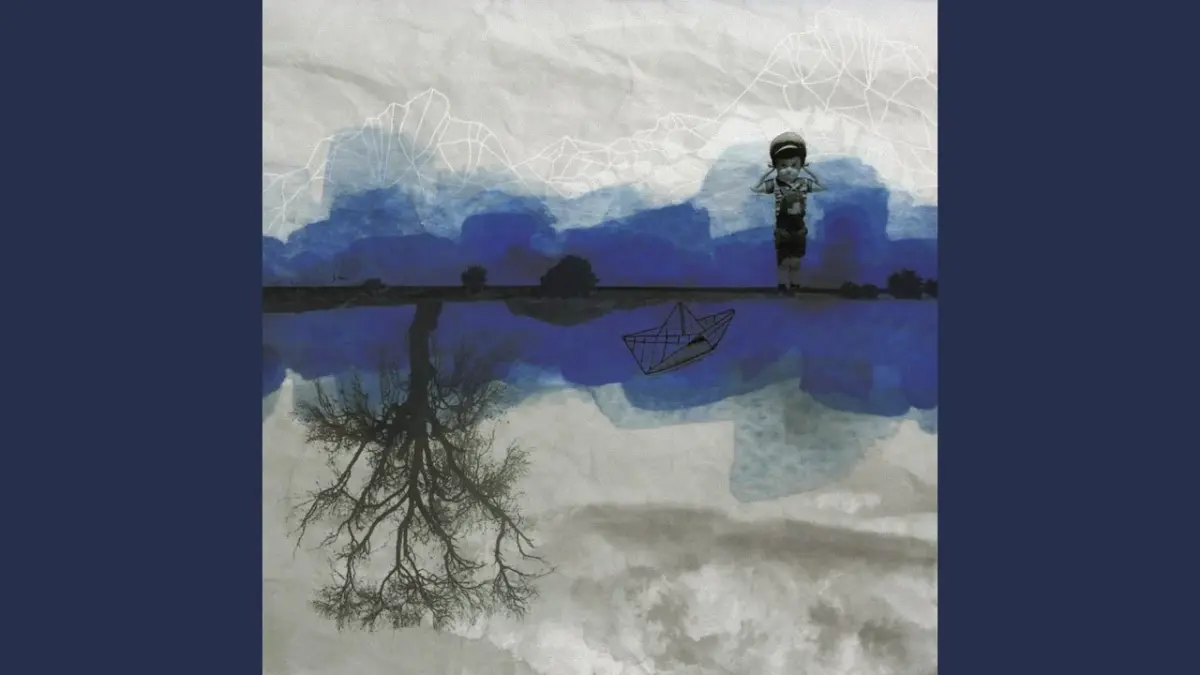
This landmark composition anchors Zolev’s newly relaunched album, Sensaciones Bajo La Lluvia, a project that has gained renewed international traction following his extensive European summer tour. Over a career spanning decades, Zolev has established himself as a central pillar of Colombia’s independent music infrastructure. From his early roots in the Andean town of Pamplona to his conservatory training in Bogotá, and through his pioneering work with world-jazz ensembles like Dos Aguas and Bereket, as well as the founding of the independent label and studio EnnO, Zolev has continuously broken down stylistic and geographic boundaries. This feature-length report explores the intricate chronology of Zolev’s career, the rich cultural context of his work, the structural metrics of his independent enterprise, official insights into his creative vision, and the future outlook for a visionary artist bridging the Andes with the wider world.
Detailed Chronology: From the Andean Foothills to Global Soundscapes
Roots and Musical Genesis in Pamplona
Aldo Zolev’s musical journey began in Pamplona, a historic, picturesque Andean city nestled in northeastern Colombia, mere miles from the Venezuelan border. In this culturally rich environment, Zolev was immersed in music from an early age, guided by his grandfather, a professional double bassist. Under his grandfather’s rigorous mentorship, Zolev developed an intimate, tactile relationship with the double bass—an instrument that would remain the gravitational anchor of his entire career.
Growing up in the shadow of the Andes provided Zolev with a deep appreciation for regional Colombian folk idioms, yet his inquisitive musical ear continually looked outward. The border proximity of Pamplona also exposed him to a cross-pollination of Andean and Venezuelan musical traditions, laying the groundwork for an eclectic sonic palette that would later define his adult projects.
Conservatory Training and the Bogotá Jazz Renaissance
Seeking to formalize his classical technique and immerse himself in the country’s premier artistic hub, Zolev relocated to Bogotá. He enrolled in the conservatory at the Universidad Nacional de Colombia, dedicating himself to mastering the rigorous technical demands of the orchestral double bass.
However, the academic environment of the conservatory was only one facet of his education. Bogotá in the late twentieth and early twenty-first centuries was experiencing a vibrant underground jazz and improvisational renaissance. Eager to expand his harmonic vocabulary, Zolev sought out private lessons in jazz and advanced harmony with renowned saxophonist Antonio Arnedo. Arnedo, a pioneer in blending traditional Colombian rhythms like puya, bambuco, and cumbia with contemporary jazz improvisation, profoundly influenced Zolev’s compositional approach. It was during this period that Zolev learned to view traditional folk forms not as museum pieces, but as living, breathing frameworks capable of infinite harmonic exploration.
Cross-Cultural Exploration: Dos Aguas and Bereket
Armed with a dual foundation in classical discipline and jazz improvisation, Zolev began forming collaborative ensembles that reflected his expanding worldview. His first major venture was the world-jazz group Dos Aguas, a project designed to bridge the gap between indigenous Colombian rhythmic structures and modern jazz improvisation.
Never content to remain within a single stylistic box, Zolev subsequently joined Bereket, an innovative ensemble dedicated entirely to the exploration of Turkish and Middle Eastern music. Playing the double bass within a Middle Eastern modal framework demanded an exceptional degree of microtonal awareness and rhythmic agility. This experience fundamentally altered Zolev’s conception of the bass, transforming it from a purely harmonic and rhythmic support instrument into a melodic voice capable of navigating complex, non-Western modal systems.
Institutional Building: The Birth of EnnO and UVA Sexteto
Recognizing the structural limitations facing independent artists within Colombia’s commercial music industry, Zolev took matters into his own hands in 2007 by founding EnnO. Operating out of Bogotá, EnnO was conceived as both an independent record label and a state-of-the-art recording studio. Over the ensuing years, EnnO would evolve into a vital incubator for avant-garde, folk, and world music in South America.
Building upon the studio’s success, Zolev launched UVA Sexteto in 2010. This ensemble represented a bold step in his ongoing cross-cultural experiments, prominently featuring the oud—the traditional Middle Eastern short-necked lute—alongside his own double bass. The interplay between the deep, resonant frequencies of the double bass and the piercing, expressive microtones of the oud created a mesmerizing trans-cultural dialogue that challenged conventional boundaries of world music.
Environmental Soundscapes and Recent Relaunches
Zolev’s commitment to organic, uncompromised sound production reached a new zenith through his collaboration with MARIAZÁ. Their critically acclaimed album, Eau de Vie – Agua Ardiente, was recorded entirely outdoors amidst the rugged, breath-taking landscape of the Sierra Nevada de Santa Marta. Eschewing the sterile confines of traditional indoor recording studios, the ensemble placed acoustic instruments and indigenous percussion in the open air, capturing the natural acoustic resonance of the environment, interwoven with authentic birdsong and the rushing waters of mountain streams.
In 2025, Zolev marked a major milestone in his discography by officially relaunching Sensaciones Bajo La Lluvia, the seminal album housing "Caminando Por La Playa." This relaunch coincided with a triumphant summer tour across Europe, where European audiences were introduced to the unique synthesis of high-altitude Andean warmth and cosmopolitan jazz sophistication that defines Zolev’s oeuvre.
Supporting Context & Metrics: The EnnO Ecosystem and Acoustic Architecture
To fully understand Aldo Zolev’s artistic output, one must examine the infrastructural ecosystem he built through EnnO. Independent music production in the Andean region historically faced immense hurdles regarding distribution, high-end engineering facilities, and cultural homogenization driven by commercial pop markets. EnnO was explicitly designed to counteract these systemic challenges.
Production Metrics and Creative Output
- Albums Produced: Since its inception in 2007, EnnO has served as the production incubator and recording home for 25 full-length albums, spanning genres from contemporary jazz and chamber folk to Middle Eastern modal fusion and environmental field-recording projects.
- Festival Directorship: Beyond studio production, EnnO operates its own independent world music festival, creating a vital live performance circuit for artists who operate outside the mainstream commercial apparatus.
- Geographic Reach: EnnO’s catalog has achieved international distribution, bridging audiences across South America, North America, and Europe, with physical and digital media reaching niche world-music markets globally.
The Acoustic Anatomy of "Caminando Por La Playa"
A sonic analysis of "Caminando Por La Playa" reveals the meticulous craftsmanship underpinning Zolev’s compositions. The track defies the listener’s geographic expectations from its opening bars:
- The Percussive March: Rather than utilizing tropical Latin percussion commonly associated with Colombian coastal music, the track employs a tight, crisp percussion set that establishes an urban, resolute marching cadence. This rhythmic choice auditory reinforces Zolev’s inspiration: a brisk, purposeful march through the high-altitude streets of Bogotá.
- Cymbal Work: Sandro Londoño’s cymbal textures provide a shimmering, metallic counterpoint to the earthy thud of the marching drum, simulating the shifting light and dynamic energy of a daytime urban expedition.
- The Bassoon-Double Bass Dialogue: The integration of Sandra Duque’s bassoon playing the primary melody over Zolev’s double bass creates a rich, dark-toned harmonic chamber. The reedy, nasal timbre of the bassoon blends organically with the wood-and-string resonance of the double bass, offering a chamber-music intimacy rarely found in jazz-fusion contexts.
Official Statements & Artistic Philosophy
To gain deeper insight into the motivations driving Zolev’s career, one must look to his own reflections on his music, identity, and the philosophy of artistic creation.
On the Metaphor of the Walk
Discussing the conceptual genesis of "Caminando Por La Playa," Zolev emphasizes that the title is intentionally deceptive, serving as a poetic inversion of geography and state of mind:
“‘Caminando Por La Playa’ means walking along the beach, yet I wrote it about a happy day marching through Bogotá—a city more than 2,600 metres up in the Andes and hundreds of kilometres from the sea. The physical walk stands for a way through life. It is an urgent reminder to my friends and listeners to walk ‘por la vida hoy y siempre’—through life today and always—and to choose to be happy, regardless of the terrain we find ourselves navigating.”
On Cultural Hybridity and Instrument Craft
Zolev’s incorporation of diverse instruments—from the European double bass and bassoon to the Middle Eastern oud and indigenous Colombian percussion—stems from a foundational belief in the universality of human musical expression. In various artist statements regarding his work with ensembles like Bereket and UVA Sexteto, Zolev has noted:
“Music does not recognize the arbitrary borders drawn by nations or continents. When you bring an instrument like the oud into dialogue with the double bass, you are not forcing disparate cultures together; you are discovering the common harmonic language that existed beneath them all along. The Andes taught me discipline and depth; the wider world taught me how to listen.”
On Independent Infrastructure
Reflecting on his decision to establish EnnO in 2007, Zolev has frequently highlighted the necessity of artistic self-determination in the Global South:
“Waiting for traditional industry gatekeepers to validate experimental, acoustic, or world music is a recipe for creative stagnation. By building our own studios, producing our own records, and curating our own festivals, we ensure that the true sound of our land and our imaginations reaches the world unfiltered.”
Future Outlook: The Next Chapter for Aldo Zolev
As Aldo Zolev looks beyond his successful 2025 European summer tour and the triumphant relaunch of Sensaciones Bajo La Lluvia, the trajectory of his career points toward an even greater synthesis of global acoustic traditions.
Expanding International Collaborations
Building upon the warm reception he received across European stages, Zolev is currently laying the groundwork for subsequent international exchange projects. By inviting European and Middle Eastern instrumentalists to Bogotá to record at EnnO, and conversely taking South American acoustic ensembles abroad, Zolev aims to institutionalize a two-way cultural bridge that bypasses traditional Eurocentric distribution hubs.
Upcoming EnnO Initiatives
The EnnO studio and label are expanding their infrastructural capabilities to include educational workshops for young Andean musicians. Recognizing the challenges faced by the next generation of instrumentalists in Colombia, Zolev intends to use EnnO as a mentoring ground, passing down the lessons learned from his conservatory days, his studies with Antonio Arnedo, and his decades of independent production. These workshops will focus on advanced jazz harmony, non-Western modal systems, and the practical realities of independent record production.
New Recording Projects
While Sensaciones Bajo La Lluvia continues to captivate new audiences on streaming platforms and vinyl, Zolev is already conceptualizing his next studio venture. Whispers from the EnnO compound suggest a deeper dive into environmental acoustic recording—expanding upon the methodology used for Eau de Vie – Agua Ardiente—with the goal of capturing the shifting soundscapes of the high-altitude Andean páramos before climate disruption alters these fragile ecosystems forever.
In an era dominated by hyper-processed, algorithmically generated pop music, Aldo Zolev stands as a steadfast champion of acoustic authenticity, intellectual curiosity, and geographic defiance. Whether he is walking mentally along a non-existent beach in the freezing heights of Bogotá or commanding the low end of a trans-continental world-jazz ensemble, Zolev continues to prove that true artistry knows no altitude, no borders, and no limits.