Executive Overview
Four years ago, the storied jazz institutions Blue Note Records and Universal Music Group Africa made waves across the global music industry with the joint launch of Blue Note Africa. The newly minted imprint carried a bold and unambiguous mandate: to scout, sign, and elevate extraordinary musical talent from across the African continent, granting them a direct, unmediated pathway to a worldwide stage. Yet, the imprint’s operational trajectory proved unconventional.
Following the release of pianist Nduduzo Makhathini’s critically acclaimed In the Spirit of Ntu, the "Blue Note Africa" brand name effectively receded from active marketing materials. Subsequent releases, including Makhathini’s later albums and saxophonist Linda Sikhakhane’s 2024 effort Iladi, were co-credited to Blue Note and Universal Music Africa without the regional imprint qualifier.
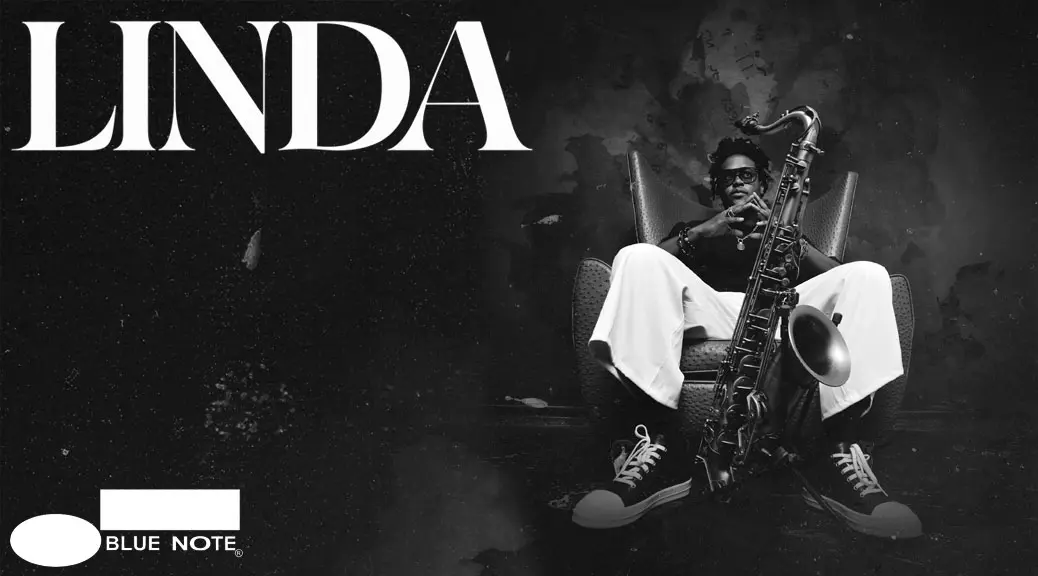
Now, with the release of LINDA—Sikhakhane’s fifth studio album and his second under the Blue Note umbrella—the geographic descriptor has vanished entirely. Yet, beneath the shifting currents of major-label branding lies a far more significant reality: a resilient, deeply collaborative working relationship bridging an elite American jazz label with South Africa’s vibrant, generation-defining creative class.
LINDA is not merely another entry in an established catalog; it is a masterclass in modern jazz composition, an intergenerational showcase of South African and New York-trained brilliance, and a definitive statement from a saxophonist stepping fully into his international prime.
Detailed Chronology: From Umlazi to the Global Stage
To understand the sophisticated architectural framework of LINDA, one must trace the meticulous educational and artistic trajectory of its creator. When jazz publication ukvibe first sat down with Sikhakhane in 2020 ahead of his album An Open Dialogue, he was already a young artist engaged in a rigorous, deliberate, and deeply intentional musical education.
The Foundation: KwaZulu-Natal and Musical Pedagogy
Sikhakhane’s journey began in Umlazi, a township in KwaZulu-Natal, South Africa, at the Siyakhula Music Centre. There, under the mentorship of the late, revered Dr. Brian Thusi, the young saxophonist experienced a foundational pivot. Dr. Thusi placed a Miles Davis record in front of him, a moment that sparked an enduring fascination and permanently locked Sikhakhane’s artistic compass onto the orbit of John Coltrane.
This early grounding blossomed into formal academic and competitive achievements:
- University of KwaZulu-Natal: Sikhakhane earned his diploma, mastering the foundational idioms of both South African jazz and Western harmonic structures.
- SAMRO Overseas Scholarship (2016): Capturing this prestigious bursary provided the financial and institutional leverage necessary to cross continents.
- The New School, New York: Armed with the scholarship, Sikhakhane moved to New York City to study at the renowned New School, deliberately choosing the institution because jazz icons Billy Harper and Reggie Workman were on the faculty.
Throughout this foundational period, Sikhakhane maintained a philosophy that would heavily inform his later leadership style: memory as a point of departure. In his view, to truly know where you are going as an artist, you must intimately understand where you come from.
The Next Generation: Convening the Ensemble
The ensemble Sikhakhane has convened for LINDA serves as living proof of this philosophy in action. Rather than relying solely on older, more established transatlantic heavyweights—a crutch often utilized by artists bridging the African and American scenes—Sikhakhane has populated his band with the brilliant young minds of the succeeding generation.
The rhythm section is anchored by a familial and institutional synergy:

- Cameron Campbell (Piano) & Conway Campbell Jr. (Bass): These brothers have played and developed their dynamic musicality together for over a decade.
- Kabelo Mokhatla (Drums): Hailing from Tembisa, Mokhatla crossed paths with Cameron Campbell at the Manhattan School of Music (MSM). At MSM, Mokhatla studied under the prestigious Hugh Masekela Heritage Scholarship, learning directly from modern masters Kendrick Scott, John Riley, and Jaleel Shaw.
Prior to recording LINDA, Mokhatla and the Campbell brothers formed an MSM-born quintet named In Exile and subsequently forged a telepathic synergy as a standalone trio. In a poetic twist of artistic lineage, a South African saxophonist who traveled to New York on a national scholarship has returned to staff his sophomore Blue Note album with the exact generation of expats and scholars who followed in his footsteps.
Supporting Context & Metrics: Production, Collaboration, and Sonic Architecture
Behind the glass, Nduduzo Makhathini assumes the role of producer—a position he first stepped into for Sikhakhane’s An Open Dialogue after hearing his senior recital and recognizing that the performance demanded preservation as a physical record. While Makhathini contributes a single composition to the project, he strictly remains behind the mixing desk; the acoustic piano chair belongs exclusively to Cameron Campbell throughout the sessions.
The album traverses a breathtaking sonic landscape, balancing contemporary global jazz idioms with hyper-local South African textures.
Track-by-Track Breakdown
- "Days Begin To Sing": The album opens with an evocative interplay of human voice and low bass. Sikhakhane’s tenor saxophone soon enters, folding seamlessly into the vocalist’s timbre, underscored by exceptional, understated drumming. The vocalist, Omagugu, is a legendary presence in her own right. Hailing from Nquthu in KwaZulu-Natal, Omagugu won the SAMRO bursary for singers in 2003—thirteen years before Sikhakhane claimed the instrumental equivalent. She secured an Mbokodo Award for Jazz in 2016, released her debut album uThingo LweNkosazana that same year, and has recorded alongside South African royalty including Themba Mkhize, Herbie Tsoaeli, and Azar Lawrence. Having previously collaborated with Sikhakhane on 2017’s Two Sides, One Mirror, her presence on LINDA marks a triumphant nine-year reunion. Strikingly, nothing in the rhythm, scale, or vocal delivery screams localized "world music"; it is a boldly contemporary piece by any international standard.
- "Ubizo": The mood shifts instantly as South Africa enters the room. Cameron Campbell’s piano lays down the harmonic bedrock, though Sikhakhane’s tenor guides the narrative with an unmistakable, soaring John Coltrane-esque inflection.
- "Indlela": This track pivots to soprano saxophone soaring above magnificent piano voicings. Sikhakhane holds long notes in a modal style that feels as though it could have been lifted directly from a classic Blue Note session recorded sixty years ago in Manhattan. It is a standout moment that belongs natively to the label’s historic aesthetic, leaning willingly into the American modern jazz mainstream while retaining its distinct artistic soul.
- "Ilanga": The floor is handed over to Zuluboy, the iconic Ntuzuma rapper whose maskandi-inflected hip-hop has been a pillar of the KwaZulu-Natal cultural fabric since the mid-2000s. Spoken in both English and isiZulu over a dense bed of saxophone and polyrhythmic drums, the band acts as a supportive, kinetic cushion for the lyrical delivery.
- "Vumani": Serving as the album’s primary creative workshop, this track showcases Sikhakhane’s distinctive horn work at its absolute finest. The piano carves out aggressive territorial claims even as it reaches outward toward the middle register, creating a dynamic dialogue.
- "Izibusiso": Standing slightly apart from its surrounding tracks, this composition brings a more commercial, accessible sheen to the record. Significantly, this is the sole composition contributed by producer Nduduzo Makhathini, highlighting his gift for melodic clarity.
- "Uzalo": Immersed deep within South African traditional idioms, this track strikes with immediate emotional impact. The arrangement features the unmistakable ring of cowbells, a muscular, driving bassline, a deeply recessed acoustic piano, and the soaring trumpet of Thabo Sikhakhane—the leader’s younger brother, who ascended through the very same Umlazi music center as Linda.
- "Abalimi Bayovuna": A buoyant, swinging piece powered by flamboyant saxophone lines played over electronic keys rather than an acoustic piano, augmented by the spoken cadence of Phila Dlozi. The horn dominates the mix, placing the leader front and center.
- "Izwi": Closing the album as a profound ballad, Sikhakhane delivers a masterclass in emotional restraint and tone. It feels like an intimate, wordless narrative, pulsing with heartfelt sincerity. Entrusting the final word entirely to the quartet without vocal embellishment proves to be an inspired sequencing decision.
Official Statements and Industry Perspective
While the grand marketing experiment of the standalone "Blue Note Africa" banner may have quieted, the structural objective has undeniably borne fruit. The underlying pipeline connecting South African creative hubs to major-label global distribution is no longer a corporate theory; it is a functioning, breathing ecosystem.
As jazz critic and industry observer Steve Williams notes in his appraisal for ukvibe:
"The temptation with any South African record is to spend the review looking backwards, measuring the new against the well-known. I would sooner dive into the current scene and look forward, which is the direction this record faces anyway. Sikhakhane stands tall on it. He has had better-known musicians in support on earlier records, and here, with a younger band, he has still made his mark on his own."
The transition from marquee guest stars to peer-to-peer collaboration with emerging artists demonstrates Sikhakhane’s confidence as a bandleader. He no longer requires the protective scaffolding of jazz elder statesmen; his own musical vision, executed alongside contemporaries who cut their teeth in New York and Johannesburg alike, carries the full weight of the performance.
Future Outlook: A New Paradigm for Transatlantic Jazz
LINDA arrives not merely as a career high-water mark for its creator, but as a blueprint for the future of international jazz publishing. By stripping away regional marketing qualifiers while deepening institutional ties, Blue Note and Universal Music Africa have quietly established a sustainable model for cross-continental talent cultivation.
For Linda Sikhakhane, the album cements his status as a vital architect of 21st-century jazz. He bridges the gap between the modal spirituality of the 1960s American avant-garde and the rhythmic, socio-political realities of contemporary South Africa. As jazz continues to decentralize—moving away from traditional New York and London epicenters toward vibrant global nodes like Johannesburg, Durban, and Umlazi—artists like Sikhakhane ensure that the music’s future remains deeply rooted in local memory while speaking a universal language.
With LINDA poised as a strong contender for jazz album of the year, the global jazz community is put on notice: the vanguard of modern improvised music is being forged in South Africa, and its transmission to the world is stronger than ever.